[Bit#120] The World of the Mysterious Fungus That Feeds on Radiation
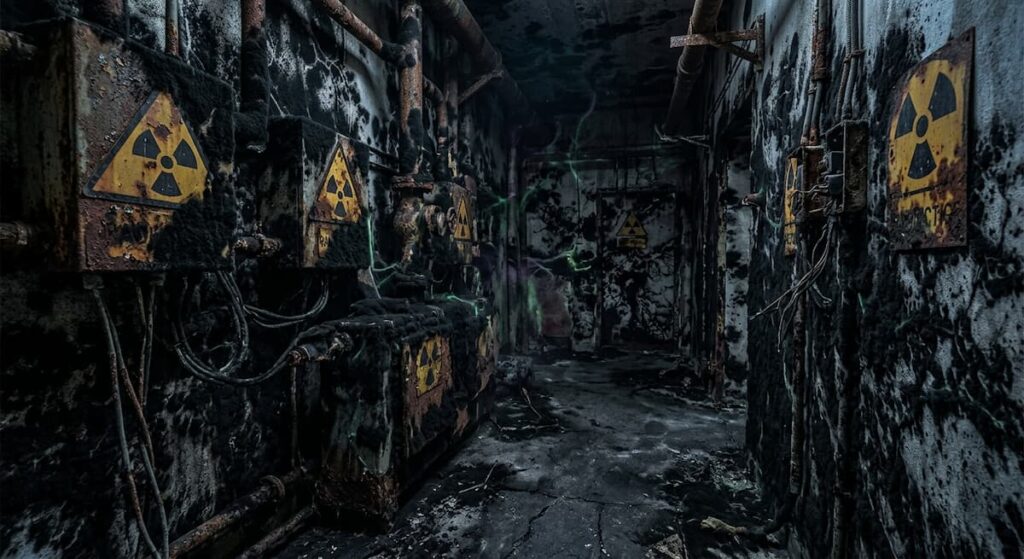
Introduction
The black fungus discovered amidst the extreme radiation of the Chernobyl nuclear disaster site thrives by using radiation, which is fatal to humans, as its primary energy source. Just as plants undergo photosynthesis using sunlight, this article explores the mechanism of radiosynthesis performed by this remarkable organism and its potential applications in space exploration. Through this microorganism, we can reflect on the relentless adaptability of life and humanity’s future prospects for space expansion.
1. The Black Organism Discovered in the Ruins of Chernobyl
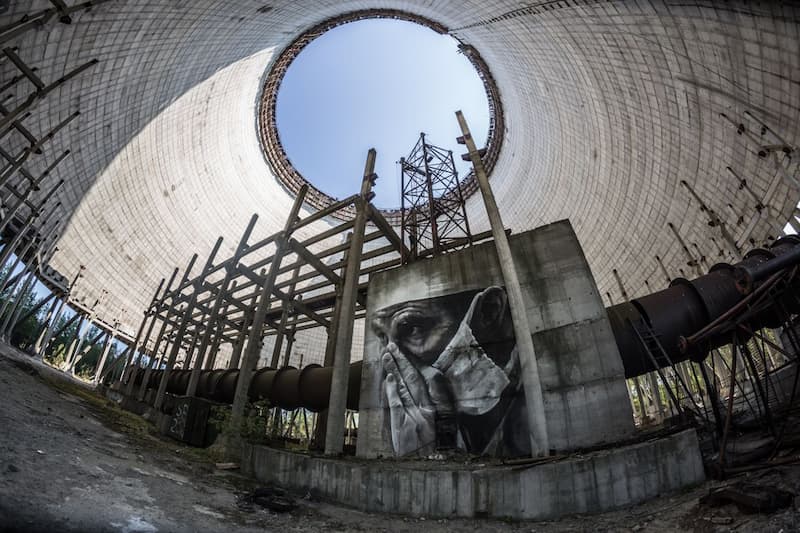
In 1986, the most fatal nuclear accident in human history occurred. It was the Chernobyl disaster. The invisible poison, radiation, spread rapidly in all directions and completely paralyzed the surrounding ecosystem. People were convinced that it had become a phantom land where life could never survive. What on earth could have survived in a place that resembled hell? Why did a new organism begin to stir in a space where everything else was dying?
Years after the accident occurred, unmanned robots were deployed into the nuclear isolation zone. It was the core of the reactor, where extreme radiation pouring out exceeded lethal doses by thousands of times. However, a shocking phenomenon was observed on the walls of that location. Something was blackly covering the walls and growing exceptionally vigorously.
Its identity was, surprisingly, a small black fungus. How was this possible amidst high levels of radiation that mercilessly destroy and sequentially break down the cells of living organisms? Normally, when cells of living organisms are hit by radiation, their internal genetic information is destroyed, causing immediate death. This is because immense energy passes through the cells and tears them apart without mercy.
However, far from dying, this black microorganism was extending its stems toward the direction where radiation was emitting most strongly. Scientists could not contain their astonishment. This microorganism was not merely enduring an extreme environment. It was directly absorbing fatal radiation and converting it into nutrients for its own growth.
The existence of a microorganism that turns deadly poison into raw materials for life’s energy completely shook the common sense of existing biology to its roots. The presence of a living organism that feeds and grows on fatal radiation, rather than oxygen or sunlight, poses a massive question to humanity. Where on earth does the secret to this tough vitality come from?
2. Melanin Pigments and the Hidden Mechanism of Radiosynthesis
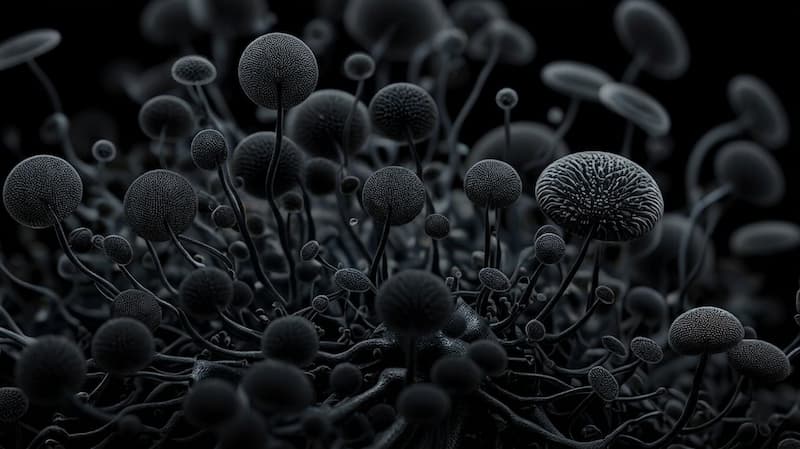
How on earth does this fungus consume dangerous radiation? The core lies precisely in the melanin pigment that turns the skin of the fungus black. It is the very same pigment that darkens human skin.
We are generally well aware of plant photosynthesis, which creates energy by absorbing sunlight. Plants use chlorophyll to convert light into chemical energy. The black fungus of Chernobyl does precisely the same thing. It simply uses melanin instead of chlorophyll. The academic community calls this radiosynthesis.
Melanin has a very unique structure. What happens when radiation collides with melanin? Intense energy instantly stimulates the electrons inside melanin. The stimulated electrons bounce out and trigger chemical reactions. The fungus captures this flow to generate real energy that cells can use. It is the moment when fatal radiation is instantly transformed into fuel for life.
Why did such evolution occur? Earth in its early stages had much stronger radiation than it does today. The fungus might have learned how to utilize this energy hundreds of millions of years ago. Melanin was not merely a shield protecting against radiation. It was a power generator converting it into energy.
As this remarkable mechanism was unravelled, the scientific community fell into great shock. This served as strong evidence that living organisms could grow independently even in outer space, which is filled with radiation. Isn’t the secret of this tiny microorganism, turning poison into medicine, truly astonishing?
3. Possibilities Ranging from Radiation Shields to Space Food

Where can this bizarre microorganism, which grows by consuming radiation, actually be applied? Will it end as a simple wonder of nature? Absolutely not. This small fungus is a key that can solve some of the most massive challenges facing humanity.
The first possibility is a radiation shield. What would happen if we applied this fungus to walls at nuclear accident sites or radioactive waste treatment facilities? It can effectively absorb radiation without the need for thick, heavy lead or concrete. An eco-friendly biological shield that grows on its own and repairs damaged areas would be born.
The second is space exploration. What is the biggest obstacle in humanity’s long-held dream of migrating to Mars? It is precisely the fatal cosmic radiation pouring from outer space. What if we surrounded the outer hull of a spacecraft with a layer of black fungus? In fact, scientists conducted an experiment growing this fungus on the International Space Station. The results were astounding. The fungus blocked cosmic radiation while simultaneously multiplying on its own.
Furthermore, the byproducts generated by the fungus as it absorbs radiation hold the potential to become food or protein sources for astronauts. This means an ecosystem that blocks radiation inside spacecraft while simultaneously providing nutrients becomes feasible.
Can this incredible microbial technology, which turns dangerous poisons into useful resources, accelerate the era of human space expansion?
4. Shifts in the Concept of Life Posed by Extremophilic Organisms

The black fungus of Chernobyl delivers a massive shock that goes beyond a simple mystery of nature. For a long time, we believed that living organisms could thrive only in environments with mild climates, abundant oxygen, and warm sunlight. We assumed that spaces filled with fatal radiation were merely barren lands where only destruction and death existed.
However, as if mocking humanity’s arrogant prejudice, this quiet microorganism survived splendidly. Rather than merely surviving, it absorbed hellish radiation as its life energy and multiplied explosively. Life as an existence is far more resilient, tough, and creative than we think.
Then, how far can the definition of life be expanded? Should we still insist only on liquid water and oxygen when searching for life on alien planets? Haven’t we been limiting the possibility of life in the entire universe using the framework of knowledge created within the small well of Earth?
Sprouting from the space of death, this tiny fungus leaps over the limits of terrestrial biology and opens a new horizon for the search for extraterrestrial life. Perhaps somewhere in the universe, a massive ecosystem is breathing, obtaining energy through entirely different methods that we cannot even imagine.
Conclusion
The discovery of this miraculous microorganism that converts radiation into energy completely shakes humanity’s fixed ideas about life. It is truly paradoxical that the key of hope to assist humanity’s space expansion was born in the Chernobyl nuclear power plant, a symbol of destruction and contamination. Are we truly ready to move beyond Earth, our familiar sanctuary, and adapt and survive like this microorganism within the new ruins of space, where infinite radiation lurks?
![[Bit#23] The Dining Revolution: Cultured Meat and the Dilemma of Carnivory](https://hiddenbitknowledge.com/wp-content/uploads/2026/05/7b4b7585b7de-768x538.jpg)
![[Bit#25] The Future Where Brain and Computer Become One: The Essence of BCI Technology](https://hiddenbitknowledge.com/wp-content/uploads/2026/05/0cff846367c9-768x431.jpg)
![[Bit#43] Animal’s Instinctive Weather Radar You Didn’t Know About](https://hiddenbitknowledge.com/wp-content/uploads/2026/05/8bf6811cafc2-768x512.jpg)
![[Bit#126] Alien Biology Unveiled: What Forms Could Extraterrestrial Life Take Beyond Earth?](https://hiddenbitknowledge.com/wp-content/uploads/2026/08/main.-Alien-Biology-Unveiled-768x419.jpg)
![[Bit#12] The Golden Death: Why Scorpion Venom Costs $39 Million Per Gallon](https://hiddenbitknowledge.com/wp-content/uploads/2026/04/5fbca9cf7008-768x561.jpg)
![[Bit#38] Is Traditional Eastern Medicine Truly Scientific?](https://hiddenbitknowledge.com/wp-content/uploads/2026/05/c687525e4da5-768x439.jpg)