Why Can’t the Human Body Regenerate Perfectly? [Bit#210]
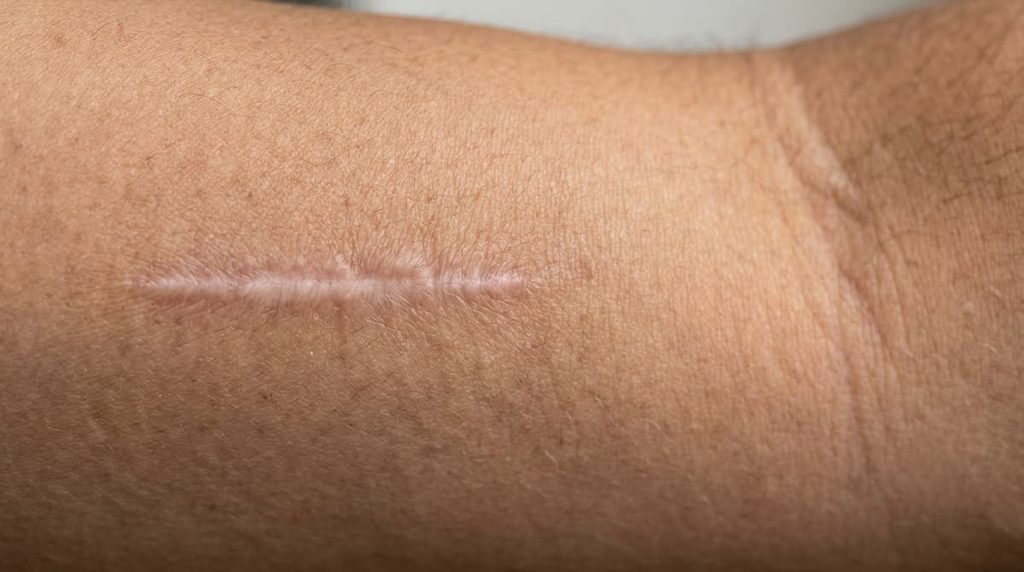
A deep wound does not simply disappear.
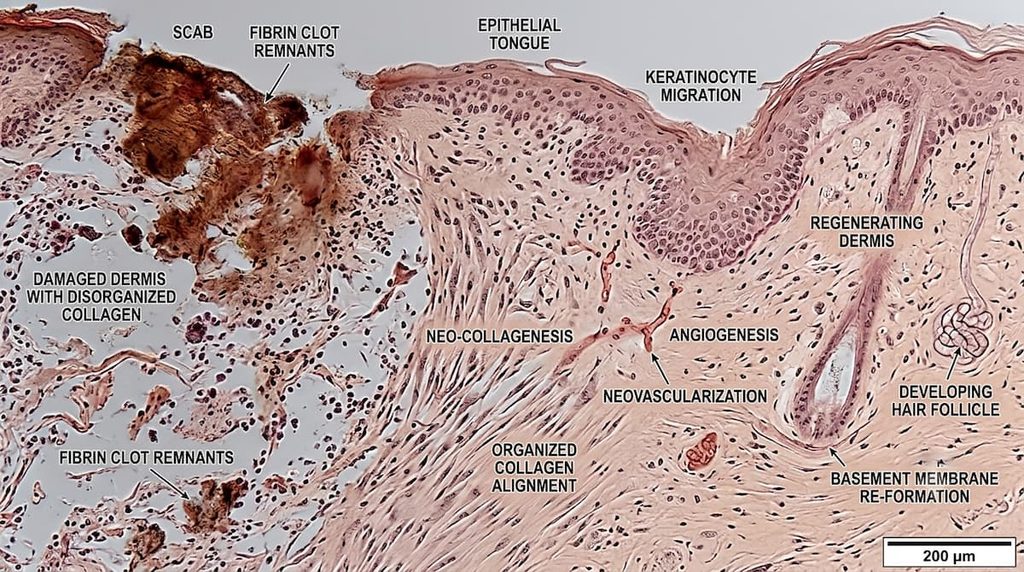
The human body can close damaged skin, stop bleeding, rebuild a protective barrier, and restore much of the tissue’s function. But when the injury is severe, the original tissue is often not recreated exactly as it was. Instead, the body leaves behind a scar.
That raises a surprisingly difficult question.
Why does the human body repair damaged tissue instead of simply rebuilding it?
The answer begins with an important distinction. Healing and regeneration are not the same thing.
Regeneration means replacing damaged tissue with new tissue that closely restores its original structure and function. Repair is different. It closes the damage and restores stability, but the replacement tissue may not reproduce everything that was there before.
For adult human skin, deep injuries commonly end in this second kind of response.
The body chooses speed over perfection
When tissue is damaged, leaving an open gap is dangerous. The body needs to restore a physical barrier and stabilize the injured area.
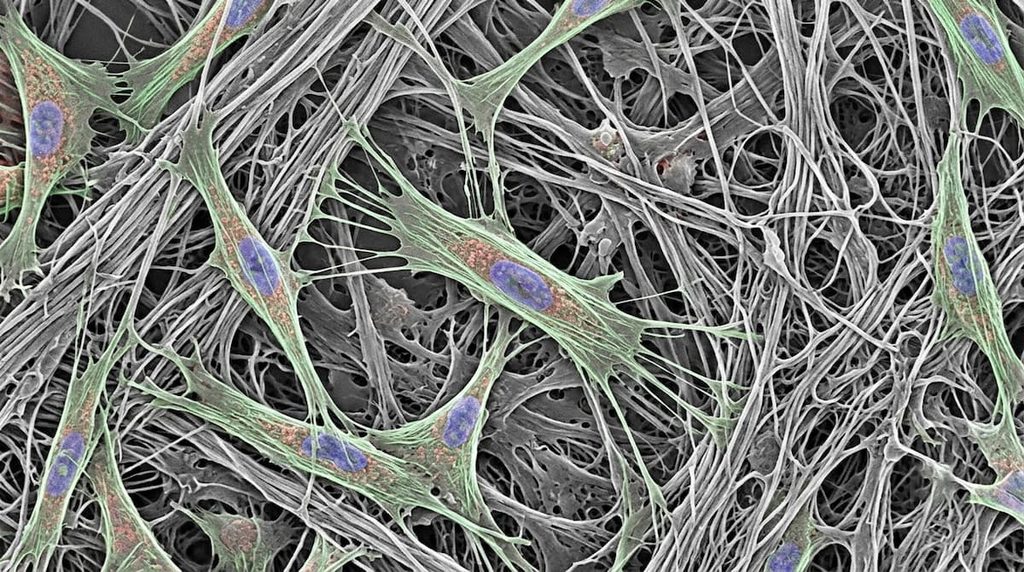
One of the major players is a type of cell called a fibroblast. Fibroblasts produce and organize the extracellular matrix, the network of proteins surrounding cells. During wound repair, some fibroblasts become specialized cells called myofibroblasts, which help contract the wound and produce large amounts of extracellular matrix.
This is useful during repair.
But if this response produces too much fibrous material, or remains active for too long, the result can be fibrosis and scar formation rather than restoration of the original tissue architecture. Modern research therefore views scarring not simply as failed healing, but as a different biological outcome of tissue repair.
A scar is essentially evidence that the body successfully stabilized an injury without completely reconstructing the original tissue.
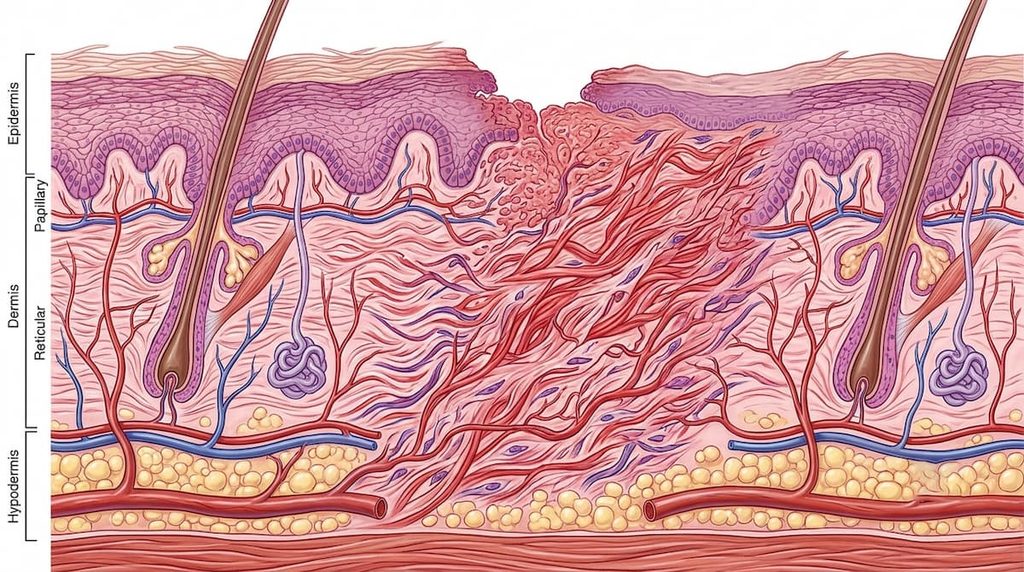
That difference becomes much more interesting when we look at animals that can do something humans generally cannot.
Some mammals can rebuild what was lost
African spiny mice of the genus Acomys are unusually good at regeneration.
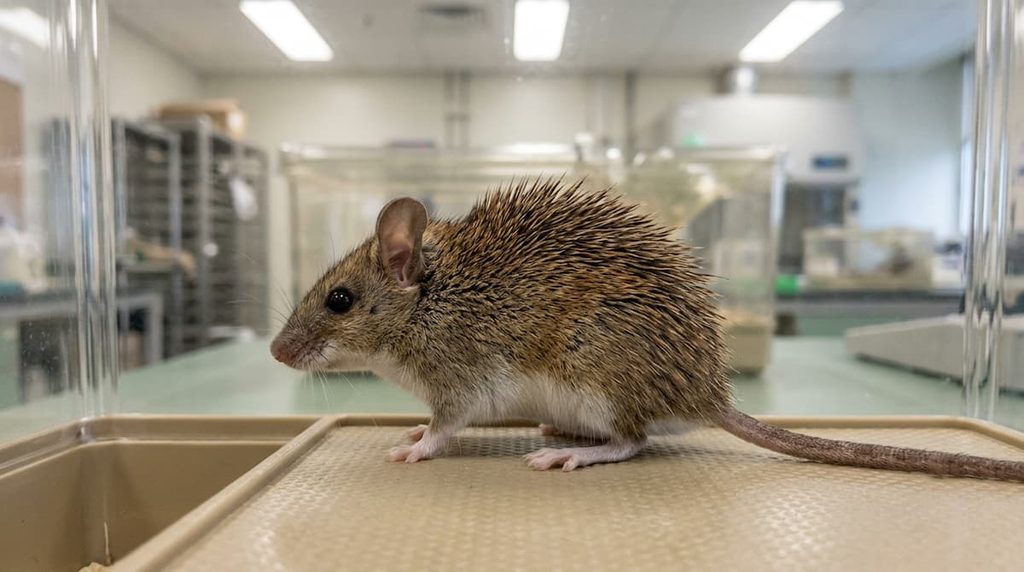
After full-thickness skin injuries, some spiny mouse species can regenerate not only the epidermis and dermis, but also hair follicles, sebaceous glands, and even skeletal muscle associated with the skin. In contrast, laboratory mice generally repair comparable injuries by forming scar tissue.
This is not simply a case of one mouse healing faster.
The tissue that forms after injury can have a different organization and composition. Researchers have observed differences in immune responses, extracellular matrix production, cell behavior, and the formation of new structures.
In other words, the spiny mouse is not merely better at closing a wound.
It can follow a different biological program after injury.
The cells that make scars can behave differently
One clue comes from myofibroblasts.
These cells are important contributors to scar formation in ordinary wound repair. In spiny mice, myofibroblasts still appear after injury, but they do not persist in the wound in the same way they do in scar-forming mice.
A 2021 study found that myofibroblasts appeared rapidly after injury in both spiny mice and ordinary mice, but persisted longer in ordinary mice. In spiny mice, their disappearance was associated with tissue regeneration. The study also linked this difference to the Hippo-YAP signaling pathway, which helps cells respond to mechanical and developmental signals.
This matters because it changes the question.
The problem may not be that regenerative animals lack the machinery needed for repair.
They may instead control that machinery differently.
A repair response that remains active can push tissue toward fibrosis. A response that is switched off or redirected at the right time may allow regeneration to continue.
Regeneration may depend on timing
Another clue comes from ERK, a signaling pathway involved in cell growth and responses to injury.
Researchers studying spiny mice found that ERK becomes activated soon after injury in both regenerating and scar-forming mice. The important difference was what happened afterward.
In spiny mice, high ERK activity remained active during the regenerative process. When researchers inhibited ERK, regeneration shifted toward a more fibrotic form of repair. Conversely, activating parts of the same pathway in normally scar-prone mouse wounds promoted features associated with regeneration, including cell proliferation, extracellular matrix remodeling, and new hair follicle formation.
This does not mean that turning on ERK would make human wounds regenerate perfectly.
The experiments were performed in animal models, and regeneration involves many interacting pathways rather than a single molecular switch.
But the finding reveals something important.
Regeneration is not simply the absence of scarring. It is an active biological program.
Humans have actually shown this ability
There is an even more surprising clue in our own species.
Early in human development, fetal skin can heal without forming the type of scar seen in adult skin.
Experiments using human fetal skin have shown that early fetal tissue can repair wounds with organized tissue architecture and without conventional scar formation. Researchers found that fetal fibroblasts themselves play an important role in this behavior, rather than the effect being explained entirely by the surrounding fetal environment.
This means humans are not completely incapable of scar-free regeneration.
We can do it under certain biological conditions.
But that ability changes as development progresses.
Adult skin responds to injury differently from early fetal skin, with stronger inflammatory and fibrotic responses. Differences in fibroblast populations, extracellular matrix, immune signaling, mechanical cues, and gene regulation all appear to contribute to this developmental change.
So somewhere during development, the balance between regeneration and repair shifts.
And scientists are trying to understand exactly why.
Why would evolution favor scars?
At first, scar formation may seem like a biological failure.
But that interpretation is too simple.
A large injury creates an immediate problem. The body needs to prevent further damage, restore structural integrity, and protect the organism. Rapidly producing a strong extracellular matrix can help accomplish those goals.
Perfect regeneration is more demanding.
To rebuild the original tissue, the body would need to coordinate cell proliferation, differentiation, blood vessel formation, extracellular matrix remodeling, nerve interactions, immune activity, and tissue architecture with remarkable precision.
A fast repair response can close the problem.
A regenerative response has to reconstruct the solution.
This may help explain why regeneration is relatively limited in adult mammals compared with animals such as salamanders and certain fish, although the evolutionary reasons are complex and remain an active area of research.
The real challenge is not making scars disappear
This distinction matters for future medicine.
Scientists are not simply trying to find a substance that makes scars vanish. The deeper goal is to understand how a wound can be directed toward regenerative healing rather than excessive fibrosis.
The spiny mouse provides one model. Early fetal tissue provides another.
Both point toward the same broad idea: the outcome of an injury depends not only on what was damaged, but also on which cells respond, what signals they receive, what extracellular environment surrounds them, and how long those signals remain active.
That opens a different way of thinking about regenerative medicine.
Instead of replacing damaged tissue after the fact, future treatments might try to change the body’s response at the moment an injury occurs.
The goal would not simply be to close the wound faster.
It would be to persuade the tissue to rebuild more of what it originally had.
We are not there yet
This is where the science needs some restraint.
Researchers have identified several mechanisms associated with scar-free regeneration, including fibroblast behavior, immune signaling, extracellular matrix organization, ERK activity, and Hippo-YAP signaling. Some experimental interventions have even shifted certain animal wounds toward more regenerative behavior.
But that does not mean human skin can currently be instructed to regenerate perfectly.
A mouse wound is not a human wound. A developmental model is not an adult patient. And manipulating one signaling pathway does not reproduce the complex environment in which an entire tissue develops.
The challenge is therefore much bigger than finding a single “regeneration switch.”
Scientists need to understand how many biological systems cooperate to decide between rebuilding and scarring.
And that may be the most interesting part of the story.
The human body is not simply bad at repairing itself.
It has evolved an extremely effective way to survive tissue damage, even when that means sacrificing some of the original architecture.
The future of regenerative medicine may depend on learning when to change that trade-off, and how to do it without losing the speed and stability that make wound repair work in the first place.
If scientists can eventually control that balance, a scar may no longer be the unavoidable signature of healing.
It could become a biological choice that medicine learns to change.
Scientific Sources
- Fu M, Huang Z, Li J, et al. “Approaching Scarless Wound Healing: From Passive Anti-Fibrotic to Proactive and Programmable Pro-Regenerative Strategies.” Advanced Science. 2026;13(18):e21824. PMID: 41732917. DOI: 10.1002/advs.202521824. Read the study on PubMed
- Gawriluk TR, Simkin J, Thompson KL, et al. “Comparative analysis of ear-hole closure identifies epimorphic regeneration as a discrete trait in mammals.” Nature Communications. 2016;7:11164. PMID: 27109826. DOI: 10.1038/ncomms11164. Read the study on PubMed
- Brant JO, Yoon JH, Polvadore T, Barbazuk WB, Maden M. “Cellular events during scar-free skin regeneration in the spiny mouse, Acomys.” Wound Repair and Regeneration. 2016;24(1):75-88. PMID: 26606280. DOI: 10.1111/wrr.12385. Read the study on PubMed
- Mascharak S, et al. “Adaptations in Hippo-Yap signaling and myofibroblast fate underlie scar-free ear appendage wound healing in spiny mice.” Cell Reports. 2021. PMID: 34610329. Read the study on PubMed
- Tomasso A, Koopmans T, Lijnzaad P, et al. “An ERK-dependent molecular switch antagonizes fibrosis and promotes regeneration in spiny mice (Acomys).” Science Advances. 2023;9(17):eadf2331. PMID: 37126559. DOI: 10.1126/sciadv.adf2331. Read the study on PubMed
- Gomes MLNP, Krijnen PAJ, Middelkoop E, Niessen HWM, Boekema BKHL. “Fetal Skin Wound Healing: Key Extracellular Matrix Components and Regulators in Scarless Healing.” Journal of Investigative Dermatology. 2025;145(2):280-302. PMID: 39152955. DOI: 10.1016/j.jid.2024.05.027. Read the study on PubMed