[Bit#83] Genetically Modified Organisms(GMO): Dangerous Monster or Food Savior?

Introduction
We might be consuming Genetically Modified Organisms every single day. Yet, the vast majority of people harbor a vague, instinctive fear toward them. Is genetic modification truly a monster threatening human health? Or is it the sole savior capable of resolving the impending food crisis on our scorching planet? In this article, we look directly into the true face of GMOs through the lens of science. Furthermore, we contemplate realistic alternatives for the very survival of humanity.
1. Silent Fear The Scientific Reality of GMOs We Never Knew
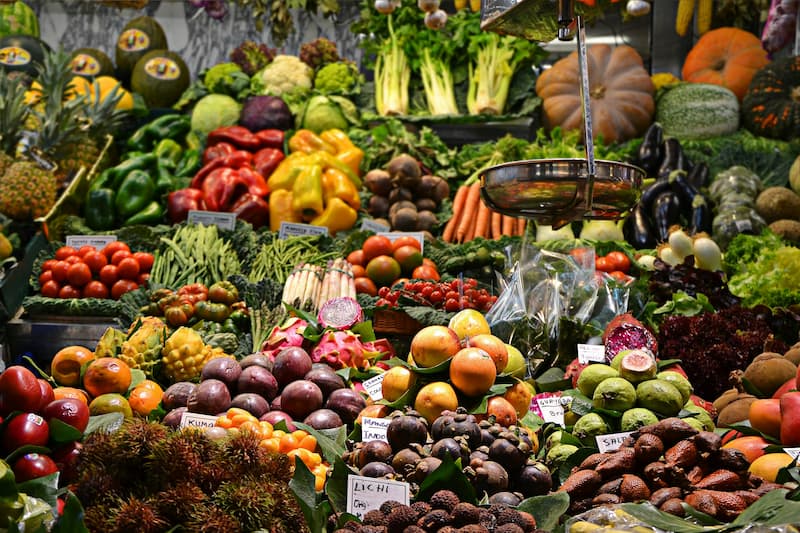
We are consuming Genetically Modified Organisms, commonly known as GMOs, every day without even noticing it. Tofu on our dinner tables, canola oil, and corn starch used in snacks are prime examples. Why do so many people feel an instinctive aversion just by hearing the word GMO? This is exactly why products labeled Non-GMO sell at a premium in supermarkets. The image of GMOs etched into the public mind resembles a monster like Frankenstein rather than actual science. The mere fact that genes have been artificially manipulated triggers an inherent sense of anxiety.
However, when we look closely through cold scientific eyes, the reality is completely different. Genetic modification is not an entirely new creation. It is a highly precise technology that edits a specific functional segment within the existing genetic map of a plant. For instance, scientists insert a gene from a microbe that is toxic exclusively to pests into corn. This specific toxicity causes absolutely no reaction in the human digestive system and breaks down completely. This is because it is engineered to activate solely within the intestinal environment of specific target pests. Why does the fear persist even though the scientific community has verified its safety for decades? Humans naturally suspect changes in the microscopic world that remain invisible to the naked eye.
The truly important fact is that humanity has already been modifying genes for thousands of years. Wild ancestral corn was nothing more than a hard grass with only a few tiny kernels. Humans selected only the larger and tastier individuals to breed over generations. This is the traditional technique known as selective breeding. Natural crossbreeding is also a massive process of genetic modification where tens of thousands of genes mix at random. Modern GMO technology is the evolutionary result of transforming this random process into a precise science. It swaps a single, targeted gene as accurately and swiftly as computer science. Believing that random mixing through breeding is safe while precisely targeted technology is dangerous is a scientific contradiction.
2. Dining Tables on the Brink of Extinction The Massive Wave of Climate Change and Food Crisis

Global temperatures are breaking record highs every single year. Extreme heat waves, severe droughts, and sudden floods are sweeping across agricultural lands worldwide. This is not simply a matter of the weather getting warmer. It signifies the complete collapse of the dining tables we rely on daily. If we continue to farm the way we do now, an era will soon arrive where we cannot secure food even with ample money. Why is the food crisis not a far-off scenario? Global grain yields are already fluctuating violently due to climate change.
The reason the foundation of food production is shaking is entirely clear. Crops are extremely vulnerable to environmental shifts. A mere one-degree Celsius rise in global temperature reduces the production of rice and corn by approximately ten percent. Furthermore, climate change creates mutant strains of pests and diseases. Warmer winters allow pest larvae to survive instead of dying off, which utterly devastates farms in the spring. Plant viruses that used to stay confined to specific regions are now spreading globally. Is humanity truly prepared to block this massive counterattack from nature? Current traditional farming methods can never keep up with this terrifying speed.
The global population is projected to reach nearly ten billion by the year 2050. The mouths to feed are increasing, but the land available to cultivate grains is actually shrinking. Water scarcity is another critical issue. Agriculture is a massive industry that consumes seventy percent of the freshwater used by humanity. Groundwater is being depleted rapidly, and rivers are drying up. We have reached a critical tipping point where we can no longer farm by relying solely on rain and the mercy of nature. In this crisis of extinction, there is only one way for humanity to survive. We must secure entirely new plants that can transcend environmental limitations.
3. Tailored Saviors Genetic Technology Overcoming Drought and Pests
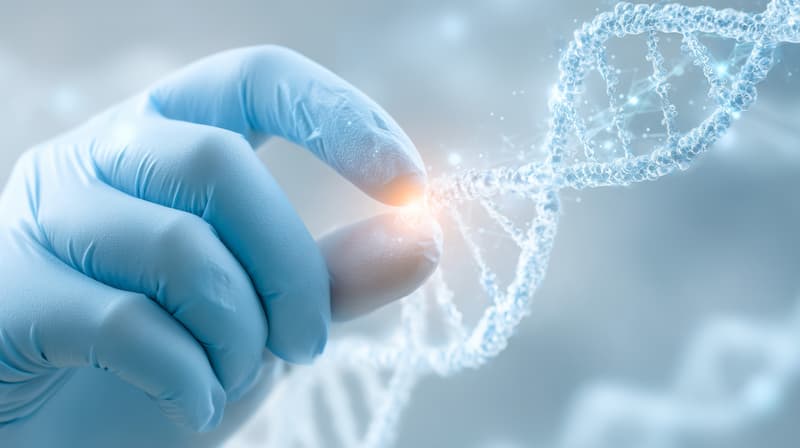
To overcome the massive wave of the food crisis, scientists have pulled out a highly precise tool called genetic scissors. Genetic scissors represent a technology that accurately cuts and pastes specific desired sections of plant DNA, much like editing text on a computer. Utilizing this technology allows us to create powerful crops that can fight against climate change. Why can this technology serve as a reliable savior for humanity? It maximizes the survival instinct of plants, enabling them to endure and survive on their own even in barren environments.
The most prominent achievement is rice and corn that can withstand severe drought. When a drought strikes, plants close the stomata on their leaves to prevent water evaporation. However, keeping the stomata closed for too long prevents them from absorbing carbon dioxide, making photosynthesis impossible. Consequently, they starve to death. Scientists discovered genes responsible for water preservation capabilities in desert plants and specific microorganisms. Implanting this gene into ordinary crops brought about a staggering transformation. The plants maintain growth by protecting their cell membranes with minimal water, even under extreme moisture deficits. The miracle of reducing water consumption by over thirty percent while maintaining the exact same yield has become a reality.
Crops that overcome pests on their own also drastically reduce the use of agricultural chemicals. In the past, farmers had to spray thousands of liters of chemical pesticides over fields to catch bugs. These pesticides caused severe side effects, polluting the soil and killing beneficial insects. Now, a natural protective shield that activates the moment a pest takes a bite is embedded directly into the plant’s genes. The mechanism involves the crop producing a protein that binds specifically with the digestive enzymes of target pests to paralyze their intestines. This component is completely harmless to other animals or humans. With pest worries gone, farmers’ labor decreases, and the ecosystem surrounding the agricultural land becomes safer from toxic chemical substances. Genetic technology is evolving into a tool that heals the environment rather than just increasing yields.
4. A Backlash from the Ecosystem or a Blessing for Humanity The Choice for a Sustainable Future

The debate surrounding GMOs ultimately boils down to a question of how far humanity can control nature. Opponents worry about the possibility of genetically modified organisms escaping into the natural ecosystem and crossbreeding with wild weeds. Their logic suggests that this could lead to the birth of superweeds that no herbicide can eliminate. Why does this anxiety never fade? It stems from a fundamental fear that human-made technology might completely dismantle the grand order of nature.
Indeed, early genetic modification technology did produce negative side effects, such as patent monopolies by specific conglomerates and corporate dominance over seeds. However, modern science has advanced beyond mere corporate profit-seeking to point toward the very survival of humanity. The speed of the food crisis we face is far too rapid for us to reject genetic technology entirely. Crops capable of growing in the barren, arid zones of Africa or the saline mudflats of Asia can only be created through the power of science. The wise choice is not to unconditionally block the technology, but to establish international standards to manage it safely.
In the end, GMOs may not be a Pandora’s box bringing destruction, but the final key to preventing impending mass starvation. We are already living healthy lives while consuming foods with precisely edited genes. The history of humanity has always been a journey of finding answers through technology when confronted with massive crises. Standing before the giant wave of the food crisis, the thing we must fear may not be the technology itself. The true horror is the starvation that will inevitably arrive if we refuse change and cling stubbornly to the methods of the past.
Conclusion
Genetic modification technology promises an abundant dining table for humanity, but it simultaneously imposes a heavy moral burden regarding the infringement upon the realm of nature. Can we truly be certain that preserving nature exactly as it is constitutes absolute justice? For whom is that naturalness intended when it means turning a blind eye to hundreds of millions of lives suffering from starvation? Amidst the abundance provided by science, humanity must find a wise point of equilibrium that sustains survival without compromising the essential nature of life.
![[Bit#127] Salt-Tolerant Crops: Future Food Growing in Salty Soil](https://hiddenbitknowledge.com/wp-content/uploads/2026/08/main.saline-grow-area-768x419.jpg)
![[Bit#73] The Martian Farmer’s Dream: Can Plants Truly Grow on the Red Planet?](https://hiddenbitknowledge.com/wp-content/uploads/2026/06/main.mars-teraforming-768x419.jpg)
![[Bit#43] Animal’s Instinctive Weather Radar You Didn’t Know About](https://hiddenbitknowledge.com/wp-content/uploads/2026/05/8bf6811cafc2-768x512.jpg)
![[Bit#23] The Dining Revolution: Cultured Meat and the Dilemma of Carnivory](https://hiddenbitknowledge.com/wp-content/uploads/2026/05/7b4b7585b7de-768x538.jpg)
![[Bit#76] Leaf Quantum Code: 100% Light to Energy Secret](https://hiddenbitknowledge.com/wp-content/uploads/2026/06/main.plant-converting-light-into-electricity-768x419.jpg)
![[Bit#25] The Future Where Brain and Computer Become One: The Essence of BCI Technology](https://hiddenbitknowledge.com/wp-content/uploads/2026/05/0cff846367c9-768x431.jpg)