[Bit#87] Why Cavities Are the Price of Human Evolution
Introduction
Human ancestors did not visit dentists daily for cavities like modern people do. In the process of human evolution and cultural development, our jaws and dietary habits have changed drastically. This article reveals through paleoanthropological evidence and bio-mechanisms that cavities are not just a simple disease, but a trace and a price of evolution chosen by humanity. We invite you to reflect on the fascinating evolutionary journey of humanity, where we compromised dental health in exchange for a rich and expanded brain.
1. As the Brain Grew, the Jaw Shrank: The Tragedy of Space
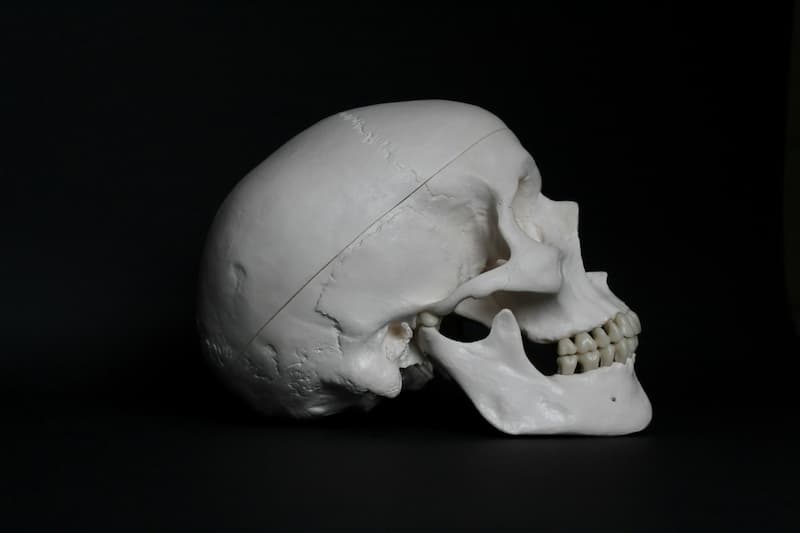
The human skull has undergone massive changes throughout evolutionary history. The core driver is the volume of the brain. Evolving from hominids to modern humans, our brains have expanded more than threefold. The brain of early humans was at a level of about 400cc, similar to that of modern apes. However, the modern human brain averages around 1350cc. This explosive growth to acquire intelligence triggered a biological space war inside the skull.
Space is inherently limited. As the brain expanded its territory, other skull structures had to be pushed aside. The area that took the direct hit was the lower part of the face, specifically the jawbone. As the cranium housing the brain grew larger, the jawbone was progressively pushed backward and its size decreased sharply. This is exactly why the protruding snout, like that of a chimpanzee, transformed into the flat face of modern humans. The expansion of the brain forced the reduction of the jaw.
The real problem lay in the size and number of teeth. While the jawbone shrank at an astonishing speed, the evolutionary pace of teeth could not keep up. The number and volume of teeth remained largely unchanged from the past, meaning only the container, the jawbone, became narrower. Naturally, a severe shortage of space occurred. Permanent teeth failed to erupt properly, pushing against one another and alignment became crooked and crowded.
As the teeth became misaligned, countless microscopic gaps formed between them. These tight spaces created a worst-case structure where food debris easily became trapped and difficult to remove. In prehistoric times, when there were no toothbrushes or dental floss, these narrow gaps became impregnable fortresses for oral microorganisms. Ultimately, in exchange for gaining a giant brain to build civilization, humanity created the perfect biological environment for cavity-causing bacteria to thrive between their teeth. The price of high intelligence was, ironically, the tragedy of teeth.
2. The Discovery of Fire and Cooking Revolution: The Disaster of Soft Food

What is the greatest turning point in human evolution? It is undeniably the discovery of fire. By controlling fire, humans began to cook their food. This marked the beginning of the cooking revolution. Cooking food brought tremendous survival advantages to humanity. Tough, fibrous raw meat and hard root vegetables turned soft upon meeting fire. The absorption rate of nutrients also increased exponentially.
However, this revolution, which maximized digestive efficiency, was a bolt from the blue for dental health. This was because the necessity of mastication, the act of chewing food, decreased dramatically. In the days of eating raw food, humans had to chew with all their might to break down tough fibers and hard bones. During this process, the surfaces of the teeth were naturally cleaned. The coarse food scraped across the teeth, acting as a sort of natural toothbrush that removed plaque.
As food became soft, teeth no longer needed to collide forcefully. Jaw muscles weakened, and the physical stimulation to the jawbone decreased. To make matters worse, cooked soft food possessed high viscosity. It clung to the tooth surfaces and gaps like sticky rice, refusing to fall off easily. The cleaning effect of coarse fibers vanished, leaving sticky food debris stagnant in the oral cavity for extended periods.
This residue was a magnificent feast for oral bacteria. The mouths of humans raised on soft food transformed into perfect incubators favored by cavity-causing bacteria. In exchange for easily acquiring energy through the use of fire, we completely lost the natural defense mechanism where teeth cleaned themselves. The cooking revolution filled the bellies of humanity but left their teeth to rot.
3. The Beginning of Agriculture: The Sweet Trap of Carbohydrates

The most colossal event that completely overturned the human diet occurred about 10,000 years ago with the birth of agriculture. Transitioning from a hunter-gatherer lifestyle to Bronze Age farming freed humanity from starvation. Sedentary life became possible, and the population exploded. Grains such as wheat, rice, and corn became the staples of humanity. This was the exact moment the foundations of civilization were laid.
However, this abundance was the most fatal disaster in dental history. Grains are mass aggregates of starch, which means carbohydrates. The moment carbohydrates enter the mouth, they are rapidly broken down into sugars by the amylase enzyme in saliva. An unprecedented amount of pure sugar began to be supplied into the oral cavity, incomparable to the meat or wild vegetables consumed during the hunter-gatherer era.
According to research by paleoanthropologists, cavities are rarely found in the remains of pre-agricultural hunter-gatherers. Even when discovered, they accounted for a mere 1 to 2 percent of total teeth. However, looking at remains immediately following the transition to an agricultural society, the incidence of cavities surges sharply to over 10 percent. This serves as clear evidence that the oral environment completely shifted as the staple diet changed to carbohydrates.
The blessings of settlement and high fertility brought by agriculture turned, paradoxically, into a harsh punishment that melted teeth. Modern humans consumed immense amounts of carbohydrates daily, turning the inside of their mouths into an acidic hell overflowing with sugar. While the revolution in food production raised the survival probability of humanity, it set a sweet trap that inflicts an acidic terror upon our teeth every single second.
4. Coexistence with Mutans Bacteria: The Counterattack of the Microbial Ecosystem
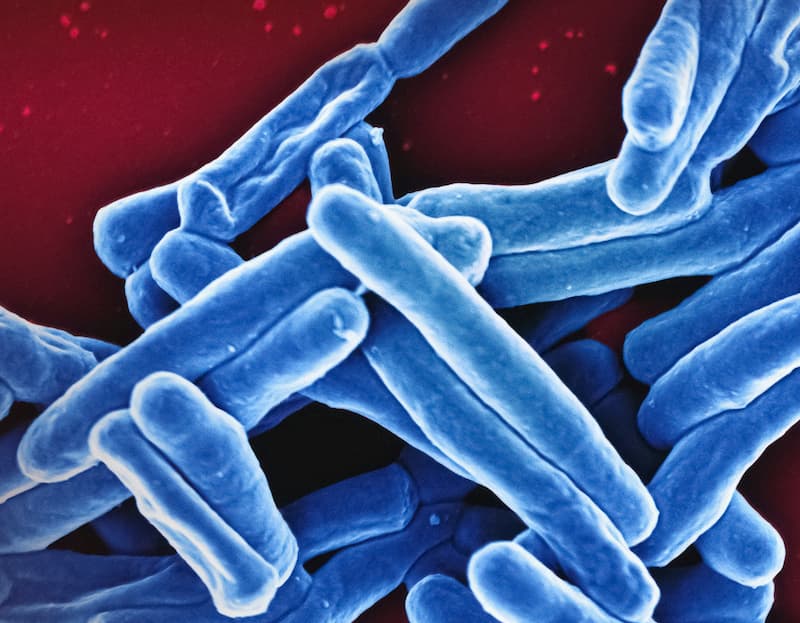
Once humanity combined a narrowed jawbone, soft food, and an excess of carbohydrates, the oral microbial ecosystem was completely turned upside down. The balance among the numerous bacteria that once coexisted peacefully in the oral cavity was shattered. Seizing this chaos, the ruler that emerged as the absolute power in the mouth was Streptococcus mutans, commonly known as mutans bacteria.
Mutans bacteria possess an abnormal affinity for carbohydrates and sugars. As humans initiated agriculture and mass-produced sugar, a literal golden age opened up for these bacteria. They consume the sugars remaining in the mouth and excrete strong acid as a byproduct. The process where this acid dissolves the hard surface of the tooth, the enamel, is precisely the cavity we experience.
An interesting scientific fact is that mutans bacteria form a solid protective layer called a biofilm, or plaque, on the tooth surface. This film is not easily washed away by ordinary friction; it serves as a fortress that blocks the approach of other beneficial bacteria and maintains an acidic environment. The evolutionary behavior of humanity provided mutans bacteria with the opportunity to construct a perfect defensive shield.
Ultimately, cavities are not an infectious disease that arrived from the outside. They are the byproduct of an oral microbial ecosystem that evolved into something demonic, triggered by the evolutionary paths chosen for human survival and prosperity, such as a large brain, cooked food, and agriculture. As civilization became highly sophisticated, the coexistence with mutans bacteria grew more intense. Humanity became the only species on Earth destined to brush and manage their teeth every single day just to survive.
Conclusion
A cavity is not a simple oral disease. It is a distinct footprint of evolution that humanity acquired as a price for expanding the brain, inventing fire to cook food, and establishing civilization through agriculture for survival. Consequently, the toothaches we endure daily run parallel to the history of human prosperity.
Here, we confront a profound question. In exchange for gaining civilization and intelligence, humanity has lost its natural physical defense mechanisms one by one. If so, what unexpected biological price will modern humans, who are maximizing technology and convenience to evolve at this very moment, have to pay in the future? It is time for us to deeply contemplate the direction of evolution hidden behind the sweetness of the civilization we have obtained.
![[Bit#24] The Glucose Spike: A Silent Bombardment Destroying Your Body](https://hiddenbitknowledge.com/wp-content/uploads/2026/05/3d60887a0b05-768x512.jpg)
![[Bit#20] Life Never Perishes: It Only Changes Form](https://hiddenbitknowledge.com/wp-content/uploads/2026/05/44235f6975cd-768x431.jpg)
![[Bit#65] Why Do Women Live Longer Than Men?](https://hiddenbitknowledge.com/wp-content/uploads/2026/06/main.grave_-768x512.jpg)
![[Bit#74] The Warning from Siberia: Ancient Viruses Awakening from the Permafrost](https://hiddenbitknowledge.com/wp-content/uploads/2026/06/main.virus-and-ice-768x432.jpg)
![[Bit#8] The Secret Cloning War in Your Bathroom While You Sleep](https://hiddenbitknowledge.com/wp-content/uploads/2026/04/7e29f21bdd69-768x512.jpg)
![[Bit#14] Gray Hair and Hair Loss: A Play of Genetics or a Warning from Your Body?](https://hiddenbitknowledge.com/wp-content/uploads/2026/04/054ca0f2a0c3-768x512.jpg)