[Bit#159] Secrets of Delayed Onset Muscle Soreness: Why Does It Hurt More the Next Day?
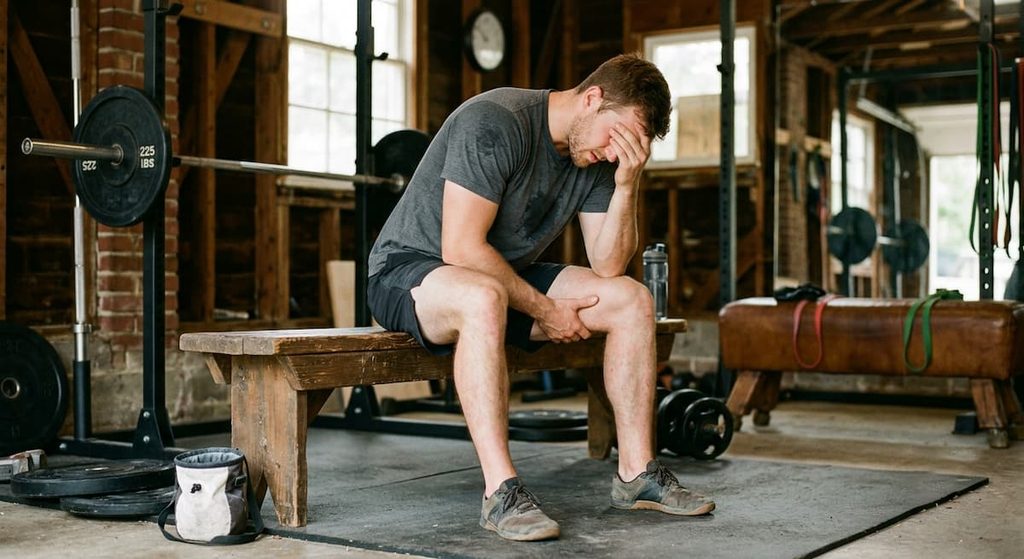
We often mistakenly believe that the pain felt immediately after working out is true muscle soreness. However, the moment when moving becomes genuinely difficult usually arrives the following morning. Why does the pain manifest after a time lag? This column explores the causes of delayed muscle soreness after exercise and delves into the microscopic, biochemical changes taking place inside our bodies. Recognizing that pain is not mere damage, but a crucial rebuilding process, provides an opportunity to deeply understand our body’s remarkable recovery system.
1. The True Identity of Pain Arriving the Next Day

On the night after a hard workout, you go to bed feeling accomplished. Your body feels light, with only a slight sensation of heat in your muscles. However, the moment you open your eyes the next morning, the situation changes completely. Getting out of bed becomes painful. Your legs ache, and lifting your arms feels exhausting. Why does the pain explode a day or two later rather than right after exercise?
This phenomenon has a distinct medical name: Delayed Onset Muscle Soreness. As the name implies, the onset of pain is postponed. Generally, full-blown soreness begins 12 to 24 hours after completing a workout. The discomfort peaks between 24 and 72 hours.
People often ask whether harmful substances build up during exercise to cause immediate pain. If that were true, peak soreness should occur right after training ends. However, our body’s alarm system operates much more slowly and intricately. It takes significant time for physical stress to transform into cellular signals that subsequently stimulate pain nerves.
The heavy soreness we experience is not simple suffering. It is the first signal that intensive restoration has begun deep within the tissue. Our body effectively declares a state of emergency to erect new structures where muscle fibers were disrupted. To uncover the true cause of this delayed reaction, we must examine the microscopic alterations occurring within muscle fibers.
2. The Lactic Acid Myth vs. The Reality of Micro-Tears
Many individuals blame lactic acid for post-workout muscle pain. The belief that lactic acid accumulates as a fatigue byproduct during strenuous exercise and triggers pain has long been accepted as fact. But is this actually true? Scientific findings completely overturn this long-standing assumption.
Lactic acid produced during exercise travels through the bloodstream within just a few hours after activity ceases. It is either recycled as an energy source or broken down into water and carbon dioxide before being excreted. In short, it cannot remain in the muscles until the following morning to cause pain. While lactic acid may contribute to temporary exhaustion right after exercise, it is not the true culprit behind next-day muscle soreness.
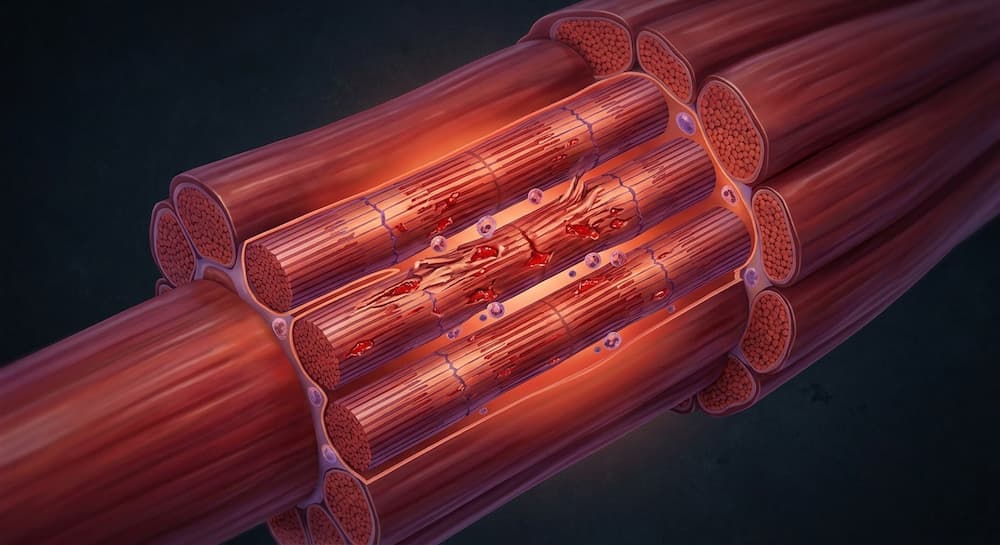
What, then, is the genuine cause? It is the microscopic damage to muscle fibers. When lifting heavier weights than usual or performing unfamiliar exercises, muscles experience high tensile force. This damage peaks during eccentric contractions, where muscles lengthen under tension. Microscopic cracks form on muscle cell membranes when lowering a dumbbell slowly or walking downhill, rather than during the lifting motion.
These micro-tears represent a natural process for growth rather than pathological destruction. Physical strain causes the protein structures composing muscle fibers to tear slightly, creating numerous microscopic wounds. Surprisingly, no major pain is felt at the exact moment this damage occurs. The true soreness begins when our immune system mobilizes to repair these micro-wounds.
3. Inflammatory Cascades and Neural Stimulation Creating the Pain Lag

When microscopic cracks form in muscle cells, the body immediately dispatches an emergency response team. Immune cells gather in large numbers at the damaged muscle sites. The repair operation to clear damaged tissue and synthesize new proteins begins in earnest. Surprisingly, this restoration process itself is the root cause of the pain. Why does pain occur during repair?
When immune cells activate, they release chemical substances around the damaged area. These include inflammatory mediators such as histamine, bradykinin, and prostaglandins. These substances dilate blood vessels and cause swelling in the affected area. Simultaneously, they continuously stimulate pain-sensing nerves distributed around the muscles. As these nerves transmit signals to the brain, we finally perceive the throbbing pain.
The crucial factor here is the time lag. It takes approximately 12 hours or more after micro-damage occurs for immune cells to assemble, trigger inflammation, and accumulate chemical concentrations high enough to stimulate nerve endings. This inflammatory response reaches its peak between 24 and 48 hours post-exercise.
Thus, on the day of exercise, inflammatory substances have not yet accumulated sufficiently for us to feel pain. Only after a night passes and immune cells actively engage in repair do we feel the soreness. Ultimately, the heavy pain arriving the next morning is not a sign of muscle deterioration, but living proof that the body is working hard to repair itself.
4. A Scientific Approach to Efficient Muscle Recovery and Relief

No miracle cure exists to instantly eliminate delayed muscle soreness. Physical time is essential for damaged muscle tissue to regenerate and for inflammation to subside. However, clear scientific strategies can shorten the duration of pain and accelerate recovery. How can we help fatigued muscles recover rapidly?
Ironically, light movement serves as the most effective method. Lying in bed due to severe soreness reduces blood circulation, delaying recovery. Engaging in light aerobic activity, such as walking or gentle cycling, proves far more beneficial. Increased blood flow actively delivers oxygen and nutrients to damaged areas while flushing out accumulated inflammatory byproducts much faster.
Sleep and adequate nutrition are equally indispensable core factors. While we are in deep sleep, the body actively secretes growth hormones. These hormones stimulate protein synthesis and repair damaged muscle tissue. Consuming sufficient protein and hydration immediately after exercise is also critical, supplying essential building blocks for muscle reconstruction to help resolve inflammation promptly.
Cold therapy and massage should also be utilized appropriately. Applying ice packs immediately post-workout minimizes excessive inflammatory responses and swelling. Once acute pain subsides, warm compresses and light massage help relieve muscle tension. Understanding and supporting the body’s natural recovery process stands as the ultimate strategy for wisely overcoming muscle soreness.
Conclusion
The pain following exercise is not mere discomfort, but vivid evidence that our body is rebuilding itself to become stronger. As the old adage states, no pain, no gain; our muscles strengthen through a paradoxical cycle of breakdown and repair. Was that heavy soreness you felt today not a preparation process for a stronger tomorrow? It invites us to reflect on how our lives are also perfected through repeated cycles of trial and recovery.
![[Bit#64] From Ocean Menace to Medical Miracle: The Incredible Rediscovery of Starfish](https://hiddenbitknowledge.com/wp-content/uploads/2026/06/main.Starfish-768x512.jpg)
![[Bit#4] I Put Someone Else’s ‘Poop’ in My Body, and a Miracle Happened](https://hiddenbitknowledge.com/wp-content/uploads/2026/04/main.Fecal-Microbiota-Transplantation-768x512.jpg)
![[Bit #155] The Secret of Unihemispheric Sleep: Why Some Animals Sleep with Half Their Brains](https://hiddenbitknowledge.com/wp-content/uploads/2026/09/mian.sleeping-768x419.jpg)
![[Bit#9] Why We Must Die: The ‘Expiration Date’ Chosen by Evolution](https://hiddenbitknowledge.com/wp-content/uploads/2026/04/0348b8923730-768x585.jpg)
![[Bit#16] The Red Flow of Life: The Past and Future Told by Blood](https://hiddenbitknowledge.com/wp-content/uploads/2026/04/bf7bc0b95bfd-768x429.jpg)
![[Bit#117] Forensic Entomology: The Last Witness at the Crime Scene](https://hiddenbitknowledge.com/wp-content/uploads/2026/08/main.Forensic-Entomology-768x429.jpg)