[Bit#160] Why Do You Feel Extreme Thirst the Day After Drinking?

Did you wake up the morning after drinking alcohol feeling your mouth so parched that your tongue stuck to the roof of your mouth? That burning thirst in your throat, where even saliva fails to form, is one of the most painful hangovers. We drank liquids constantly until going to sleep, so why is our body experiencing such a severe drought? Let us delve into the bizarre biological mechanism of how alcohol tricks brain hormones to forcibly squeeze moisture out of the body.
1. The Biochemical Principle of Alcohol-Induced Diuresis

On the morning after drinking alcohol, you open your eyes to a throat that feels painfully dry. Your mouth feels like a desert, and saliva barely forms. We clearly drank liquids all night, so why is our body suffering from such an intense drought? The secret lies in how alcohol disables our brain’s water regulation center.
Our body operates a precise control system 24 hours a day to maintain constant blood concentration and water volume. If fluid levels drop even slightly, the brain promptly sends an emergency signal, commanding the body to retain moisture tightly. However, the moment alcohol enters the body, this delicate communication network becomes instantly paralyzed.
Alcohol is not a simple beverage. It is a powerful chemical compound that easily passes through cell membranes and directly penetrates the brain’s nervous system. When you drink, alcohol molecules quickly travel through the bloodstream up to the brain. They begin to directly suppress the biochemical command system managing hydration, completely halting the brain’s orders to conserve water.
When the brain is paralyzed, our body loses its reference point. The sensors that judge how much water exists in the body and how much should be stored break down. Alcohol molecules interrupt the flow of neurotransmitters, forcibly turning off the hydration switch. Consequently, the body loses biochemical control over maintaining fluid levels and prepares to flush out far more water than was ingested. This is the true prelude to biochemical dehydration immediately following alcohol consumption.
2. Suppression of Vasopressin and Renal Water Loss
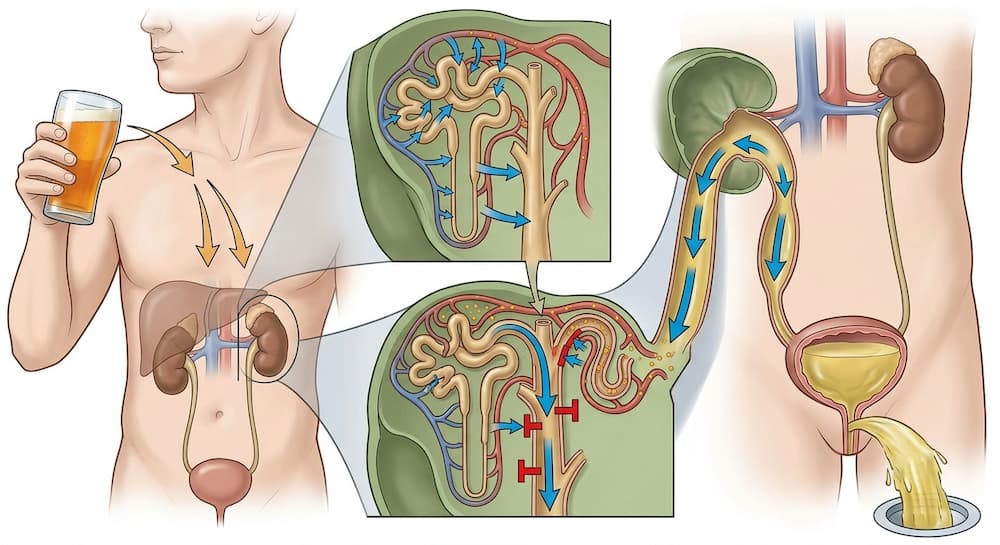
When alcohol paralyzes the brain’s control center, an immediate emergency occurs in the posterior pituitary gland. The secretion of an antidiuretic hormone called vasopressin drops sharply. As the name suggests, this hormone is the key guardian that prevents urine production and commands the body to reabsorb water back into the bloodstream.
Normally, our kidneys filter hundreds of liters of blood daily and absorb water efficiently, serving as gatekeepers 24 hours a day to prevent fluid shortage. Vasopressin is the only key that operates this precise reabsorption process. But what happens when alcohol enters the body and forcibly blocks the secretion of this hormone? The water reabsorption channels in the kidneys close tight.
Cells and blood desperately need hydration, yet the kidneys receive no commands from the brain. With reabsorption channels closed, the kidneys begin indiscriminately discharging vital water along with processed waste as urine. Remarkably, for every 1 gram of alcohol absorbed, approximately 10 milliliters of additional urine is generated. Drinking just one can of beer ends up flushing out far more than double the volume of liquid consumed.
Ultimately, the kidneys enter a rampant state, dumping necessary body fluids outside. As blood water levels rapidly deplete, the entire body enters a severe biochemical drought. With the hormone barrier protecting hydration completely collapsed, the kidneys forcibly squeeze out internal water.
3. Systemic Dehydration Driven by Acetaldehyde
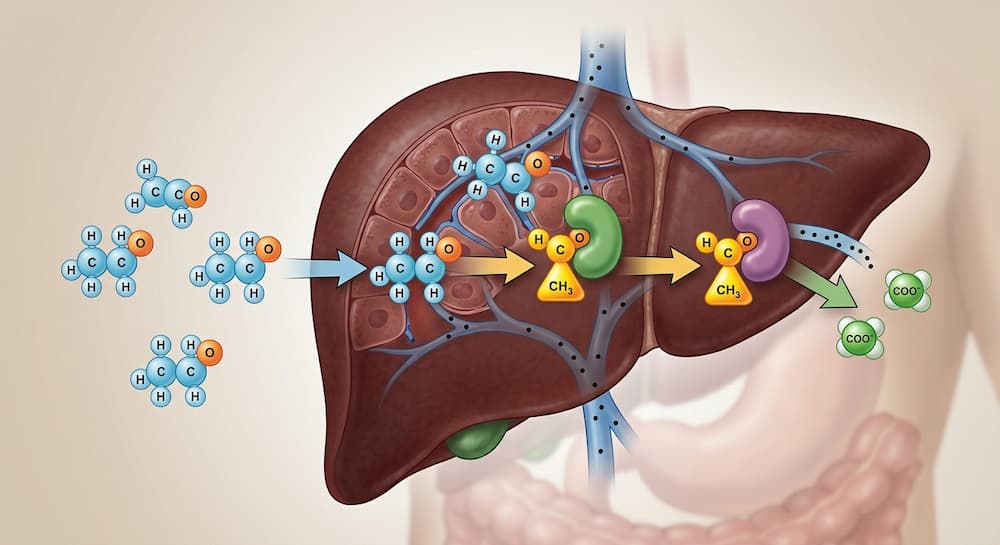
While alcohol expels water, another ticking time bomb starts running in the liver: acetaldehyde, a toxic substance created during alcohol breakdown. This compound is not only a major cause of hangovers, but also the primary culprit behind rapid systemic dehydration. Why is that?
The liver wage an all-out effort to quickly convert highly toxic acetaldehyde into harmless acetic acid. The problem is that this chemical breakdown process consumes an enormous quantity of water molecules. While water is already being lost through the kidneys, the liver draws remaining internal moisture directly into its breakdown factory.
That is not all. Acetaldehyde accumulating in blood vessels stimulates the autonomic nervous system, expanding systemic blood vessels. This is precisely why your face flushes and body heat rises during drinking. As blood vessels expand and body temperature climbs, the body continuously evaporates moisture into the air through skin surfaces and breathing to cool down.
Consequently, acetaldehyde consumes water in the liver while simultaneously stripping moisture through skin surfaces via elevated body temperature. Under this dual strain of toxin clearance and temperature regulation, cellular fluid reserves dry up entirely. Individual cells become thoroughly parched, worsening systemic dehydration further.
4. Causes of Xerostomia and Nighttime Thirst

Lying in bed at night after drinking, you have likely woken up multiple times to a scorching throat. Why does thirst intensify so drastically during sleep compared to daytime or right after drinking? The secret lies in the oral environment and salivary gland paralysis that occur overnight.
Alcohol stimulates the sympathetic nervous system and directly suppresses normal salivary gland function. Saliva acts as a protective shield that keeps the mouth moist and blocks bacteria. However, when alcohol paralyzes salivary gland cells, saliva production drops close to zero. Deprived of its protective barrier, oral mucosa becomes directly exposed and thoroughly dried out with every breath.
Furthermore, falling asleep intoxicated makes nasal breathing difficult because alcohol expands blood vessels, causing nasal mucosa to swell. With a blocked nose, mouth breathing occurs unconsciously. Air passing through the mouth during sleep completely strips away what little moisture remains inside.
Ultimately, the dual negative factors of halted saliva secretion and mouth breathing persist throughout sleep. With internal fluid reserves depleted and oral mucosa continuously exposed to dry external air, the brain transmits a powerful survival alarm near dawn. Waking up in the middle of the night searching for water is the body’s final desperate scream for survival.
Conclusion
The extreme thirst experienced the day after drinking alcohol is not merely a dry throat. It is a fierce survival cry issued by our body against a chemical substance called alcohol. A paralyzed brain water control system, kidneys leaking water, and the liver pulling massive amounts of moisture to decompose toxins demonstrate both the precision and vulnerability of our organism.
We often tip our glasses for pleasure and enjoyment, but during those moments, our internal organs struggle to squeeze out water and eliminate toxins. Perhaps this thirst is a severe debt owed to our body in exchange for fleeting pleasure. It is time to reflect on whether we too easily ignore this burning warning sent by our body to protect itself.
![[Bit#5] The Science of Drunk Munchies: Why Your Brain Craves Pizza at 2 AM](https://hiddenbitknowledge.com/wp-content/uploads/2026/04/5ac627532a2c-768x512.jpg)
![Why Do Your Fingers Wrinkle in Water? [Bit#177]](https://hiddenbitknowledge.com/wp-content/uploads/2026/10/mian-image-767x510.jpg)
![[Bit#16] The Red Flow of Life: The Past and Future Told by Blood](https://hiddenbitknowledge.com/wp-content/uploads/2026/04/bf7bc0b95bfd-768x429.jpg)
![[Bit#146] Why Coffee Makes You Urinate Frequently: Caffeine and Diuresis](https://hiddenbitknowledge.com/wp-content/uploads/2026/09/main.man-and-coffee-767x428.jpg)
![[Bit#173] Why Do Wounds Itch When They Heal?](https://hiddenbitknowledge.com/wp-content/uploads/2026/10/main.Healing-wound-768x419.jpg)
![[Bit#99] The Reality of Designed Babies in the Era of CRISPR Gene Editing](https://hiddenbitknowledge.com/wp-content/uploads/2026/07/main.CRISPR-Gene-Editing-768x526.jpg)