[Bit#171] The Scientific Wonder of Breast Milk and Secrets of Bioactive Molecules

Breast milk is not merely a source of nutrition. It is a living biological substance that interacts with an infant’s immune system. How does this perfect liquid, crafted by millions of years of evolution, protect a baby’s life and foster growth? In this article, we delve deep into the scientific secrets hidden within breast milk. This will be an opportunity to reflect deeply on the true value of breast milk, which transforms microorganisms, immune substances, and even a baby’s brain.
1. Breast Milk is a Collection of Living Cells, Not Just Simple Food
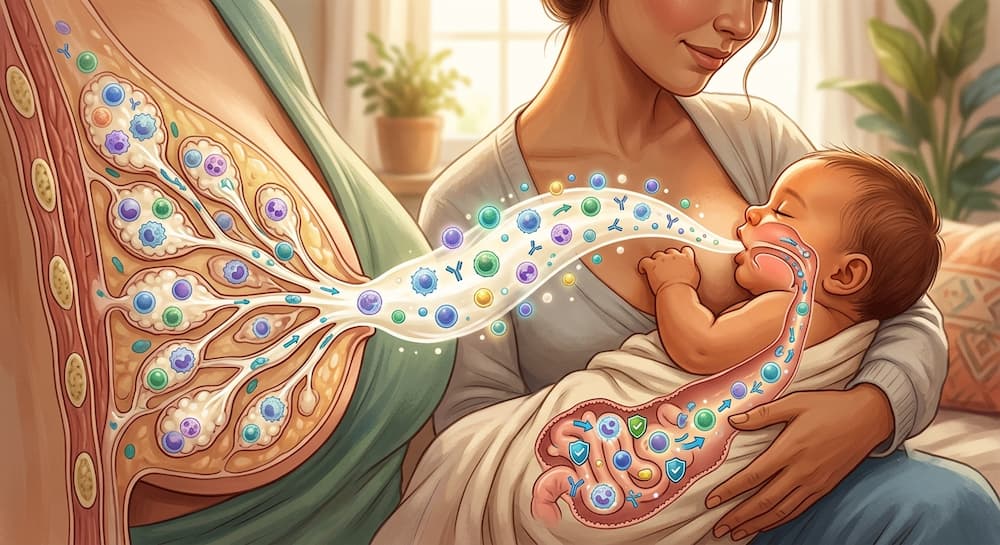
Can we define breast milk merely as a simple, perfect nutritional meal? In fact, breast milk is a living biological tissue itself, pulsating with vital energy. It is no exaggeration to view it as a form of liquid organ created in real time by the mother’s body for her baby.
In fact, a single milliliter of breast milk contains millions of active living cells tightly packed together. Where on earth did these numerous cells come from? They originate directly from the mother’s blood, bone marrow, and mammary gland tissues. Stem cells, along with immune-defending white blood cells and epithelial cells, blend together and flow straight into the baby’s mouth.
Particularly, the stem cells contained in breast milk demonstrate exceptional capabilities that astonish biologists. They safely withstand the baby’s strong stomach acid and digestive enzymes to pass through the intestinal barrier. Afterward, they move to major organs such as the baby’s brain, liver, bones, and pancreas, settling down as actual tissue cells of those organs. The mother’s bodily cells are reborn as core materials that directly construct the baby’s body.
The accompanying white blood cells also play a decisive role in protecting the baby’s life. They retain the memory of numerous pathogens that the mother fought and conquered in the past. These powerful immune cells patrol every corner of the baby’s intestinal interior, hunting down threatening bacteria directly. For a young baby whose own immune system is not yet fully developed, this is equivalent to sending the most reliable elite mercenaries.
In this way, breast milk is on a completely different level from infant formula produced by chemically combining ingredients in factories. Living cells reach the baby’s organs directly to reconstruct and actively protect the body. This is a direct exchange of biological matter between living beings, going far beyond simple nutritional supply.
2. A Tailored Immune System Whose Components Change Based on the Baby’s Condition
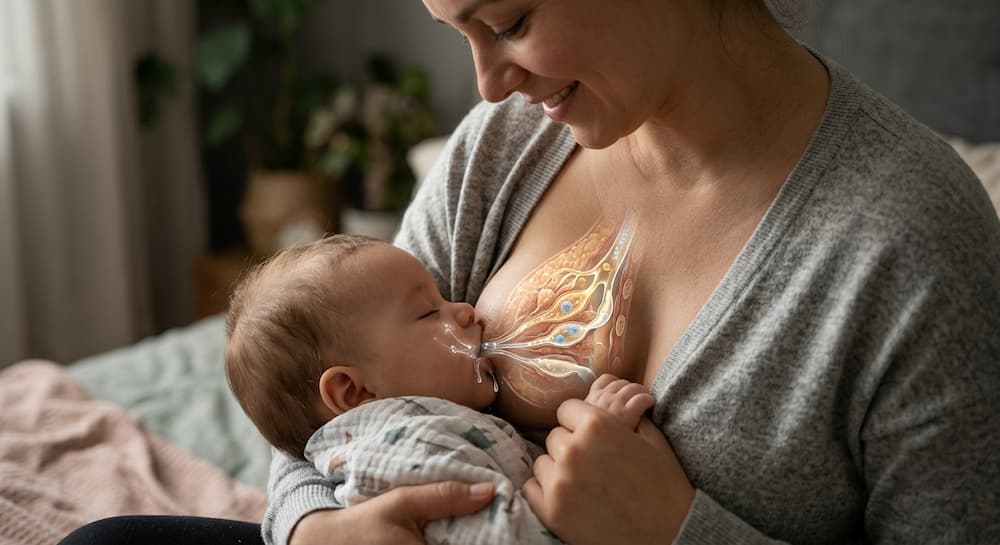
How does the mother’s body accurately perceive the baby’s health status in real time? Surprisingly, the very act of nursing the baby is a highly sophisticated bio-information exchange process. While the baby suckles on the mother’s nipple, various data contained within the baby’s saliva flows back minutely into the mother’s mammary glands. This saliva holds detailed data regarding the baby’s current body temperature, internal bacteria, and viruses, and the mother’s mammary gland tissue acts as a biosensor to detect it.
What happens if the baby becomes infected with an external virus or shows cold symptoms? Upon analyzing the baby’s saliva, the mother’s body immediately begins producing customized therapeutic substances. In just a few hours, it explosively increases and releases the levels of immunoglobulin A and white blood cells in breast milk. The mother’s body formulates custom antibodies that can immediately treat the baby’s illness and delivers them directly into the mouth. Such precise custom responses are a mystery of living organisms that is difficult to implement with any modern medical technology.
Not only that, but the composition of breast milk also changes completely depending on the time of day and night. Why is that? Breast milk secreted during the day is rich in cortisol, a hormone that increases the baby’s activity and stimulates the brain. On the other hand, at night, melatonin and nucleotide components that induce sleep and aid cellular recovery increase rapidly. The mother’s breast milk even serves as the safest natural sleep aid that naturally aligns the baby’s circadian rhythm.
3. Secrets of the Microbiome Determining Brain Development and Gut Microscopic Ecosystem
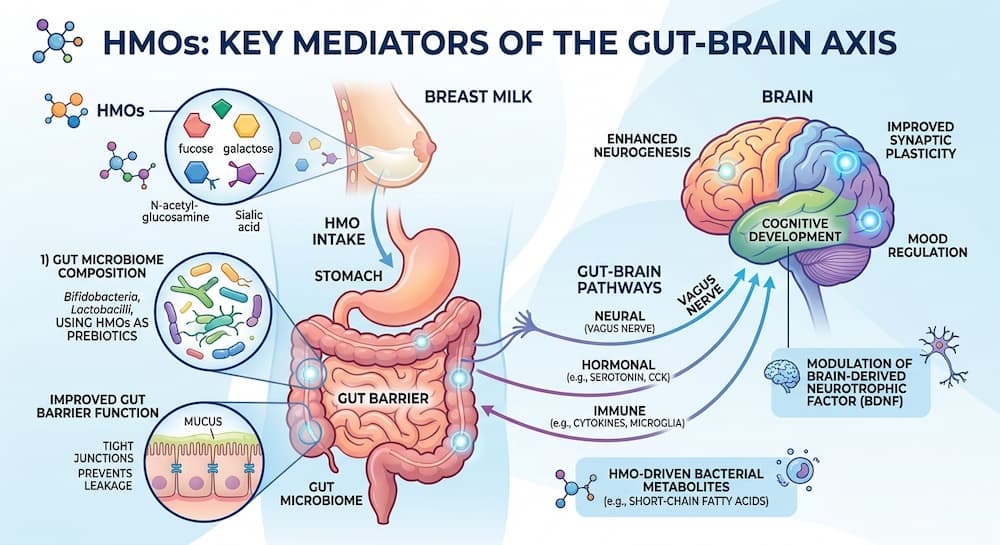
When is the ecosystem inside a baby’s gut formed? Surprisingly, the construction begins in earnest the moment the baby drinks the mother’s breast milk right after birth. Breast milk contains large amounts of unusual components that the baby cannot digest directly. These are Human Milk Oligosaccharides, or HMOs. Why does the mother produce components that the baby cannot even digest?
These oligosaccharides are not nutrients for the baby. They are food for Bifidobacteria, the beneficial bacteria that must reside in the baby’s gut. Beneficial bacteria that feed on HMOs densely cover the inner lining of the intestines. This leaves no room for harmful pathogens to attach, even if they enter. Through breast milk, the mother designs a perfect immune shield inside the baby’s gut.
An even more surprising fact is that this gut microbial ecosystem is directly connected to the baby’s brain development. Substances produced as microorganisms break down HMOs assist in the generation of neurotransmitters. The gut-brain axis, through which the gut and brain send and receive signals to each other, is activated through breast milk. This is why early microbiome formation has a continuous impact on the baby’s cognitive abilities and emotional stability.
Factory-made infant formula can hardly contain these complex and sophisticated HMO components as they are. Breast milk forms the baby’s gut microbial ecosystem from its roots. Furthermore, it perfectly performs even the foundational groundwork for brain development that determines a lifetime.
4. The Long-Term Epigenetic Switch of Breast Milk Impacting Adulthood
Do you think breast milk is a short-term nutritional supplement valid only during infancy? Not at all. The truly formidable power of breast milk manifests even after the baby grows into an adult. This is because it turns on the so-called epigenetic switch, which physically changes the way body genes operate.
Breast milk contains numerous tiny substances called microRNAs. These microscopic substances safely pass through the baby’s digestive organs and enter the interior of cells. Then, they directly regulate the baby’s gene expression. They act by turning off or on gene switches related to adult diseases such as obesity, diabetes, and high blood pressure. Why? It is akin to completing early programming so that the body maintains health for a lifetime.
In fact, children raised on breast milk have a significantly lower probability of developing metabolic syndrome when they become adults. Research results continue to be published showing higher IQ scores or reduced risks of cardiovascular disease. This is because the breast milk components experienced in infancy remain in the memory of cells for a lifetime, serving as a biological shield that operates throughout life.
This small drop of liquid delivered by the mother is a complete biological blueprint that determines the baby’s lifelong health. Beyond a simple single meal, shouldn’t it be considered the pinnacle of evolution that alters even the gene operation mechanism of the next generation?
Conclusion
Breast milk goes beyond being a simple nutritional source; it is an exquisite biological signal transmission system through which maternal vitality is delivered directly to the baby. From cellular migration to immune transmission, microbiome formation, and gene regulation, breast milk can be called the most perfect biotechnology possessed by humanity.
Then, can we artificially and completely replace this sophisticated and mysterious capability possessed by life? Or will breast milk remain a vast realm unique to nature that cannot be fully overtaken no matter how advanced technology becomes? We come to think deeply once again about this wondrous mystery that decorates the very first page of life.
![[Bit#135] Why Humans Can’t Synthesize Vitamin C: The Secret of Genetic Mutation](https://hiddenbitknowledge.com/wp-content/uploads/2026/08/main.eat-vitamin-c-pill-768x512.jpg)
![[Bit#8] The Secret Cloning War in Your Bathroom While You Sleep](https://hiddenbitknowledge.com/wp-content/uploads/2026/04/7e29f21bdd69-768x512.jpg)
![[Bit#88] Saliva Secrets: Predict Your Health with DTC Genes](https://hiddenbitknowledge.com/wp-content/uploads/2026/07/main.sariva-768x429.jpg)
![[Bit#48] The Margins of Survival: The Ultimate Environmental Limits for Human Life](https://hiddenbitknowledge.com/wp-content/uploads/2026/05/f83fe20b2c8c-768x432.jpg)
![[Bit#24] The Glucose Spike: A Silent Bombardment Destroying Your Body](https://hiddenbitknowledge.com/wp-content/uploads/2026/05/3d60887a0b05-768x512.jpg)
![[Bit#71] The Silent Youth Killer: How Salt Forcibly Accelerates Your Cellular Aging Clock](https://hiddenbitknowledge.com/wp-content/uploads/2026/06/main.salt_-768x512.jpg)