[Bit#172] Why Facial Expressions Change: Unconcealable Brain Signals
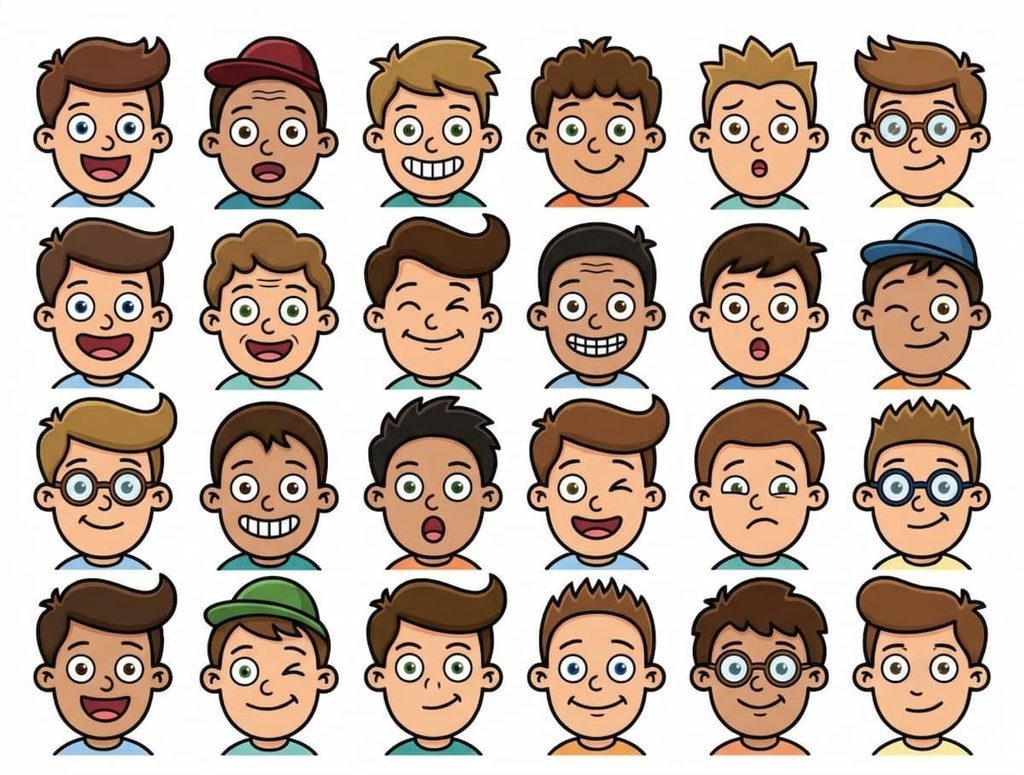
We unconsciously change our facial expressions dozens of times a day. In just 0.1 seconds, our facial muscles contract and reveal our internal emotions. Is a facial expression merely a passive display of feelings, or is it a sophisticated biological weapon that humanity developed for survival? Let us explore how subtle muscular movements connect directly to the central nervous system to govern interpersonal communication. We will dive into the bio-mechanisms hidden behind our instinct to read and react to the expressions of others.
1. The Biological Map of Emotions Created by Facial Muscles and Brain Nerves
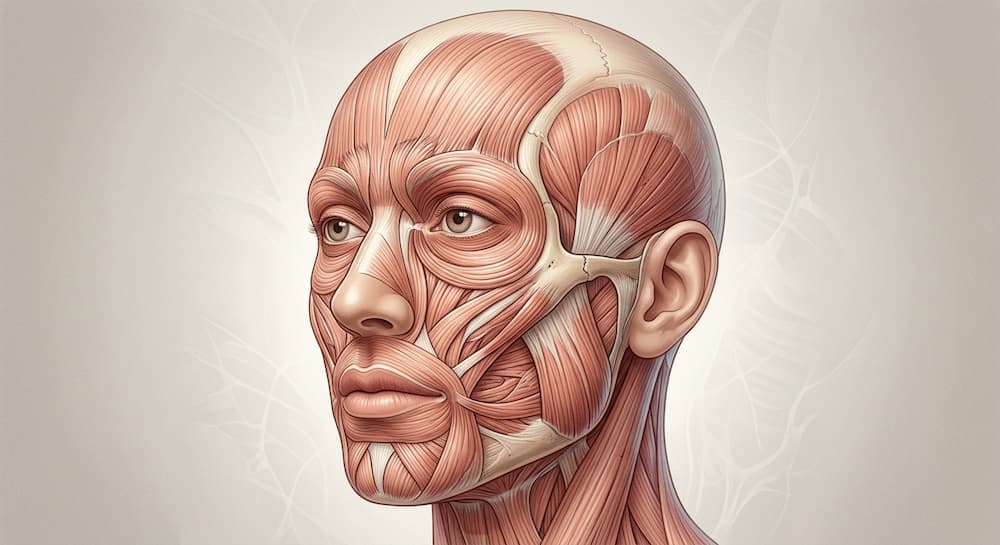
Over forty intricate muscles are densely intertwined within the human face. These small muscles combine to generate more than 10,000 distinct facial expressions. What is truly astonishing is that this complex transformation takes place in a mere 0.1 seconds. How can we alter our expressions so rapidly? The secret lies in a direct communication channel running between the facial muscles and the brain.
The movement of facial muscles is controlled by the seventh cranial nerve, commonly known as the facial nerve, which originates in the brainstem. The moment we experience an emotion, the limbic system in the brain immediately releases neurotransmitters. This signal travels along the facial nerve and spreads at lightning speed to numerous micro-muscles. The body responds before conscious thought can even intervene.
The most fascinating organ in this process is the amygdala. The amygdala functions as the threat detection system of the brain, processing primal emotions such as fear and joy. When stimulated by external triggers, the amygdala bypasses the rational judgment of the cerebral cortex and sends direct commands to the facial muscles. This explains why we instantly display a startled expression in emergencies without realizing it.
Facial expressions do not merely serve as an output monitor displaying internal feelings. In reverse, the physical movement of facial muscles sends signals back to the brain to alter emotions. This phenomenon is known as the facial feedback hypothesis. When you force the corners of your mouth upward, the brain misinterprets the action as a sign of genuine pleasure and secretes dopamine. The face and the brain are interconnected through a dynamic, bi-directional biological circuit.
2. Why Fear and Anger Expressions Increased Human Survival Odds

Why do we open our eyes wide and gasp with our mouths open during urgent moments? It is not simply to express our inner emotional state. Facial expressions served as the most sophisticated survival equipment developed by humanity to stay alive amid wild dangers. They represent biological adaptations designed to drastically increase visual input and accelerate physical reaction speeds.
When we experience fear, our face changes in an instant. The eyelids pull upward significantly, expanding our field of vision. Why is this? It allows us to detect hidden threats around us much faster. Simultaneously, the nasal passages dilate, allowing a greater volume of oxygen to flood into the lungs. The body rapidly prepares itself to either flee or fight.
Conversely, consider the expression of disgust when encountering spoiled food or a toxic environment. We squint our eyes, wrinkle our nose, and push our lips forward. This physically reduces the pathways through which harmful external toxins or microorganisms can enter the body. In ancient times, this acted as a powerful defense mechanism to protect life from contaminated food.
Expressions of anger are similarly linked directly to survival. We furrow our brows deeply and thrust our chin forward to expose our teeth. This sends a proactive warning signal that we are ready to attack at any moment. It operates as a highly cost-effective warning system that avoids unnecessary physical confrontation while defending territory. Human facial expressions are survival signals refined over millions of years of confronting predators.
3. Micro-Expressions of 0.05 Seconds Revealing Unconscious Truths and Lies

We all try to hide our true feelings from others. Even when panicked on the inside, we often pretend to stay calm and smile on the outside. However, a fleeting moment exists that even a master deceiver cannot fake. Why? It is because of micro-expressions that flash across the face in just 0.05 seconds. Why does our face betray our conscious control to expose the truth?
The secret lies in the dual neural path system of the brain. When we intentionally create a facial expression, we utilize the voluntary neural pathway controlled by the motor area of the cerebral cortex. Conversely, when genuine emotion erupts, the involuntary neural pathway operated by the limbic system deep within the brain opens up. Even as you try to construct a fake smile, the signal of real emotion sent by the limbic system strikes the facial muscles first during that brief fraction of a second.
The muscle that responds most honestly during this process is the orbicularis oculi, located around the eyes. Anyone can pull the corners of their mouth up at will to forge a fake smile. However, the orbicularis oculi, which creates fine wrinkles around the corners of the eyes, moves unconsciously only when experiencing genuine joy. Science calls this decisive difference between a forced smile and a real smile the Duchenne smile. An untrained individual can never artificially control the microscopic movements around the eyes.
Ultimately, micro-expressions serve as the most precise lie detector that humanity acquired through evolution. Language can easily be manipulated and distorted, but biological signals bursting from deep within the brain cannot lie. The ability to read minute muscle twitches within 0.05 seconds is a non-verbal weapon that enables us to discern intentions and detect threats in a complex society.
4. The Psychological Reversal Effect Through Neuroplasticity and Expression Control

Our facial expressions are not merely mirrors reflecting our emotions. Surprisingly, facial expressions can reverse roles and control the brain. The physical act of moving facial muscles directly triggers chemical changes within the central nervous system. This is the biological mechanism where somatic feedback determines emotional states.
When facial muscles form a specific expression, the seventh cranial nerve sends reverse signals back to the limbic system and the hypothalamus. When facial muscles contract to lift the corners of the mouth, the brain concludes that a pleasant situation is occurring. Consequently, the brain increases the secretion of dopamine and serotonin, which induce positive feelings. Simply altering your outer appearance can directly reconfigure inner neurochemistry.
This phenomenon links deeply to the principle of neuroplasticity in the brain. Neuroplasticity refers to the ability of neural circuits to reorganize themselves based on stimuli and experiences. When you intentionally practice bright facial expressions, the brain reinforces the neural pathways responsible for conveying positive emotions. As a result, levels of the stress hormone cortisol drop rapidly, bringing about psychological stability.
Facial expressions are not passive outputs of emotion, but powerful switches capable of actively manipulating your mood. Changing your expression when feeling depressed or anxious is not just a mood boost; it is a biological stimulus that rewiring your neural network. How you control your facial muscles completely transforms your brain state and the flow of your daily emotions.
Conclusion
Facial expressions represent the oldest and most refined biological language humanity has polished for survival. From micro-expressions lasting a mere 0.05 seconds to facial feedback that rewires neural circuits, our faces continuously exchange miraculous signals with the brain.
Was the facial expression you showed others today a true reflection of your heart, or an unconscious instinct manufactured by your brain? And what direction is the expression you are wearing right now guiding your brain toward?
![[Bit#3] The Scientific Reason Why You Were Born Sensitive](https://hiddenbitknowledge.com/wp-content/uploads/2026/04/Main.a-sensitive-personality-768x512.jpg)
![[Bit#5] The Science of Drunk Munchies: Why Your Brain Craves Pizza at 2 AM](https://hiddenbitknowledge.com/wp-content/uploads/2026/04/5ac627532a2c-768x512.jpg)
![[Bit#157] The Science of Autumn Foliage: The Biochemical Secrets Behind Leaf Color Changes](https://hiddenbitknowledge.com/wp-content/uploads/2026/09/main.Foliage-768x419.jpg)
![[Bit#50] The Great Survival Strategy of Plant Hormones](https://hiddenbitknowledge.com/wp-content/uploads/2026/06/64472267701f-768x419.jpg)
![[Bit#141] Why 98 Percent of DNA in My Body Remains Silent](https://hiddenbitknowledge.com/wp-content/uploads/2026/09/DNA-768x419.jpg)
![[Bit#47] Identical Twins: Copies of the Genome, Yet Completely Distinct Individuals](https://hiddenbitknowledge.com/wp-content/uploads/2026/05/82efd79e8b40-768x431.jpg)