[Bit#173] Why Do Wounds Itch When They Heal?
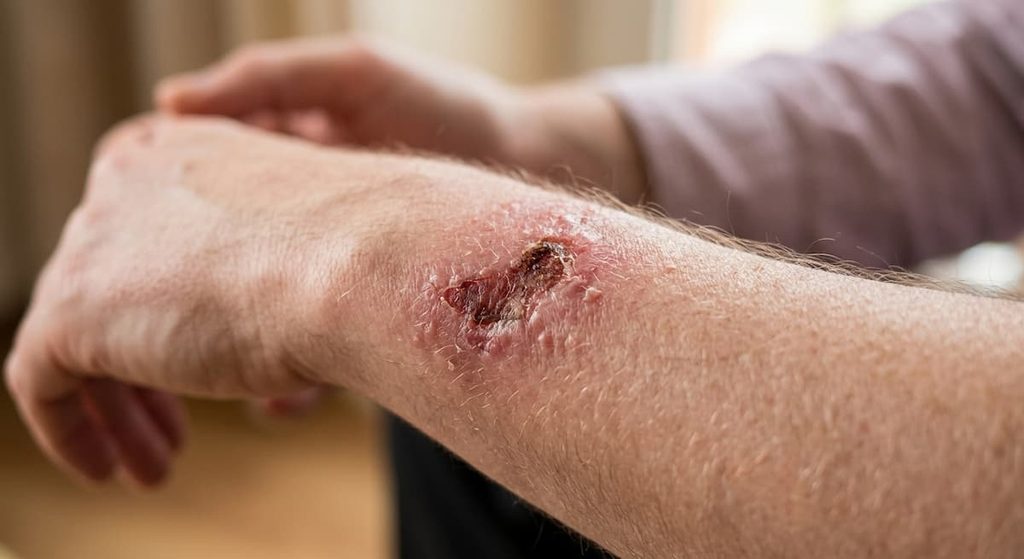
When a wound forms on the skin, an undeniable itching sensation follows after time passes. We analyze the cause of this phenomenon from a biological and physiological perspective. The healing signals we usually overlook are actually the result of intense cellular construction and neural stimulation. Through this, let us take a moment to look at the human body’s remarkable self-healing system in a new light.
1. Initial Wound Reaction and the Explosive Release of Inflammatory Substances
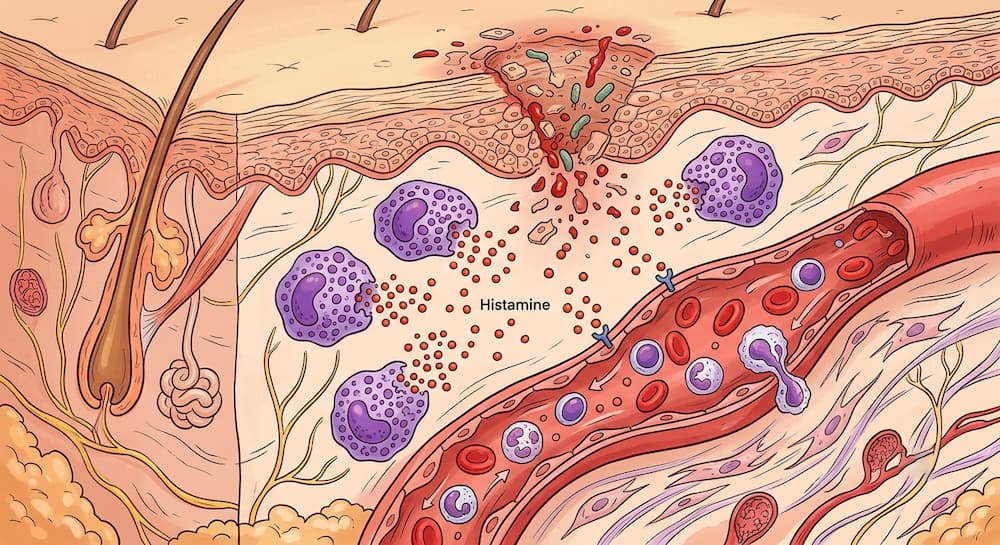
The moment you slice a finger, an immediate emergency is declared inside your skin. Damaged cells send distress signals in all directions simultaneously. The first sentinels to arrive at the scene are mast cells. These are a key type of white blood cell responsible for immune functions.
Mast cells explosively release a chemical called histamine to block the invasion of external pathogens. Why do they do this? Histamine plays the role of rapidly dilating the blood vessels around the wound. Blood vessels must expand so white blood cells and nutrients can travel through the bloodstream and reach the accident site quickly.
As the blood vessels swell, the wounded area turns red and puffy. This is the well-known inflammatory response. However, histamine’s role does not end with vascular dilation. It continuously stimulates the surrounding sensory nerve endings. It is a warning signal telling our body to pay attention because a problem has occurred. This chemical stimulation from histamine is the starting point of the first itch we feel.
Beneath the skin surface, sterilization and cleanup proceed simultaneously. White blood cells engulf pathogens and clear away damaged cell debris. Various cellular byproducts and cytokine substances generated during this fierce battle also continue to stimulate nerves. From the very early stages of healing, our skin relentlessly sends itching signals to the brain. The itch is proof that countess cells are fighting a desperate battle for the wound to heal properly.
2. Precise Chemical Signals Between Cells That Trigger Itching
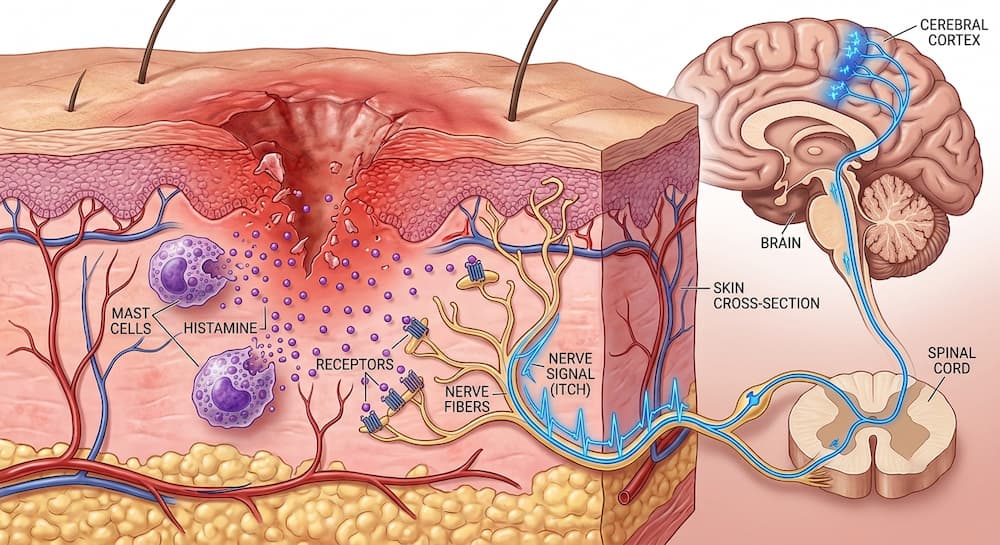
When histamine bursts forth from the wound site, the nearby sensory neural network immediately switches to an emergency system. The interesting fact is that the nerves operating at this time are completely different from those that process pain. Our body possesses a dedicated neural pathway that exclusively transmits itch signals.
Histamine released by mast cells binds to receptors located at the terminals of this dedicated nerve. It works on the principle of a precisely crafted key fitting into a keyhole. Once switched on, the nerve generates an electrical signal right away. This signal travels up the spinal cord pathway and reaches the cerebral cortex and thalamus regions of the brain in an instant. The moment the brain interprets this electrical stimulus, we finally perceive the sensation of itching. Why did such a dedicated neural pathway evolve?
An itch is not merely a mild discomfort. It is a powerful warning signal designed to force physical action for survival. If pain is a rejection signal telling us to step back from danger, an itch is a direct behavioral signal forcing us to brush off harmful foreign substances or parasites on the skin with our hands.
However, during the wound healing process, this precise chemical system creates a dilemma. Even while cells move busily to repair damaged tissue, chemicals keep pressing the nerve switch. The brain misunderstands that there are still foreign substances on the skin that need removal. Consequently, it issues a command to reach out and brush them off, subjecting us to an intense urge to scratch the wound. Ultimately, this precise chemical signaling between cells creates a tightrope walk between a biological response meant to heal the body and an urge to irritate the wound.
3. The Formation of New Tissue and Contracting Skin Fibers
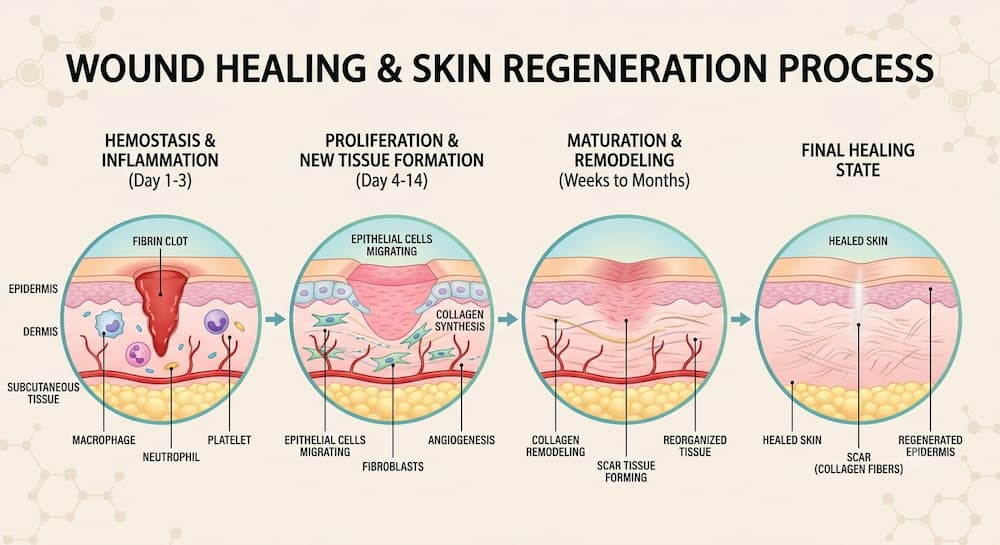
Once the initial inflammatory response subsides to some extent, the wound site enters a full-scale reconstruction phase. Specialized construction cells called fibroblasts are deployed in large numbers to fill the damaged skin. These cells spout collagen proteins that form the framework of the skin, rapidly filling in new tissue.
During this period, microscopic new blood vessels are created. As new tissue grows, pink and soft granulation tissue forms at the wound site. Dynamic physical changes occur at this intricate construction site. To reduce the wound size, fibroblasts transform into specialized cells and begin pulling the wound edges toward each other. Skin fibers contract as if pulling torn fabric closed with thread.
As skin tissue tightens, the dense web of sensory nerves underneath is physically compressed and pulled. A continuous mechanical stimulus is applied to the neural network. Nerves receiving this stimulus convert the physical pressure signal into an itching sensation and send it to the brain. Why does the brain perceive pressure as an itch?
This happens because it detects minute vibrations and tension in the deforming skin. Furthermore, newly growing micro-nerve endings have not yet formed a complete insulating sheath. Even tiny physical friction or tension changes cause the nerves to react hyper-sensitively, continuously flashing electrical signals. Consequently, during the peak of recovery when new tissue forms and the skin tightens firmly, the intensity of the itch we feel becomes even stronger.
4. Physical Stimulation and Distortion of Sensory Signals Sent to the Brain
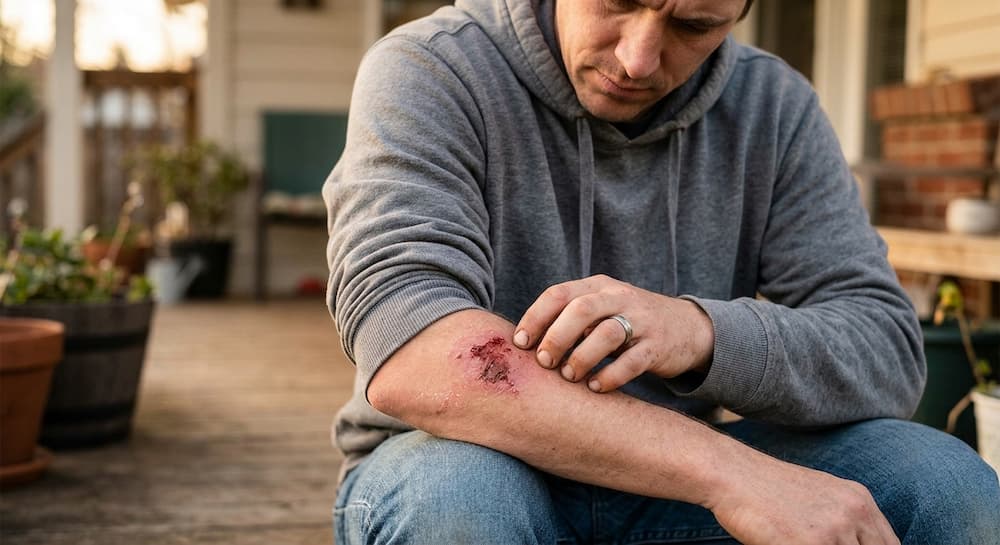
As the wound heals, internal tissue movement is not the only thing bothering us. The hard scab covering the wound surface is also a powerful itch trigger. The scab acts as a protective shield, preventing moisture evaporation and blocking external bacteria. However, as skin tissue gradually contracts, the edges of the scab pull on the healthy surrounding skin.
The physical friction and tension generated at this point continuously transmit micro-vibrations to skin nerves. As the wound dries, the scab becomes even harder. As the physical gap between the soft new tissue underneath and the hard scab on top widens, sensory nerves receive stronger friction signals.
The brain’s misconception compounds this effect. Our brain cannot accurately distinguish between physical pressure and friction signals coming from the wound site. It simply judges the light stimuli sent by new nerves as an external parasite or foreign object clinging to the skin. Why? Because throughout human evolution, microscopic sensations felt on the skin were mostly caused by dangerous insects or foreign objects.
Ultimately, the brain issues a mistaken command to scratch the area and remove the foreign object, even though it is actually just a physical signal of internal tissue being diligently rebuilt. The unbearable itch we feel is a joint product of physical stimulation from recovering skin fibers and the brain’s sensory confusion mistaking it for a threat.
Conclusion
The itch felt when a wound heals is paradoxically proof of how fiercely our body is fighting to repair itself. Even the unpleasant signal of an itch is, in reality, a living wave of life sent as damaged nerves and tissues assemble themselves back together. What, then, is the meaning of the itching sensation that follows the emotional wounds and pain in our lives? Perhaps the disorientation and impatience we feel while emotional pain heals are also part of a healing process, where new flesh grows on our souls as we adapt to a new chapter of life.
![[Bit#131] Elephant Cancer Resistance: The Giant Organism with Dozens of Cancer Suppressor Genes](https://hiddenbitknowledge.com/wp-content/uploads/2026/08/main.-Elephant-767x428.jpg)
![[Bit#109] Aspirin: How Science Turned Toxic Willow Bark into Medicine?](https://hiddenbitknowledge.com/wp-content/uploads/2026/07/main.Aspirin-768x432.jpg)
![[Bit#87] Why Cavities Are the Price of Human Evolution](https://hiddenbitknowledge.com/wp-content/uploads/2026/07/main.Cavities-768x512.jpg)
![[Bit #155] The Secret of Unihemispheric Sleep: Why Some Animals Sleep with Half Their Brains](https://hiddenbitknowledge.com/wp-content/uploads/2026/09/mian.sleeping-768x419.jpg)
![[Bit#149] The Hidden Cytotoxicity of Oxidized Vegetable Oils in the Human Body](https://hiddenbitknowledge.com/wp-content/uploads/2026/09/main.oxidation-oil-768x419.jpg)
![[Bit#5] The Science of Drunk Munchies: Why Your Brain Craves Pizza at 2 AM](https://hiddenbitknowledge.com/wp-content/uploads/2026/04/5ac627532a2c-768x512.jpg)