[Bit#80] Science of Happiness: What Is It from a Scientific Approach?

Introduction
We constantly pursue happiness. But why does happiness always seem just out of reach, vanishing so quickly? Neuroscience explains that happiness is actually a survival tool designed by evolution. In this article, we will uncover the mechanism of dopamine, which triggers pleasure, and serotonin, which brings tranquility. We will also trace the incredible pathway through which gut microbes regulate our mood. Furthermore, we share scientific approaches to overcoming genetic limitations and rewiring brain circuits.
1. The Battle for Dominance Between Dopamine and Serotonin: The Balance of Pleasure and Stability
We feel intense joy when we eat delicious food or get our hands on an object we have desperately wanted. At that exact moment, a neurotransmitter called dopamine is explosively released inside our brain. Dopamine stimulates the reward circuit of the brain, acting as the main character that grants us a sense of achievement and pleasure. The powerful energy that drives us to accomplish something originates precisely from this mechanism.
However, the happiness provided by dopamine possesses a fatal flaw. Why is that? It is because the expiration date of the pleasure induced by this substance is shockingly short. Our brain adapts to stimuli at an incredibly fast rate. Once it experiences a strong stimulus, the brain begins to crave only greater stimuli. A phenomenon occurs where the baseline for feeling satisfaction itself rises entirely. Ultimately, a life relying solely on dopamine calls forth an unquenchable thirst, and furthermore, traps us in a dangerous cycle of addiction.
Right at this timing, our body requires another relief pitcher. It is serotonin, which brings peace and stability to the mind. Serotonin calms down rapid fluctuations in emotion and helps us feel satisfaction in trivial daily life. An interesting fact is that serotonin performs the role of a powerful brake that controls the reckless runaway of dopamine. If dopamine is an accelerator rushing forward, serotonin is, in essence, a safety device that regulates the speed.
In the end, the true happiness we feel is determined by the precise balancing act created by these two substances. If dopamine alone runs excessively wild, humans suffer from anxiety and obsession. Conversely, if the brain is filled only with serotonin, the dynamism and progress of life may disappear, leaving us lethargic. This fierce battle for dominance between the two hormones inside the brain is the real cause that determines our daily mood and long-term quality of life.
2. Mood Regulated by Gut Microbes: Happiness Signals from the Second Brain
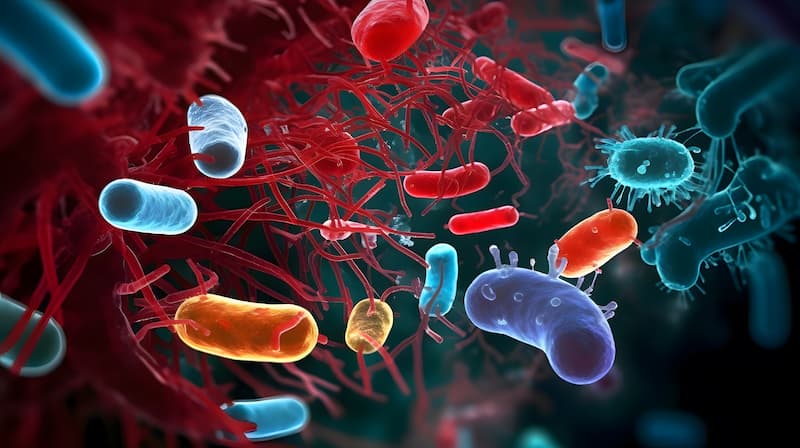
We often believe that emotions like happiness or depression are created exclusively within the brain inside our head. However, this is a completely incorrect idea biologically. Our digestive organs, especially the gut, are a massive command center that sways human mood. Numerous scientists refer to the gut by the nickname of the second brain. The gut and the brain are directly connected by a massive highway network called the gut-brain axis. It means they exchange hundreds of millions of signals in real-time through the vagus nerve without resting for even a single second.
In fact, looking at the distribution of serotonin, the core neurotransmitter that makes us feel happiness, the data is highly shocking. About 90% of the total serotonin is produced not in the brain inside our head, but right in our gut. The brain merely manufactures and uses a meager 5% or so of serotonin directly. Then, how can the gut produce such an immense amount of the happiness hormone? Why is that? The secret is hidden within the microbiome, the ecosystem of tens of trillions of gut microbes living in dense colonies inside the gut.
The food we eat every day completely changes the survival environment of gut microbes. When we frequently consume dietary fiber, which is abundant in vegetables, or traditional fermented foods, beneficial bacteria in the gut multiply fiercely. These beneficial bacteria produce substances called short-chain fatty acids during the process of breaking down food. When these substances stimulate the cells in the gut wall, the cells explosively synthesize and release serotonin into the bloodstream and nervous network. This is the exact reason why our mind feels comfortable and our mood improves when we eat healthy food.
Conversely, what happens if we excessively enjoy processed foods or instant meals filled with sugar? Harmful gut bacteria multiply at a frightening speed, and the balance of microbes collapses in an instant. Toxins spewed out by harmful bacteria cause microscopic inflammation in the gut wall and shut down the factory that creates serotonin. This devastating signal that the gut environment has been devastated is transmitted intact to the brain along the gut-brain axis. The phenomenon where we suddenly feel down, turn irritable, or become engulfed in anxiety without any clear reason is actually an SOS signal sent by the microbes inside our gut.
3. Happiness from an Evolutionary Perspective: Why Are Humans Constantly Dissatisfied?

Why do we quickly feel another craving even when we move to a slightly larger house or achieve our desired annual salary? The human brain is originally designed that way. Evolutionary biology explains this as an essential device for survival. A clear answer emerges when we recall the environment of primitive humans tens of thousands of years ago. What would have happened if a certain human felt perfect happiness and satisfaction from just a single successful hunt and rested eternally inside a cave? Why is that? That human would have starved to death while delaying the next hunt, or would have vanished from the earth after being attacked by a wild beast.
Our ancestors were individuals who were constantly anxious and dissatisfied. Only the humans who worried about tomorrow’s starvation even after filling their stomachs once, and went out to the hunting ground again, survived to pass down their genes. Scientists call this phenomenon the hedonic treadmill. Just like a treadmill where you ultimately stay in the same place no matter how much you run and run, humans return to their original emotional baseline after feeling happiness for only a very brief moment, no matter what achievement they attain.
This is not because we are unhappy, but because it is a survival instinct programmed by evolution. The emotion of dissatisfaction itself acts as a powerful evolutionary engine that keeps humans constantly moving. The real reason we cannot experience eternal satisfaction is due to the command of evolution inside our body to prevent laziness and preserve genes. Ultimately, endless craving is not evidence of deficiency, but the most certain evidence that humanity has survived.
4. Neuroplasticity and Happiness Training: Scientific Methods to Change Brain Circuits

If happiness is determined by genetics and evolution, must we live unhappily for the rest of our lives? Fortunately, the human brain is not fixed concrete. One of the greatest discoveries uncovered by modern neuroscience is neuroplasticity. Neuroplasticity refers to the property where the neural circuits of the brain constantly change and rewire themselves according to experience and learning. To put it simply, it means that the physical structure of the brain itself changes depending on what thoughts we focus on frequently.
When we focus on complaints and anxiety every day, the brain builds the related neural highways more solidly. It transforms into a brain that gets annoyed easily even over small matters. Then, conversely, what happens if we intentionally focus on gratitude and positive emotions? Why is that? The brain detects that signal and begins to thickly expand the synaptic connections of the positive circuit. The act of writing a gratitude journal or meditating regularly every day is not mere mind management. It is a scientific muscle workout that physically exercises the happiness circuits inside the actual brain.
In this process, the secretion of cortisol, the stress hormone, decreases sharply, while the secretion of serotonin and endorphin increases. Through repetitive training, the mood baseline of the brain itself can be adjusted upward. Happiness is not a genetic byproduct one is born with, but a skill that can be mastered through acquired practice. The direction of thoughts we choose every day ultimately determines tomorrow’s brain structure and becomes the key to creating true happiness.
Conclusion
In the end, the happiness that science speaks of is not a mirage of vague emotion. It is a precise balance of hormones, a signal sent by gut microbes, and a physical result created by brain circuits. Our body and mind have constantly evolved, learning dissatisfaction for the sake of survival. However, humanity has also inherited the potential to rewire our own brains through the great weapon called neuroplasticity.
What signals are we listening to at this very moment? The food we eat every day and the thoughts we carelessly toss around are changing our brain structure in real-time. Perhaps true happiness does not mean reaching a perfect state, but rather the dynamic journey itself of constantly conversing with the chemical substances inside my body to find my own balance. Which signal of happiness is your brain tuning today?
![[Bit#6] Why You Are Addicted to Smartphone Dopamine: The Science of Digital Traps](https://hiddenbitknowledge.com/wp-content/uploads/2026/04/d0c5451a8a58-768x512.jpg)
![[Bit#92] Autonomic System Reset: The Science of Restoring Your Body’s Balance](https://hiddenbitknowledge.com/wp-content/uploads/2026/07/main.Autonomic-system-768x357.jpg)
![[Bit#41] The Mystery of the Eye: Human Megapixels and Animal Vision](https://hiddenbitknowledge.com/wp-content/uploads/2026/05/35a56faed904-768x500.jpg)
![[Bit#147] The Spicy Illusion: Why Does the Brain Mistake Pain for Pleasure?](https://hiddenbitknowledge.com/wp-content/uploads/2026/09/main.eat-spicy-food-768x496.jpg)
![[Bit#37] Why Do Brilliant Ideas Suddenly Pop Up in the Shower?](https://hiddenbitknowledge.com/wp-content/uploads/2026/05/72e6c17b538b-768x419.jpg)
![[Bit#13] Blessing or Curse? The People with the “Pain Switch” Turned Off](https://hiddenbitknowledge.com/wp-content/uploads/2026/04/5ab74558154b-768x512.jpg)