[Bit#79] Electricity Conducting Bacteria: Earth’s Hidden Battery
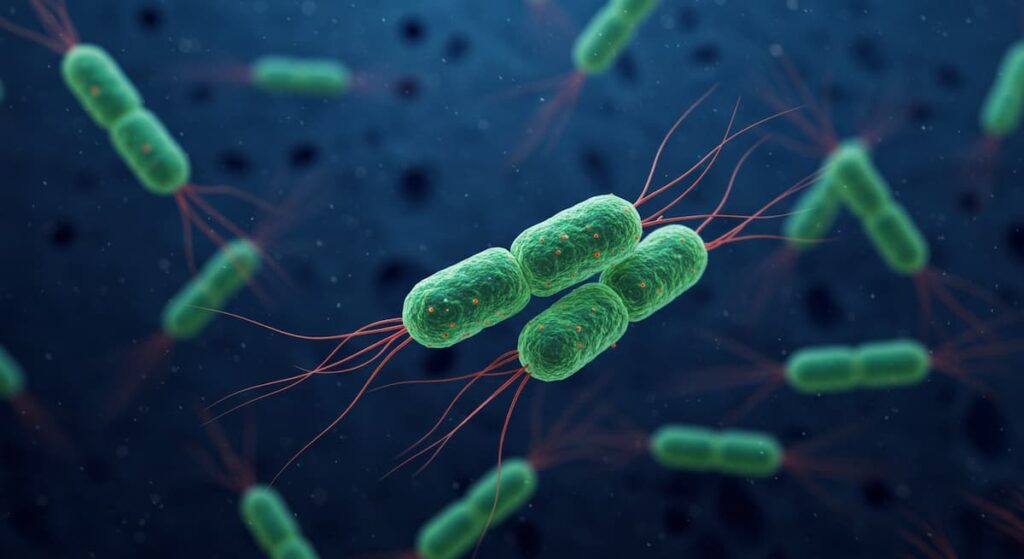
1. Living Wires: How Bacteria Generate Electricity

Incredible secrets are hidden deep within the soil. Mystifying living organisms exist that allow electricity to flow naturally without a single copper wire. These are bacteria known as Geobacter. It sounds unbelievable that microorganisms can directly produce and transport electricity. However, they possess incredibly microscopic nano-wires densely packed across their body surfaces. Protein filaments tens of thousands of times thinner than a human hair wrap around their entire bodies. Scientists officially refer to this structural marvel as microbial nanowires.
Humans generate vital life energy by consuming food and breathing. Human cells utilize a system that transfers remaining electrons to oxygen during this metabolic process. This is the exact reason why we must breathe every single moment. However, deep within the soil or inside riverbed mud, oxygen is completely non-existent. Without oxygen, energy metabolism halts instantly, and cells inevitably die.
These bacteria discovered a brilliant alternative pathway to survive in such extreme environments. Instead of relying on oxygen, they chose a method to dump electrons directly onto solid metals like iron, manganese, or surrounding soil minerals. Metal essentially takes over the functional role of oxygen.
The specific tool for this process is the protein nanowire growing outside their bodies. Electrons generated from metabolic activities inside the cell flow outward along these wires. A flawless circuit is established where electric current flows externally, exactly like a human-made battery. The living organism itself becomes a moving wire and a functional power plant.
In reality, the electricity they produce is a minute amount, yet a continuous current is clearly measurable with scientific equipment. Electric conduction, which we believed was only possible through advanced human technology, was actually a survival mechanism of natural microorganisms existing for hundreds of millions of years. Why did they select such a peculiar evolutionary path? It is a wondrous and desperate survival strategy of life to endure a harsh, anoxic environment.
2. Breathing Without Oxygen? Eating Metal and Spitting Electricity

Can you imagine a living being that survives without breathing? For Geobacter bacteria, this is a completely ordinary routine. They live in a fundamentally different manner compared to humans who perform oxygen respiration. Surprisingly, their targets for respiration are solid metals rather than gases. Rusty iron or manganese chunks scattered in the soil serve as their breathing pathways. How exactly do they breathe using solid metals?
The secret lies within the unique structure of their electron transport system. Humans break down nutrients inside cells to create electrons, eventually binding them to oxygen to expel them as water. Conversely, Geobacter must push electrons directly outside the cell membrane. They deliberately press their entire bodies against metal surfaces. Then, they shoot electrons from inside the cell directly onto the metal surface. The moment the metal accepts the electrons, one complete respiratory cycle of the bacterium ends flawlessly.
During this process, the properties of the metal alter completely through chemical reactions. Solid iron oxide compounds absorb electrons and gradually transform into soft, magnetic minerals. It is virtually identical to an alchemist carving rocks and melting stones through microbial activity.
What happens if the available metal nearby becomes insufficient? Geobacter individuals weave their bodies together to form a massive network. They connect their own nanowires to the wires of neighboring bacteria. The entire microbial community links together like a giant electrical circuit network. It is a stunning survival method where they use their peers as bridges to transmit electricity to distant metal chunks.
Consequently, they utilize metal as a giant electron trash can to acquire vital energy. The sight of them emitting electric currents by relying on solid metals deep within a harsh, oxygen-free Earth forces us to reconsider the true definition of life.
3. Microbes Saving the Earth: Natural Batteries Cleaning Pollutants
These peculiar, electricity-spitting microorganisms do not merely exist as a scientific novelty. They are gaining immense attention as saviors to resolve environmental pollution caused by humanity. They exhibit exceptional capabilities in purifying toxic heavy metals mixed in industrial wastewater or groundwater. When highly toxic water-soluble uranium or arsenic penetrates the soil, extracting it through human effort becomes exceptionally difficult. When Geobacter is introduced, a miraculous event occurs.
The underlying principle is straightforward. These bacteria continuously hurl electrons through their nanowires toward toxic heavy metals. The heavy metals accept these electrons, trigger a chemical reaction, and transform into a solid form insoluble in water. Toxic substances spreading everywhere along groundwater currents freeze in place. It serves as a flawless, natural purification device where microorganisms capture and isolate pollutants without humans needing to excavate the earth.
It does not stop there. Utilizing their electricity-generating capacity allows us to achieve environmental purification and energy production simultaneously. This is known as microbial fuel cell technology. Sewage or livestock wastewater is packed with organic pollutants. When Geobacter consumes and breaks down these organic matters, a vast quantity of electrons is generated. Capturing these electrons and directing them through a circuit purifies the contaminated water while producing usable electricity.
A brand-new world opens up where we obtain eco-friendly electricity using pollutants as fuel, without burning waste or relying on nuclear power. Microorganisms that once hid in riverbed mud spitting electrons are now transforming into the cleanest energy sources to prevent environmental disasters. Why must we focus on the movements of these tiny creatures? They are the perfect, clean batteries hidden by nature to heal itself.
4. The Future of Bio-Computers: Erasing the Boundary Between Life and Machines

The nanowires possessed by Geobacter are now reshaping advanced human IT technology. Scientists discovered that these microbial protein wires hold far superior potential than human-made silicon semiconductors. The era of bio-computers, where computers are manufactured using components of living organisms, is rapidly becoming a reality.
The greatest advantages are overwhelming efficiency and eco-friendliness. Current electronic components consume massive amounts of energy and emit toxic chemicals during manufacturing. In contrast, microbial nanowires grow and multiply entirely on their own as long as water and nutrients are provided. Furthermore, these biological wires operate flawlessly even in extreme, moisture-rich environments, transmitting signals with minuscule amounts of power. No better material exists for ultra-small medical sensors or biochips implanted inside bodies.
Recently, research has been underway to develop neuromorphic chips that mimic human neural networks by arranging these nanowires on silicon substrates. The analog method through which bacteria exchange electrons is incredibly similar to the operational principles of synapses in the human brain. The boundary between machines and living organisms is literally collapsing.
Human technology has constantly advanced by imitating nature. However, we have now progressed beyond mere imitation to directly assembling components created by living, breathing microorganisms inside machines. Perhaps future supercomputers will operate by culturing bacteria inside nutrient solutions rather than plugging into electrical outlets. Tiny microbes in the soil are becoming a massive key to completely transform the digital future of humanity.
Conclusion
Ultimately, electricity-conducting bacteria pose fundamental questions regarding life and technology. We have always strictly separated living things from non-living things, and nature from machines. Yet, in front of microorganisms that extend wires to communicate with metals, we realize those boundaries were merely artificial lines drawn by humans.
Could the planet Earth itself be a singular, massive electrical organism? The realization that electricity and computers, which humans proudly claimed as advanced technology, were actually survival laws completed by mud microbes billions of years ago inspires a strange sense of awe. How far should we extend the definition of life in front of these tiny batteries?
![[Bit#105] Forensic Genetics: Reconstructing Suspect Faces and Biological Traits from a Single Cell](https://hiddenbitknowledge.com/wp-content/uploads/2026/07/main.DNA-tracing-technology-768x544.jpg)
![[Bit#47] Identical Twins: Copies of the Genome, Yet Completely Distinct Individuals](https://hiddenbitknowledge.com/wp-content/uploads/2026/05/82efd79e8b40-768x431.jpg)
![[Bit#146] Why Coffee Makes You Urinate Frequently: Caffeine and Diuresis](https://hiddenbitknowledge.com/wp-content/uploads/2026/09/main.man-and-coffee-767x428.jpg)
![[Bit#151] The Science of Shock Absorption in the Jaw Joint When Chewing Hard Food](https://hiddenbitknowledge.com/wp-content/uploads/2026/09/main.eat-meat-768x419.jpg)
![[Bit#9] Why We Must Die: The ‘Expiration Date’ Chosen by Evolution](https://hiddenbitknowledge.com/wp-content/uploads/2026/04/0348b8923730-768x585.jpg)
![[Bit#141] Why 98 Percent of DNA in My Body Remains Silent](https://hiddenbitknowledge.com/wp-content/uploads/2026/09/DNA-768x419.jpg)