[Bit#86] Chameleon’s Real Secret: Color Change is Not for Camouflage
Introduction
We often believe that chameleons change their body color to hide in their surroundings. This is the concept of camouflage, where they turn green in the grass and brown on a branch. However, this is a massive misunderstanding. Recent biological research reveals that their color change is not for hiding, but rather a means to express themselves. This article explores the remarkable communication methods of chameleons that shatter conventional wisdom, along with the nanotechnology hidden within them. Moving beyond the human perspective of judging solely by appearances, what is the true message of nature?
1. The Reality of Chameleon Color Change: Unmasking the Myth of Camouflage
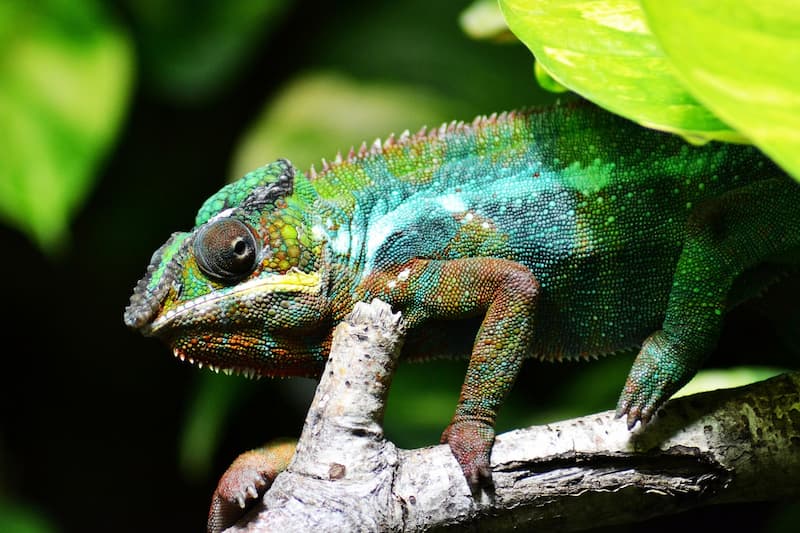
We commonly believe that chameleons change their body color to blend into their environment. People marvel at how they turn green in green bushes and brown on brown branches, praising it as perfect camouflage. However, this is a huge misconception driven by a human-centered perspective, which contradicts actual biological facts. The resting green or brown colors are simply the default skin tones displayed when a chameleon is in a relaxed state. The true color change of a chameleon is not a disguise to hide itself. It is a visual means of communication to boldly display its presence regardless of the surrounding environment.
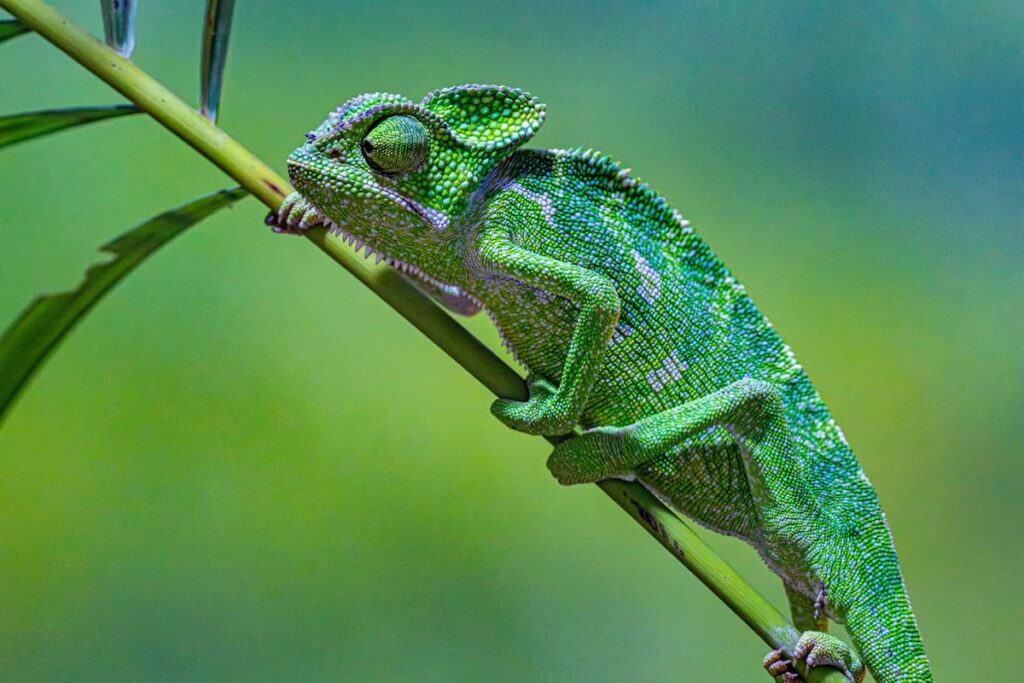
Why did we develop this misunderstanding? The primary habitats of chameleons are trees and bushes. Their default skin color when resting peacefully happens to match the surrounding environment, such as green or brown. The chameleon does not actively alter its color to fit the background; it merely maintains its original default tone. Yet, to human eyes, it appears as though the creature has dynamically transformed to match its surroundings. In reality, when a predator appears, chameleons do not change their color to blend in. Instead, they physically conceal their bodies behind branches.
Ultimately, the changing skin color of a chameleon is not a camouflage suit for hiding. It is a brilliant language used to communicate its internal state to others while defying the surrounding background. The concept of camouflage that we have taken for granted is nothing more than a distorted frame created by human observation.
2. Secrets Beneath the Skin: Nanocrystals and the Magic of Light
The mechanism behind how chameleons change color remained a mystery for a very long time. In the past, scientists believed that chameleons changed color by expanding or contracting pigment sacs within their skin, much like octopuses or squids. It was argued that they regulated skin color by moving these pigments. Why was this the case? The technology of that era was insufficient to observe the microscopic structures of chameleon skin. However, modern nanotechnology has finally unlocked this secret. The color change of a chameleon is not caused by the movement of pigments. It is a physical alteration of structural components that reflect light.
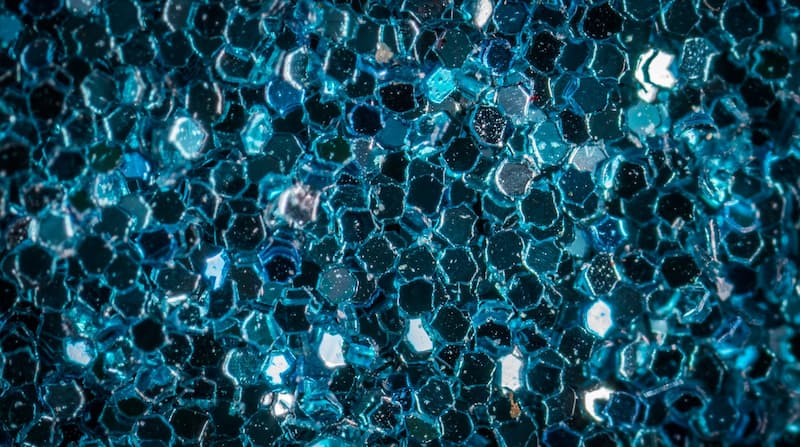
The secret lies deep within the skin cells of the chameleon. Chameleon skin contains structural color cells called iridophores. Inside these cells, tiny nanocrystals are packed tightly in a grid-like lattice. These nanocrystals do not emit light on their own. They merely reflect the light entering from the outside world. What happens when a chameleon tightens or relaxes its skin? The spacing between these nanocrystals changes. This structural shift in spacing is the ultimate key to the phenomenon.
When the spacing between the nanocrystals is narrow, they reflect blue light, which has a short wavelength. At this time, the blue light mixes with the yellow pigments in the skin cells, making the chameleon appear a peaceful green to our eyes. Conversely, when a chameleon becomes excited and stretches its skin tight, the distance between the nanocrystals widens. As the gap increases, the skin begins to reflect yellow, orange, and red light, which have longer wavelengths. Consequently, chameleons are masters of nanophotonics, freely controlling the physical gaps of nanocrystals inside their skin to bend light.
3. Traffic Lights of Emotion: How Chameleons Communicate
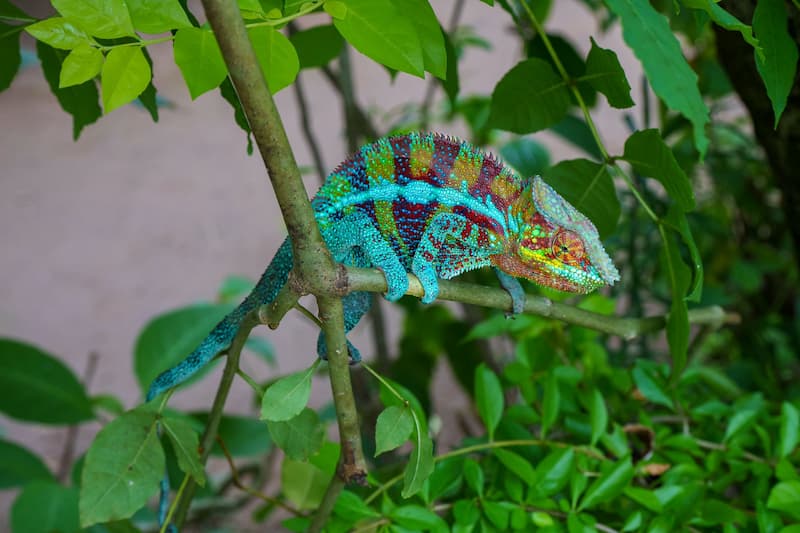
The brilliant color changes of chameleons are strictly tools for communication. Their skin functions like a real-time traffic light that displays internal emotions. Why is this? Chameleons cannot make vocal sounds to cry out. Instead of using a voice, they alter their entire body color to converse with others. As their emotions become more intense, their skin tone shifts dramatically, completely independent of the background environment.
The most fierce conversations occur when males engage in territorial battles. A chameleon that was peacefully green will instantly turn into a fiery red or bright yellow upon confronting a rival. Even though the surrounding foliage is green, the chameleon shines alone in red and yellow. This serves as a powerful warning declaring its presence and telling rivals not to approach. It intimidates opponents by displaying a striking color that is visible from a distance. The individual that loses this visual battle of nerves dampens its color to a dark, muddy brown. This is a submissive signal indicating defeat and surrender.
The skin also moves quickly when attempting to attract a desirable mate. To catch the attention of a female, the male displays highly seductive patterns like neon blue or fluorescent hues across its entire body. This is an active courtship display proving its health and strength. During this exchange, the female responds through color as well. If she is already pregnant or dislikes the courtship, she changes her body to a very dark or uniquely hostile warning color. This is a clear refusal telling the male not to approach. For chameleons, color change is not a tool for survival through hiding, but a direct and brilliant language to shout their emotions to the world.
4. Thermoregulation for Survival: Skin that Cycles Between Hot and Cold
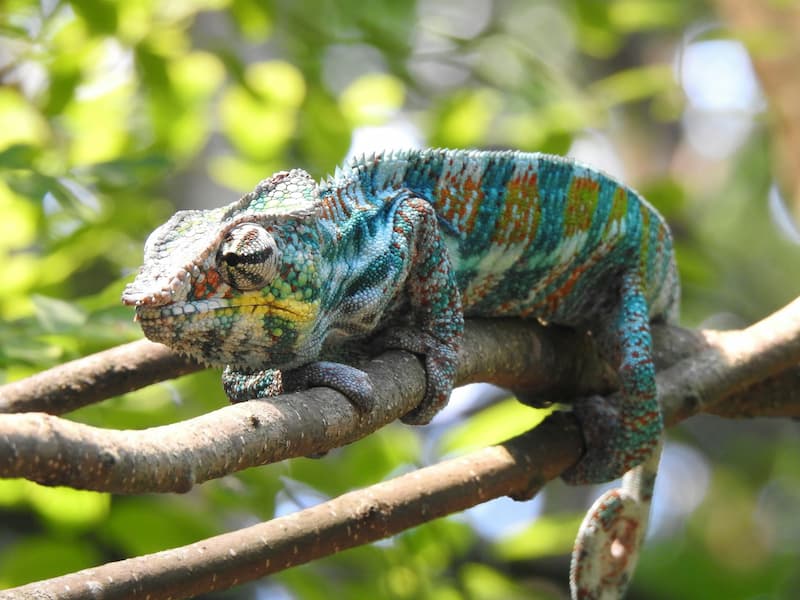
The skin of a chameleon is an excellent temperature control device. These creatures are ectothermic animals that cannot generate their own body heat. Their body temperature rises and falls according to the environment. They must warm themselves when it is cold and cool down when it is hot. Why is this? Maintaining an optimal body temperature is critical for muscle movement and digestion. To overcome these environmental challenges, chameleons adjust the brightness and darkness of their skin.
When the morning sun rises, chameleons climb up onto tree branches. This behavior is meant to warm up their bodies, which grew cold overnight. During this time, they turn their skin very dark, close to deep brown or black. Dark colors absorb significantly more light and heat energy. This allows them to raise their body temperature rapidly. On the other hand, under the scorching midday sun, they shift their bodies to a light gray or bright yellow. Light colors reflect incoming sunlight, preventing their bodies from overheating.
Ultimately, the color change of a chameleon is a perfect survival strategy. However, the purpose is completely different from the camouflage we traditionally imagine. They do not change color to hide in the background. They do so strictly to survive by absorbing or reflecting sunlight. The skin of a chameleon is not a camouflage uniform for blending into the environment. It is a highly intelligent heating and cooling system designed to navigate harsh nature by shifting between hot and cold states.
Conclusion
For a long time, chameleons have been misunderstood as masters of disguise that hide within their surroundings. In truth, they are clever survivors that utilize nanotechnology to actively communicate and regulate their body temperature. The belief that they completely transform to match the colors of their background is nothing more than a sophisticated illusion. It was built by human observation and amplified through the sensationalized framing of popular mass media.
Why have we misunderstood the true nature of chameleons for such an extended period? Is it perhaps due to our habit of looking only at superficial, isolated phenomena and believing them to be the absolute truth? Misinterpreting the core nature of others or the truths of the natural world based solely on outward appearances occurs frequently in our daily lives. It is time to deeply consider how many of the facts we take for granted as common sense might actually be human-centered delusions.
![[Bit#163] Plant Nyctinasty: The Secret Cellular Science Behind How Plants Sleep](https://hiddenbitknowledge.com/wp-content/uploads/2026/09/main.plant-sleep-767x428.jpg)
![[Bit#43] Animal’s Instinctive Weather Radar You Didn’t Know About](https://hiddenbitknowledge.com/wp-content/uploads/2026/05/8bf6811cafc2-768x512.jpg)
![[Bit#58] Insects Changing the Future of Humanity: Innovations in Biomimicry](https://hiddenbitknowledge.com/wp-content/uploads/2026/06/44bd14a34264-768x419.jpg)
![[Bit#138] How Mudskippers Breathe on Land: The Secrets of Cutaneous Respiration](https://hiddenbitknowledge.com/wp-content/uploads/2026/08/main.Mudskipper-767x428.jpg)
![Why Species Go Extinct [Bit#191]](https://hiddenbitknowledge.com/wp-content/uploads/2026/10/main-image-14-768x419.jpg)
![[Bit#136] Do Plants Have Memory? Unveiling Plant Intelligence Without Brains.](https://hiddenbitknowledge.com/wp-content/uploads/2026/08/main.plant-memory-768x419.jpg)