[Bit#85] Is a Virus Alive? The Shocking Truth Behind the Ultimate Biological Mystery
Introduction
Are viruses actually living organisms? Or are they merely sophisticated chemical substances? This critical question, which has shaken the scientific community for centuries, completely disrupts our definition of life. By uncovering the true nature of this bizarre entity standing on the boundary, we explore the philosophical answer to whether humans can ever perfectly control viruses.
1. Bizarre Nanomaterials That Reject the Conditions of Life
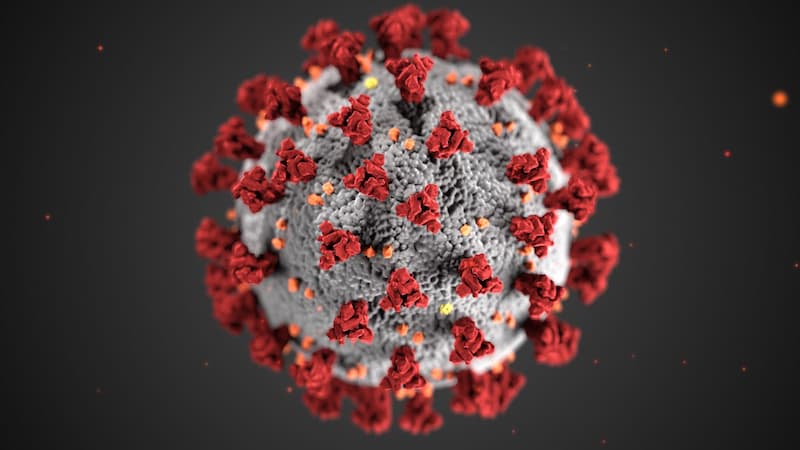
Every living organism on Earth is composed of cells. From the tiniest bacteria to the massive blue whale, there are absolutely no exceptions. The cell is the most fundamental unit that performs life activities. It generates energy on its own and excretes waste products. However, viruses are entirely different. Viruses do not possess any cells. Their structure is unbelievably simple. It consists merely of nucleic acid containing genetic information and a protein coat surrounding it. Their size is only tens to hundreds of nanometers. This is a level equivalent to a few thousandths of the thickness of a human hair. They cannot even be seen through a standard optical microscope.
Because of this simple structure, viruses fail to satisfy the core conditions of life. The biggest problem is that they cannot generate energy on their own. To be classified as a living organism, an entity must perform metabolism. This is the process of absorbing nutrients from the outside, breaking them down, and obtaining energy. Viruses completely lack the enzymes necessary for this metabolism. In short, they do not have the factory to produce energy.
Then, what does a virus look like when it is not inside a living organism? Surprisingly, it is just a protein crystal. It is not much different from a stone, or a piece of dust rolling around on a desk. It does not breathe, nor does it react to external stimuli. It remains in a state of perfect non-living matter. This is precisely why scientists initially refused to recognize viruses as living organisms. They could not call a motionless and unchanging lump of protein a living being.
However, a strange thing happens. It is the exact moment when this non-living lump comes into contact with a living cell. It suddenly changes as if a power switch has been turned on. It recognizes the surrounding environment and begins to move toward its target. It is a scene where dead matter suddenly gains vitality. How is this even possible? Where exactly is the boundary line where a simple chemical substance transforms into a living organism?
2. Perfect Host-Dependent Parasitism Hacking the Cell
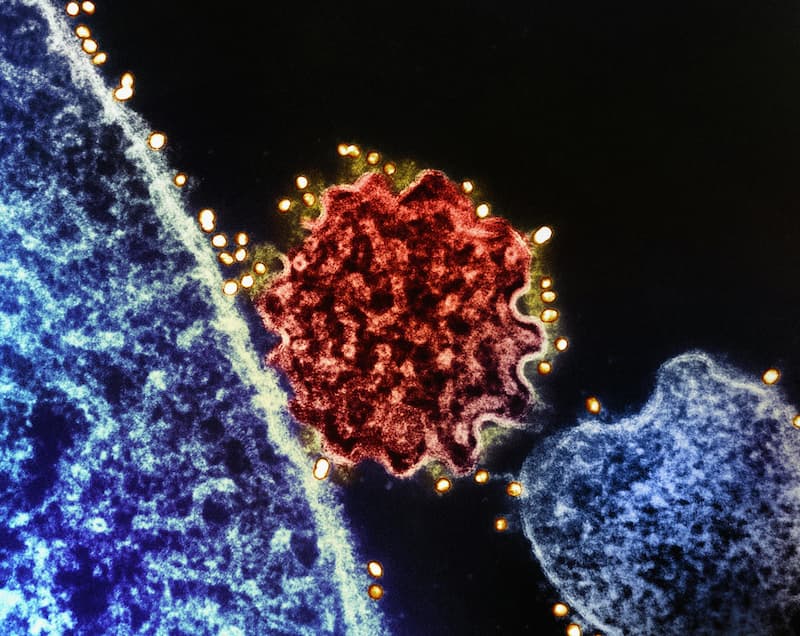
The secret that revives a virus like a lifeless stone lies precisely within the host cell. Viruses have absolutely no ability to replicate themselves. Although they possess genetic information, they are in a state without a copier to duplicate it. Therefore, the method they chose is incredibly clever. It is to infiltrate inside the cells of other living organisms. The virus sticks tightly to the surface of the host cell. Then, it pierces the cell membrane and pushes its own genes inside. From this moment, a cell-hacking process resembling a horror movie begins.
The viral genes that have entered the cell change the owner of the host cell. Originally, the host cell was manufacturing proteins for its own survival and growth. However, the moment the viral genes enter, control over the cell is completely stolen. The host cell now obeys only the commands of the virus. It begins to pour all its energy into churning out viral components. It copies the viral genes and mass-produces the protein coats. It is complete forced labor.
This process is exactly identical to the way a highly trained hacker takes over the main server of a major corporation. The host cell diligently manufactures viruses without even realizing that it is being destroyed. What happens when the inside of the cell becomes completely filled with newly created viruses? Eventually, the host cell bursts open with a pop. Numerous replicated viruses pour out into the outside world. Then, they search for another healthy cell nearby to begin infiltration all over again.
This is an incredibly amazing strategy. Although they cannot do anything on their own, they reproduce perfectly by borrowing the power of others. Looking at this behavior, it is difficult to call a virus non-living matter. This is because they successfully achieve reproduction and proliferation, which are the greatest characteristics of living organisms. Then, were viruses defective parts broken off from cells from the very beginning? Or are they a primitive form before becoming a living organism? The evolutionary method of these clever hackers drives us into an even greater shock.
3. The Mystery of Genetic Replication Constantly Evolving
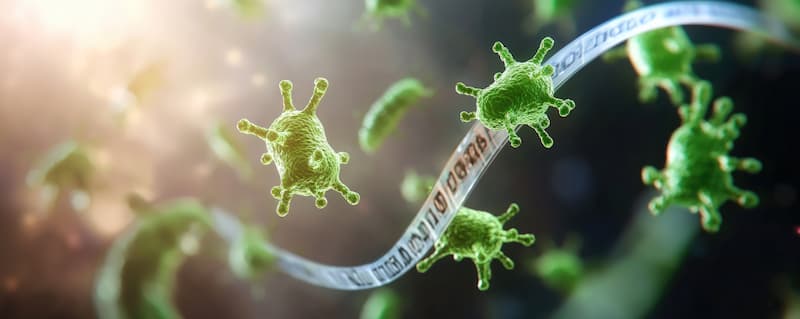
Another piece of evidence for a living organism is evolution. Organisms alter their genes to adapt to the environment and survive. Viruses are the absolute ultimate kings of this evolution. They are even significantly faster than general living organisms. Why is that? It is because their replication process is full of flaws. When a virus hacks a host cell to copy itself, an enormous number of errors occur. Human cells have a function to repair themselves when replication errors happen. However, viruses do not possess such a sophisticated system. They just churn copies out recklessly.
This clumsy replication system becomes an incredibly powerful weapon. This is because a copying error is precisely a mutation. Out of tens of thousands of replications, a unique mutation is born by chance. A virus that evades existing vaccines emerges. A variant that neutralizes the human immune system appears. When the environment changes, the variants that survive become the mainstream. In the blink of an eye, a new group of viruses dominates the Earth. This is exactly why we must receive a new flu shot every single year.
The genes of viruses are also deeply intertwined with the history of life. When a virus enters a host cell, it sometimes plants its own genes directly into the host’s DNA. If the host survives without dying, these viral genes are passed down to the offspring exactly as they are. Surprisingly, about 8 percent of the human genome consists of traces inherited from viral infections in the ancient past. In essence, viral genes have directly influenced human evolution.
An entity that cannot even breathe on its own is changing the DNA of humanity. It alters its own appearance in real time to match the environment. The numerous pandemics that plunged the entire world into fear were also ultimately due to this vicious evolutionary ability. Can we still view viruses merely as a simple, inanimate lump like a stone? This entity, which shakes the ecosystem by changing its genetic information, is far too dynamic to be called non-living matter. It is a moment when the boundary between living and non-living completely collapses.
4. A New Paradigm with Collapsed Boundaries Between Living and Non-Living
Ultimately, is a virus a living thing or non-living matter? Modern science questions this dichotomous question itself. We cannot define a virus using past standards. Therefore, scientists have created a new concept. It is the expression conditional organism. When there is no host, it is perfectly non-living matter. However, the moment it encounters a host, it transforms into a living organism. It is an entity existing in a gray zone that cannot be divided into black and white.
This ambiguity of viruses demands a new paradigm from humanity. It means we must not think of life as something confined merely to the framework of cells. Perhaps viruses are fossils that preserve the appearance of the primitive Earth before life was born. Or they could be the result of a highly evolved living organism discarding everything unnecessary for survival and leaving only genes behind. Whichever it is, viruses are widening and deepening the definition of life much further.
The boundary between living and non-living matter may be nothing more than a line drawn by humanity for convenience. The virus crosses that line freely as if mocking it. It is a paradoxical entity that dominates the world despite being unable to generate energy on its own. We must now recognize this bizarre nanomaterial as a proud axis of the history of life.
Conclusion
The process of tracing the identity of viruses ultimately returns to the fundamental question of what life truly is. If an entity spreads its genes even without breathing on its own, can we definitively conclude that it is not alive? Perhaps another living organism existing in the universe might not be in the form of the cells we know. This bizarre question posed by viruses is completely shaking the arrogant standards of life held by humanity.
![[Bit#163] Plant Nyctinasty: The Secret Cellular Science Behind How Plants Sleep](https://hiddenbitknowledge.com/wp-content/uploads/2026/09/main.plant-sleep-767x428.jpg)
![[Bit#20] Life Never Perishes: It Only Changes Form](https://hiddenbitknowledge.com/wp-content/uploads/2026/05/44235f6975cd-768x431.jpg)
![[Bit#112] Rare Blood Type Rh-null: The Rarest Blood in the World](https://hiddenbitknowledge.com/wp-content/uploads/2026/08/main.rh-null-768x399.jpg)
![[Bit#93] Dolly’s Legacy and the Hidden Truths of Cloning](https://hiddenbitknowledge.com/wp-content/uploads/2026/07/main.dolly-sheeps-768x479.jpg)
![[Bit#63] Why Did Life That Once Hatched From Eggs Choose the Placenta?](https://hiddenbitknowledge.com/wp-content/uploads/2026/06/main.Eggs-and-chickens-768x512.jpg)
![[Bit#94] Why Your Appendix is Still Vital: The Surprising Scientific Evidence](https://hiddenbitknowledge.com/wp-content/uploads/2026/07/main.Appendix-768x512.jpg)