[Bit#90] Neurobiology of Frisson: Why Music Gives You Goosebumps
Introduction
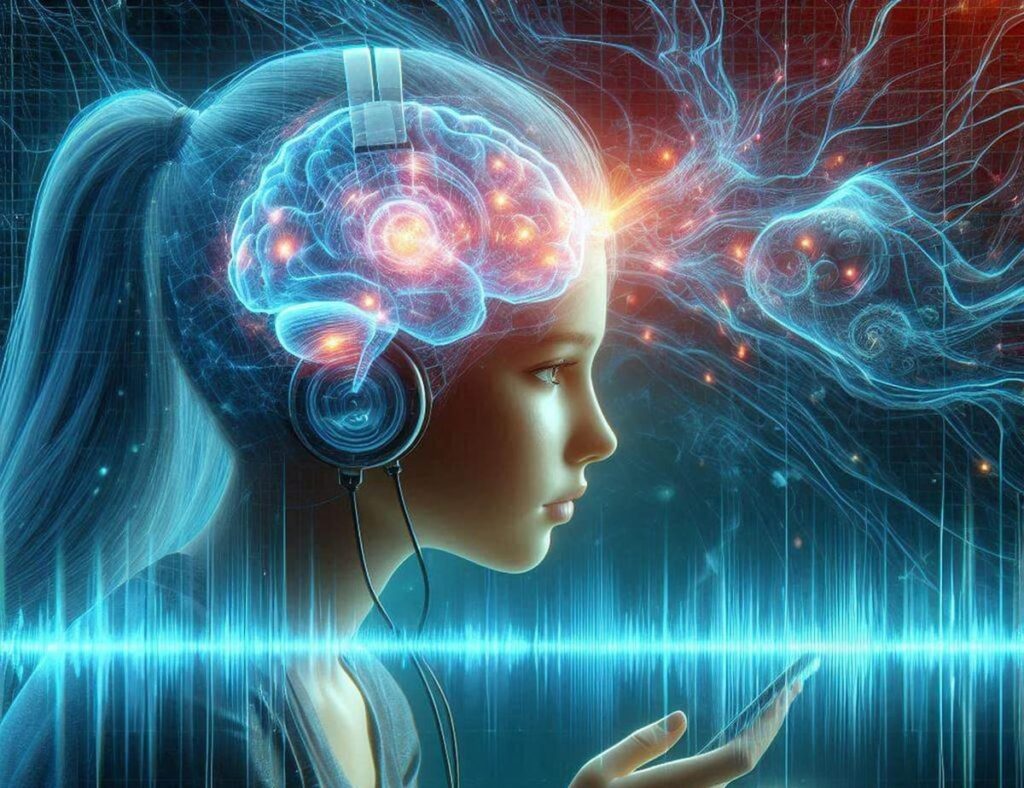
When we deeply immerse ourselves in music, the phenomenon of goosebumps erupting across our skin is the result of a combination of the brain’s most primitive reward system and our evolutionary heritage. This article goes beyond a simple emotional response to scientifically analyze how neurotransmitters and brain structures collaborate to generate this thrilling physical frisson. Furthermore, it aims to explore the fundamental question of how this phenomenon connects to human empathy and our core survival instincts.
1. Why Does Listening to Music Give You Goosebumps?

The goosebumps you experience while listening to music are by no means a mere figment of your imagination. They represent a powerful physical signal dispatched directly from the brain. Why does this phenomenon occur? The answer lies at the very heart of the brain’s reward circuitry. The human brain is wired to secrete dopamine, a neurotransmitter associated with intense pleasure, whenever we engage in behaviors that favor biological survival. This is the exact same chemical substance released when we consume delicious food or encounter unexpected good fortune. Curiously, even though music is not a strict necessity for physical survival, the brain perceives it as a monumental reward.
The brain does not remain passive while listening to music. It constantly calculates and predicts in the background how the subsequent notes and rhythms will progress. During this process, if the music completely defies our subconscious expectations in a beautifully orchestrated manner, the brain experiences a refreshing shock. This frequently happens during a sudden high note or a dramatic transition of instruments. Scientists refer to this exact peak moment, where dopamine secretion reaches its absolute zenith, as the chill-inducing moment of frisson. It is a precise window of time when the brain is instantly flooded with ecstatic pleasure.
Once dopamine completely saturates a specific region of the brain known as the striatum, the resulting signal cascades outward into the physical body. This is where the initial psychological excitement triggers the autonomic nervous system. As the sympathetic nervous system is strongly activated, the heart rate accelerates rapidly, and micro-fluctuations in body temperature occur. When this acute stimulation reaches the skin, it triggers the arrector pili, which are tiny muscles located at the base of each hair follicle, causing them to contract tightly. Consequently, the pores close, and the skin hairs stand on end, producing the visible phenomenon of goosebumps. This is a profound neurobiological sequence wherein an auditory stimulus is transformed within seconds into a thrilling physical sensation.
2. The Process of Turning Auditory Sounds into Physical Chills

How exactly does music entering through the ears transform into a full-body shiver? It happens because auditory signals travel through various chambers of the brain, engaging in a highly intricate, real-time dialogue. When sound waves cause the eardrum to vibrate, these physical movements are immediately converted into electrical signals. These signals then rush first to the auditory cortex located on the lateral sides of the brain. The auditory cortex is far more than a mechanical tool that merely parses the pitch or rhythm of a sound; it serves as the primary dissection room where incoming music is meticulously analyzed.
The subsequent phase is where the process becomes truly fascinating. The moment the auditory cortex completes its initial analysis, it instantly transmits a signal to the emotional centers buried deep within the brain. The core components of this emotional network are the amygdala and the limbic system. The amygdala is an evolutionary structure originally responsible for processing primal emotions such as fear or raw joy. When the sophisticated musical signals processed by the auditory cortex arrive at the amygdala, the structure interprets them as an incredibly intense emotional event.
At this precise moment, a massive neural highway opens up between the auditory cortex and the emotional centers. Scientists have discovered that individuals who frequently experience musical frisson possess neural fiber tracts connecting these two distinct regions that are significantly thicker and more densely packed than average. Because this biological highway is much wider, neural signals pass back and forth with immense power and zero friction. In essence, the structural shifts in the music are aggressively hammering on the doors of the emotional centers.
Ultimately, this seamless real-time dialogue goes so far as to shake the frontal lobe, which governs human rationality. The entire brain begins to resonate simultaneously, operating much like a single grand orchestra. This is the exact moment when auditory data penetrates and triggers our deepest emotional memories. Does it now make sense why certain pieces of music can make you feel on the verge of tears or cover you in goosebumps the instant you hear them? It is the direct consequence of flawless teamwork among highly specialized brain regions.
3. Traces of Survival Left by Primitive Humans

Did our ancient ancestors experience goosebumps when they listened to music millions of years ago? The definitive answer is no. This is because the physiological reaction of goosebumps was not originally designed or evolved for the appreciation of music. The authentic purpose of goosebumps is absolute survival. Millions of years ago, when primitive humans encountered massive predators or were suddenly exposed to biting cold, they raised every single hair on their bodies. When body hair stands on end, it makes an organism look significantly larger, which provides a valuable visual threat to potential enemies. Simultaneously, it traps a layer of air between the hairs, creating an excellent thermal insulator to protect core body temperature against freezing conditions.
However, modern humans wear clothes. We rarely find ourselves hunted by apex predators in our daily lives. Consequently, body hair as a physical mechanism of defense has largely degenerated. Why, then, does this physiological function persist so vividly without disappearing? It remains because the brain occasionally misinterprets specific auditory stimuli as an imminent threat to survival. A sudden, piercing high note or an overwhelmingly grand crescendo in a piece of music is perceived by the primitive subcortical brain as a scream of distress or a crack of thunder. In an instant, the brain declares a state of emergency.
To protect the physical body from this perceived danger, the brain rapidly secretes adrenaline. Adrenaline is a hormone engineered to place the entire system into a high-tension state. When this hormone floods the bloodstream, the tiny muscles underneath the skin contract sharply, which is the exact mechanism that generates goosebumps. However, immediately afterward, the cerebral cortex, which governs higher-level rationality, reassesses the situation. It realizes that there is no danger present and that the stimulus is merely a safe, beautiful piece of music.
This is the exact moment a profound sense of relief washes over the system. As the threat signal is instantly re-evaluated into a safe reward, the brain experiences an even greater rebound of pleasure. This operates on a very similar principle to why people enjoy the intense thrills of watching a horror movie. Ultimately, the goosebumps we feel while listening to music are a living evolutionary footprint. It is a fascinating phenomenon where a primitive struggle for survival has evolved over millennia into a supreme sensory apparatus for enjoying fine art.
4. The Secret of a Special Brain That Feels Chills Easily

If you look around, you will notice that there are certain individuals whose skin erupts in goosebumps almost every time they listen to a moving piece of music. Conversely, many others remain completely detached and stoic, showing no physical response even when listening to the most magnificent compositions. Why does such an immense individual variance exist? It is not merely a matter of being emotionally sensitive or detached. The secret is deeply embedded within our genetics and the physical architecture of our personality structures.
According to recent breakthroughs in molecular biology, individuals who frequently experience frisson possess a distinctly different variation of dopamine receptor genes compared to the general population. This means the sensitivity of their biological antennas, which receive dopamine when the neurotransmitter is released, is remarkably higher. Since their reward circuitry reacts with extreme sensitivity to even minor stimuli, the probability of that signal translating into a full-body physical chill is twice as high. They are, quite literally, born with a different neurochemical constitution.
This genetic sensitivity binds powerfully with a psychological personality trait known as openness to experience. Individuals who score high in openness to experience trigger far more complex associative mechanisms within their brains when encountering a new piece of art or a profound intellectual stimulus. While listening to music, they continuously construct vivid visual imagery or actively summon deeply buried emotional memories. It is a setup where the brain dynamically amplifies its own incoming stimuli.
In conclusion, the phenomenon of goosebumps while listening to music is a brilliant masterpiece co-created by genetic sensitivity and deep imagination. These individuals have been endowed with a rare ability to feel a spectrum of emotion that others cannot perceive. What kind of neural disposition were you born with?
Conclusion
The physical thrills delivered by music are, in the end, a beautiful byproduct of the survival instincts developed by humanity to endure the harsh storms of evolution. A primitive alarm signal that once detected mortal danger has been reborn in the modern era as a supreme sensory experience, allowing us to feel great art with our entire physical being.
If humans in the distant future lose their emotional depth and evolve into beings possessing only flawless, cold rationality, will we still be able to experience goosebumps through music? In a world stripped of physical thrills, music might deteriorate into nothing more than a mechanical combination of audio frequencies. Tonight, why not fully surrender your physical body to a beautiful melody capable of awakening the dense neural pathways of your brain?
![[Bit#81] Placebo Effect : The Mysterious Phenomenon of a Fake Drug Healing the Body](https://hiddenbitknowledge.com/wp-content/uploads/2026/07/main.Placebo-Effect-768x512.jpg)
![Why Does OCD Make People Repeat Things? [Bit#196]](https://hiddenbitknowledge.com/wp-content/uploads/2026/10/main-image-19-768x419.jpg)
![[Bit#54] The Secret of Anesthesia](https://hiddenbitknowledge.com/wp-content/uploads/2026/06/c06a1d259465-768x430.jpg)
![[Bit#142] Gender Differences in Mirror Perception: Why Men Are Satisfied and Women Are Self-Critical](https://hiddenbitknowledge.com/wp-content/uploads/2026/09/main.mirorr-767x428.jpg)
![[Bit#7] The Chilling Reason Why Your Brain Paralyzes Your Body While You Sleep](https://hiddenbitknowledge.com/wp-content/uploads/2026/04/6e3ddc42884a-768x511.jpg)
![Why Work Feels Harder Than Play: Can You Make Work More Enjoyable? [Bit#181]](https://hiddenbitknowledge.com/wp-content/uploads/2026/10/main-image-5-768x512.jpg)