
[Bit#89] Psychopathic Brain and the Science of Selective Empathy

Introduction
We shed tears together when we see the sadness of others, and we flinch when someone else gets hurt. This happens because mirror neurons operate within our brains. It is a mysterious system that reflects the actions and emotions of others like a mirror, making us feel as if we are experiencing them directly.
But what would happen if this mirror were broken, or if it were a switch that could be turned on and off only when needed? This is the story of the psychopathic brain, an existence in the coldest realm of humanity. In this article, we delve into the essence of the amazing empathy created by mirror neurons. We scientifically trace what bizarre things are happening inside the brain of a psychopath who is insensitive to the pain of others. We will look deeply into how the emotion we took for granted, empathy, is actually a precise collaborative action of the brain, and what consequences the cracks in that system bring.
1. The Mirror in the Brain That Creates Empathy
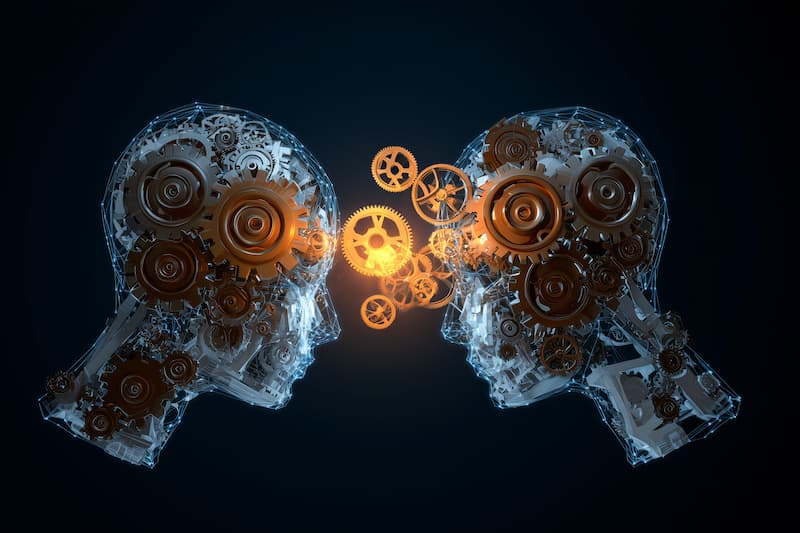
We feel the emotions of others with our whole body. When a friend cuts their hand on sharp paper, we frown as if we are in pain. When we watch a sad movie, our hearts feel heavy and we cry. Why is that? It is because a special neural circuit exists in our brain that projects the actions and emotions of others exactly as they are. The scientific community calls these special cell structures mirror neurons.
These mysterious cells were discovered by accident in the 1990s by a research team at the University of Parma in Italy. At that time, the researchers were observing the motor cortex region, which is activated when a monkey reaches out to pick up food. However, a bizarre phenomenon occurred during the experiment. The monkey was sitting still and not moving at all. It was merely watching the experimenter pick up a banana placed in front of it. At that moment, the nerve cells inside the monkey’s brain reacted violently. Brain waves perfectly identical to the pattern when the monkey picked up the banana itself were measured.
It was the moment when the brain mistook witnessing another person’s action for moving itself. This dramatic discovery completely changed the landscape of modern neuroscience. This is because it proved that beyond the simple reception of visual information, we simulate the movements of others in real-time within our own brains.
The human mirror neuron system has evolved to be much more sophisticated and massive than that of monkeys. We beautifully go beyond the imitation of physical body movements. We copy high-level emotional realms such as sadness, anger, joy, and fear of others just like a mirror. The reason why a causal relationship occurs where the pain network inside my brain is stimulated just by looking at the facial expression of another person suffering is right here.
These cells, concentrated in the lower part of the frontal lobe and the front part of the parietal lobe of the brain, serve as a pathway to walk into the minds of others. When we finely move our facial muscles to imitate another person’s expression or simulate another person’s situation in our minds, these cells send and receive signals at the speed of light. And they reproduce the emotional state of the other person exactly in my brain.
This wondrous empathy that makes humans human is the greatest blessing that evolution has given to mankind. Thanks to mirror neurons, we predict the intentions of others quickly and accurately. Furthermore, we were able to form deep bonds, maintain social communities, and develop giant civilizations. Small cells inside the brain are constantly building invisible bridges that connect others and me.
2. The Turned Off Empathy Switch of Psychopaths
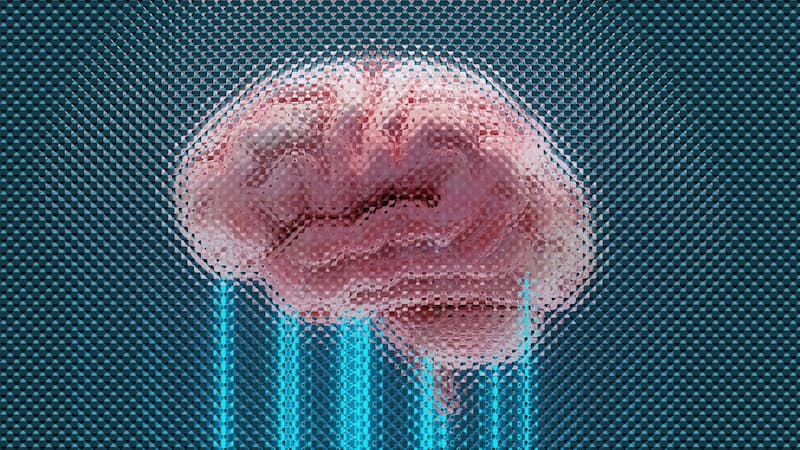
What would happen if the mirror neurons that feel the pain of others as my own do not function properly? We often imagine that the mirror inside a psychopath’s brain must be completely shattered. This is because they do not shed tears at the pain of others. However, the latest research in neuroscience has revealed a shocking fact that completely overturns our expectations. To conclude, the mirror neurons of psychopaths are not broken. They are simply turned off normally.
Professor Christian Keysers and his team at the Netherlands Institute for Neuroscience conducted a very interesting experiment. They showed videos of other people experiencing pain to inmates diagnosed with psychopathy and photographed their brains using functional magnetic resonance imaging (fMRI). As expected, at first, the brain regions related to emotion and mirror neurons did not react at all. Even when the person on the screen suffered with their fingers twisted, their brains were cold and quiet.
The real twist happened after that. The researchers instructed them to intentionally try to empathize with the person in the video. Then, a surprising change was observed. The mirror neuron regions of the quiet psychopaths began to burn up in an instant. It was a reaction that perfectly matched the map of the brain activated when ordinary people see the pain of others.
The fact proved by this experiment is clear. Psychopaths are not existences that completely lack empathy. They can fully control their empathy. Ordinary people automatically turn on their mirror neurons when they see the pain of others. Pain is transmitted even if they do not want it. On the other hand, psychopaths keep this system in a default off state normally. They intentionally turn on the empathy switch only when they need it or want it for themselves.
This selective empathy becomes a very dangerous weapon. When necessary, they act as if they empathize perfectly to win the trust of the other person. After achieving their goal, they turn off the switch without regret. And they inflict cruel harm on others without guilt. The mirror inside their brain is not broken. It is like a cold remote control that they turn on and off only when they want to.
3. Cold Cognition Understanding Only with the Head

We often think of empathy as a single, unified emotion. However, psychology and neuroscience largely separate empathy into two types. Cognitive empathy, which understands with the head, and emotional empathy, which feels with the heart. The most prominent characteristic of a psychopath is that these two empathy abilities are imbalanced to a grotesque degree. They understand perfectly with their heads, but feel nothing at all with their hearts.
Why does this deformed separation occur? The answer can be found in the structural connectivity of the brain. When ordinary people see someone’s sad face, the cognitive and emotional regions of the brain turn on their lights at the same time. This is because when mirror neurons copy the pain of the opponent, this signal is immediately transmitted to the amygdala and limbic system, which are responsible for emotions. Thanks to this, we intuitively share the pain of others.
On the other hand, the psychopathic brain has this connection link broken. Looking at fMRI images, when they perceive the pain of others, the planning and strategy regions centered on the frontal lobe of the brain move actively. This means they are calculating exactly why the opponent is in pain and what state they are in right now. However, the amygdala, which processes emotions, is terrifyingly quiet. It is a state where data has been entered, but the output value called emotion does not come out.
This fatal imbalance brings terrible results. Cognitive empathy devoid of emotional empathy degenerates into a pure tool of manipulation. They perfectly grasp when the opponent feels sad and when they feel fear. Rather, they sometimes read the psychology of others more precisely than ordinary people. They capture the emotional vulnerabilities of others like radar.
In the end, they do not grieve the pain of others, but use it. Even if a person bleeds in front of them, there is no emotional impact that rings their heart at all. To them, the pain of others is just an easy math formula or a piece on a chessboard. A precise computer with an empty heart, that is the reality of the cognitive empathy that psychopaths possess.
4. The Cheater Strategy Left Behind by Evolution

The unique brain structure of psychopaths poses a very strange question in the evolutionary history of mankind. Are they merely social outcasts or mutants? Or are they another survival strategy of mankind precisely designed to survive in fierce competition? Neuroanthropologists pay attention to the reason why this cold brain did not die out during the process of evolution and survived continuously.
Since the hunter-gatherer days, mankind has formed societies centered on individuals who cooperate and empathize with each other. The consensus created by mirror neurons was the most powerful weapon to increase the solidarity of the group. However, the story changes when a society arrives where everyone acts only altruistically. When everyone trusts and yields to the opponent, what happens if an individual appears who cheats and manipulates others solely for their own benefit? That individual will monopolize the resources of the group and enjoy an immense survival advantage.
In evolutionary biology, this is called the cheater strategy. The psychopathic brain, which turns on the empathy switch only when necessary without being swayed by emotions, may be a structure optimized to maximize this cheater strategy. Since they are not held back by the pain of others, they make extremely cool and fast decisions in crisis situations. Even in modern society, this trait is sometimes demonstrated as a bizarre ability in extreme environments such as corporate restructuring, fierce political decisions, or battlefields.
Ultimately, the existence of psychopaths forces mankind to ask the essence of empathy again. The heart that feels the pain of others together is a righteous attribute that makes humans human. On the other hand, the coldness that can turn empathy off and on depending on the situation is an extreme efficiency for survival. We live protecting the blessing of evolution called mirror neurons, but on the flip side of our society, those holding the cold weapon of selective empathy still coexist.
Conclusion
Our brains are finally connected as one through the mirror that reflects the minds of others. However, the cold brain of a psychopath proves that empathy can be a controllable choice, not an automatic reflex. Understanding with only the head in the absence of the heart will only lead mankind to isolation without bonds. If everyone could turn the empathy switch on and off at will due to the development of technology in the future, would the world become a more efficient place, or a more cruel hell? It makes us deeply ponder whether our mirror that feels the pain of others is truly the completed form of evolution.
![[Bit#4] I Put Someone Else’s ‘Poop’ in My Body, and a Miracle Happened](https://hiddenbitknowledge.com/wp-content/uploads/2026/04/main.Fecal-Microbiota-Transplantation-768x512.jpg)
![[Bit#57] Wildfires and Ecosystems: The Bio-Mechanism of Destruction and Rebirth](https://hiddenbitknowledge.com/wp-content/uploads/2026/06/8b81363e2c58-768x512.jpg)
![[Bit#31] The Origin of Life: From Chemical Evolution to the Birth of Cells](https://hiddenbitknowledge.com/wp-content/uploads/2026/05/f009466cf8b1-768x419.jpg)
![[Bit#77] Cosmic Radiation and Its Fatal Impact on Human Genetics](https://hiddenbitknowledge.com/wp-content/uploads/2026/06/main.Cosmic-Radiation-768x430.jpg)
![[Bit#18] From a Badge of Survival to the Root of Disease: The Cruel Paradox of Obesity](https://hiddenbitknowledge.com/wp-content/uploads/2026/05/48843f2b382a-768x512.jpg)
![[Bit#43] Animal’s Instinctive Weather Radar You Didn’t Know About](https://hiddenbitknowledge.com/wp-content/uploads/2026/05/8bf6811cafc2-768x512.jpg)