Why Do We Follow Trends? [Bit#192]

A style that once seemed unusual can suddenly appear everywhere. A particular hairstyle becomes common, a phrase spreads across social media, or an unfamiliar habit becomes something people feel they should try. Before long, something that seemed like a personal choice starts to look like a social expectation.
This is the power of a trend. It changes not only what people do, but also what they notice, value, and consider normal.
Trends are often associated with fashion, but the same broad process can occur in language, entertainment, everyday habits, and social behavior. Their popularity is not always explained by usefulness or quality alone. The choices people observe around them can also influence what they choose themselves.
Understanding trends therefore requires two connected questions: how does a new behavior become popular, and why are people willing to follow it?
How Does a Trend Begin?
A trend rarely needs everyone to agree at the beginning. It can start when a small number of people adopt a new style, express a different preference, or begin doing something that others have not yet considered.
Some people deliberately experiment with unfamiliar ideas. Others encounter a new behavior through friends, public figures, online communities, or ordinary daily interactions. The original choice might be driven by personal taste, convenience, creativity, or circumstances specific to a small group.
At this stage, the behavior may remain unnoticed. Most new ideas never become widespread trends. A choice needs some way to reach other people, and those people must decide whether it is worth adopting.
That distinction matters. A trend does not emerge simply because someone invents something new. It develops when individual choices begin to influence one another.
Research on fashion cycles has explored how these patterns can emerge when people copy not only a particular cultural trait, but also other people’s preferences for that trait. Mathematical models show that this interaction can produce changing patterns of popularity, including traits that spread rapidly and are later abandoned.
This does not mean every trend follows the same formula. It suggests that the relationship between personal preference and observed popularity can help explain why trends sometimes develop in unpredictable ways.

Why Does Popularity Attract More Popularity?
Imagine entering a room where almost everyone is talking about the same new show. You have never watched it, but the number of people discussing it makes you curious. Perhaps they have discovered something genuinely entertaining. Perhaps you simply want to understand the conversation.
Either way, other people’s choices have changed your own attention.
Psychologists distinguish between different forms of social influence. One important form is informational influence: people use the behavior or opinions of others as clues when they are uncertain about what to think or do.
This can be a sensible strategy. Other people may have experiences or information that we lack. If many people independently recommend a film, for example, their reactions may provide useful evidence that we could enjoy it too.
The difficulty is that popularity does not always reveal why something is popular. People may be following a trend because they genuinely like it, because others are doing it, or because they assume that widespread adoption signals quality. These possibilities can overlap.
As more people adopt a behavior, it becomes easier for others to notice. That visibility creates additional opportunities for imitation. The result can be a reinforcing cycle: adoption increases visibility, visibility attracts attention, and some of that attention leads to further adoption.
However, this cycle is not automatic. People differ in their preferences, social environments, and willingness to change. A widely noticed behavior may still fail to spread if few people want to adopt it.
Why Do We Want to Fit In?
Popularity does not influence us only by providing information. It can also affect our sense of belonging.
Humans depend on social relationships, and group membership can matter in everyday life. People often pay attention to shared habits, expectations, and symbols because these help them understand the groups around them.
Following a trend can therefore be a way of participating in a social world. Wearing a style that friends recognize, using a phrase that circulates in a community, or joining a shared activity can make interaction easier. It gives people something in common.
Sometimes the motivation is explicit. Someone might try a popular activity because their friends invited them. In other cases, the influence is less obvious. A behavior can begin to feel normal simply because it appears repeatedly in a person’s surroundings.
Social psychology research identifies the desire to form and maintain meaningful relationships as one of the important motivations underlying social influence. People also care about understanding their environment and maintaining a positive view of themselves.
These motives help explain why the same trend can appeal to different people for different reasons. One person may enjoy the trend itself. Another may value the social connection it provides. A third may be curious because so many people are talking about it.
Following a trend does not automatically mean someone is insecure or incapable of independent thought. Social influence is a normal part of human decision-making. Its effects depend on the situation, the person, and the behavior involved.

Why Does a Trend Suddenly Take Off?
Some trends appear to remain obscure for a long time before becoming widely visible in a short period. This can seem mysterious, as if everyone decided to change their minds at once.
One possible explanation involves the interaction between inertia and trend-seeking.
Inertia means that people often continue with their existing choices rather than changing them immediately. Trend-seeking, in the context of social diffusion research, describes sensitivity to a behavior that appears to be gaining popularity.
A study published in Nature Communications examined social diffusion using repeated group experiments and a mathematical model. The researchers found that accounting for both tendencies helped explain patterns in which change could be delayed and then spread rapidly once it gained momentum.
The findings offer a useful way to understand how a new behavior might remain uncommon before becoming widespread. Early adoption may be too limited to influence most people. But as the visible pattern changes, more individuals may become willing to reconsider their existing choices.
This is not proof that every viral trend passes through a precise tipping point. The study investigated particular experimental and modeled conditions, and real-world trends involve many additional factors. Still, it demonstrates that the speed of social change can depend on how individual decisions interact over time.
Online platforms may make some trends more visible by allowing people to encounter the same content repeatedly or see other users responding to it. But visibility alone does not guarantee lasting popularity. A trend still needs people to engage with it, and different audiences may respond in very different ways.
Why Do We Keep Following Something We May Not Even Like?
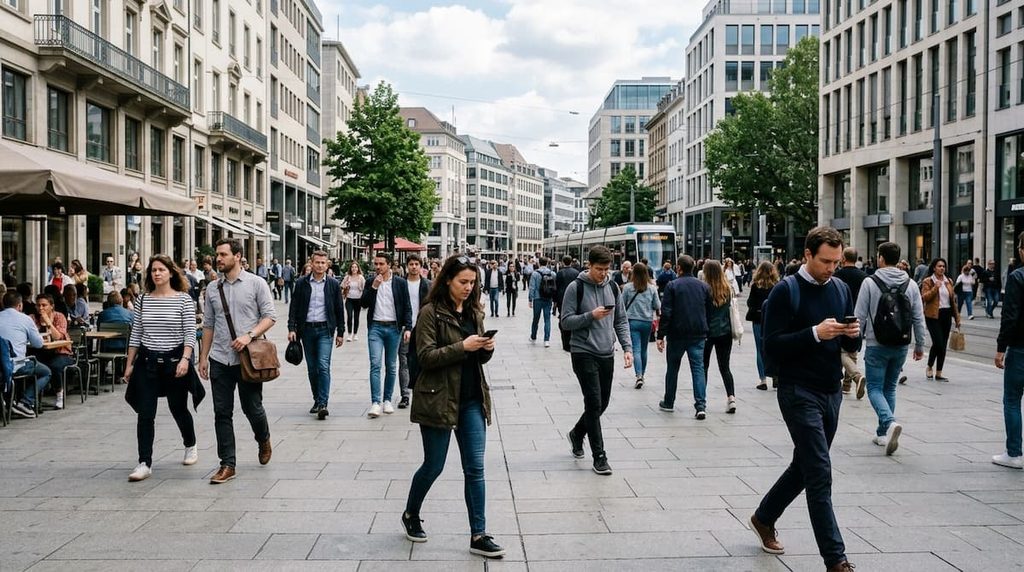
Sometimes people participate in a trend without being especially enthusiastic about it. They may try an activity because everyone is discussing it, adopt a style because it is common in their social circle, or feel that they should understand a popular reference.
Several motivations may contribute to this behavior.
First, following a trend can reduce uncertainty. When people are unsure which choice is appropriate, other people’s behavior provides a convenient reference point.
Second, participation can help maintain social connections. Knowing about a shared trend may make it easier to join a conversation or feel included in a group.
Third, people can become sensitive to changing social expectations. A behavior that once seemed unusual may begin to feel ordinary after repeated exposure. Once it becomes familiar, participating in it may require less thought.
These influences do not necessarily override personal preferences. Instead, they can compete with them. Someone might like a trend but dislike the effort involved in following it. Another person might have little interest in it but still participate because their friends care about it.
This is why asking whether people follow trends simply because they like them is too narrow. Personal enjoyment is one possible reason, but it is not the only one.
The distinction is especially important when interpreting popularity. Observing that many people participate in an activity does not tell us whether they all enjoy it equally, whether they feel social pressure, or whether they are responding to different motivations.
Why Do Trends Eventually Change?
If popularity attracts more popularity, why does a trend not continue growing forever?
One reason is that people do not all want the same things. Even when individuals are influenced by their social environment, they retain different tastes and goals. A trend may spread widely without eliminating the appeal of alternatives.
Another possibility is that people value distinctiveness. They may want to share something with their group while also expressing what makes them different from others.
A study published in Psychological Review examined this tension between conformity and uniqueness. The researchers proposed a theory of identity expression based on both motives and analyzed patterns in the popularity of given names. Their model showed how the interaction between these motives and social networks could produce changing cultural trends rather than a stable, unchanging outcome.
The finding is relevant because it challenges the idea that people only imitate others. Human social behavior can involve competing motivations. People may want to belong, but they may also want their choices to express something personal.
Consider a style that initially feels distinctive. As more people adopt it, it may become a recognizable group signal. For some individuals, that growing popularity may make the style more attractive because it is familiar and socially accepted. For others, widespread adoption may reduce its appeal because it no longer feels distinctive.
Over time, different preferences can help shift attention toward alternatives.
This is a possible mechanism of trend change, not a universal rule. Some popular styles remain common for decades, while others disappear quickly. The reasons depend on the particular behavior, the people involved, and the environment in which the trend spreads.

Is Following Trends Always a Bad Thing?
It is easy to treat trend-following as evidence that people lack independent judgment. But that conclusion overlooks how social learning works.
People cannot personally investigate every option they encounter. Observing others can help them discover new music, useful habits, creative ideas, or activities they might otherwise miss. Shared trends can also provide common ground between people.
The more useful question is not whether a trend is popular, but why it appeals to us and whether it suits our own needs.
Do we genuinely enjoy it? Have we found it useful? Are we curious because other people recommend it? Or are we participating mainly because we worry about being left out?
There is no single answer that applies to every situation. A person can follow a trend for several reasons at once, and those reasons can change over time.
Recognizing social influence does not require rejecting popular things. It simply allows us to distinguish our own preferences from the pressure or expectations we may experience around them.
What Makes a Trend Worth Following?
Trends emerge from the interaction between individual choices and social influence. A new behavior may begin with a small group, attract attention through social connections, and spread as people respond to its growing visibility. Informational cues, belonging, and sensitivity to changing patterns can all contribute to this process.
Yet the same social world that encourages imitation also leaves room for personal differences. People do not merely copy one another. They make choices while balancing familiarity, social connection, personal taste, and the desire to express their individuality.
That tension helps explain why trends can spread, change, and disappear rather than moving in one predictable direction.
The next time something suddenly becomes popular, it may be worth pausing before deciding whether to join in. The trend might genuinely suit you, or its popularity might simply have made it more noticeable.
Either way, understanding the difference gives you a little more freedom to decide what is worth following.
Scientific Sources
1. Acerbi A, Ghirlanda S, Enquist M. “The logic of fashion cycles.” PLoS One. 2012;7(3):e32541. PMID: 22412887. DOI: 10.1371/journal.pone.0032541. Read the study on PubMed
2. Ye M, Zino L, Mlakar Ž, Bolderdijk JW, Risselada H, Fennis BM, Cao M. “Collective patterns of social diffusion are shaped by individual inertia and trend-seeking.” Nat Commun. 2021;12:5698. PMID: 34588442. DOI: 10.1038/s41467-021-25953-1. Read the study on PubMed
3. Golman R, Bugbee EH, Jain A, Saraf S. “Hipsters and the cool: A game theoretic analysis of identity expression, trends, and fads.” Psychol Rev. 2022;129(1):4-17. PMID: 34968137. DOI: 10.1037/rev0000341. Read the study on PubMed
4. Cialdini RB, Goldstein NJ. “Social influence: Compliance and conformity.” Annu Rev Psychol. 2004;55:591-621. PMID: 14744228. DOI: 10.1146/annurev.psych.55.090902.142015. Read the study on PubMed