[Bit#114] The Miraculous Cement That Bonds Bones: The Revolution of Biocompatible Bone Cement
Introduction
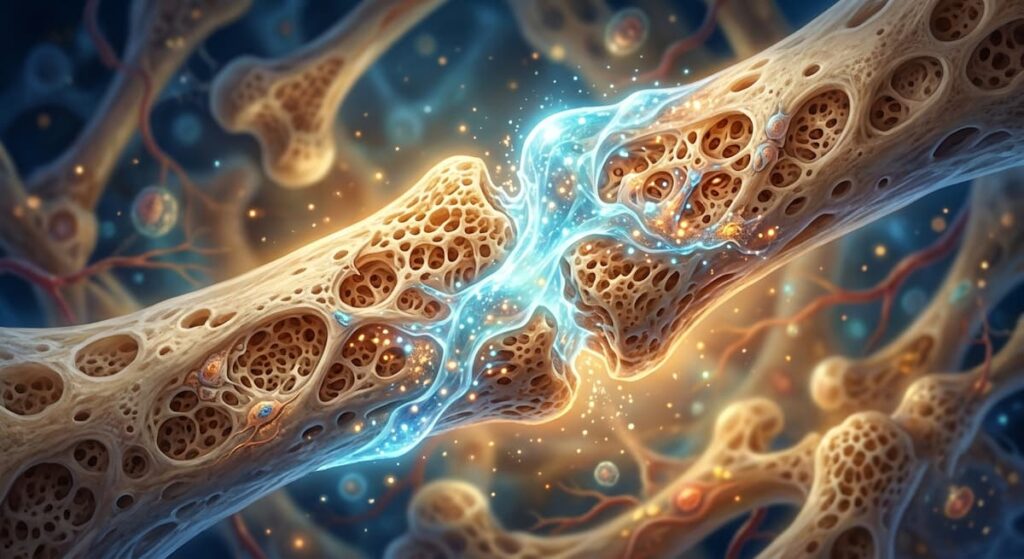
There is a unique type of cement used inside surgical operating rooms. It is fundamentally different from the industrial cement we commonly see in construction. This story is about biocompatible bone cement, a material that seamlessly harmonizes with the bones inside our bodies. In the past, it served as nothing more than an emergency fix to stabilize fractured bones. Today, the landscape has completely shifted. It has evolved into a smart biological material capable of regenerating damaged bone tissue and absorbing itself over time.
In this column, we will dive deep into everything from the fundamental principles of bone cement to futuristic bio-materials packed with cutting-edge medical technology. We will explore how these technological advancements are reshaping human life and consider how far artificial organs and bone transplantation technologies might advance in the near future.
1. How Does It Differ from Construction Cement? The Secret of Biocompatibility
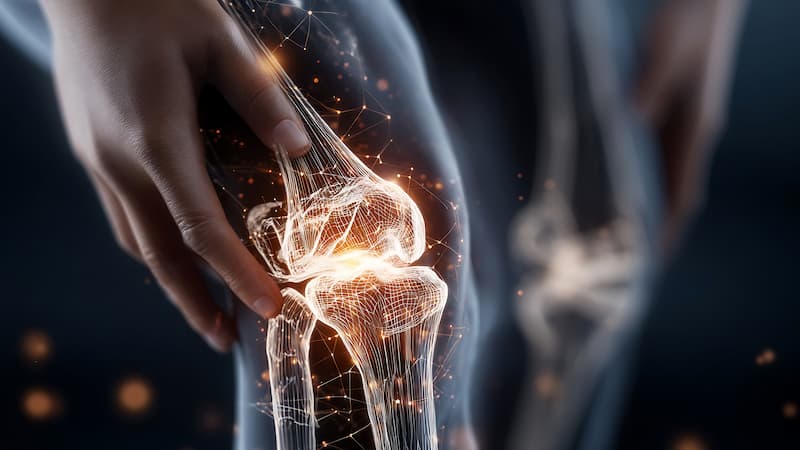
Doctors use specialized cement to bond bones during surgery. Although it shares the same name as the cement we see on city streets, the two are entirely different substances. What would happen if we injected construction site cement into the human body? It would trigger severe inflammation and destroy healthy tissue. The immune system would recognize it as a massive foreign invader and launch an aggressive attack. Ultimately, this leads to cell death and catastrophic side effects.
On the other hand, medical-grade bone cement keeps immune cells completely quiet even after entering the body. Why is that? The answer lies in a special characteristic known as biocompatibility. Biocompatibility refers to the ability to minimize immune rejection within our body. The material must not release toxic substances when it comes into contact with blood or living tissue. Only when a material passes this toxicity test does it earn a passing grade for medical use.
The history of bone cement began with PMMA, an acrylic resin material. It offers the distinct advantages of being exceptionally hard and quick to set. Surgeons frequently inject it between fractured vertebrae to lock distorted structures back into place. However, this first-generation cement cannot truly merge with natural bone. It merely remains next to the bone as a rigid adhesive.
Because of this limitation, scientists turned their attention to the actual components of human bone. Our bones consist primarily of hydroxyapatite, a crystalline compound of calcium and phosphate. Calcium phosphate bone cement was created to mimic this genuine bone composition. When this material enters the body, living cells mistake it for real bone. It triggers zero rejection responses and achieves natural harmony.
Ultimately, the key lies in how effectively we can deceive the human body. It is a technology designed to slip past the vigilant surveillance of the immune system. The core mechanism involves chemical strategies that allow artificial materials to be handled like genuine tissue. Thanks to this mechanism, countless patients have regained the ability to stand upright and walk again.
2. Heat Generated Inside the Bone? The Science and Limitations of Bone Cement Curing
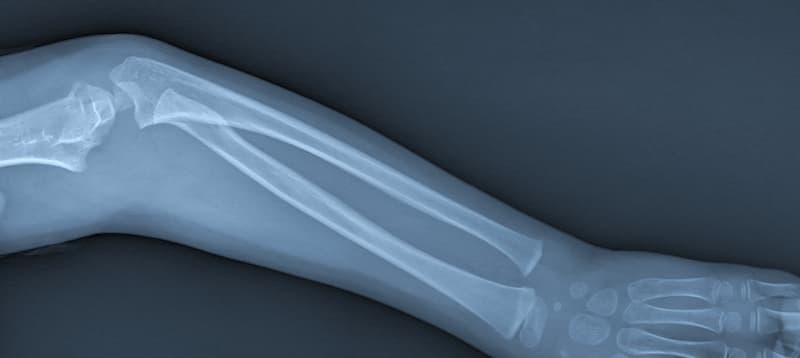
When surgeons begin mixing acrylic bone cement in the operating room, a sharp odor fills the air as the paste rapidly heats up. Massive amounts of heat are generated during the process as the paste transforms into a hardened state. An intense exothermic reaction occurs through chemical bonding. The temperature can skyrocket anywhere from 70 to 90 degrees Celsius. Heat at this level can denature normal surrounding proteins and cause micro-nerve damage or tissue necrosis.
Why do medical professionals take such fatal risks? The answer lies in its overwhelming initial mechanical strength. When injected into patients suffering from severe pain due to collapsed bones, it hardens within minutes. As a result, patients can be freed from pain immediately after surgery and walk out of the hospital on the same day. The instantaneous utility outweighs the risks of side effects.
However, the real issues emerge after time passes. Fully cured cement is far stiffer and stronger than soft human bone. Because its strength vastly exceeds that of surrounding bones, it fails to absorb impact properly. Consequently, mechanical stress concentrates on the surrounding weakened natural bone, becoming a major cause of secondary fractures.
An irony arises where extreme hardness becomes a drawback. While it bonds strongly to relieve pain, the fully hardened cement remains inside the body permanently, creating microscopic cracks akin to a ticking time bomb. This is the decisive reason scientists shifted their focus to developing new materials that solve these critical issues of heat generation and strength imbalance.
3. The Emergence of Second-Generation Bone Cement That Self-Absorbs and Converts to Bone
To overcome the fatal limitations of heat generation and excessive stiffness found in conventional bone cement, an entirely new material concept was born. This is second-generation absorbable bone cement, which naturally dissolves and disappears inside the body. This innovative cement does not stop at acting as a rigid adhesive that physically fills fractured areas.
The secret lies in its bioactive response. Formulated with a foundation of calcium and phosphate, it cures gently while maintaining a temperature similar to human body heat. Because it generates no intense heat, the risk of destroying nearby nerves or proteins is drastically reduced. This fundamentally prevents the dangerous threat of surrounding tissue damage following surgery.
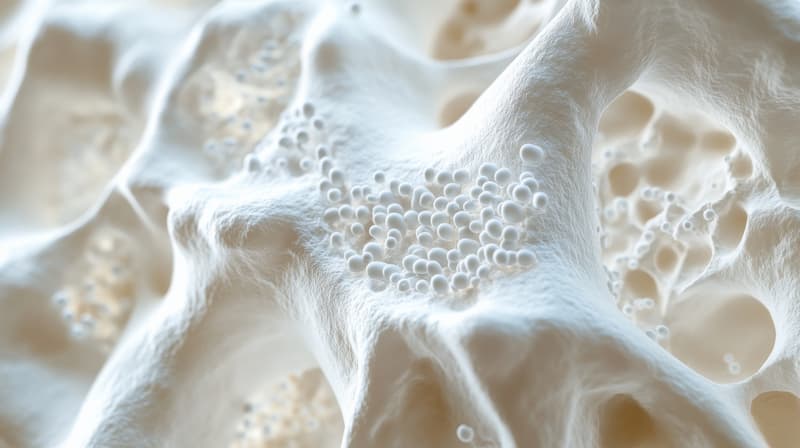
However, the truly remarkable transformation begins after the cement hardens. Dense, microscopic pores exist inside this cement that are invisible to the naked eye. Blood and nutrients from our body begin to penetrate smoothly along these pores. At this point, osteoclasts within the body arrive and gradually consume the artificial cement bit by bit.
What fills the microscopic spaces left behind as the cement dissolves? Osteoblasts, the cells responsible for building real bone, step in. Osteoblasts migrate into the vacant spots left by the dissolved artificial material and systematically fill them with new human bone tissue. In essence, genuine living tissue belonging to the patient completely replaces the space once occupied by artificial material.
Ultimately, second-generation bone cement is not a foreign object destined to stay inside the body forever and cause discomfort. It fulfills the role of a temporary scaffold, safely maintaining structure until the patient’s own natural bone fully matures. Once bone regeneration is complete, the cement is completely absorbed without a trace. It represents a massive leap forward in biomedical engineering that fundamentally eliminates the risk of secondary fractures.
4. Smart Cement Carrying Medication Opens the Future of Regenerative Medicine
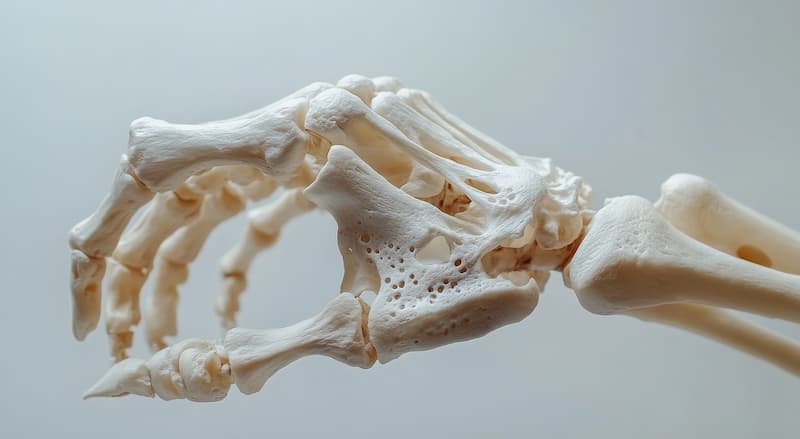
The evolution of bone cement does not stop at merely filling empty bone spaces. Modern biomedical engineering has begun imparting intelligence to this material. It has been reborn as a smart delivery system that can diagnose and treat issues autonomously, going far beyond a simple structural reinforcement. If a bacterial infection or inflammation occurs inside the body, the entire surgical site falls into jeopardy. To solve this problem, scientists have perfected technologies that load antibiotics or therapeutics directly inside the cement.
The underlying principle is remarkably sophisticated. As the cement cures calmly in response to body temperature, the medication inside does not pour out all at once. Instead, it is controlled to release consistently in minute amounts over several weeks. This delivers the exact effect of applying medication directly to the surgical site. Highly toxic antibiotics can precisely target localized inflammation without needing systemic administration throughout the whole body.
Furthermore, recent advancements involve combining stem cell growth factors with bone cement. When the artificial material reaches bone tissue, it broadcasts a signal. This signal forcefully attracts surrounding cells. Stem cells responding to this signal gather at the site, accelerating the speed of bone regeneration multiple times over. The cement itself effectively functions as a massive bioreactor.
Future bone cement will take another step forward. By integrating with 3D printing technologies, it will construct customized three-dimensional structures matching the exact shape of a patient’s damaged area. Fitting flawlessly into injured sites without error, it will secrete therapeutic agents and transform into perfect bone. A material that started as a simple emergency repair adhesive has now become the ultimate key to completely reconstructing human tissue.
Conclusion
Biocompatible bone cement serves as a perfect example of how non-living chemical substances can be accepted as part of a living organism. Starting as an industrial material with toxic properties, it evolved into a substance that dissolves into real bone, and now reaches a level where it actively delivers medical treatments.
Perhaps the ultimate goal of medicine is to dissolve the boundaries between the artificial and the natural. Watching synthetic materials transform into real living tissue raises a fundamental question. If numerous parts of our bodies are replaced and regenerated by smart materials like these, how much of ourselves can we truly call the original me? As technology gains the power to completely reconstruct the human body, we are compelled to re-examine the uniqueness of the human frame and the true meaning of vitality.
![[Bit#118] Hydroponics: The Science of Growing Plants Without Soil](https://hiddenbitknowledge.com/wp-content/uploads/2026/08/main.Hydroponics-768x512.jpg)
![[Bit#122] Synthetic Biology: The Dawn of an Era Designing Life Anew](https://hiddenbitknowledge.com/wp-content/uploads/2026/08/main.-Synthetic-Biology-768x419.jpg)
![[Bit#53] The Double Edged Sword of Biofuels: Humanity’s Savior or a Cruel Dilemma?](https://hiddenbitknowledge.com/wp-content/uploads/2026/06/fc96429034b1-768x431.jpg)
![[Bit#95] 3D Bio-Printing: The Artificial Organ Revolution Challenging the Realm of God](https://hiddenbitknowledge.com/wp-content/uploads/2026/07/main.3D-bioprinter-768x512.jpg)
![[Bit#43] Animal’s Instinctive Weather Radar You Didn’t Know About](https://hiddenbitknowledge.com/wp-content/uploads/2026/05/8bf6811cafc2-768x512.jpg)
![[Bit#25] The Future Where Brain and Computer Become One: The Essence of BCI Technology](https://hiddenbitknowledge.com/wp-content/uploads/2026/05/0cff846367c9-768x431.jpg)