[Bit#113] Ant Natural Preservatives: Chemical Weapons Defeating Fungi
Introduction
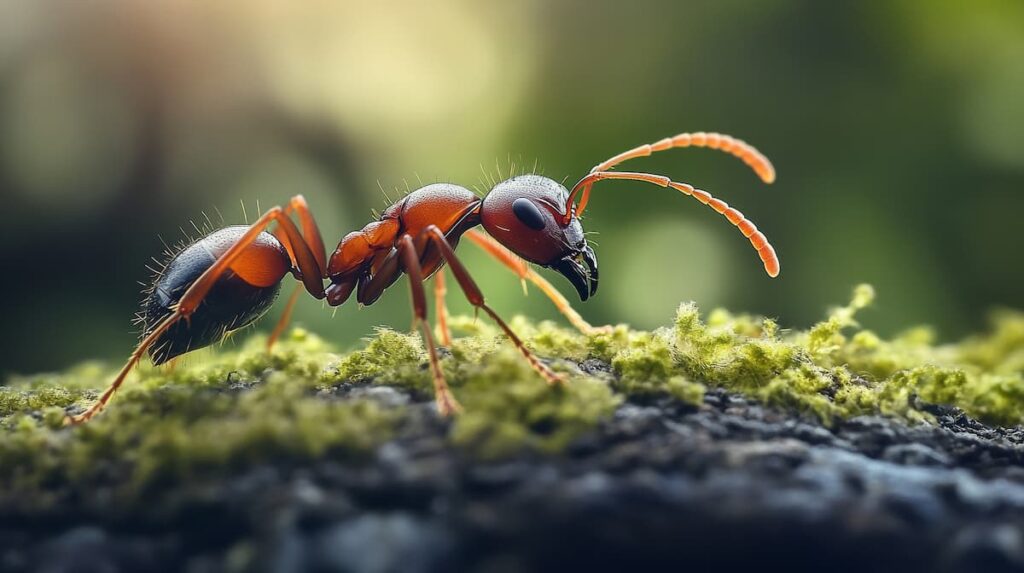
Why do ants remain completely fine without falling ill in dark, damp underground environments? The secret lies in natural preservatives secreted from their abdomens. Formic acid from poison glands and antimicrobial substances from metapleural glands serve as core weapons. These chemical agents stop fungal spores from germinating and prevent food for larvae from rotting. They constantly synthesize natural disinfectants within their own bodies.
This column explores the preservative production mechanism of ants and how it protects the entire colony. Can tiny microorganisms offer a key hint to solving humanity’s antibiotic overuse crisis? Let us examine the chemical factory of ants through the lens of biotechnology.
1. Underground Sealed Crisis: Stop the Fungal Bomb
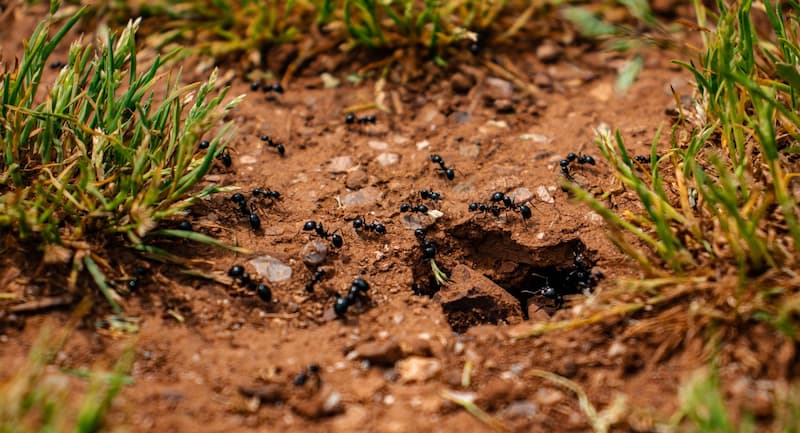
Damp underground tunnels present ideal conditions for microbial proliferation. Humidity exceeds ninety percent, and temperatures stay consistently warm. It represents a genuine paradise for fungi and bacteria. Why then do ant colonies, housing tens of thousands of individuals together, avoid destruction from infectious diseases?
The secret rests in their exceptional approach to cleanliness. Ants do not merely dig soil to build nests. In sealed underground spaces, lethal spores spread instantly throughout the entire colony upon entry. Chain infections with near-hundred-percent mortality rates can occur rapidly.
How do ants overcome this crisis? Ants immediately isolate foreign substances or dead nestmates upon discovery. Dedicated worker ants act like specialized sanitation teams, monitoring internal hygiene in real time.
However, physical cleaning alone cannot fully block airborne microorganisms. A chemical defense barrier is essential. Ants coat inner tunnel walls with special substances or disinfect the whole nest using bodily secretions.
Why do they exercise such extreme caution? Social groups with high population density in tight spaces remain extremely vulnerable to viruses and fungi. A single gram of natural soil contains hundreds of millions of microorganisms. For ants, the underground world presents a daily biological battlefield.
Consequently, ants evolved to synthesize chemical weapons internally. They created unique preservative substances that fundamentally block conditions required for fungal spores to germinate.
2. Internal Chemical Factory: Formic Acid and Metapleural Gland Antimicrobials
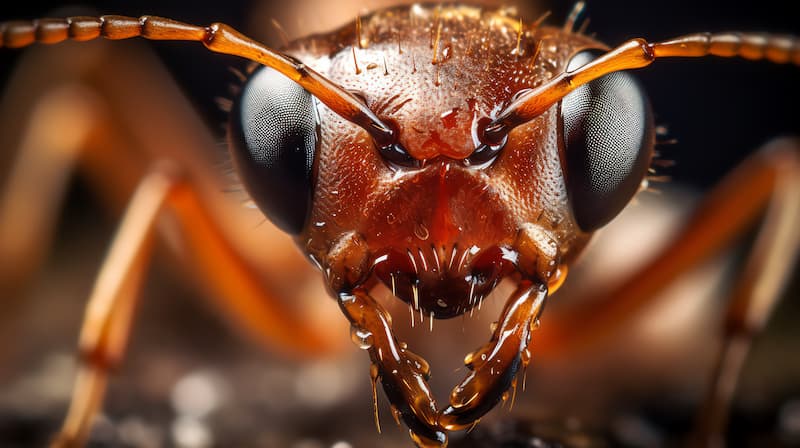
An ant’s sophisticated defense system extends beyond external cleaning. Giant chemical synthesis factories operate twenty-four hours a day inside their bodies.
The core weapons consist of formic acid secreted from poison glands and antimicrobial fluids from metapleural glands. Formic acid acts as a powerful organic acid, dissolving cell membranes instantly upon contact with bacteria or fungal spores.
How do ants store such dangerous acidic substances safely without self-harm? Their own internal organs or skin could suffer damage. Why is that?
The secret lies in the unique structure of internal walls. Ants line the inside of their poison glands with multiple layers of specialized acid-resistant protective membranes. They store potent toxins safely at high concentrations, deploying them externally only during critical emergencies. This design proves far more precise than state-of-the-art chemical storage containers built by humans.
Secretions from the metapleural glands prove equally remarkable. These fluids contain powerful antibiotic compounds capable of destroying proteins. Ants diligently use their legs to coat these secretions over every part of their bodies.
Furthermore, they meticulously coat internal tunnel walls and the delicate surfaces of larvae. This coating functions as a natural preservative film. Even if foreign fungal spores enter, they fail to sprout and perish due to this protective layer.
Even more surprising, ants adjust secretion components depending on the invading microorganism type. They synthesize customized antimicrobial agents for bacteria versus fungi. Rather than stopping after a single spray, they perform fine adjustments considering bacterial genetic mutations.
When the lethal acidity of formic acid meets the antimicrobial strength of metapleural gland secretions, synergy reaches its peak. A complete natural preservative that totally suppresses harmful bacteria is created. Ants continuously synthesize optimal disinfectants inside their personal chemical laboratories every day. This represents a paramount chemical defense barrier forged over hundreds of millions of years of evolution.
3. Secrets of Collective Hygiene: Social Immunity through Mutual Disinfection
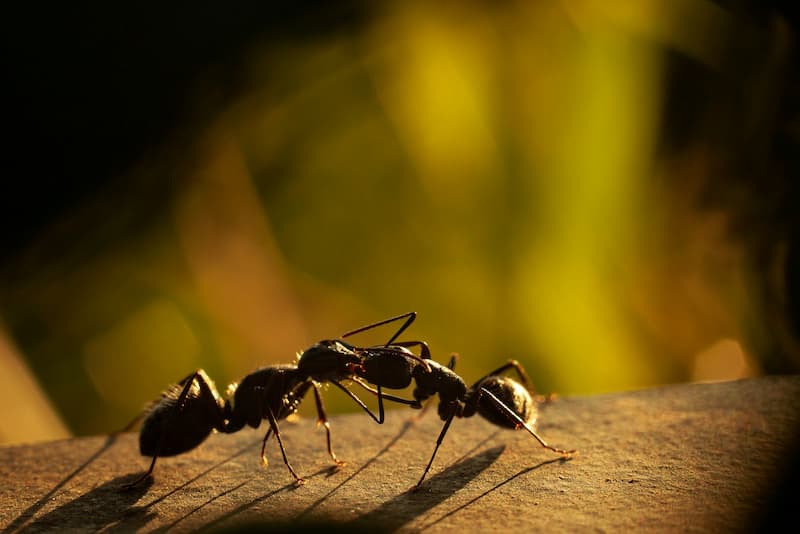
Chemical weapons in a single ant prove powerful, yet individual cleanliness alone cannot guarantee survival in sealed soil. Ant societies built a collective quarantine system transcending personal hygiene. Scientists call this phenomenon social immunity.
Grooming behavior serves as a prime example. Ants returning from foraging carry countless fungal spores on their bodies. Upon entering the nest, fellow ants immediately gather around, licking every corner of their companion’s body to remove spores.
Fungi swallowed during this process get completely destroyed by strong acidic fluids secreted inside the ant’s stomach. They clean external body parts while simultaneously disinfecting microorganisms internally. This constitutes a truly remarkable multi-dimensional quarantine system.
Additionally, ants apply metapleural gland secretions directly onto each other’s bodies. Companions disinfect hard-to-reach areas like backs or the rear of heads. What happens when an infected ant is found? Fellow ants immediately isolate the infected individual or bury them outside the nest in severe cases. Though ruthless, it remains a strict quarantine protocol for total colony survival.
The method for protecting larvae appears even more dramatic. Larvae chambers, housing vulnerable offspring, occupy the deepest and cleanest parts of the nest. Worker ants constantly coat larvae bodies with antimicrobial substances, building double and triple chemical barriers to prevent fungi from even approaching.
Thus, ants do not rely solely on individual immune systems. Disinfecting each other and providing mutual protection allow the entire society to function as one giant immune organ. As long as social immunity exists, ant nests remain secure fortresses against any microbial threat.
4. Hints for Human Future: Next-Generation Antibiotics from Ant Preservatives
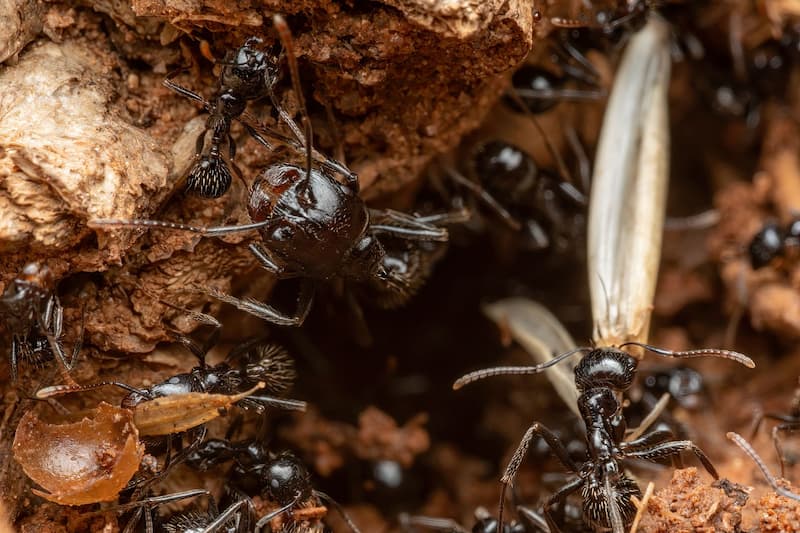
Natural preservatives produced by ants serve as more than mere survival tools for insects. They hold a powerful key to solving one of humanity’s most critical crises.
Humanity currently faces severe danger due to mutant bacteria and resistant strains, driven by the emergence of super-toxic bacteria resistant to existing antibiotics. Why is this happening?
Human antibiotics were designed to attack bacteria with single compounds, allowing bacteria to mutate rapidly and acquire resistance.
Conversely, ants have utilized identical preservative substances for hundreds of millions of years. Yet, resistant bacteria failed to break out inside ant nests. Isn’t that surprising?
The secret rests in cocktail complex prescriptions. Ants mix formic acid, metapleural gland secretions, and compounds produced by beneficial internal microbes. This leaves bacteria no temporal or genetic leeway to develop resistance.
Scientists focus precisely on this point. Research is underway to develop next-generation natural antibiotics using extracts from metapleural glands and symbiotic microbes on ant body surfaces. Treatment techniques utilizing formic acid acidity to physically collapse bacterial walls are also being studied.
The evolutionary history of ants battling tiny microbes offers a grand milestone for humanity. Hidden within the chemical wisdom preserved by ants over hundreds of millions of years lie hints for next-generation medicine that could save human survival.
Conclusion
Ants became self-sustained chemical factories in the darkest, dampest underground environments to safeguard total colony survival. Their mechanism of disinfecting and quarantining as a unified organism, rather than relying on single-ant immunity, displays extreme precision.
Beyond simple insect survival, this wisdom may represent the sole key to resolving super bacteria and antibiotic resistance challenges facing humans today.
What can humans truly learn from the evolutionary journey of tiny, invisible insects? Did nature already complete the healing answer long ago, leaving humans searching for it far too late?
![[Bit#22] The Silent Scream of Plants: Unlocking the Secrets of Ecosystems Through Ultrasound](https://hiddenbitknowledge.com/wp-content/uploads/2026/05/10ce1382fc5c-768x513.jpg)
![[Bit#12] The Golden Death: Why Scorpion Venom Costs $39 Million Per Gallon](https://hiddenbitknowledge.com/wp-content/uploads/2026/04/5fbca9cf7008-768x561.jpg)
![[Bit#57] Wildfires and Ecosystems: The Bio-Mechanism of Destruction and Rebirth](https://hiddenbitknowledge.com/wp-content/uploads/2026/06/8b81363e2c58-768x512.jpg)
![[Bit#109] Aspirin: How Science Turned Toxic Willow Bark into Medicine?](https://hiddenbitknowledge.com/wp-content/uploads/2026/07/main.Aspirin-768x432.jpg)
![[Bit#50] The Great Survival Strategy of Plant Hormones](https://hiddenbitknowledge.com/wp-content/uploads/2026/06/64472267701f-768x419.jpg)
![[Bit#55] How Do Animals Find Their Way Home Without Navigation?](https://hiddenbitknowledge.com/wp-content/uploads/2026/06/5ca23dab518d-768x512.jpg)