[Bit#118] Hydroponics: The Science of Growing Plants Without Soil
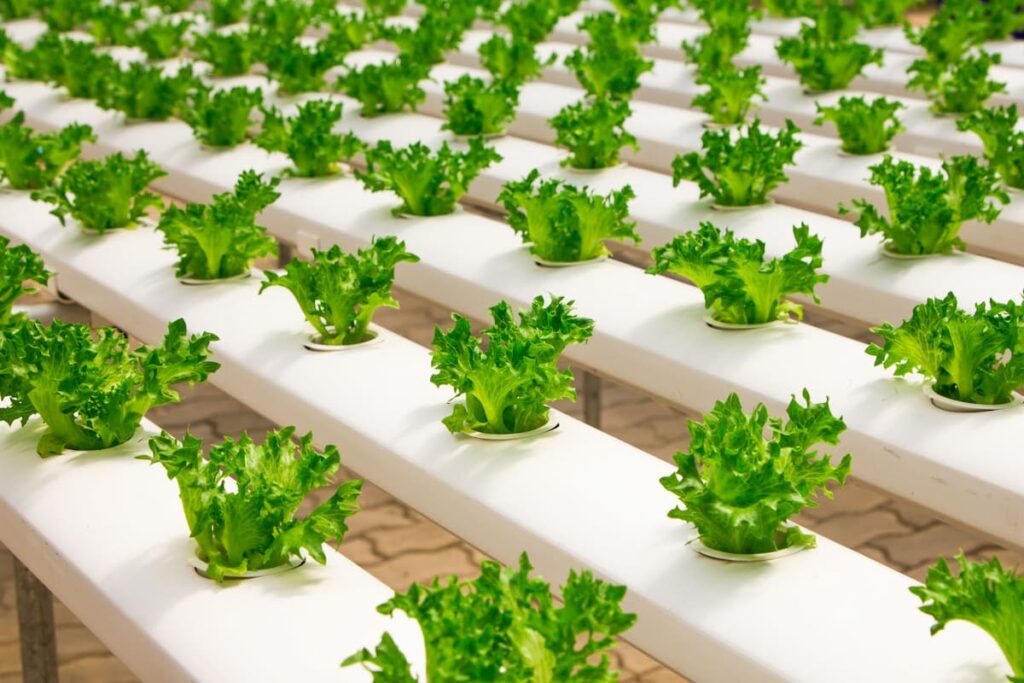
Introduction
Hydroponics is a precise science that overcomes the limitations of land to provide plants with an optimal growth environment. Understanding the mechanisms of nutrients and oxygen that plants truly need reveals new possibilities for agriculture. We examine the principles of hydroponics that yield perfect results without soil, and reflect on the future direction of global food production.
1. The Nutrient Solution Replacing Soil: Secrets of the Plant Diet
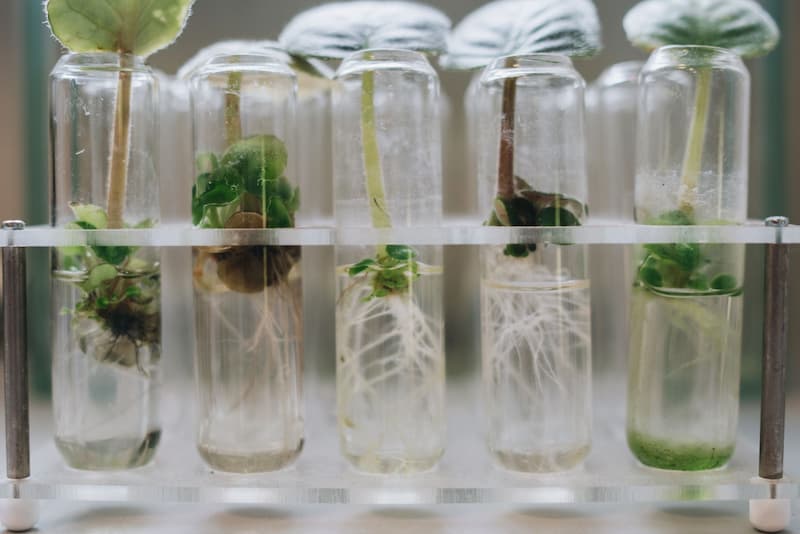
Plants do not consume soil itself. They absorb minerals dissolved in water. Elements such as nitrogen, phosphorus, and potassium represent essential plant nutrients. What then is the real role of soil? It is merely a container that anchors roots and holds water. Even without soil, plants grow far better if provided with exact nutrients. Why is this?
Countless variables exist within soil. Pests, weeds, and microbial contamination constantly follow. Fine-tuning nutrient concentration in soil proves extremely difficult. However, nutrient solutions with minerals perfectly dissolved in water function differently. They supply exact required amounts to plants right when needed.
Plants growing in open fields extend their roots broadly to search for nourishment. They consume massive amounts of energy exploring beneath the ground. Conversely, in a hydroponic environment, nutrients flow directly to the front of the roots. Plants redirect energy previously wasted on root expansion toward growing stems, leaves, and fruits. This explains why growth rates multiply rapidly.
Controlling the acidity (pH) of the nutrient solution also remains critical. Incorrect pH levels prevent roots from absorbing nutrients, no matter how rich the solution is. Hydroponics measures and controls pH in real time. It maintains the optimal state for maximum nutrient absorption 24 hours a day. Precise nutrient delivery transforms farming from guesswork into science.
2. Balance of Oxygen and Water: How Roots Breathe
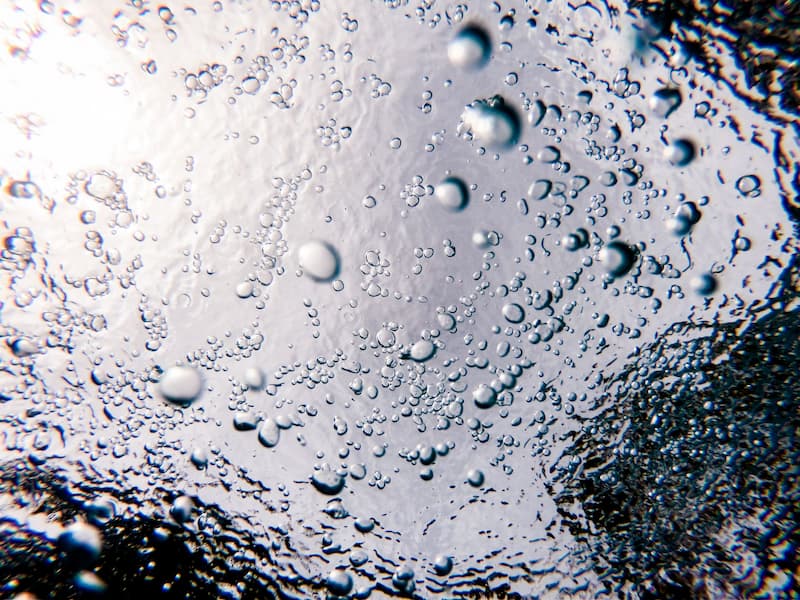
Did you know that plant roots breathe just like humans do? Roots absorb oxygen and release carbon dioxide day and night. If roots cannot breathe oxygen, they lose the capacity to absorb nutrients. Providing the richest nutrient solution becomes useless without sufficient oxygen.
Overwatering potted plants causes root rot for the same reason. Water blocks air pockets in the soil, suffocating the roots. How then does hydroponics keep roots from rotting inside water? The secret lies in dissolved oxygen—oxygen gas dissolved in the liquid.
Bubblers or water circulation devices operate continuously inside hydroponic systems. They constantly inject air into the water and create waves to force oxygen to dissolve. Oxygen-rich water maximizes root cellular respiration. When roots become healthily active, their nutrient absorption speed accelerates dramatically.
However, as water temperature rises, dissolved oxygen drops sharply. This mirrors how carbonation escapes warm soda quickly. Why do hydroponic systems strictly maintain nutrient temperatures between 18 and 22 degrees Celsius? It preserves the ideal breathing environment for roots. Hydroponics is not merely a watering technique, but precision engineering designed for root respiration.
3. Representative Hydroponic Systems: NFT and DWC
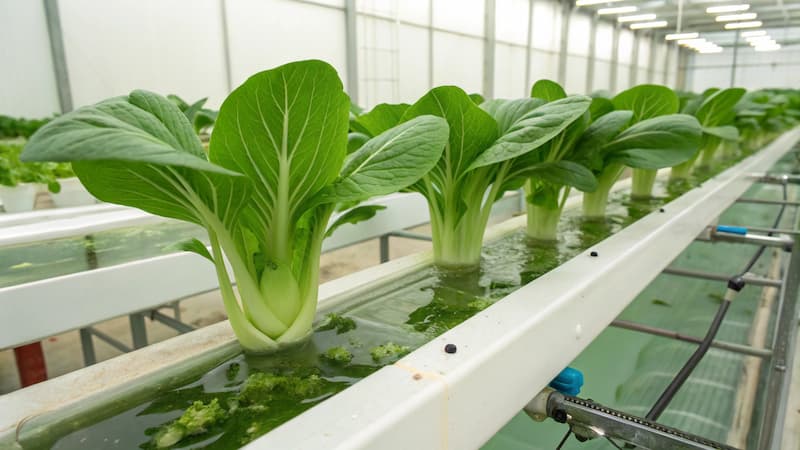
Hydroponics expands far beyond simply filling containers with water. Systems divide clearly based on structures supplying nutrient solutions and oxygen. The primary methods are Nutrient Film Technique (NFT) and Deep Water Culture (DWC). These two methods differ fundamentally in their philosophy of delivering water and air to roots.
The NFT method continuously flows a thin film of nutrient solution along inclined channels. The lower portions of roots absorb nutrients from the flowing stream. The upper sections exposed to air breathe oxygen directly. It presents a highly efficient structure achieving simultaneous nutrient delivery and respiration. The equipment remains lightweight and consumes minimal space.
Conversely, the DWC method fills deep reservoirs with nutrient solution and floats plants on top. Roots remain completely submerged in water. Powerful air bubbles blast from the reservoir bottom continuously to prevent root suffocation. The large volume of water reduces temperature fluctuations, providing system stability. This method proves advantageous for cultivating larger vegetables.
Regardless of the selected system, the core principle remains identical: supplying consistent nutrients and oxygen to roots. Although structural designs vary, the underlying biological principles apply uniformly. The precision in choosing systems matched to grower environments determines hydroponic success.
4. Core of Future Agriculture: Why Produce Food on Water?
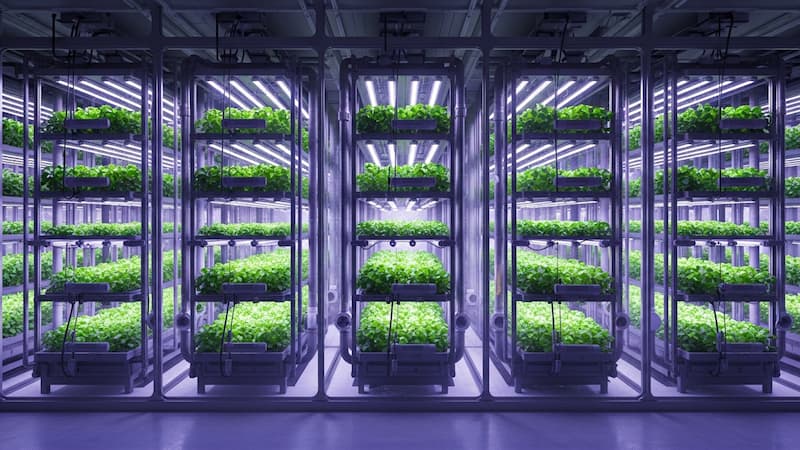
Substantial portions of the Earth’s surface suffer from climate change and soil contamination. Droughts crack the earth, while heavy downpours wash away soil nutrients completely. Traditional soil agriculture faces a massive crisis. Humanity turning toward hydroponics to produce food on water is not a simple technical curiosity. It represents an essential choice for survival.
Hydroponics operates independently of land area. Plants grow inside urban buildings, deserts, and even inside spacecraft. Vertical farms stacking growth tiers to maximize cultivation area serve as prime examples. The same ground footprint yields tens of times more crops than open-field farming. It completely blocks climate change impacts, supplying food stably under identical conditions year-round.
Water conservation demonstrates incredible innovation as well. When watering soil, most liquid seeps deep underground or evaporates. Conversely, hydroponics utilizes closed recirculating systems. Excluding water absorbed by plants, remaining nutrient solutions undergo purification and reuse. Systems conserve over 90 percent more water compared to traditional farmland. This provides a powerful tool for a future facing severe water shortages.
Ultimately, hydroponics is not a simple shift in farming methods. It marks a technological revolution where humanity transitions from passive farmers governed by environment into active producers completely controlling growth conditions.
Conclusion
Hydroponics redefines our long-standing relationship with the land. Observing plants thriving on water and science rather than soil, one must ask: Is humanity truly mastering nature, or discovering new ways to harmonize with it? As technology dissolves agricultural boundaries, we must deeply reflect on the true value of nature we need to preserve.
![[Bit#44] The Bizarre World of Mushrooms](https://hiddenbitknowledge.com/wp-content/uploads/2026/05/24e5b396f4e7-768x512.jpg)
![[Bit#122] Synthetic Biology: The Dawn of an Era Designing Life Anew](https://hiddenbitknowledge.com/wp-content/uploads/2026/08/main.-Synthetic-Biology-768x419.jpg)
![[Bit#76] Leaf Quantum Code: 100% Light to Energy Secret](https://hiddenbitknowledge.com/wp-content/uploads/2026/06/main.plant-converting-light-into-electricity-768x419.jpg)
![[Bit#98] Carbon Capture Technology Turning Carbon Dioxide into Stone](https://hiddenbitknowledge.com/wp-content/uploads/2026/07/main-768x432.jpg)
![[Bit#170] Survival Strategy of Sponges: The Most Primitive Creatures Surviving 600 Million Years](https://hiddenbitknowledge.com/wp-content/uploads/2026/09/main.-Sponges-768x419.jpg)
![[Bit#139] Why Do Plant Roots Always Grow Downward? The Secret Gravity Sensor Inside](https://hiddenbitknowledge.com/wp-content/uploads/2026/08/main.Plant-root-768x432.jpg)