[Bit#119] How Psilocybin Treats Depression: The Bio-Mechanism Behind Magic Mushrooms
Introduction
For decades, humanity dismissed magic mushrooms as mere hallucinogens. Today, modern neuroscience views them as a revolutionary key to mental health. That key is psilocybin. How does this compound reset severe, treatment-resistant depression in a single leap? This article dives deep into the biochemical mechanisms psilocybin triggers inside the brain. By examining how it shatters rigid, negative thought loops, we confront a compelling new question about the human mind and neuroplasticity.
1. The Core Magic Mushroom Compound Resetting Rigid Brain Circuits
A depressed brain behaves like hardened concrete. It gets trapped in repetitive, negative thought loops. Why does this happen? The brain’s neural networks become rigid, actively resisting change. Enter a compound that brings a fresh wave of adaptability: psilocybin.
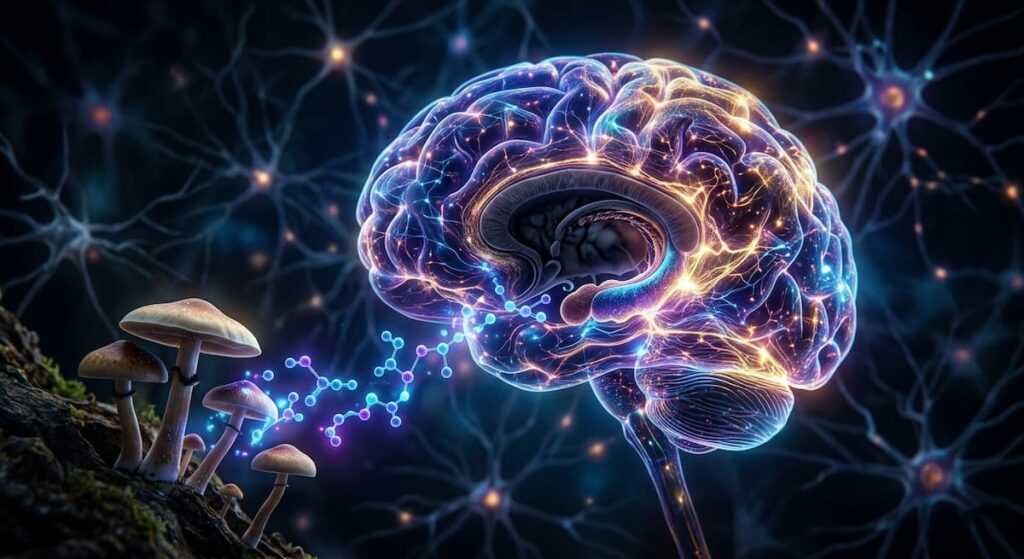
Magic mushrooms refer to wild fungi species containing the psychoactive compound psilocybin. Ancient tribes used these mushrooms in sacred rituals, but they are far more than recreational substances. Modern medicine now focuses heavily on how this fungal chemical reorganizes human neural pathways.
Psilocybin is a natural alkaloid extracted from these mushrooms. When ingested, it undergoes a dramatic chemical transformation inside the human body. As the liver metabolizes it, psilocybin converts into its active form, psilocin. Psilocin easily crosses the blood-brain barrier, acting as a direct master key to access brain cells.
Inside the brain, psilocin closely mirrors the molecular structure of serotonin, a primary neurotransmitter. This structural similarity allows it to bind perfectly into serotonin receptors on brain cells, specifically targeting 5-HT2A receptors. Traditional antidepressants slowly raise overall serotonin levels by blocking reuptake. Psilocybin takes a different route by directly and intensely activating these receptors.
This intense activation sends a powerful shockwave through hardened neural circuits. It momentarily disrupts chronic, deeply ingrained depressive patterns. The brain finally prepares to break its old mold and build entirely new neural connections. This step marks the primary biochemical mechanism bringing relief to a frozen mind.
2. Serotonin Receptor Binding and the Explosion of Neuroplasticity
What actually happens once psilocin binds to 5-HT2A serotonin receptors inside the brain? This binding triggers far more than a simple chemical reaction. It sparks a massive intracellular signaling cascade inside the neurons.
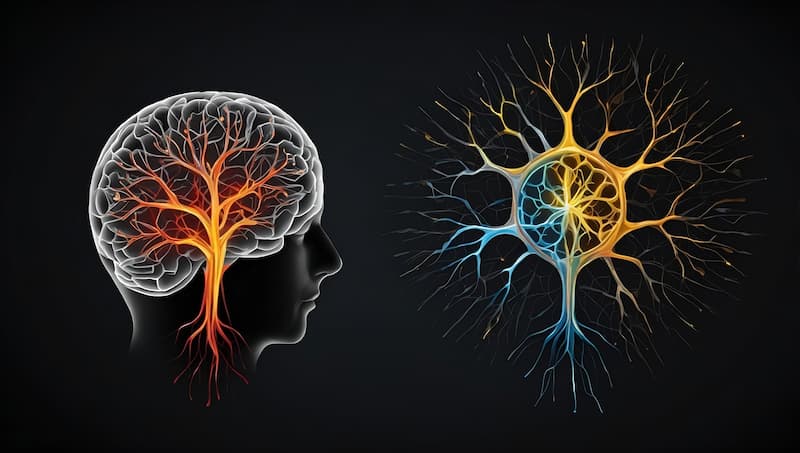
When this switch flips, brain cells release an explosive surge of a specialized protein called Brain-Derived Neurotrophic Factor, or BDNF. BDNF acts as a natural fertilizer for the brain, promoting neuronal growth, repair, and survival. What changes occur when BDNF levels spike?
First, new branches, known as dendrites, begin sprouting outward from the ends of nerve cells. Countless new communication pathways open up between existing neural networks. As these branches connect in real time, they rapidly establish an entirely new neural web. Neuroscience refers to this rapid structural adaptation as a dramatic increase in neuroplasticity. The once-rigid brain architecture transforms back into a flexible, malleable state.
Why is this structural change so vital? The brain of a chronic depression patient suffers from degraded, shrunken neural pathways. The physical roads for thought become blocked. Psilocin, boosted by BDNF, swiftly repairs and regenerates these damaged neural bridges.
Traditional antidepressants take weeks or even months to stimulate similar neuroplasticity. They require daily, long-term administration just to yield minor structural shifts. In contrast, a single dose of psilocybin drastically boosts neuroplasticity within hours. It opens brand-new superhighways across stagnant brain networks almost overnight.
Ultimately, psilocybin is not a simple mood lifter. It functions as a potent biological catalyst that physically alters and restores brain architecture. This forms the second key bio-mechanism through which psilocybin rapidly rewires the depressed brain.
3. Breaking Negative Thought Loops by Suppressing the Default Mode Network
Our brains feature a specialized neural network that activates when we daydream, rest, or lack focus. Neuroscientists call this region the Default Mode Network, or DMN. The DMN serves as headquarters for self-referential thought, past regrets, and future anxiety.
What occurs in the brain of someone suffering from depression? The DMN becomes excessively hyperactive. The brain endlessly loops self-criticism and replays painful memories without pause. Uncontrolled DMN activity locks individuals inside a cage of inescapable negative thoughts, creating a entrenched vicious cycle.
Psilocybin instantly dampens this hyperactive DMN. It acts as a master switch that temporarily pauses the brain’s overbearing control hub. As rigid DMN connectivity loosens, distinct regions of the brain break free from their usual silos and begin communicating with each other in entirely new ways.
During this state, patients break free from the narrow, self-absorbed perspective that holds them captive. The obsessive grip of negative thoughts snaps, opening up emotional space. It functions like rebooting an overloaded computer to terminate background programs that drain system resources. This reduction in DMN activity forms the third primary mechanism breaking the cycle of depression.
4. Key Differences from Traditional Antidepressants and Future Potential
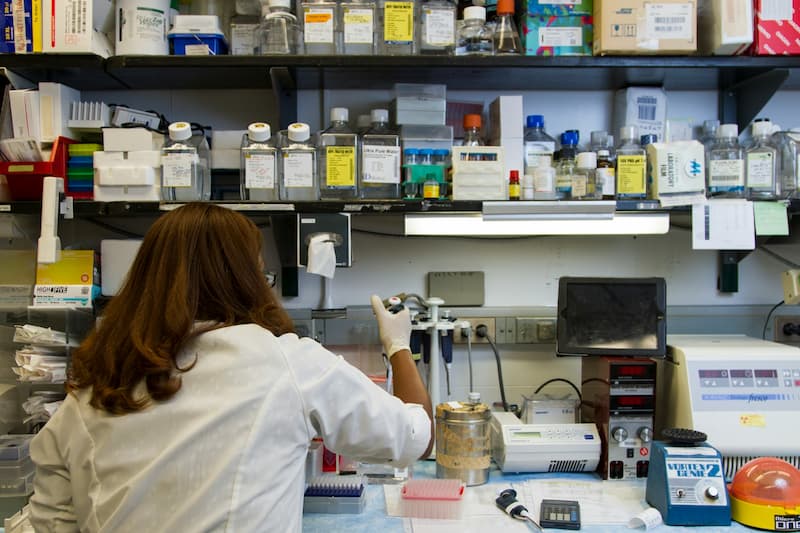
The therapeutic outcomes achieved with psilocybin surpass the core limitations of standard psychiatric treatments. Commonly prescribed SSRIs work by artificially maintaining elevated serotonin levels. They typically require 4 to 8 weeks to demonstrate clinical benefits, demanding daily administration. Furthermore, a substantial percentage of patients exhibit treatment resistance, seeing little to no improvement.
Why does this clinical gap exist? Standard medications often dull the overall emotional spectrum. While they decrease sadness, they frequently blunt joy and emotional resonance as well. Psilocybin is not a daily pill. It is administered just once or twice under strict clinical supervision alongside psychological support.
Rather than numbing emotions, psilocybin fundamentally restructures neural pathways. It enables patients to confront the root causes of suppressed emotions while temporarily amplifying brain plasticity. Clinical trials show that a single session can produce long-lasting relief from depressive symptoms, enduring for months or even years.
Challenges still remain on the horizon. Given its powerful psychedelic nature, treatment requires a safe clinical environment guided by trained professionals. The biopharmaceutical industry is currently working to isolate non-hallucinogenic analogues or engineer fast-acting derivatives that minimize side effects. Psilocybin stands as one of the most promising next-generation biotherapeutics, poised to reshape modern psychiatry.
Conclusion
Exploring the mechanisms of psilocybin forces us to rethink human consciousness and the remarkable flexibility of the brain. Depression is not a failure of willpower, but a biological state where neural circuits become locked in rigid patterns. If resetting these pathways can wash away deep psychological suffering, it raises a fundamental question: to what extent are our identity and emotions tied to malleable physical biology?
![[Bit#6] Why You Are Addicted to Smartphone Dopamine: The Science of Digital Traps](https://hiddenbitknowledge.com/wp-content/uploads/2026/04/d0c5451a8a58-768x512.jpg)
![[Bit#62] Is Reincarnation Science or Illusion? Decoding the Secrets of the Human Brain](https://hiddenbitknowledge.com/wp-content/uploads/2026/06/main.Reincarnation-768x512.jpg)
![[Bit#52] Love as a Severe Addiction: The Cruel Expiration Date of the Brain Designed by Hormones](https://hiddenbitknowledge.com/wp-content/uploads/2026/06/8b7a2c3fcebd-768x512.jpg)
![[Bit#129] Why Does Time Seem to Pass Faster as We Get Older?](https://hiddenbitknowledge.com/wp-content/uploads/2026/08/main.fast_-767x428.jpg)
![[Bit#59] Are Zombies Scientifically Possible? The Real Reality of Zombies Proven by Science](https://hiddenbitknowledge.com/wp-content/uploads/2026/06/1105c1a39030-768x431.jpg)
![[Bit#19] The Science of Infantile Amnesia: The First Fragment in the Dark](https://hiddenbitknowledge.com/wp-content/uploads/2026/05/6050aee2b01d-768x512.jpg)