[Bit#62] Is Reincarnation Science or Illusion? Decoding the Secrets of the Human Brain

1. The Substance of Past-Life Memories: Brain Malfunction or Memory Transference?
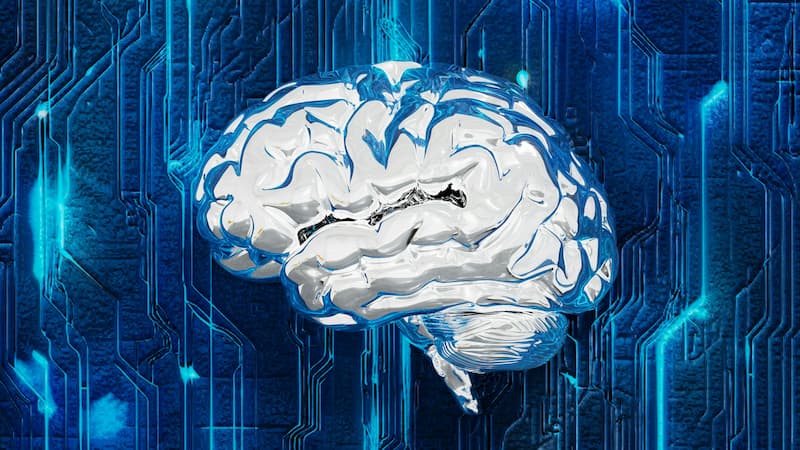
Many people claim to remember their past lives. They often describe very specific geographical locations or events from before they were born. How does science interpret this? Is it simply a brain malfunction, or is it a mysterious transference of memory?
Our brain possesses a sophisticated system for storing and playing back information. However, this system occasionally commits errors. The most representative phenomenon is the creation of false information, professionally known as False Memory Syndrome. This is a process where the brain reconstructs events that never existed as if they were actually experienced. It is a process where intense information encountered in movies or books is mistaken for one’s own actual experience as time passes.
However, those who claim to have past-life memories speak of much more concrete information. In particular, there are instances where young children accurately describe places or people they have never seen. The scientific community interprets this as cryptomnesia, or the phenomenon of hidden memory. It is a method where information seen fleetingly in a documentary or encountered by chance in the past is stored in the unconscious and then intensely expressed in specific situations. The brain has a habit of trying to connect new information with existing information when inputting it. If the source of the information is forgotten during this process, our brain classifies that information as a secret, internal memory. Why is this? It is because our brain has a very strong desire to logically explain fragmented information.
Furthermore, brain science explains this as a process of memory reintegration. Memory is not fixed data. Every time we retrieve it, the brain rewrites and modifies that memory. This process leaves room for imagination to intervene. Actual past experiences, imagination, and externally introduced information become mixed together inside the brain. It is like a collage. It becomes difficult to distinguish which is a real memory and which is a fabricated story. Ultimately, it is highly likely that what we call past lives are the results of the brain’s instinctual effort to protect itself and complete a narrative. Scientifically, past lives may not be events where someone else’s life has invaded my memory, but a very elaborate fiction created by my own brain. Isn’t it truly fascinating? The brain is an organ that is this intelligent, and yet it plays such dangerous tricks.
2. Deja Vu and Genetic Memory: The Secret Behind That Strange Familiarity

Following past-life memories, there is another phenomenon that baffles us the most: deja vu. The feeling that you have seen a place before even though you are visiting it for the first time. The illusion of knowing what words will come next in a conversation you are having for the first time. People often see this and claim that memories of a past life have been revived. Is that really the case?
Science explains this as a processing delay phenomenon in the brain. Our brain goes through several steps when processing visual information. Light entering through the eyes passes through the retina and is delivered to the occipital lobe of the brain. At this time, the left and right brains each process information independently. Usually, because the two brains receive information simultaneously, we perceive reality in real-time. However, what happens if the speed at which one side of the brain processes information is delayed by a very slight margin? The brain that processed the information first has already stored the data in the memory room, and the brain that processed the information later confirms it again. The brain perceives this slight time difference as a memory from the past. This is the reality of deja vu. It is not a phantom of a past life, but a very short synchronization error caused by the brain’s system.
Then what about genetic memory? It is the claim that the memories of ancestors are engraved in our genes and felt as if they were past lives. According to epigenetic research, powerful experiences such as fear or stress can cause changes in the way genes are expressed. However, this is not a way of calling up specific scenes of events as memories. Genes only pass on reactive mechanisms for survival; they do not store data like the landscapes of specific places or conversations experienced by an individual.
Many people want to interpret their deja vu as a special destiny. They imbue a system error created by the brain with mystical meaning. Why? Because it makes our ordinary daily lives much more dramatic. However, from the cold perspective of science, this is just a limitation of a complex neural network. That strange familiarity you felt is not a signal from a past life, but clear evidence that your brain is working very hard today.
3. Quantum Mechanics and Consciousness: Where Does It Go After Death?
People who believe in past lives often talk about the permanence of consciousness. The logic is that even if the body disappears, consciousness remains in the form of energy and moves on to the next life. What is often cited here is quantum mechanics. This is due to the principle of superposition, where particles in the microscopic world exist in multiple states simultaneously until observed. Some people apply this to human consciousness, claiming that consciousness, too, is a form of energy that does not perish but is stored within the universe’s quantum data. Is this a hypothesis with actual scientific grounds?
First, it is necessary to clarify the scope of quantum mechanics. Quantum superposition or entanglement are probabilistic phenomena that occur in the world of very small particles. The claim that consciousness wanders around like physical particles in the macroscopic human brain to preserve information has not been proven by the academic community to this day. Consciousness is the sum of high-level electrical and chemical signals created by a biological machine called the brain. If the machine stops, the signals naturally disappear.
However, why do people want to connect post-death consciousness with quantum mechanics? It is because of the fundamental fear humans possess. It is too terrifying to accept the fact that one’s self completely disappears. Therefore, we borrow the language of science to seek comfort that my data will remain somewhere even after death. This is professionally called an anthropomorphic scientific error.
It is a result of forcing physical laws to fit human emotional desires. The universe does not understand our desire to be remembered forever even after we die. Under the cold laws of the universe, consciousness is merely a spark that flickers only within a living brain. It is not sad that darkness follows after that spark is extinguished. It is the natural final destination where a very complex phenomenon called life has completed its physical mission. Isn’t this the moment when we need the courage to face reality, which is different from when we imagine past lives?
4. The Conclusion from Modern Psychology and Neuroscience

Why are we so captivated by the narrative of past lives? Beyond mere brain errors, we need to examine why this has become a theme that is constantly repeated throughout human history. Psychologically, this is a survival strategy for humans to endure the absurdities of life. When facing painful reality and misfortunes that are hard to accept, the concept of past lives becomes a very powerful anesthetic. The moment you believe that current suffering is a karmic debt from a past life or a preparation process for the next life, the weight of life becomes a little lighter.
The conclusion of past lives from the perspective of neuroscience is clear. The human brain is not an organ that remembers facts, but an organ that generates meaning. We collect fragmented pieces of memory, fill the gaps between them with imagination, and complete a single narrative. The conviction in past lives is a very elaborate self-deception created by the brain, and at the same time, a powerful defense mechanism to protect oneself. The brain feels the greatest stability when it believes the stories it created itself are true reality.
Ultimately, a past life is not data from the past, but a mirror reflecting our current minds. What we want to see through past lives is not a life that has passed, but a yearning for how we want to understand this life right now. Science does not deny past lives. It only reveals that they are not external realities, but internal landscapes. Instead of clinging to a past that has not been scientifically proven, focus on the reality right in front of your eyes that your brain is creating at this very moment. That is the only way to awaken from the illusion of past lives and become the master of your own life. Your effort to find memories of a past life might actually be your strongest will to live today as intensely as possible.
![[Bit#17] The Collapse of Brain and Instinct: The Biological End Proven by the Rat Utopia Experiment](https://hiddenbitknowledge.com/wp-content/uploads/2026/04/4426b677d91a-768x431.jpg)
![[Bit#142] Gender Differences in Mirror Perception: Why Men Are Satisfied and Women Are Self-Critical](https://hiddenbitknowledge.com/wp-content/uploads/2026/09/main.mirorr-767x428.jpg)
![[Bit#119] How Psilocybin Treats Depression: The Bio-Mechanism Behind Magic Mushrooms](https://hiddenbitknowledge.com/wp-content/uploads/2026/08/main.magic-mushrooms-768x419.jpg)
![[Bit#81] Placebo Effect : The Mysterious Phenomenon of a Fake Drug Healing the Body](https://hiddenbitknowledge.com/wp-content/uploads/2026/07/main.Placebo-Effect-768x512.jpg)
![[Bit#7] The Chilling Reason Why Your Brain Paralyzes Your Body While You Sleep](https://hiddenbitknowledge.com/wp-content/uploads/2026/04/6e3ddc42884a-768x511.jpg)
![[Bit#90] Neurobiology of Frisson: Why Music Gives You Goosebumps](https://hiddenbitknowledge.com/wp-content/uploads/2026/07/main.Brain-music-768x591.jpg)