[Bit #155] The Secret of Unihemispheric Sleep: Why Some Animals Sleep with Half Their Brains
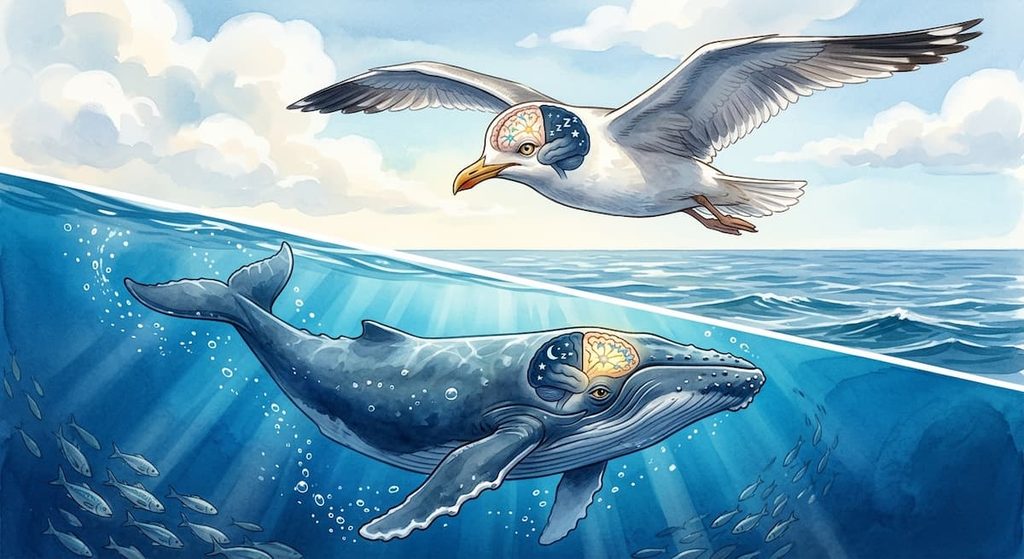
We turn off our entire bodies when we sleep. However, there are creatures in the ecosystem that swim and fly with only half of their brains turned on. How does unihemispheric slow-wave sleep work, where only half of the brain falls asleep for survival? We will dig into the fierce survival strategy of living organisms and examine whether traces of it remain in our human brains as well.
1. Shattering the Common Sense of Sleep: Animals That Sleep with Half Their Brain

Do you think your whole brain stops functioning when you sleep? The common sense of sleep we know does not apply to aquatic animals or certain birds. Killer whales, dolphins, and some birds flying in the sky maintain a unique state where only one hemisphere falls asleep while the other remains awake. Academics refer to this phenomenon as unihemispheric slow-wave sleep.
Why do these animals sleep by dividing their brains in half? It is directly connected to respiration and defense for their survival. Land animals can breathe automatically through their autonomic nervous system even when they fall asleep. On the other hand, aquatic mammals like dolphins must consciously control their breathing. If their entire brain falls asleep under water, breathing stops, and they drown without being able to rise to the surface. To continue swimming and control breathing, half of the brain must always remain on high alert.
The visual defense system also operates simultaneously. When the right brain falls asleep, the left eye closes, and when the left brain falls asleep, the right eye closes. Thanks to the crossed neural architecture, the eye connected to the opposite cerebral hemisphere constantly monitors the surrounding environment. While half of the brain takes a deep rest, the other half acts as a night guard to detect the approach of predators. This is a completely different survival mechanism from human sleep, which becomes entirely defenseless.
Surprisingly, they can rest without completely losing consciousness. These animals continuously swim, maintain group formations, and sense danger even while sleeping. Even when measuring brainwaves during sleep, slow-wave sleep with slowed brainwaves appears in one hemisphere, while brainwaves characteristic of being awake are maintained in the other hemisphere.
2. Half-Brain Escape: Biological Mechanisms of Unihemispheric Sleep
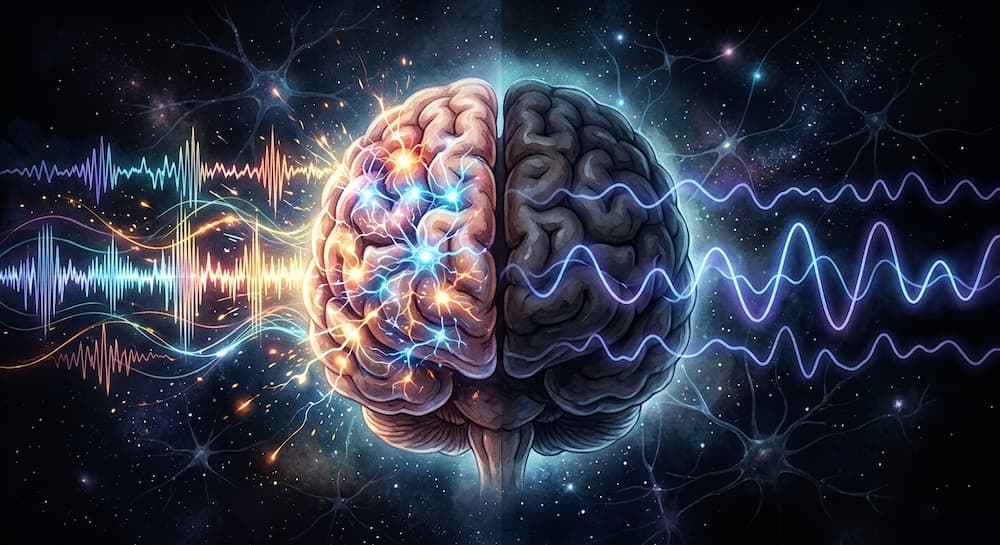
How can a single brain be divided into two halves that move independently? The secret lies in the nerve bundles connecting the left and right sides of the brain. It is a precise chemical switching system located in the corpus callosum and thalamus region.
Under normal sleep conditions, inhibitory neurotransmitters spread throughout the entire brain. This substance is known as GABA. When GABA is secreted, brain cell activity slows down and enters a state of sleep. However, animals that perform unihemispheric slow-wave sleep are different. The secretion of GABA does not spread across the whole brain but is localized strictly to one hemisphere.
Why does this chemical imbalance occur? It is due to the regulation of acetylcholine and noradrenaline secretion starting from the brainstem. One hemisphere is filled with GABA to induce sleep, while the opposite hemisphere receives a continuous secretion of acetylcholine to maintain an awake state. Two opposite chemical reactions—sleep and wakefulness—happen simultaneously inside a single head.
Then, do the two hemispheres become confused while communicating with each other? Here, the role of the corpus callosum is decisive. This massive neural pathway connecting the left and right brains blocks sleep signals from crossing over to the other side. It essentially acts as a firewall.
Measuring brainwaves makes this phenomenon even clearer. Slow and large slow-wave signals are detected in the sleeping hemisphere. This means brain cells are resting and undergoing a clearance process. At the same time, tight and fast high-frequency waveforms are observed in the awake hemisphere. This serves as evidence that external stimuli are being processed in real-time.
This precise neurochemical switch alternates in reverse after a set period. The rested hemisphere wakes up, and the working hemisphere goes to sleep. It is the most perfect division of labor created by the brain’s biochemical balance.
3. A Choice for Survival: Evolutionary Advantages of a Watchful Brain
The natural world is a harsh arena of survival where one cannot let down their guard even for a moment. The answer to why animals chose the tedious method of sleeping with half their brains is clear: to avoid death. Sleep is the most dangerous moment when senses are paralyzed and creatures become defenseless. It is an ideal state to become a target for predators. Unihemispheric slow-wave sleep keeps one half of the brain awake, allowing surrounding sensory organs to function continuously even during sleep.
They detect the faint sound of an approaching predator or subtle vibrations of water waves in real-time. If threats like sharks or killer whales approach, they can react and flee immediately. Why is this ability essential? If an animal were completely asleep, it would have been preyed upon without being able to react. It also prevents body temperature from dropping rapidly if movement stops in cold seawater. One side of the brain lightly contracts muscles to maintain continuous swimming and retain body heat.
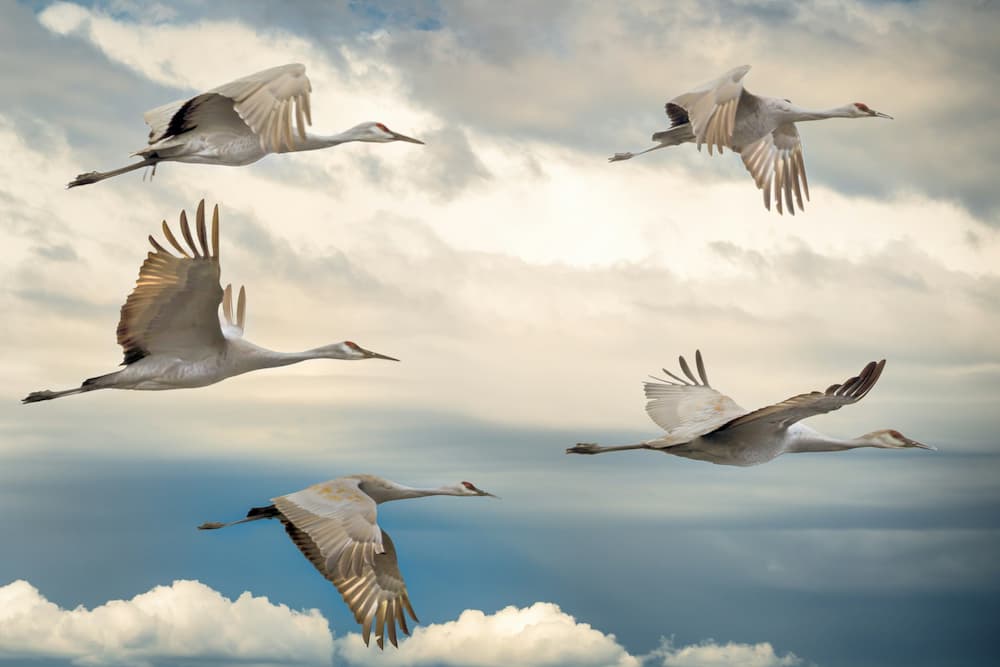
This capability is equally vital for birds flying in the air. Consider migratory birds flying thousands of kilometers over the ocean without rest. The moment they stop flying and land, the risk of predator attacks or straying off course increases significantly. Birds keep one half of their brain awake while airborne to maintain the minimal balance needed for flight.
For birds living in flocks, it serves as a collective defense measure. When ducks sleep in a line, the ducks at the very ends keep their outer-facing eye open and guard using half their brain. While the ducks in the middle sleep comfortably with both eyes closed, the outer ducks take turns standing guard. Ultimately, unihemispheric slow-wave sleep is the perfect evolutionary outcome that achieves both brain rest and survival.
4. Can Human Brains Also Sleep Halfway? Insomnia in Unfamiliar Places
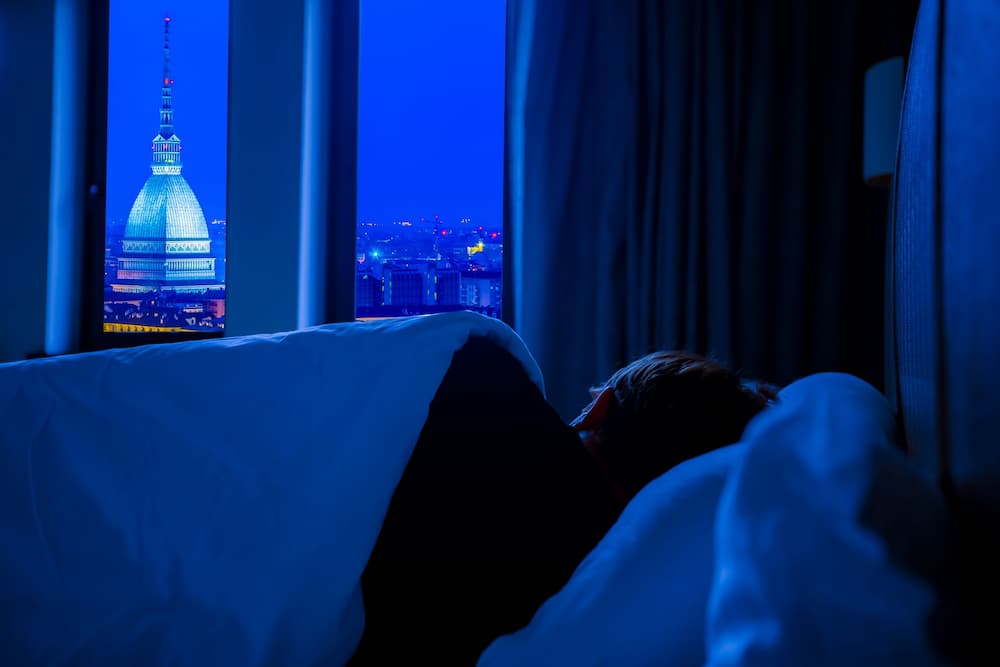
Does this unique sleep ability found in animals still remain in humans? To conclude, traces for survival still exist. You have likely experienced tossing and turning on your first night in an unfamiliar hotel or travel destination. Was the reason you felt exceptionally tired and heavy the next day simply because the bed was uncomfortable? Brain scientists call this phenomenon the first-night effect and explain the secret of human sleep through it.
Precise measurements of the human brain during sleep revealed a surprising fact. When entering an unfamiliar environment, the human left hemisphere fails to fall into a deep sleep and remains awake. Why the left brain? Human left hemisphere is responsible for logical thinking along with focused attention on threats. In wild environments, unfamiliar places were potential danger zones. The left hemisphere activates night guard mode in preparation for unusual external sounds or intrusions.
Of course, humans cannot walk around with one eye open like dolphins. However, the phenomenon where the depth of slow-wave sleep differs between the left and right sides in unfamiliar places is clear biological evidence. The brain maintains an unconscious state of alertness without completely switching off one side just in case of an emergency. The evolutionary defense mechanism left by our ancestors to avoid predator attacks during the night still operates in modern human bodies.
Ultimately, insomnia experienced while traveling is not a simple sleep disorder or sensitivity. It is the most instinctive and perfect survival defense operation launched by the human brain to survive in the wild. If you toss and turn in a new place, you can think of it as your brain working hard to protect you.
Conclusion
Unihemispheric slow-wave sleep is an evolutionary masterpiece created by living organisms adapting to harsh natural environments. Human sleep, which rests the entire brain, and animal sleep, which shares the brain in halves for survival, were both optimal choices for their respective environments.
We often think of sleep as simple rest or a state of pause. However, seeing creatures swimming in the ocean and flying in the sky with half their brains turned on makes us realize that sleep is also a continuation of fierce survival.
What then is true rest? Is it defenseless tranquility letting go of consciousness completely, or is it a state of fierce vigilance keeping one side of the brain awake for survival? Perhaps we humans living in modern society have not found a safe zone for our minds, standing an anxious night guard every night with half of our brains turned on.
![[Bit#24] The Glucose Spike: A Silent Bombardment Destroying Your Body](https://hiddenbitknowledge.com/wp-content/uploads/2026/05/3d60887a0b05-768x512.jpg)
![[Bit #154] Why 5 Nobel Prizes Went to Fruit Fly Research](https://hiddenbitknowledge.com/wp-content/uploads/2026/09/main.fruit-fly-768x419.jpg)
![[Bit#101] Why Your Body Kills Millions of Cells Every Day: The Science of Apoptosis](https://hiddenbitknowledge.com/wp-content/uploads/2026/07/main.apoptosis-768x431.jpg)
![[Bit#131] Elephant Cancer Resistance: The Giant Organism with Dozens of Cancer Suppressor Genes](https://hiddenbitknowledge.com/wp-content/uploads/2026/08/main.-Elephant-767x428.jpg)
![[Bit#29] The Evolutionary Secret of Right-Handed Dominance](https://hiddenbitknowledge.com/wp-content/uploads/2026/05/391c8203889c-768x512.jpg)
![[Bit#31] The Origin of Life: From Chemical Evolution to the Birth of Cells](https://hiddenbitknowledge.com/wp-content/uploads/2026/05/f009466cf8b1-768x419.jpg)