[Bit#165] Green Sea Slug: The Secret of an Animal Powered by Sunlight Like a Plant
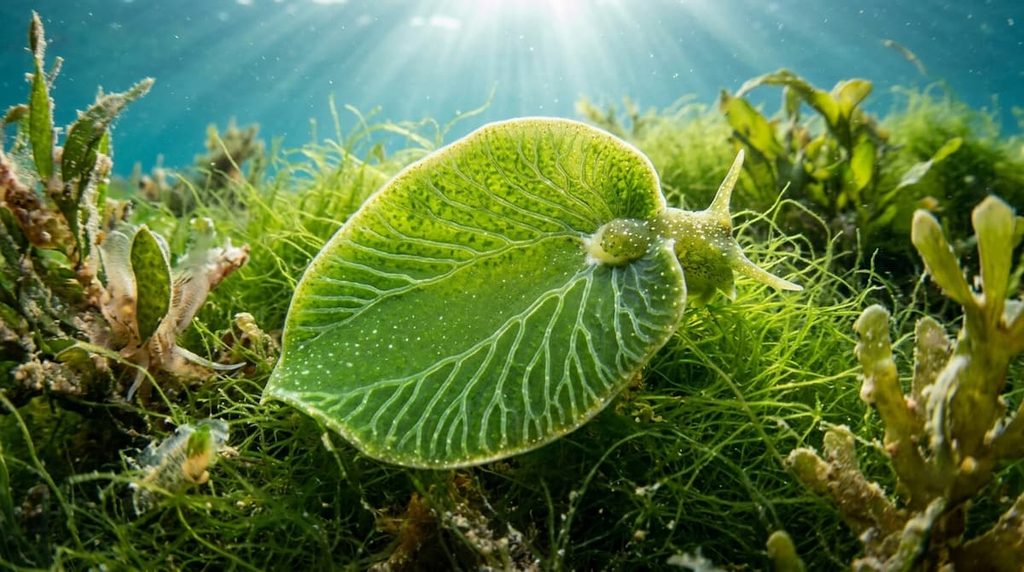
Can an animal survive solely on sunlight, just like a plant? The green sea slug eats its prey, marine algae, and selectively extracts only the photosynthetic factories inside to use as its own. Exploring this incredible phenomenon that shatters biological norms, we dive into the blurring boundary between animals and plants and the sheer wonder of evolution.
1. The Emergence of a Photosynthetic Animal
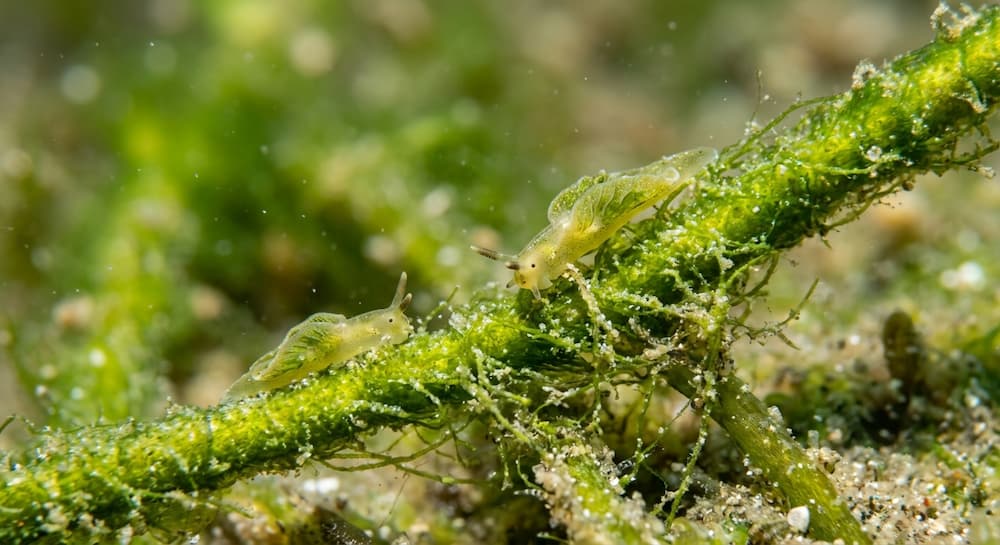
What if an animal could produce its own nutrients simply by absorbing sunlight? The need to roam around searching for food would completely vanish. Just like a plant, basking lazily under the sun would fill its belly. While this sounds like a concept straight out of a science fiction novel, it is a reality for a creature existing on Earth: the green sea slug. Ordinarily, animals obtain the energy required for survival by consuming other organisms. Conversely, plants synthesize their own nutrients using sunlight. The boundary dividing these two realms was clear for a very long time. However, the green sea slug has completely shattered this ancient formula of the natural world.
This sea slug stands out from its appearance alone. It moves through the ocean with a vibrant green body that closely resembles a leaf. It is not merely green in color, either. Photosynthesis actually occurs inside its body every single day. In essence, it functions as a living biological solar generator that converts solar energy directly into chemical power. How is such a process possible within an animal body? The key lies in the chloroplasts stored inside its tissues. Chloroplasts are specialized internal cellular factories where plants transform light into energy. Yet, there is a fascinating twist: this sea slug is not born with chloroplasts inside it.
A newborn sea slug begins its life as an ordinary, translucent creature devoid of any photosynthetic capability. Only after consuming specific prey during its growth phase does it acquire this extraordinary ability. It absorbs the essential organelles of its food and seamlessly integrates them into its own biological system. Watching this sea slug swim through the ocean while sunbathing dealt a massive shock to biologists. Possessing attributes of both plants and animals, this miraculous living creature represents a true scientific marvel. How exactly could this sea slug preserve these photosynthetic organelles, unique to plants, without destroying them inside its own body?
2. The Genetic Thief That Steals Chloroplasts
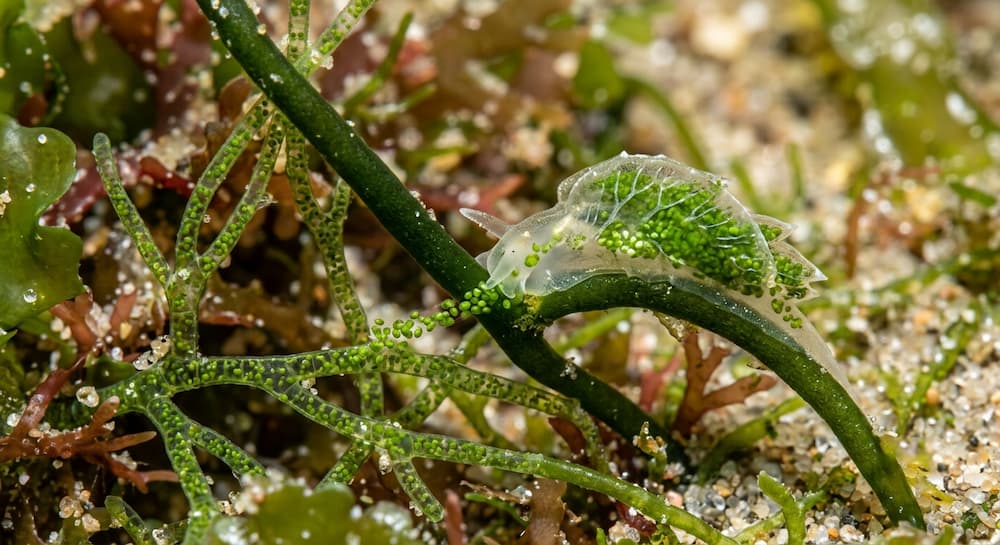
By what method did the green sea slug come to manipulate chloroplasts, the exclusive property of plants, as if they were its own organs? The answer lies in a meticulously planned and daring operation of cellular plundering. Crawling across the seafloor, this sea slug searches for a specific type of marine algae. Upon locating its target, it immediately pierces the algal cell walls using sharp, straw-like radular teeth. It then forcefully siphons out the internal cellular fluids.
Under normal circumstances, an animal would obliterate all organelles at this stage by secreting powerful stomach acids and digestive enzymes to dissolve them beyond recognition. However, the digestive apparatus of the green sea slug operates with astonishing precision. Its digestive tract cells selectively harvest only the chloroplasts, keeping them entirely undamaged and storing them safely. In biology, this phenomenon of stealing chloroplasts to turn them into internal organs is known as kleptoplasty.
Yet an even deeper scientific question emerges from this process. Chloroplasts are delicate organelles that degrade rapidly without specific proteins supplied by the plant nuclear genome. Once separated from the host plant, chloroplasts typically lose functionality within a few days. Why, then, do chloroplasts inside the body of this sea slug continue performing active photosynthesis for months on end without breaking down?
The secret behind this remarkable longevity lies in the sea slug’s maintenance capabilities. In the process of stealing the chloroplasts, the sea slug also imported the essential plant genetic information required for chloroplast maintenance into its own body. Beyond merely taking someone else’s equipment, it acquired the complete system needed to repair and operate that machinery over an extended period. Ultimately, this sea slug demonstrates extraordinary biological sophistication by gaining complete operational control over the core life support systems of a plant.
3. Why the Boundary Between Plants and Animals Is Collapsing
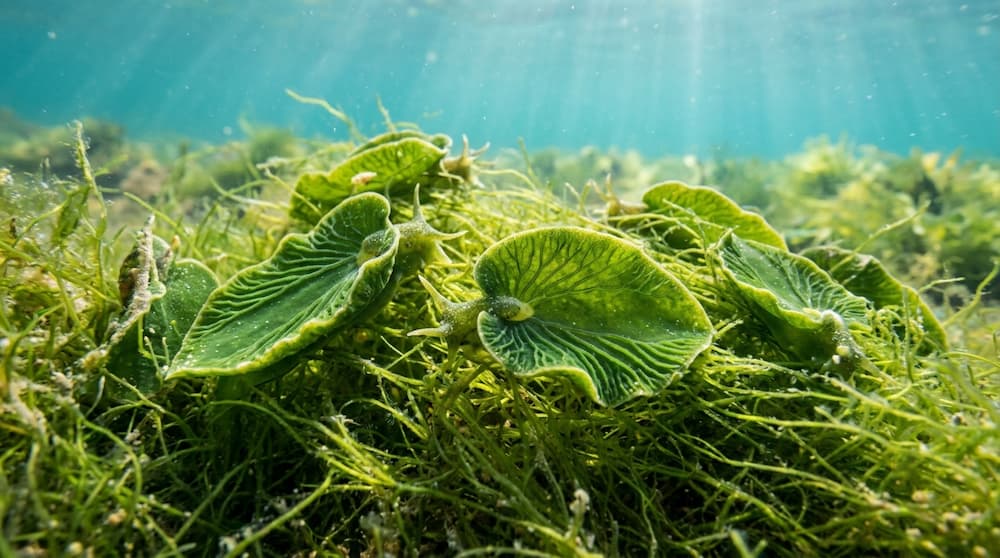
Animals move continuously, while plants take root in a single location. Animals are heterotrophs that gain nutrients by consuming other organisms, whereas plants are autotrophs that synthesize their own energy using sunlight. For a long time, we learned in biology class that these two categories form an indivisible dichotomy. However, the green sea slug effortlessly dismantles this rigid barrier. It possesses a peculiar survival strategy that cannot be neatly confined to either category.
Heterotrophs cannot sustain life without acquiring organic matter from external sources. As predators, they must constantly consume other organisms to keep the gears of survival turning. The early life of the green sea slug reflects the quintessential path of a heterotroph. Young sea slugs busily devour marine algae to grow in size. However, upon reaching a certain stage, a dramatic turning point occurs. Even during extreme famines where food completely disappears from the environment, the sea slug does not perish. It activates the chloroplasts housed inside its body, generating its own energy supply just like an autotroph.
This transformation represents far more than a simple shift in diet. It is a profound biological metamorphosis in which a heterotroph transplants and operates the core biological engine of an autotroph. It maintains the flexible physical structure of a moving animal while simultaneously executing photosynthesis, a capability once exclusive to plants. In this single organism, the two major pillars of the ecosystem, predator and producer, merge in perfect harmony.
Can we truly view this creature merely as a rare animal, or should we define it by a new name, such as a swimming plant? The artificial distinction between autotrophs and heterotrophs exposes its limitations before the wonder of the green sea slug. Nature proves that evolution unfolds in ways far more flexible and unconventional than the arbitrary lines drawn by human logic.
4. The Biological Mechanism of Chloroplast Maintenance
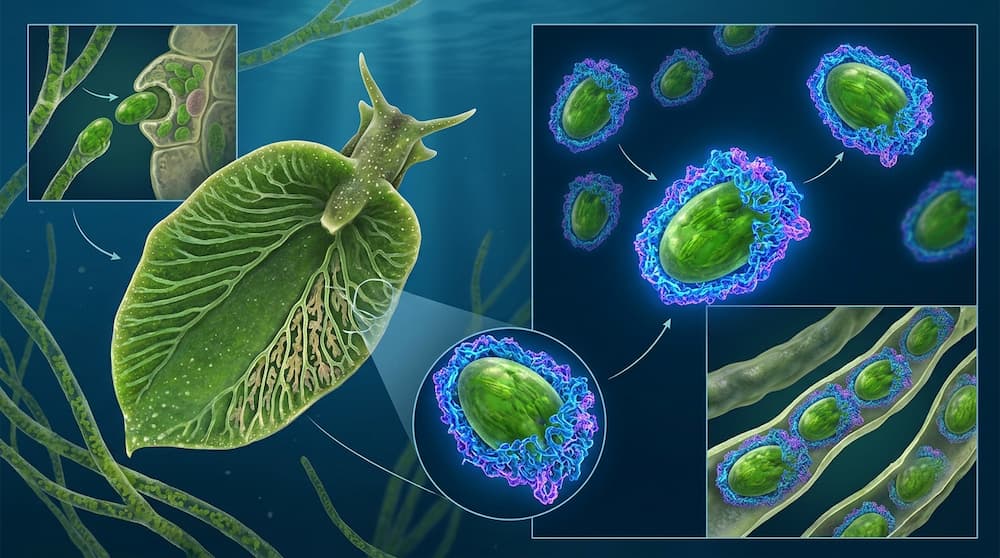
The ability of the green sea slug to keep stolen chloroplasts operational and fresh for several months remained a monumental mystery in life sciences. Even normal plant cells struggle to maintain chloroplasts for long without active support from the cell nucleus. Photosynthesis, while generating energy from light, produces abundant reactive oxygen species that continuously damage internal chloroplast proteins. Plants repair this damage daily by sending repair proteins encoded by nuclear genes directly to the chloroplasts. How could chloroplasts isolated inside a sea slug, completely separated from the plant nucleus, survive without being destroyed?
Early researchers hypothesized that the sea slug transferred the algal nuclear genes directly into its own genome, a process known as horizontal gene transfer. However, when modern whole-genome sequencing was performed on the sea slug, researchers surprisingly found no core repair genes derived from plants. In other words, the sea slug was managing the chloroplasts flawlessly without physically integrating plant genes into its DNA. This discovery completely upended existing scientific theories.
What, then, is the true secret? Scientists are now focusing on the unique metabolic regulation and antioxidant systems inherent to the sea slug itself. The green sea slug secretes large amounts of specialized enzymes that neutralize harmful reactive oxygen species generated during photosynthesis. It forms a protective shield that prevents cellular damage before it can even start. Furthermore, when positioning chloroplasts within its digestive cells, it wraps them in specialized stabilizing proteins to shield them from external exposure.
Ultimately, this sea slug did not simply copy the repair mechanisms of plants. Instead, it evolved an entirely novel maintenance system, leveraging its own animal biochemical apparatus to physically and chemically support the plant organelles. This extraordinary biological control mechanism, where a plant organelle functions in perfect harmony inside an animal body, provides vital clues for the future development of artificial organs and bioenergy systems.
Conclusion
By harboring the light of plants within an animal body, the green sea slug has dissolved all dichotomous boundaries drawn by nature. As a predator that simultaneously creates its own life energy, is this tiny creature a complete animal, or a plant standing at the extreme edge of evolution? The classifications and identities we take for granted may simply be convenient frameworks constructed by humans to organize the world. The existence of this sea slug, achieving perfect harmony through the fusion of two distinct life systems, invites us to reflect deeply on how far the boundaries of an individual organism can truly expand in the natural world.
![[Bit#51] Locusts: The Time Bomb Transformation of Peaceful Vegetarians](https://hiddenbitknowledge.com/wp-content/uploads/2026/06/0288773009e8-768x433.jpg)
![[Bit#34] Defenseless Animals: Bizarre Strategies Against Extinction](https://hiddenbitknowledge.com/wp-content/uploads/2026/05/994b0097e65f-768x419.jpg)
![[Bit#36] The Mystery of the Octopus: Secrets of an Alien Highly Intelligent Organism](https://hiddenbitknowledge.com/wp-content/uploads/2026/05/79e43c3db89e-768x512.jpg)
![[Bit#116] The Secret to Longevity: How Naked Mole-Rats Defy Aging and Cancer](https://hiddenbitknowledge.com/wp-content/uploads/2026/08/main.Naked-mole-rat-768x419.jpg)
![[Bit#103] Self-Luminous Plants: Genetically Modified Glowing Trees to Replace Streetlights](https://hiddenbitknowledge.com/wp-content/uploads/2026/07/main.Bioluminescent-plants-768x431.jpg)
![[Bit#140] Crab Molting Secrets: Why Crustaceans Must Risk Death to Grow](https://hiddenbitknowledge.com/wp-content/uploads/2026/09/main.crab-molting-768x419.jpg)