[Bit#103] Self-Luminous Plants: Genetically Modified Glowing Trees to Replace Streetlights
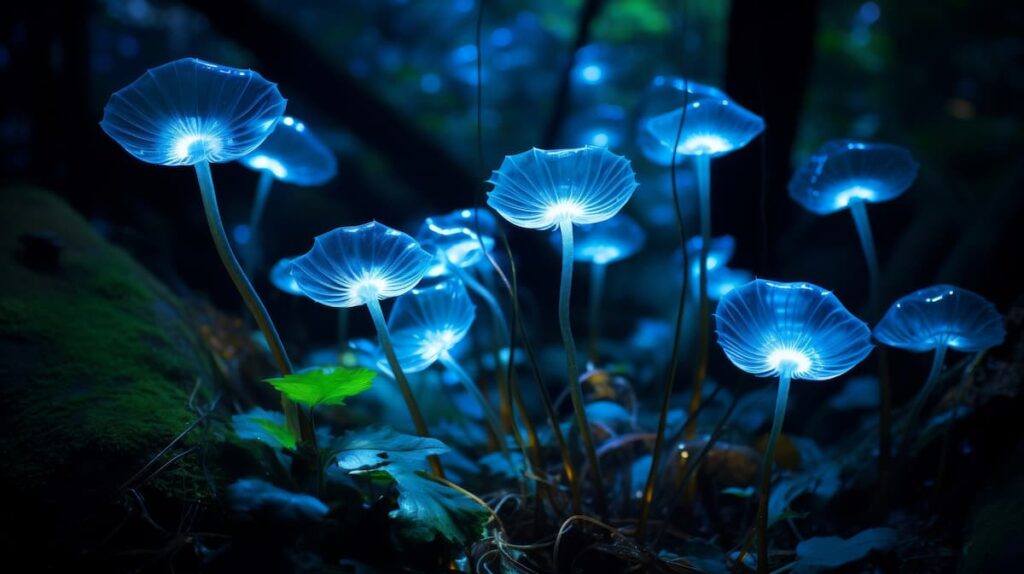
Introduction
Streetlights that illuminate roads every night consume a massive amount of electricity. Urban lighting blocks the night sky and even causes ecological disruption. What if the trees beside the road could glow on their own? With advancements in genetic engineering, fantasies from movies are becoming reality. What is the mechanism behind plants generating their own light, and why will this technology become the core of future cities? It is time to reflect on whether we are ready to embrace this new light where nature and technology converge.
1. The Secret of Glowing Plants: Firefly Genes and Luciferin Science
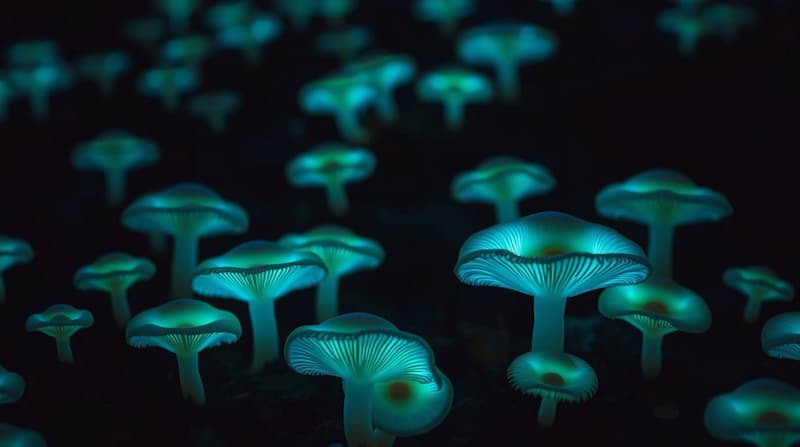
Have you ever imagined trees glowing on their own? A lush blue forest like the one in the movie Avatar might come to mind. However, real-world scientists have already brought this fantasy out of the laboratory.
The secret lies within glowing organisms in nature. We often think of fireflies or deep-sea jellyfish. These creatures generate light directly inside their bodies. Scientists posed a fundamental question. What happens if we insert the genes of these organisms into plants?
There is a key gene involved in this process. It is the enzyme gene called luciferase. This enzyme meets a substance called luciferin. It then reacts with oxygen to emit a sparkling light. Light is born through a single chemical reaction without batteries or wires.
Early researchers transplanted firefly genes into tobacco plants. The result was a success. However, the light was far too weak. Furthermore, humans had to manually inject luciferin to maintain continuous illumination. A light source that requires feeding like a pet could hardly replace city streetlights.
Thus, modern science took another leap forward. Researchers analyzed the genomic structure of bioluminescent mushrooms. Mushrooms possess an innate system that synthesizes luciferin on their own. Scientists transferred the entire genetic circuit of these mushrooms into plants.
What was the result? As the plants grew, they began casting a soft green-blue light from their stems and leaves. They maintain this glow through normal metabolic processes without extra nutrients supplied by humans. As long as energy sources inside the cells are supplied, the light does not go out.
This is the result of precisely synthesizing nature’s genetic recipe into plant cells. Now, plants are evolving beyond simple living organisms into biological lighting that generates its own energy.
2. Streetlights Without Electricity: The Energy Revolution Brought by Glowing Plants

City nights are gorgeous, but they come at a heavy cost. The streetlights we pass every day swallow vast amounts of electricity. Monthly power bills and carbon emissions have weighed heavily on the planet. But what if roads lit up on their own without an electric switch?
Self-luminous plant streetlights change the framework of our energy system. This is light that uses no electricity at all. Solar panels, power plants, and complex underground power lines become unnecessary. Simply planting and nurturing trees completes the night lighting grid of a massive city.
Consider how much greenhouse gas is produced during electricity generation. The moment streetlights are replaced by glowing trees, carbon emissions drop close to zero. In fact, they turn negative. While emitting light, plants continue to absorb carbon dioxide and release oxygen.
Lighting that cleans the air effectively acts as a purification facility. Isn’t this a true green energy revolution?
Maintenance costs also decrease drastically. There is no need to replace burnt-out bulbs or repair severed power lines. Because plants grow through continuous cell division, the lighting infrastructure effectively regenerates itself. Roadside landscaping management directly becomes urban lighting maintenance.
Even during a massive blackout that paralyzes the city power grid, there is no need to worry. Light created by nature never stops. Self-luminous plants will serve as a reliable backup that protects city safety beyond mere alternative lighting.
3. Safety and Ecological Impact: Challenges of Genetically Modified Glowing Plants
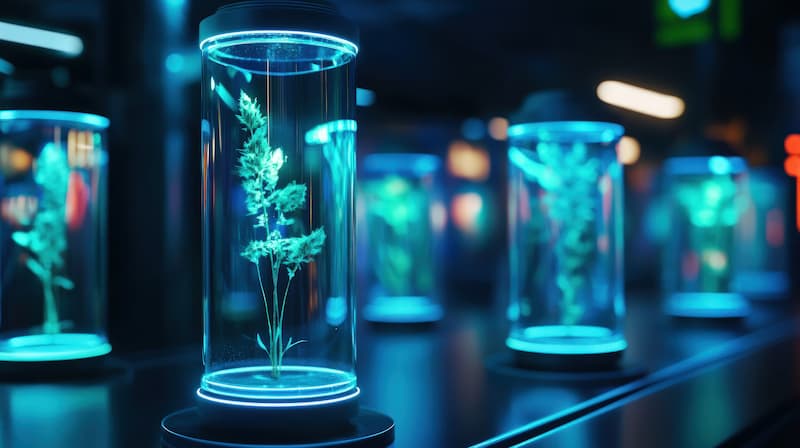
Walking down a street filled with self-glowing trees sounds deeply romantic. However, behind this brilliant technology lies a cold reality we must confront. Concerns remain that it could disrupt the balance of nature.
The primary question raised is ecological disruption. What happens if seeds or pollen from genetically modified trees drift into the wild on the wind? There is a risk that light-emitting modified genes could mix with wild plants.
What would happen if glowing plants reproduce uncontrollably in nature? The biological clocks of nocturnal insects and animals could shatter. For wildlife relying on darkness to hunt or evade predators, this poses a threat to survival.
Technical limitations also clearly exist. The light generated by self-luminous plants under current technology is still too dim to fully replace streetlights. The intensity falls short of illuminating dark night roads or allowing people to read.
If we forcibly increase metabolic activity to boost brightness, the plant itself may wither. Finding the right balance between light intensity and plant health remains a critical challenge.
Ultimately, strict safety validation is just as essential as technological perfection. Biological containment mechanisms to prevent wild leakage and proper light intensity control technologies must be established first. Can we safely embrace this new light without harming nature?
4. Landscapes of Future Smart Cities: How Glowing Plant Roads Will Change Human Life
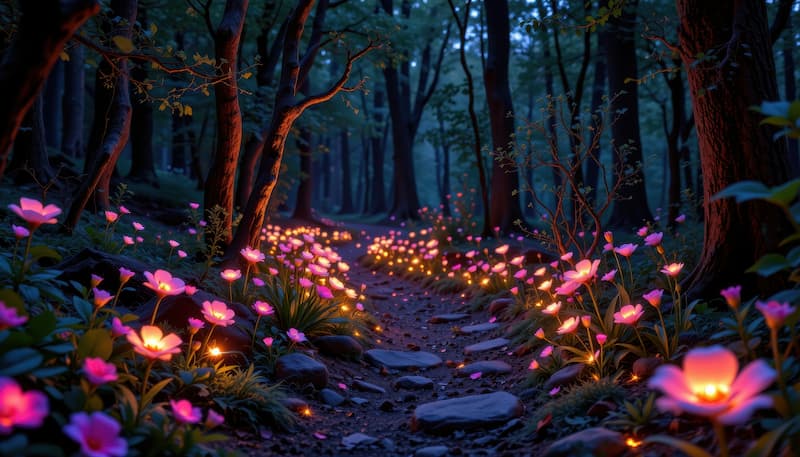
How will our daily lives change when self-luminous plants fill our roads? The landscape of smart cities will look completely different from today. Instead of desolate concrete roads, organic roads holding green light will wrap around the city center.
First, the paradigm of night driving will transform. The intense orange light of traditional streetlights easily fatigues drivers’ eyes. In contrast, the soft natural light emitted by plants creates a comfortable field of vision. As trees replace road boundaries and lane markers, night accident rates will drop significantly.
Urban night streetscapes will also transform into fantastic recreational spaces. Dark walking trails change into subtle emerald forest paths. Perfect tourist attractions emerge without installing additional night lighting. The quality of life for urban residents naturally improves.
Administrative efficiency also increases dramatically. City budgets spent on managing lighting power grids decrease significantly. Saved resources can be reinvested into public welfare and housing environment improvements.
An organic city where ecology and technology connect as one, this is the future we will face. Will self-luminous plant roads become the key to the ideal sustainable city humanity has dreamed of?
Conclusion
Self-luminous plants go beyond simple advancements in lighting technology. It marks a new stage of coexistence where humanity, having once used nature merely as a tool, now shares functional roles with nature.
We stand on the brink of an era that illuminates the night with the power of life rather than electricity. When warm natural light fills the space where cold machines and wires disappear, how will our cities and values change?
In this massive shift where technology comes to resemble nature, what kind of relationship should we build with planet Earth?
![Cut a Planarian, and It Can Regrow Its Body. How? [Bit#178]](https://hiddenbitknowledge.com/wp-content/uploads/2026/10/main-image-2-767x428.jpg)
![[Bit#86] Chameleon’s Real Secret: Color Change is Not for Camouflage](https://hiddenbitknowledge.com/wp-content/uploads/2026/07/main.chameleon-768x512.jpg)
![[Bit#21] Cockroaches: The Ultimate Biological Design Surpassing Nuclear Survival](https://hiddenbitknowledge.com/wp-content/uploads/2026/05/015d9c51b899-768x512.jpg)
![[Bit#107] Extreme Survivors of the Arid Land: The Hidden Scientific Secrets of Cacti](https://hiddenbitknowledge.com/wp-content/uploads/2026/07/main.Cactus-Desert-768x512.jpg)
![[Bit#58] Insects Changing the Future of Humanity: Innovations in Biomimicry](https://hiddenbitknowledge.com/wp-content/uploads/2026/06/44bd14a34264-768x419.jpg)
![[Bit#45] The Impact of Whales on the Earth](https://hiddenbitknowledge.com/wp-content/uploads/2026/05/00bced9565e0-768x512.jpg)