[Bit#167] Why Does the Heart Never Get Tired Even After Beating for a Lifetime?
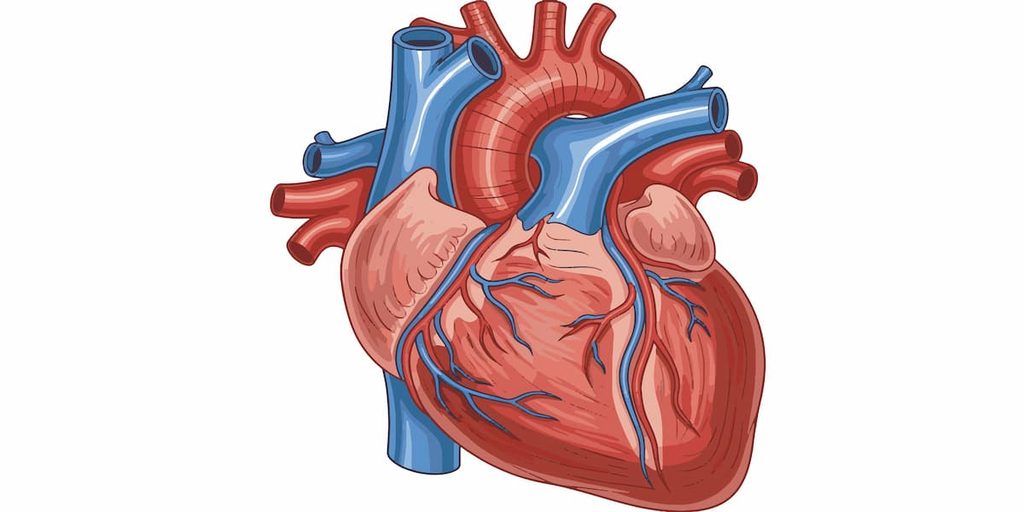
Our heart continues pumping without resting for even a single moment from birth until the end of life. While ordinary muscles accumulate fatigue substances and feel exhausted after brief activity, the heart muscle never fatigues despite a lifetime of continuous beating. Why is this? We delve into the special cellular structures and energy production principles of this remarkable biological organ. Through this article, we will deeply understand the principles of the most fundamental and miraculous biological engine that sustains human life.
1. Unstoppable Cellular Engine: The Secret of Mitochondria in Cardiomyocytes
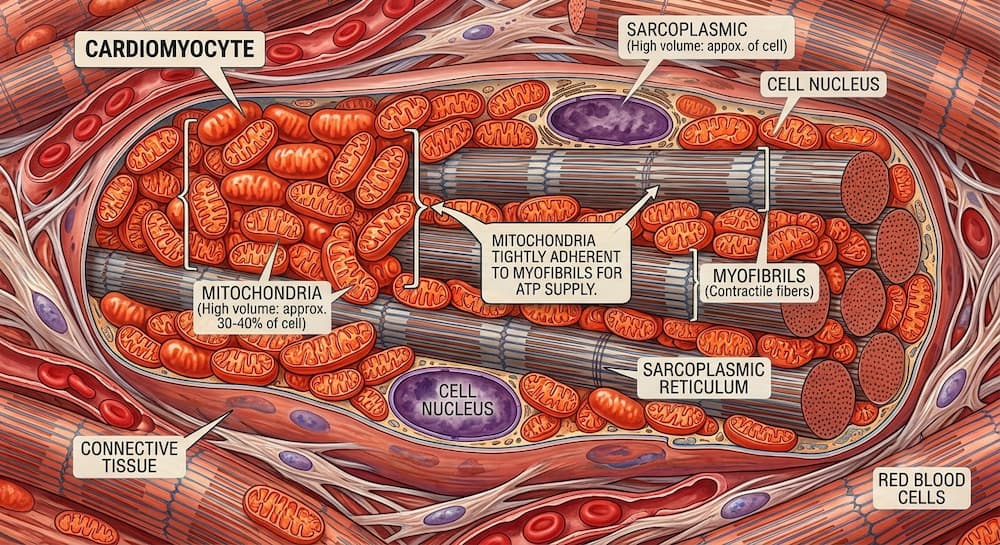
The muscles in our arms or legs tire quickly after even brief, intense movement. This happens because muscle cells leave behind fatigue substances while producing energy. However, the heart muscle is different. From the moment of birth until the end of life, it moves continuously without a single break. How on earth can the heart muscle keep running without getting tired? The secret lies in the energy factories hidden inside the cells: the mitochondria.
In typical skeletal muscle cells, mitochondria occupy only about 3% to 5% of the total volume. In contrast, heart muscle cells are entirely different. About 30% to 40% of the total volume of a heart muscle cell is packed with mitochondria. Nearly half of the cell is an energy-producing factory. This massive quantity of mitochondria supplies energy continuously. The heart simply has no time to stop due to a lack of energy.
When the engine size differs, performance becomes completely distinct. If ordinary muscle is a small engine, the heart is an unstoppable large generator. Through these mitochondria, cardiomyocytes constantly produce adenosine triphosphate, the biological energy source. As long as oxygen and nutrients are supplied, the generator never stops. A structure with an uninterrupted fuel supply was already perfected at the cellular level.
Even more surprising is the structural arrangement of the mitochondria. They are tightly attached directly adjacent to the contractile fibers of the heart muscle. As soon as energy is produced, it is immediately used for muscle contraction with zero transport distance. It is a design that extremely reduces loss occurring during the energy transfer process.
Ultimately, the first reason the heart does not tire is clear. The factories that create energy are overwhelmingly abundant inside the cells. The heart was born with a structure that inherently cannot fatigue. The giant engine called mitochondria firmly supports the heart’s non-stop beating from behind.
2. Metabolic System Obsessively Loving Oxygen: Mechanism for Preventing Fatigue Accumulation
After intense exercise, legs feel stiff and painful. This is due to the accumulation of lactic acid, a fatigue substance, in the muscles. How about the heart then? The heart feels no such pain even after beating for a lifetime. Why is this? The secret lies in the overwhelming energy cost-efficiency calculations of the heart muscle.
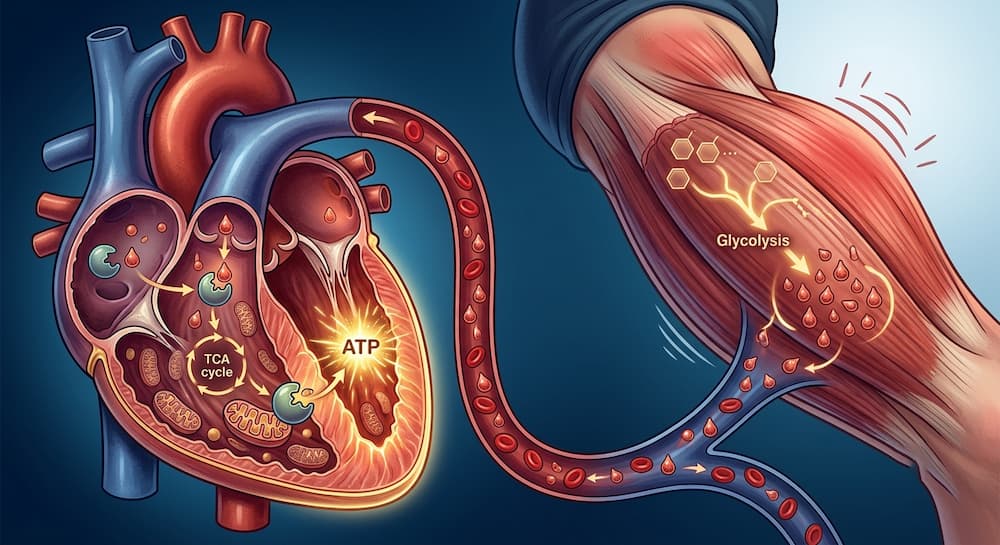
Our ordinary muscles initiate emergency operation when oxygen becomes scarce. They rapidly break down sugar without oxygen to generate energy. At this time, while gaining only a tiny amount of energy, they leave behind a large volume of lactic acid as a byproduct.
However, the heart never engages in such a losing transaction. If the heart squeezes out energy by creating lactic acid on its own, it wastes the energy it normally produces. Therefore, the heart never operates the emergency mode that leaves behind waste. It always receives abundant oxygen and insists exclusively on a complete combustion method. In this process, the fatigue substance lactic acid is not generated at all.
Then what happens to the lactic acid produced by other muscles in the body? This is where the heart’s surprising twist appears. When other muscles move intensely and pour lactic acid into the bloodstream, the heart absorbs it as if waiting for it. It takes the lactic acid already produced by others and pours it into its oxygen furnace.
The heart is filled with special enzymes that immediately convert lactic acid into high-grade fuel. While it is a fatigue substance causing pain to others, it serves as top-tier fuel obtained for free by the heart. It avoids losses by not producing lactic acid itself, yet it thoroughly collects and efficiently burns the lactic acid shed by others.
In the end, the second reason the heart does not tire is clear. It possesses a smart metabolic structure that does not produce high-loss fatigue substances on its own, and it acts as a perfect clean furnace that even transforms fatigue substances left by others into energy.
3. The 0.1-Second Rest Hidden Between Beats: The Heart’s Scheduling Strategy
Hearing that the heart beats non-stop easily makes people think it literally does not rest for even a single second. Is that really true? In fact, the heart takes very meticulous rest without us knowing. Calculating the rest time hidden between beats reveals a surprising fact.
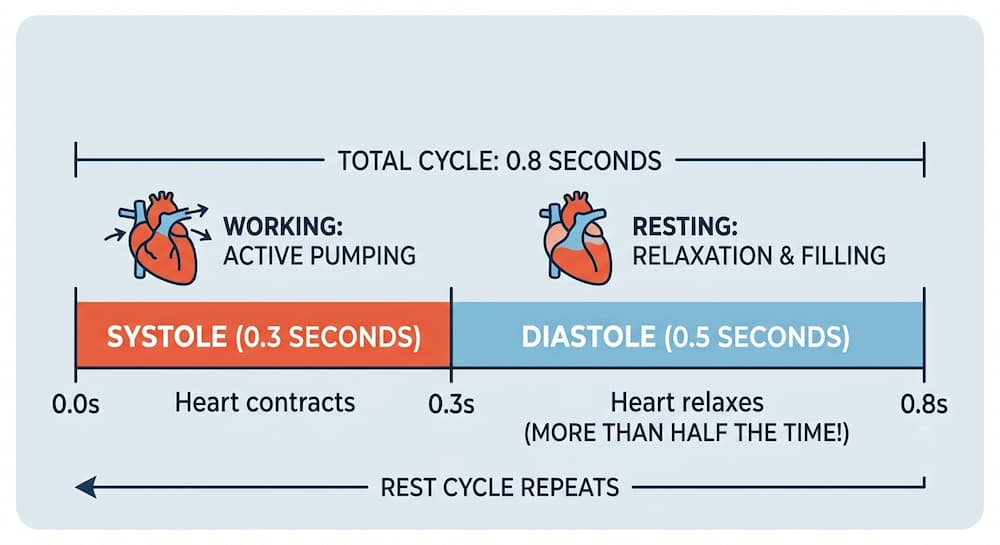
A single heartbeat is broadly divided into systole, which squeezes blood out, and diastole, which fills with blood. Looking at a standard heart beating 70 times per minute, the time taken for one beat is about 0.8 seconds. Among this, systole, which pumps blood out, takes only about 0.3 seconds. What does the heart do during the remaining 0.5 seconds then? Surprisingly, the heart relaxes completely and takes a deep rest.
More interesting numerical calculations become possible. Out of 24 hours a day, the actual working time of the heart adds up to only about 9 hours. The remaining 15 hours represent time spent receiving blood and taking rest without interruption. The time spent resting is actually much longer than the time spent working. Although it appears to run continuously, it is actually splitting its rest through incredible scheduling ability.
Why is this brief rest time important? During diastole, fresh blood and oxygen are supplied to the heart muscle itself. It is a time for the heart to reorganize and recharge itself. Thanks to fine scheduling that allocates rest in 0.1-second units, the heart never accumulates fatigue throughout a lifetime.
Ultimately, the third secret why the heart does not tire is clear. It is not working without rest, but resting perfectly within a precise rhythm of contraction and relaxation. This momentary rest hidden between beats is the secret to maintaining the unstoppable engine of life.
4. Unstoppable Automatic Electrical Stimulation: Continuous Rhythm Created by the SA Node
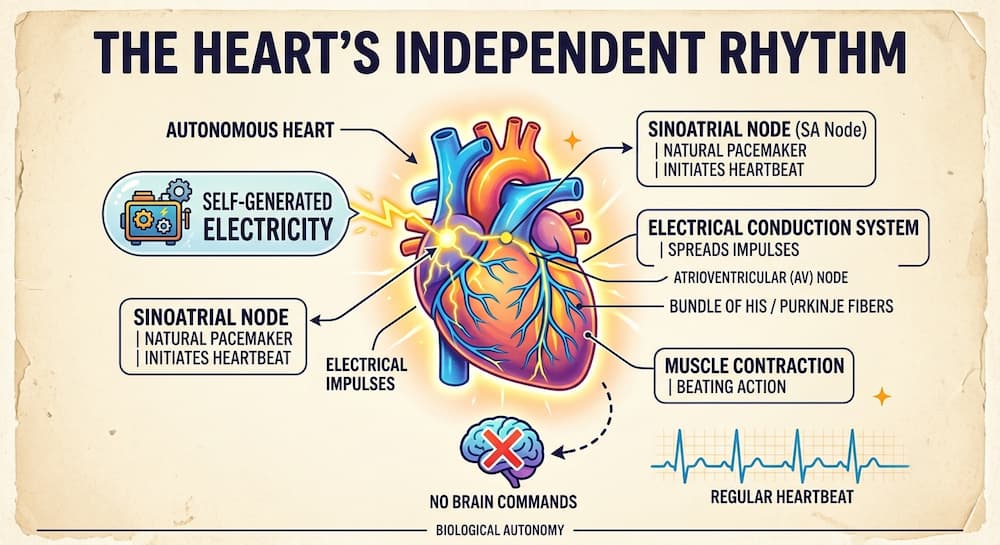
For a computer to keep operating, one must press the power button and supply electricity. Who gives commands for the heart to beat then? It is easy to think the brain constantly sends signals. However, surprisingly, the heart generates its own electricity to move without commands from the brain. This marvelous self-generator is the Sinoatrial (SA) node.
The SA node is a tiny group of cells located at the upper part of the right atrium. Its size is only a few microns, but its role is immense. The SA node continuously generates regular electrical stimulation on its own. It acts as a biological pacemaker that flows current through the entire heart to contract the muscle. This is why the heart can continue beating on its own for a while even if its connection with the brain is severed.
Even more surprising is the complete durability of the SA node. Circuits in ordinary machines overheat or short-circuit after long use. However, the SA node produces electrical signals billions of times throughout a lifetime without any malfunction. It maintains extremely constant voltage and current intensity while evenly transmitting signals to the entire heart muscle.
Thanks to this automatic electrical stimulation system, the heart neither tires nor stops. This is because the cells themselves function with perfect timing like a biological clock, without waiting for external control. Even if the nervous system becomes stressed or dull, the SA node maintains its rhythm and protects the heart.
Ultimately, the fourth secret why the heart does not tire is clear. It possesses a perfect autonomous power generation system that produces electricity on its own without depending on the outside. The mysterious electrical rhythm created by the SA node continues to supply the unstoppable power of life today.
Conclusion
We have examined four biological mechanisms that prevent the heart from feeling fatigue: abundant mitochondria, a combustion system that turns fatigue substances into fuel, fine rest allocation of 0.1 seconds, and the SA node that generates its own electricity. The heart was not running without stopping, but running while perfectly resting and regenerating every moment.
Looking at the precise rhythm of the heart that complains not once while beating billions of times in a lifetime prompts us to ask a question. In the long run of life, are we giving ourselves precise rest and complete recharge time like the heart does? The wisdom of the heart, moving continuously without losing balance, might be the most necessary message of life for exhausted modern people.
![[Bit#77] Cosmic Radiation and Its Fatal Impact on Human Genetics](https://hiddenbitknowledge.com/wp-content/uploads/2026/06/main.Cosmic-Radiation-768x430.jpg)
![[Bit#128] Autophagy: The Cell Cleaner Ending Aging and Disease](https://hiddenbitknowledge.com/wp-content/uploads/2026/08/main.autophagy-768x429.jpg)
![[Bit#30] Why Humans Can’t Survive on Grass: The Secret of Cellulose Digestion](https://hiddenbitknowledge.com/wp-content/uploads/2026/05/b85aeb5dda3e-768x512.jpg)
![[Bit#99] The Reality of Designed Babies in the Era of CRISPR Gene Editing](https://hiddenbitknowledge.com/wp-content/uploads/2026/07/main.CRISPR-Gene-Editing-768x526.jpg)
![[Bit#8] The Secret Cloning War in Your Bathroom While You Sleep](https://hiddenbitknowledge.com/wp-content/uploads/2026/04/7e29f21bdd69-768x512.jpg)
![[Bit#93] Dolly’s Legacy and the Hidden Truths of Cloning](https://hiddenbitknowledge.com/wp-content/uploads/2026/07/main.dolly-sheeps-768x479.jpg)