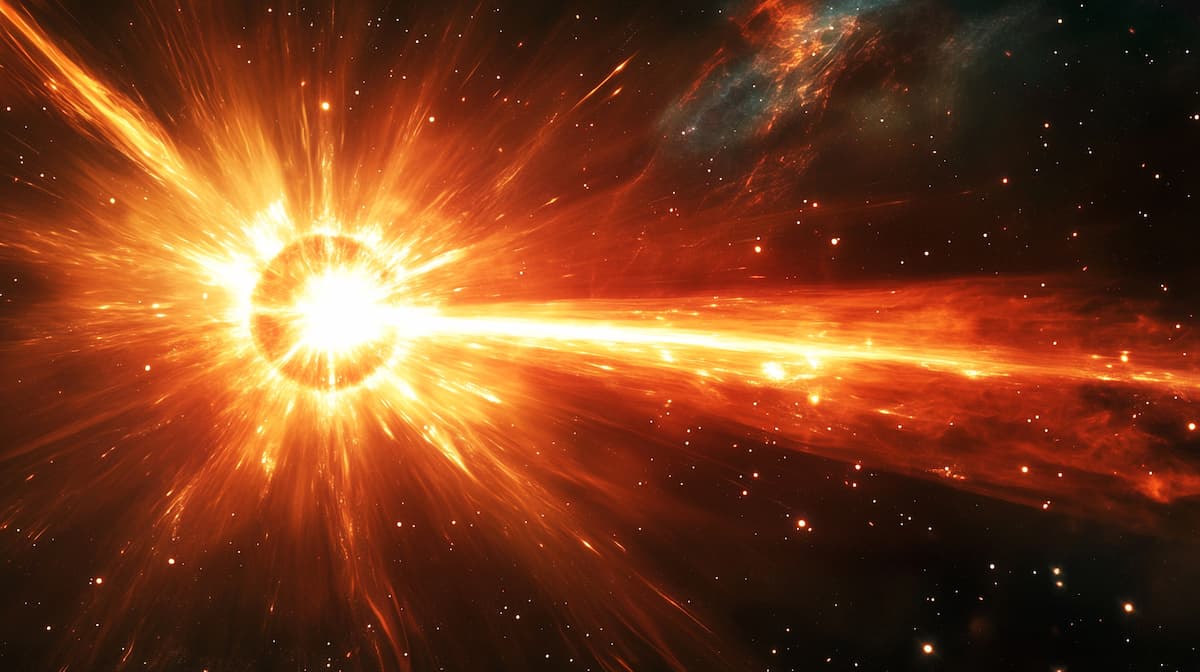
[Bit#77] Cosmic Radiation and Its Fatal Impact on Human Genetics
1. The Invisible Sniper in Space: The True Identity of Cosmic Radiation
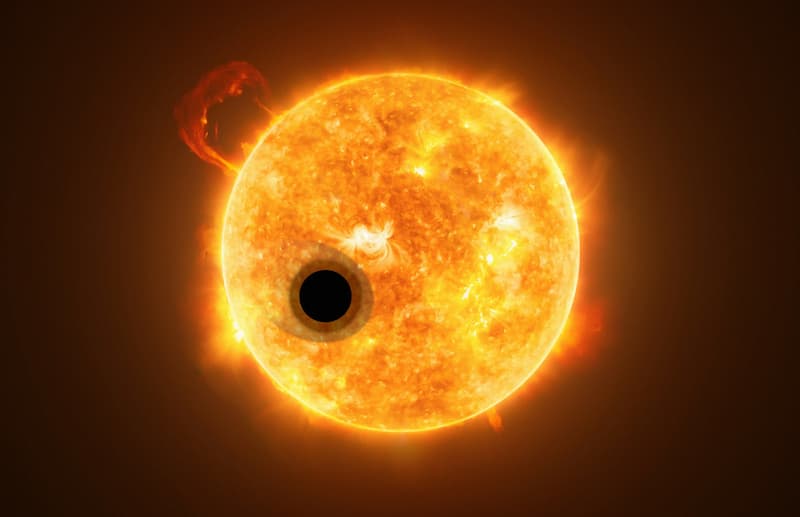
The skies of Earth appear completely serene. This tranquility is owed entirely to our thick atmosphere and powerful magnetic field shielding us from harm. However, stepping just a single fraction beyond Earth changes the reality completely. Space functions as a chaotic battlefield where invisible snipers constantly shower high-energy bullets from every imaginable direction. The true identity of these cosmic snipers is cosmic radiation.
Cosmic radiation is divided primarily into two categories. The first is solar proton events, which violently erupt during massive solar flares. The second is galactic cosmic rays, traveling from the deep corners of distant galaxies beyond our solar system. Despite being called rays, they are not composed of light. They are instead streams of subatomic particles accelerating at near-light speeds. Protons, helium nuclei, and heavy ions like iron race through the vacuum of space with staggering velocity. Why is this so lethal?
The kinetic energy carried by these particles defies imagination. They pack vastly more destructive energy than the radiation emitted by atomic bombs. On Earth, our dense atmosphere absorbs and deflects this massive energy cascade. Thanks to this shield, we can breathe safely. However, inside spacecraft or upon the barren surface of Mars, this protective blanket is missing. Thin aluminum spacecraft walls act as mere sheets of paper against these high-energy projectiles. They pierce straight through the hulls and pass directly through the human body.
When these particles penetrate the body, they trigger absolutely no physical sensation. There is no sound, and there is no smell. Yet, their destructive power manifests explicitly at the microscopic cellular level. It remains the ultimate assassin of the universe, impossible to fully block with any human-engineered protective suit. This explains why astronauts remain continuously exposed to radiation levels hundreds of times higher than those on Earth during their missions. When these invisible arrows penetrate the flesh, they reach the absolute deepest core of our existence: our genetics.
2. Ripped Genetic Blueprints: The Exact Moment of DNA Destruction
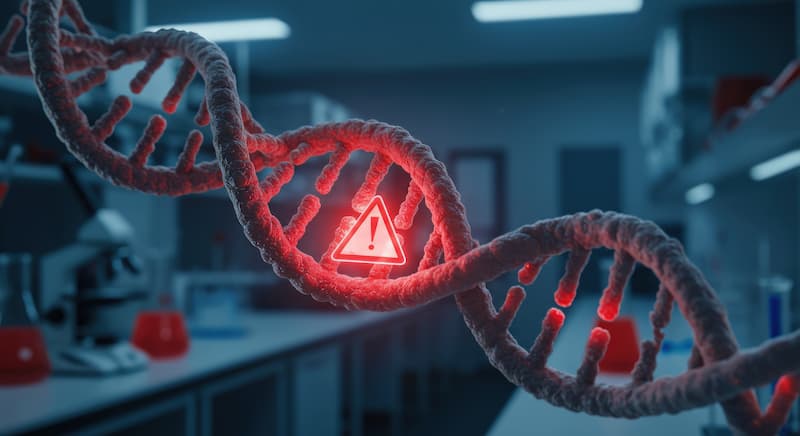
When cosmic radiation pierces through an astronaut’s body, it immediately targets the most critical component. That component is the tightly coiled DNA located inside the nucleus of every cell. DNA serves as the ultimate instruction manual for our physical bodies. What happens when this blueprint collides with high-energy particles? It mirrors a heavy missile crashing directly into a high-precision facility at dozens of kilometers per second. The genetic map is literally ripped to shreds.
The most catastrophic consequence of this collision is the double-strand break of the DNA. Human DNA is structured like a twisted ladder with two strands facing each other. If only a single strand snaps, the cell can seamlessly repair itself using the remaining side as a template. This is because a perfect backup copy still exists. However, cosmic radiation possesses immense power. It severs both strands simultaneously. When the structural backbone breaks at once, the cell enters a state of absolute chaos. It completely loses the reference point needed to determine how the pieces were originally connected. Why is this so terrifying?
The cell desperately attempts to stitch these severed fragments back together. However, lacking a proper reference, it begins fusing random, incorrect pieces together. The sequence becomes scrambled, and critical genetic codes vanish entirely. This chaotic repair process creates a bizarre, mutated blueprint completely alien to the original design. This specific malfunction marks the definitive beginning of genetic alteration and mutation. Radiation experienced on Earth is usually temporary or weak, but space operates on a completely different scale.
In deep space, this molecular destruction repeats relentlessly every single second of every single day. The moment a cell repairs a fraction, it gets obliterated again, and as soon as it stitches a gap, it is torn open once more. Eventually, the cell’s internal repair system suffers a complete overload and shuts down. Deformed, irreparable DNA strands begin accumulating heavily inside the cells. What happens when these damaged cells attempt to divide? The corrupted genetic information replicates faithfully, spreading throughout the entire body. It is the tragic moment where humanity’s most fundamental biological shield collapses helplessly in the middle of deep space.
3. The Silent War for Survival and Mutation Inside the Spacecraft
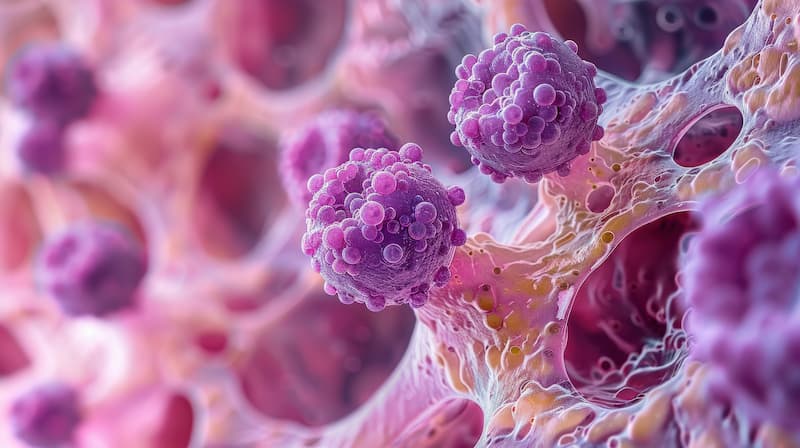
Damaged cells do not simply give up without a fight. A fierce war for survival erupts inside the biological system. Immune cells deploy rapidly to identify the heavily compromised cells. They transmit explicit self-destruction signals to force these rogue units into apoptosis. This represents the final defensive perimeter designed to prevent mutated cells from multiplying across the body. However, the onslaught of cosmic radiation never ceases. What happens when too many cells take critical damage simultaneously?
Certain cells successfully break free from the control of the immune system. Instead of dying, they manage to survive against all odds. They achieve survival with their genetic codes permanently mutated. This marks the precise birth of a mutant cell line. Why are these mutations considered so dangerous? It is because they replicate completely without restriction. They mimic a speeding car with shattered brakes. When these uncontrollable cells cluster together, they form the malignant tumors we know as cancer.
The internal environment of a spacecraft makes survival significantly harder for these struggling cells. This difficulty stems from the microgravity environment where weightlessness dominates. When gravity vanishes, human blood circulation and metabolic pathways become deeply distorted. Cells experience extreme physiological stress. They are essentially forced to endure immense gravity-related stress while simultaneously fighting off radiation bombardment. To make matters worse, the body’s overall immunity plummets drastically. The cellular army tasked with healing the wounds loses its core strength.
Consequently, the astronaut’s internal system transforms into an ideal playground for mutated cells. The statistical probability of developing cancer skyrockets dozens of times higher compared to life on Earth. Conditions like leukemia or radiation-induced cataracts progress with alarming speed. This is no longer a simple issue of a few isolated cells dying off. It triggers a massive malfunction across the foundational systems that construct a human being. The desperate war for cellular survival continues silently inside the spacecraft hulls at this very moment.
4. Shields for Martian Colonization: The Genetic Alternatives Humanity Prepares
Faced with the lethal sniper known as cosmic radiation, humanity refuses to retreat. Martian colonization and deep-space exploration are no longer distant science fiction tropes. Scientists are actively engineering highly unconventional shields to safeguard the genetic blueprints of astronauts. Relying solely on thickening spacecraft walls presents clear engineering limitations. Why is this the case? If the ship becomes too heavy, launching it into space becomes physically impossible. Therefore, researchers are shifting their focus toward biological shielding.
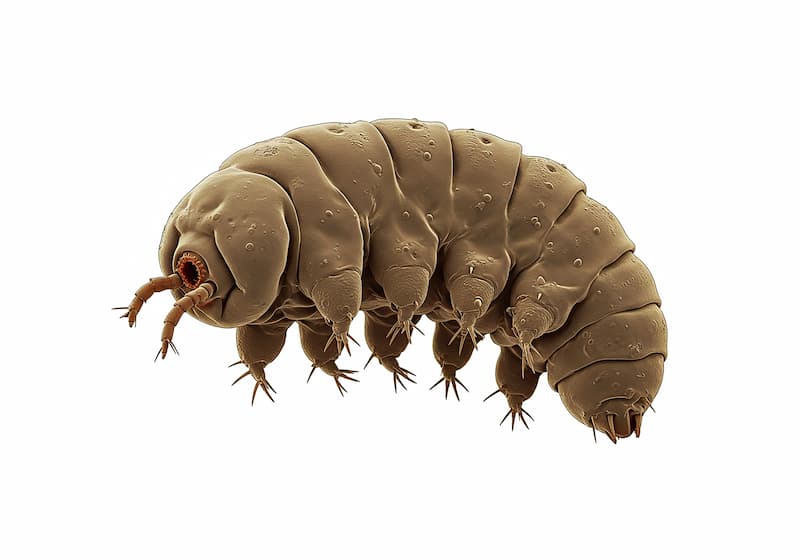
One of the most fascinating areas of research involves borrowing genetic traits from the most resilient organism on Earth: the tardigrade. Also known as the water bear, this creature survives in absolute zero temperatures of minus 270 degrees and thrives under lethal doses of radiation. Scientists have successfully isolated the specific protective protein gene responsible for this resilience. Research is currently underway to introduce this gene into human cells. Amazingly, this protein acts as a physical shield, wrapping around human DNA to protect it the moment cosmic radiation attempts to tear it apart.
Another viable alternative focuses on forcefully accelerating the inherent repair capabilities of human cells. This method utilizes CRISPR gene-editing technology. It functions by artificially activating or modifying specific genes known for high radiation resistance. This approach essentially serves as a genetic vaccine administered to astronauts before they depart Earth. It implants a molecular superpower that repairs shattered DNA at lightning speed. Can this truly serve as the ultimate solution?
Significant concerns regarding biological safety and ethical boundaries definitely remain unresolved. Artificially altering human genetics can trigger entirely unpredictable side effects. However, it represents a mandatory mountain humanity must cross to leave Earth and step into the wider cosmos. The genetic shields designed to block these invisible arrows are being refined with extreme precision today. Humanity will ultimately conquer the terror of cosmic radiation and plant its feet on Mars. The dawn of a new era of humanity, capable of self-healing its broken blueprints, is rapidly approaching.
![[Bit#96] Science Behind Your Three Major Desires: Appetite, Sleep, and Sex Drive](https://hiddenbitknowledge.com/wp-content/uploads/2026/07/main.Human-instinct-768x432.jpg)
![[Bit#25] The Future Where Brain and Computer Become One: The Essence of BCI Technology](https://hiddenbitknowledge.com/wp-content/uploads/2026/05/0cff846367c9-768x431.jpg)
![[Bit#18] From a Badge of Survival to the Root of Disease: The Cruel Paradox of Obesity](https://hiddenbitknowledge.com/wp-content/uploads/2026/05/48843f2b382a-768x512.jpg)
![[Bit#75] The Backlash of Artificial Rain: The Cost of Manipulating Atmospheric Circulation](https://hiddenbitknowledge.com/wp-content/uploads/2026/06/main.artificial-rain-768x512.jpg)
![[Bit#50] The Great Survival Strategy of Plant Hormones](https://hiddenbitknowledge.com/wp-content/uploads/2026/06/64472267701f-768x419.jpg)
![[Bit#44] The Bizarre World of Mushrooms](https://hiddenbitknowledge.com/wp-content/uploads/2026/05/24e5b396f4e7-768x512.jpg)