[Bit#168] Why Tears from Sadness and Onions Are Chemically Different
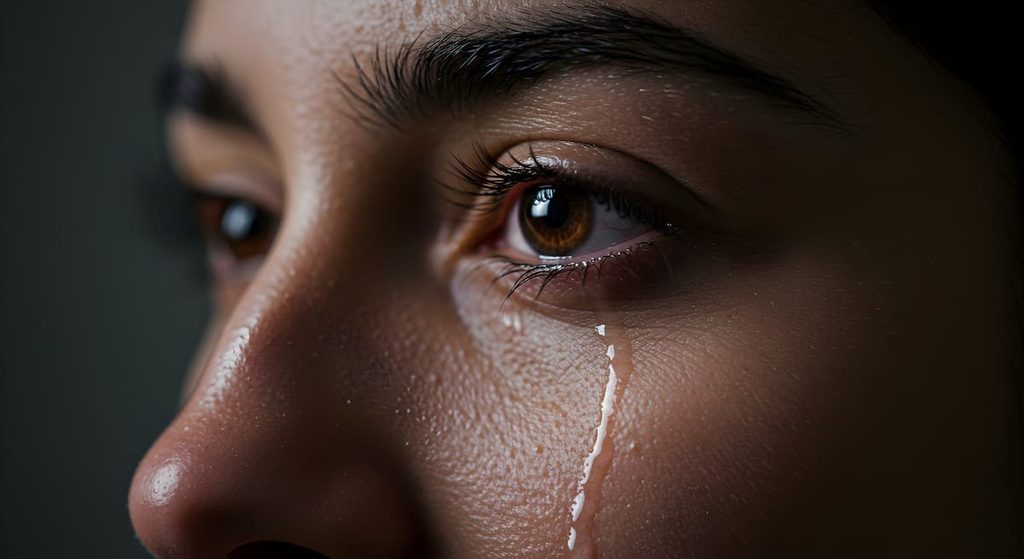
The tears we shed are not merely moisture that protects our eyes. They are a mysterious biological fluid whose chemical composition changes completely depending on our emotions and situations. Let us explore why tears shed when we are sad differ from those produced when chopping onions, and examine the mechanism by which tears heal our body and mind.
1. A Protective Barrier Against Stimuli: The Difference Between Reflex Tears and Basal Tears
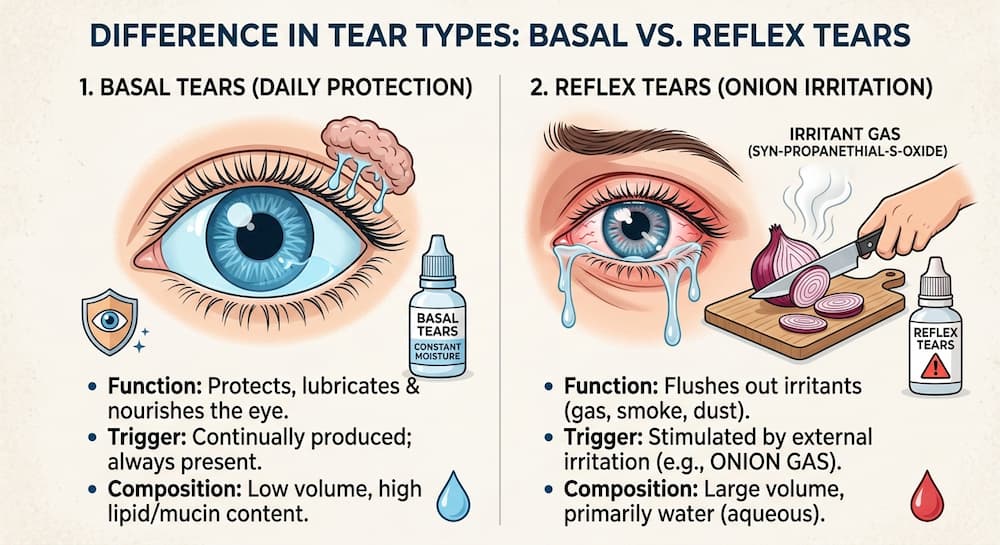
Even as you read this sentence, your eyes do not dry out at all. This is because every time your eyelids blink, a delicate moisture film gently coats the entire surface of the eye. These are basal tears, which flow continuously without us even realizing it. Basal tears prevent injuries by reducing friction with the eyelids. At the same time, they act as a core protective shield, killing microscopic bacteria invading from the outside and supplying oxygen to corneal cells.
However, why do tears suddenly pour out when you chop onions? These are reflex tears secreted in intense response to external physical and chemical intrusions. When onion cells are destroyed, a toxic chemical substance called propanethial S-oxide instantly disperses into the air. The moment this gas stimulates the sensory nerves on the surface of the eye, the brain determines that an emergency has occurred in the eye. It issues an urgent command to the lacrimal glands to explosively release moisture in order to wash away the irritant at maximum speed.
The two types of tears differ dramatically in their chemical composition as much as in the reasons for their secretion. Basal tears are a highly complex mixture of proteins, fats, lipids, and precise concentrations of salt. They even feature an oil layer to prevent moisture from evaporating easily, allowing them to remain on the eye surface for a long time. In contrast, reflex tears are composed of pure water for more than 98 percent of their volume. This is because their sole purpose is simple washing—diluting and rapidly flushing harmful substances out of the eye.
Why do our eyes create fluids with different components depending on the situation? It is the result of biological evolution designed to perfectly protect sensitive and delicate sensory organs from external hazards. Our bodies accurately distinguish between a daily moisturizer that maintains the eyes and a cleaning fluid used to wash them out in emergencies.
2. Substances That Wash Away Mental Burdens: The Chemical Components in Emotional Tears
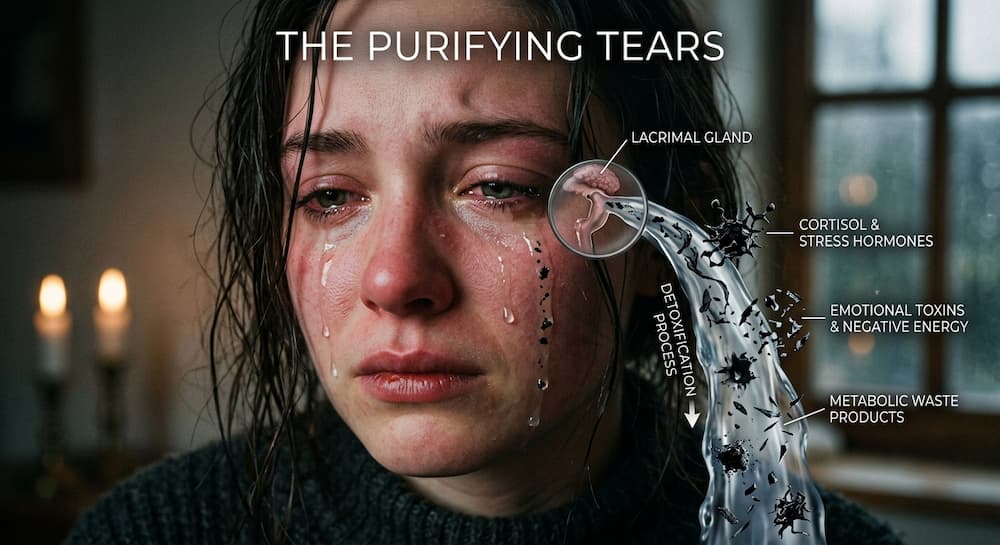
Emotional tears that pour out when we are sad or overjoyed are fascinating. Their components are completely different from the basal or reflex tears mentioned earlier. If tears were simply water droplets, why would we shed them when our hearts ache? When scientists analyzed these tears, they discovered an astounding fact. Substances that accumulate in the body during extreme stress were packed inside these tears.
When we feel sadness, the brain declares a state of emergency. At this time, a large amount of adrenocorticotropic hormone is discharged through the lacrimal glands. This hormone is a primary culprit that heightens body tension and raises blood pressure. Emotional tears act as a direct outlet to purge this dangerous hormone out of the body. Have you ever felt your chest become much lighter after crying? It is not an illusion. Stress substances inside your body actually exited along with the tears.
In addition, emotional tears contain natural painkiller components. These are prolactin and leucine-enkephalin, an endorphin-class substance that reduces pain. When physical or mental pain becomes too severe, the brain operates to protect itself by secreting its own painkillers embedded in tears. In essence, our bodies manufacture and release medicine on their own to ease emotional suffering.
Ultimately, tears that flow when waves of emotion rush in are a life-support system that wards off psychological damage. They excrete toxins accumulated in the body and relieve pain to restore biological balance. Tears are a danger signal sent by the heart, and at the same time, an astonishing self-healing defense system of the body.
3. Biological Signals from Lacrimal Glands: Autonomic Nervous System Responses and Physiological Changes
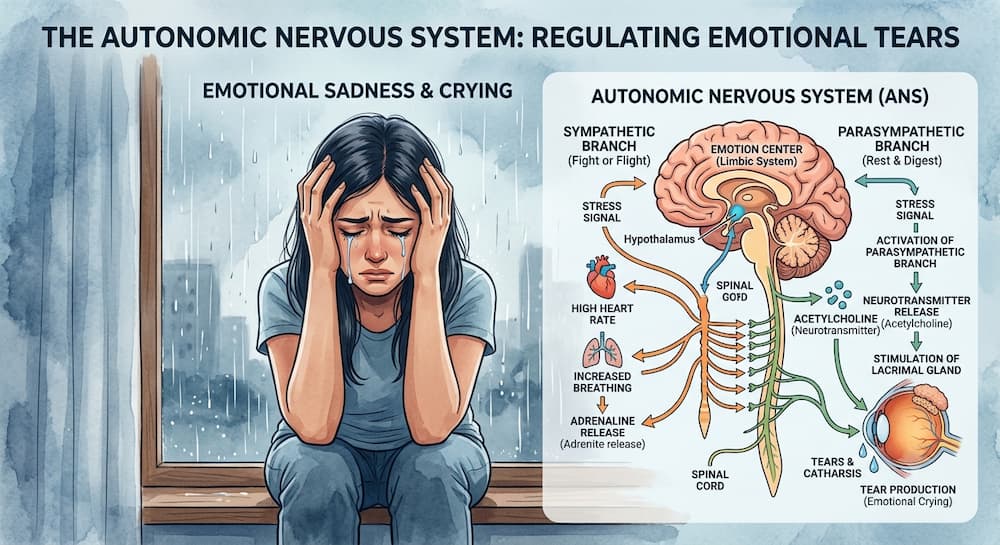
What kind of reaction does the brain show when sadness or pain reaches its peak? The operation of the lacrimal glands signifies much more than simple fluid secretion. It is the result of a fierce tug-of-war between the sympathetic and parasympathetic nervous systems in the brain. In moments of unfairness or intense agitation, our bodies escalate rapidly under the direction of the hypothalamus. What kind of miracle occurs inside the body?
When under extreme stress, our autonomic nervous system instantly switches to sympathetic nervous system mode. The heart pounds and breathing quickens. Muscles also tense up tightly as if cramping. However, the moment thick teardrops begin to fall, a mysterious reversal takes place. The parasympathetic nervous system receives a signal and slams on the emergency brakes. It serves as a deceleration device to ease the tension of a tightly constricted body.
After shedding tears, we feel a sense of calm. Why is that? Because the secretion process itself suppresses the overheated sympathetic nervous system. It evens out rapid breathing and settles accelerated blood flow speed. A surging heart rate gradually recovers to a stable state. In other words, the vibration of the lacrimal glands acts as a natural coolant that cools down a wildly running biological engine.
What happens if you forcibly hold back tears? It is an act that deprives the parasympathetic nervous system of the opportunity to intervene. The tense state of the body is maintained continuously, placing a massive overload on the cardiovascular system. Only when we fully accept the release signal sent by the lacrimal glands can our autonomic nervous system regain its broken balance.
4. A Society That Suppresses Tears and Its Biological Cost: The Necessity of Emotional Release

We learn from an early age not to show tears in front of others. This stems from a social prejudice that crying is a sign of weakness or a loss of rationality. However, from a biological perspective, forcibly holding back tears inflicts a heavy poison on the body. Unreleased stress hormones and toxic substances do not vanish. Instead, they travel through blood vessels across the entire body, attacking internal organs. What happens when suppressed tears remain trapped inside?
When we hold back tears, our autonomic nervous system maintains an extreme state of sympathetic dominance. This is a signal that the body is in a state of war. Blood pressure surges, the heart beats excessively, and gastrointestinal motility stops. If this condition becomes chronic, one pays a physical price in the form of chronic heartburn, high blood pressure, and severe decline in immunity. Because we voluntarily turned off the buffer mechanism known as emotional tears, the body cannot end its emergency state.
The process of freely shedding tears is a sophisticated cleaning operation that protects our bodies. When tears are discharged, it is not just emotional wounds that are washed away. Residual waste and stress byproducts accumulated in the nervous system spread outward along with the moisture. People who release their emotions possess overwhelmingly superior stress resilience. Conversely, individuals who hold back tears face a significantly higher probability of exposure to depression and anxiety disorders.
Tears by no means signify a lack of self-control. They are the most powerful self-healing mechanism aimed at removing biological impurities accumulated over time. A single teardrop shed without restraint when you want to cry serves as the ultimate life-support system defending our physical and mental boundaries.
Conclusion
Tears are not merely moisture that wets the eyes. They are a sophisticated life-support system that protects the body and mind by altering their components according to situations and stimuli. They perform the roles of washing away external irritants, preventing the rampage of the autonomic nervous system, and soothing emotional pain. Are we perhaps imposing biological pain on ourselves by suppressing tears due to societal eyes? Shedding tears is not weakness, but rather a candid and fierce confession of the body to save itself.
![[Bit#49] The Miraculous Defense System of Human Skin](https://hiddenbitknowledge.com/wp-content/uploads/2026/06/1e35ee73e983-768x538.jpg)
![[Bit#9] Why We Must Die: The ‘Expiration Date’ Chosen by Evolution](https://hiddenbitknowledge.com/wp-content/uploads/2026/04/0348b8923730-768x585.jpg)
![[Bit#110] Bioelectricity Unlocked: How Ion Channels Work](https://hiddenbitknowledge.com/wp-content/uploads/2026/07/main.ion-channel-768x429.jpg)
![[Bit#131] Elephant Cancer Resistance: The Giant Organism with Dozens of Cancer Suppressor Genes](https://hiddenbitknowledge.com/wp-content/uploads/2026/08/main.-Elephant-767x428.jpg)
![[Bit#141] Why 98 Percent of DNA in My Body Remains Silent](https://hiddenbitknowledge.com/wp-content/uploads/2026/09/DNA-768x419.jpg)
![[Bit#65] Why Do Women Live Longer Than Men?](https://hiddenbitknowledge.com/wp-content/uploads/2026/06/main.grave_-768x512.jpg)