Not Every Bug Is an Insect [Bit#189]
A spider crawls across a wall. A centipede disappears beneath a damp leaf. A tiny creature jumps away when you disturb the soil. Most people would call any of them a bug.
But scientists would not classify them all as insects.
The difference is more interesting than counting legs. Some animals that look like insects belong to entirely different groups, while some genuine insects look so unusual that they barely resemble the familiar beetles and butterflies we picture when we hear the word.
To identify an insect, entomologists examine its body structure, mouthparts, legs, wings, and development. To understand how different insects are related, researchers can go further, comparing anatomical features and DNA to reconstruct their evolutionary history.
The surprising part is that an animal can look like an insect without being one, and two insects can look completely different while sharing the same fundamental body plan.
What Makes an Animal an Insect?
Insects belong to the phylum Arthropoda, a major group of animals that also includes spiders, crustaceans, centipedes, and millipedes. Arthropods have jointed appendages, segmented bodies, and an external skeleton that supports and protects them.
Insects form a distinct group within this larger family.
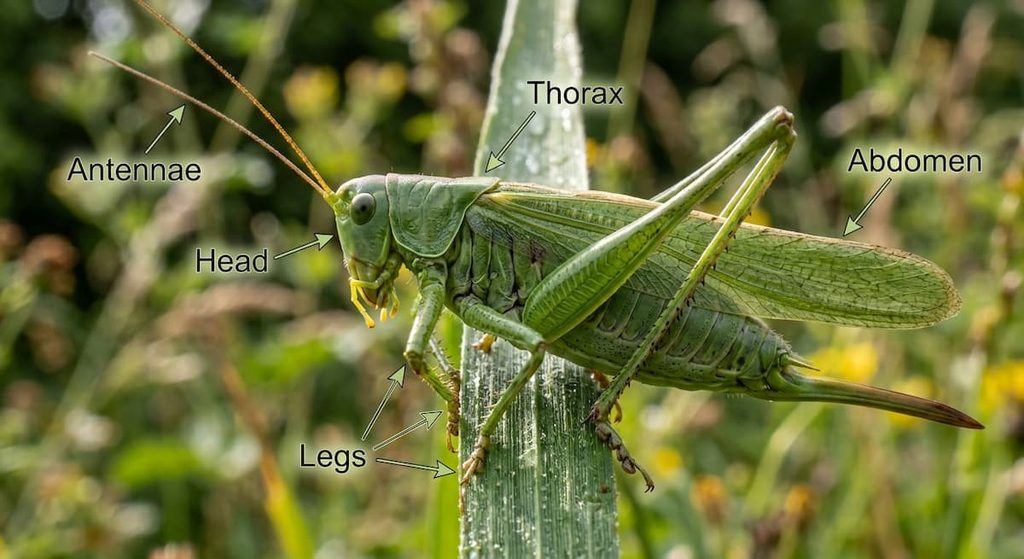
A typical insect has three main body regions: the head, thorax, and abdomen. The head carries the eyes, a pair of antennae, and the mouthparts. The thorax consists of three segments, each associated with a pair of legs. This gives the typical adult insect six legs.
The abdomen contains much of the digestive and reproductive system. Its shape and visible segmentation vary among different groups.
These features provide a useful starting point, but no single visible characteristic should be treated as a perfect identification test. Some insects have lost their wings, others have highly modified bodies, and immature insects can look very different from adults.
Wings are especially interesting. Many insects have two pairs, but flies have one functional pair of wings, with the hindwings modified into small balancing structures called halteres. Fleas and lice are examples of insects that lack wings as adults.
So wings are not a requirement for being an insect. The more reliable approach is to consider the overall body plan and the animal’s other anatomical characteristics.
Why Scientists Look Beyond Leg Count
Six legs are one of the most recognizable features of adult insects. Yet counting legs alone can be misleading.
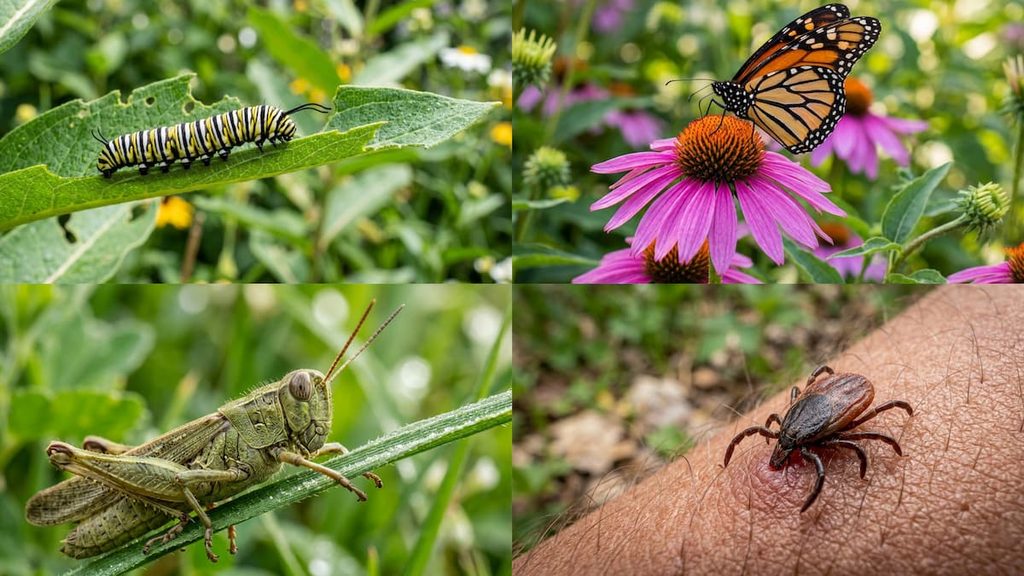
Consider a tick. Its larval stage typically has six legs, while the nymph and adult stages have eight. Ticks belong to Arachnida, the group that includes spiders and scorpions, not to Insecta.
Development matters because animals change as they grow. Insects themselves can also look dramatically different at different stages. A caterpillar has three pairs of true legs near the front of its body and may have additional fleshy structures called prolegs along its abdomen. These prolegs help it move, but they are not equivalent to the six thoracic legs of an adult insect.
Scientists therefore examine how appendages are attached to the body, how the body is segmented, and how structures develop.
Mouthparts can be particularly useful. Grasshoppers have chewing mouthparts, butterflies have a coiled structure adapted for sipping liquids, and many plant-feeding bugs have piercing and sucking mouthparts. These structures reveal how an animal feeds and can help distinguish major insect groups.
Classification is not a guessing game based on one feature. It is an interpretation of several characteristics considered together.
Spiders, Centipedes, and Millipedes Are Not Insects
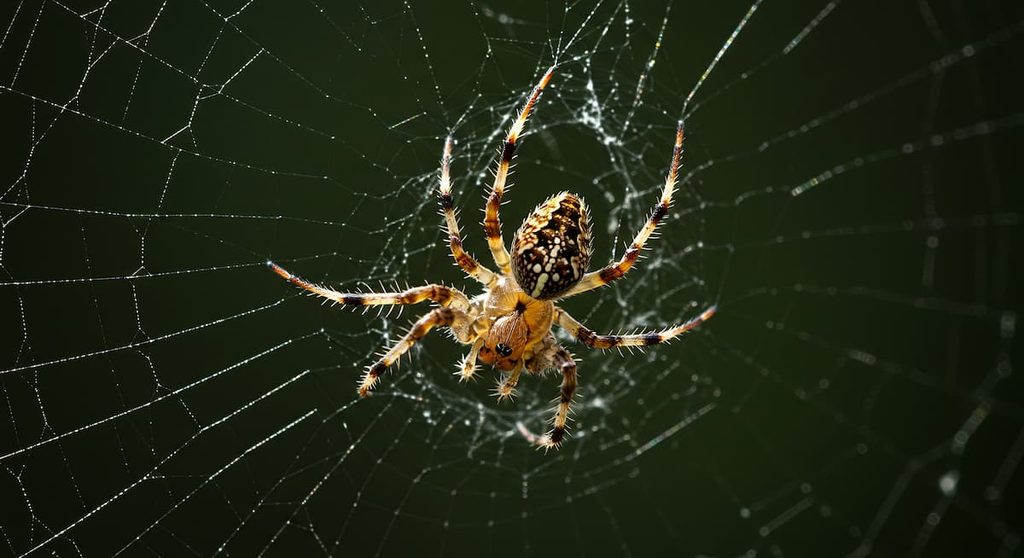
Spiders are arthropods, just like insects, but their anatomy is different.
Most adult spiders have eight legs and two principal body regions: the prosoma, also called the cephalothorax, and the opisthosoma. They do not have the same three-region body organization as insects.
Spiders belong to Arachnida. The same broad group includes scorpions, mites, and ticks. Their shared characteristics distinguish them from insects even when they are small enough to be mistaken for them.
Centipedes and millipedes provide a different example. Both have elongated, segmented bodies with numerous legs, but they belong to separate groups of myriapods.
Centipedes belong to Chilopoda. Most trunk segments bear one pair of legs, and the first pair of trunk appendages is modified into structures that deliver venom to prey. Centipedes are predators that hunt other small animals.
Millipedes belong to Diplopoda. Many of their apparent body rings carry two pairs of legs, although their body segmentation is more complex than a simple count of visible rings suggests. Most feed on decaying plant material and other organic matter.
These animals all belong to Arthropoda, but they do not belong to Insecta. Their differences in body structure, development, and evolutionary history help scientists classify them into distinct groups.
The lesson is simple: sharing a broad feature, such as jointed legs, does not mean two animals belong to the same smaller group.
The Six-Legged Animal That Challenges Expectations
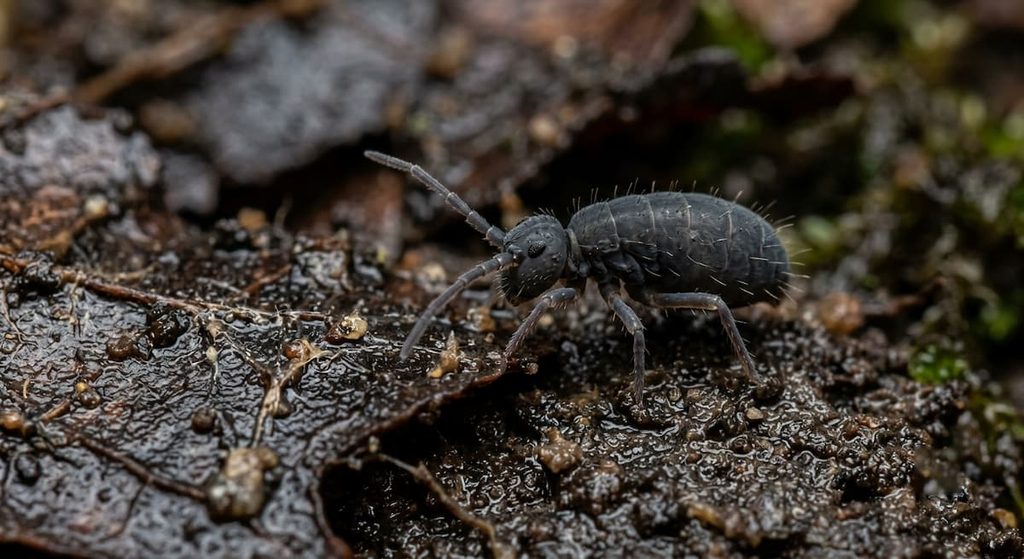
Now consider springtails, tiny animals often found in moist soil, leaf litter, and other environments rich in organic material.
Springtails usually have six legs and antennae. Some possess a specialized springing structure that allows them to launch themselves away from danger. At first glance, their six-legged body plan may suggest that they are insects.
However, modern classification places springtails in Collembola, a group distinguished from Insecta. Both belong to the broader grouping Hexapoda, which includes six-legged arthropods.
Why separate them if they share the same number of legs?
The answer involves several anatomical and evolutionary characteristics, not simply leg count. Springtails have distinctive mouthpart organization, and their evolutionary relationships have been studied using genetic data.
In the traditional morphological distinction, springtails have entognathous mouthparts, meaning the mouthparts are enclosed within folds of the head capsule. Insects are generally characterized by exposed mouthparts and are often grouped as Ectognatha.
Researchers have also investigated springtail evolution using whole-genome data. These analyses have helped clarify relationships among major springtail lineages, although some details of their deeper evolutionary history remain under investigation.
This example needs one important qualification. Older educational materials sometimes describe springtails as primitive insects. The University of Kentucky’s insect-basics guide uses that older terminology when discussing development. For this article, the more precise modern distinction is used: springtails are hexapods, but they are classified separately from Insecta.
That difference illustrates why scientific sources need to be checked for both accuracy and date. An otherwise useful educational guide can contain a classification that has since changed.
How Scientists Identify Different Kinds of Insects
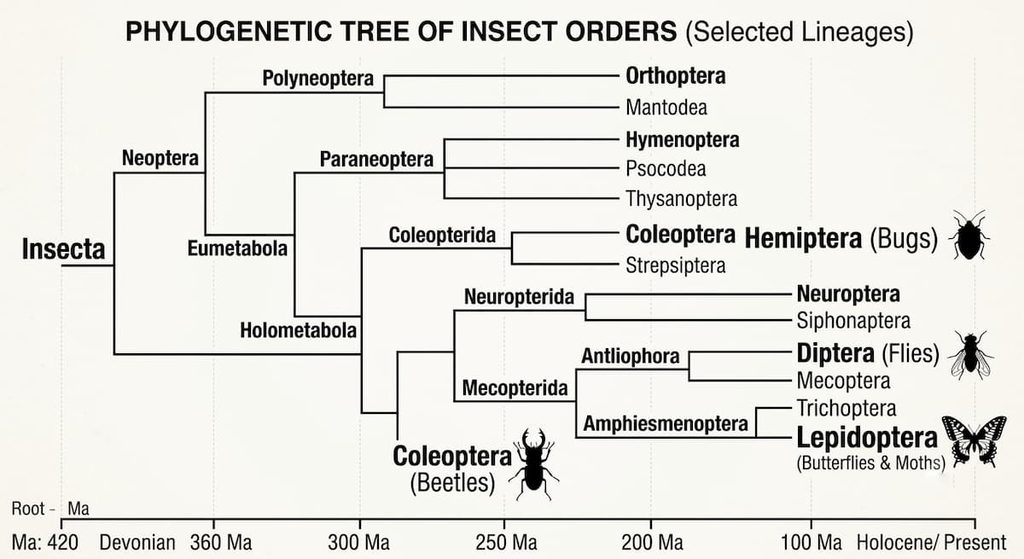
Once scientists establish that an animal belongs to Insecta, the next question is which insect group it belongs to.
A butterfly, beetle, fly, and grasshopper are all insects, but they have different combinations of anatomical characteristics. Scientists use these differences to identify orders and smaller groups.
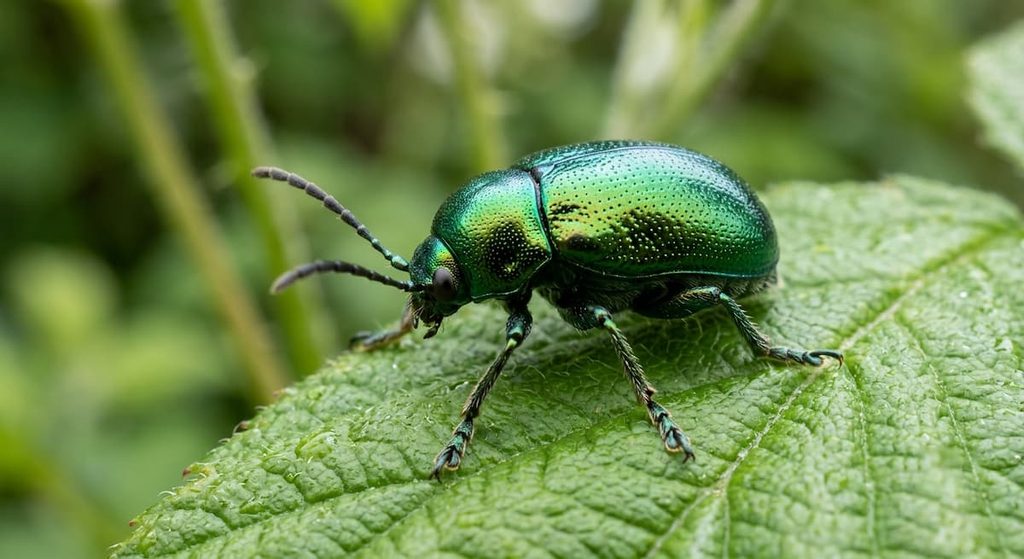
Beetles belong to Coleoptera. Their forewings are usually hardened into protective covers called elytra. Butterflies and moths belong to Lepidoptera, whose wings are covered with tiny scales. Flies belong to Diptera and have one functional pair of wings. Bees, ants, and wasps belong to Hymenoptera, a group with diverse body shapes and specialized mouthparts.
These are not arbitrary labels based only on appearance. Entomologists examine structures such as wing venation, mouthparts, leg modifications, body segments, and reproductive anatomy. The combination of features helps distinguish groups that may look similar at first glance.
For example, a beetle and a true bug can both have compact bodies and protective-looking wings. But beetles typically have hardened forewings and chewing mouthparts, while true bugs have piercing and sucking mouthparts. Looking closely at the mouthparts and wings can reveal a difference that is difficult to see from above.
The word true bug also has a specific meaning in entomology. It usually refers to members of Heteroptera, a subgroup within the order Hemiptera. The broader order Hemiptera also includes aphids and cicadas, so the terms are not interchangeable.
The more carefully scientists examine an insect, the more useful small anatomical details become.
What DNA Reveals About Insect Classification
Anatomy can reveal a great deal about how insects differ, but it can be more difficult to reconstruct the deeper relationships among insect orders.
Some characteristics evolve independently in different lineages. Two unrelated groups may develop similar body shapes because they face similar environmental challenges. Conversely, close relatives can become so different that their shared ancestry is not immediately obvious.
DNA provides another way to investigate these relationships.
Researchers compare genetic sequences from different species and use statistical methods to estimate their evolutionary history. Some studies examine a few carefully selected genes, while others use large genomic datasets. Researchers can then compare genetic results with anatomical evidence to test competing hypotheses.
A study of insect orders published in 2011 analyzed sequences from three nuclear protein-coding genes. Its results supported several major insect lineages, including Holometabola, the group containing beetles, butterflies, flies, and bees. However, not every relationship between insect orders was resolved beyond dispute.
Another study examined Zoraptera, a small insect order whose members have a remarkably uniform external appearance. Researchers combined molecular phylogenetic analysis with a detailed reassessment of morphological features. Their results supported a revised classification with distinct major evolutionary lineages.
These studies show why classification is an ongoing scientific process. DNA can reveal relationships that external appearance alone may miss, while anatomical evidence helps researchers interpret and test those relationships.
But DNA is not a magic answer. Results depend on the species sampled, the genes or genomic regions examined, and the methods used to reconstruct evolutionary trees. Strong conclusions emerge when multiple lines of evidence support the same interpretation.
Why the Word “Bug” Can Be Confusing
In everyday English, bug is an informal term for many small creatures. Someone might call a spider, beetle, or centipede a bug without intending to make a scientific claim.
In biology, however, insect refers to a specific group, and true bug has a narrower technical meaning.
A butterfly is an insect, but it is not a true bug. A beetle is an insect, but it is not a true bug either. A spider may be called a bug in casual conversation, but it is an arachnid rather than an insect.
This distinction between everyday language and scientific terminology is important because the words answer different questions. The everyday term describes how people commonly refer to small creatures. Scientific classification identifies the group to which an organism belongs.
When a scientist examines an unfamiliar animal, the goal is not simply to decide whether it looks bug-like. The goal is to identify its anatomical characteristics and determine how it fits into the broader classification of life.
A Tiny Body Can Reveal a Long Evolutionary History
The next time you notice a small creature on a windowsill or beneath a leaf, look beyond its size and color. Notice its legs, body regions, antennae, and mouthparts.
Those details may provide clues, but the deeper story is about how organisms are related and how their features evolved. A six-legged animal is not necessarily an insect, and two very different-looking insects can share a common evolutionary history.
That is what makes insect classification so fascinating. It connects the smallest anatomical details to a much larger story of adaptation, diversification, and evolution.
A bug is often just a familiar everyday word. An insect is a biological classification supported by a particular combination of characteristics and evolutionary evidence. Understanding the difference reveals how much science can uncover by looking closely at the smallest forms of life.
Scientific Sources
1. University of Kentucky, Department of Entomology. “Insect Basics.” Entomology for Master Gardeners. Read the educational resource
2. Ishiwata K, Sasaki G, Ogawa J, Miyata T, Su ZH. “Phylogenetic relationships among insect orders based on three nuclear protein-coding gene sequences.” Molecular Phylogenetics and Evolution. 2011;58(2):169-180. PMID: 21075208. DOI: 10.1016/j.ympev.2010.11.001. Read the study on PubMed
3. Kočárek P, Horká I, Kundrata R. “Molecular Phylogeny and Infraordinal Classification of Zoraptera (Insecta).” Insects. 2020;11(1):51. PMID: 31940956. DOI: 10.3390/insects11010051. Read the study on PubMed
4. Friedrich F, Beutel RG. “Goodbye Halteria? The thoracic morphology of Endopterygota (Insecta) and its phylogenetic implications.” Cladistics. 2010;26(6):579-612. PMID: 34879598. DOI: 10.1111/j.1096-0031.2010.00305.x. Read the study on PubMed
5. Yu D, Du S, Wei X, Zhu J, Ding Y, Hu F, Liu M, Zhang F. “Whole-genome-based phylogenetic analyses provide new insights into the evolution of springtails (Hexapoda: Collembola).” Molecular Phylogenetics and Evolution. 2024;200:108169. PMID: 39121953. DOI: 10.1016/j.ympev.2024.108169. Read the study on PubMed