Why Familiar Things Feel Strange [Bit#188]
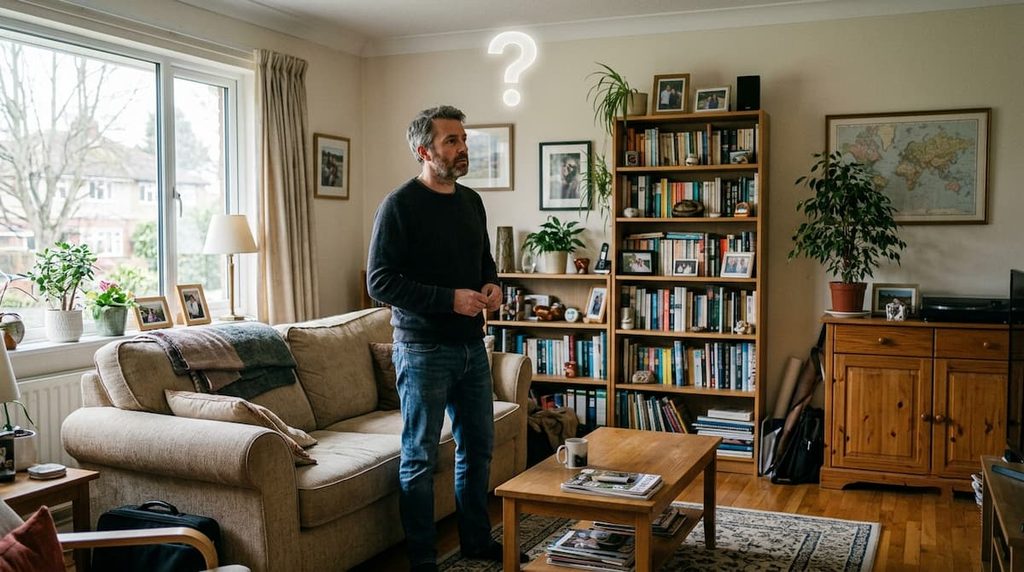
Have you ever written a familiar word so many times that it suddenly looks wrong?
You know how to spell it. You know what it means. Yet after writing it again and again, the word begins to look strange, almost as if it belongs to another language.
For a moment, something ordinary no longer feels quite so ordinary.
This experience offers a glimpse into a curious feature of the human mind. We usually assume that familiarity is straightforward: if we know something well, it should continue to feel familiar. But our experience is not always that consistent.
Psychologists have studied a phenomenon called jamais vu, in which something familiar feels unfamiliar. Experiments have shown that repeatedly writing a word can produce this strange sensation. Researchers have also found that repetition can change how people process familiar words, names, and faces.
These findings reveal something important about recognition. Knowing what something is and experiencing it as familiar are not necessarily the same thing.
When the Familiar Suddenly Feels Unfamiliar
The term jamais vu comes from French and means “never seen.” It is commonly used to describe the experience of encountering something familiar while feeling, at least briefly, as though it is unfamiliar.
It is often contrasted with déjà vu, the feeling that a new situation has happened before. The two experiences seem to point in opposite directions. In déjà vu, the present feels strangely familiar. In jamais vu, something that should feel familiar suddenly seems strange.
Imagine looking at a word you have read hundreds of times. You can still recognize the letters, but the word no longer looks quite right. Or imagine repeating a common word aloud until its sound starts to seem peculiar.
The important distinction is that the object itself has not changed. The spelling remains the same, and the word still has its usual meaning. What changes is the way the experience feels to you.
Scientists use the term carefully. Not every moment of confusion or unfamiliarity is necessarily jamais vu, and the experience of a word becoming strange is not automatically the same as feeling that a familiar place has become unreal.
Still, the phenomenon raises an intriguing question: how can something we know so well suddenly feel unfamiliar?
Scientists Recreated the Experience in an Experiment

A study published in the journal Memory in 2021 investigated whether researchers could deliberately produce jamais vu in a laboratory.
The experiment was simple. Participants repeatedly copied words. They could stop when they finished the task, when the activity began to feel peculiar, or when they had another reason to stop.
The researchers wanted to know whether an ordinary activity could produce an unusual feeling toward something as familiar as a written word.
The results were striking. About two-thirds of the participants reported at least one strange subjective experience during the task. These experiences occurred in approximately one-third of the experimental trials. Participants often reported feeling peculiar after about 30 repetitions, or roughly one minute.
The findings do not mean that everyone will experience jamais vu after writing a word 30 times. The number is an observation from a particular experiment, not a universal threshold.
What matters is that the researchers could reproduce the experience under controlled conditions. Participants were not simply asked to remember whether they had ever felt something strange. They encountered the experience while performing the task itself.
This gave scientists a practical way to investigate a phenomenon that is usually brief and difficult to study in everyday life.
The study also explored how laboratory experiences related to people’s reports of unfamiliarity in daily life. People who reported experiencing déjà vu more frequently also tended to report jamais vu more frequently. However, the laboratory version did not reproduce every pattern associated with déjà vu.
That difference is important. Two experiences can seem like opposites without being exact mirror images of one another.
The experiment demonstrates that repetition can make a familiar word feel strange. It does not prove that repetition explains every occasion when an ordinary object, place, or activity suddenly seems unfamiliar.
Why Repeating a Word Can Make It Feel Strange
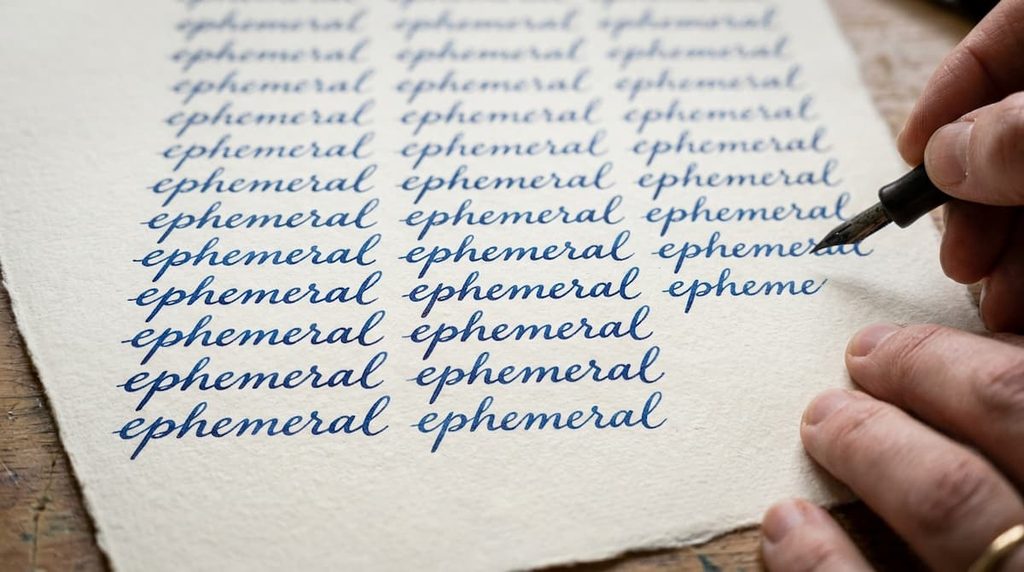
A related phenomenon is called semantic satiation. It refers to a temporary change in the experience or processing of a word after it has been repeated many times.
You can try a simple version yourself. Choose a common word, such as “window,” and write it repeatedly. Pay attention to the word rather than rushing through the task.
You might notice the shape of the letters more than usual. You might start thinking about how the word sounds or how unusual its spelling looks. The word may briefly seem disconnected from the thing it normally represents.
Not everyone experiences this, and the effect is not guaranteed. But researchers have investigated whether repetition can change how people process word meanings.
In a study published in Memory & Cognition in 1997, researchers David Balota and Susan Black examined how repeated words influenced decisions about whether two words were related in meaning.
For example, participants might see the word “DOG” repeatedly and then decide whether a pair such as “DOG-CAT” was related or whether “DOG-CHAIR” was related.
Among younger adults, the difference in response time between related and unrelated word pairs became smaller as the target word was repeated more often. Older adults did not show the same pattern in those experiments.
The researchers also tested other explanations. Repetition did not produce the same effect when participants made rhyme judgments instead of meaning judgments. An additional experiment also argued against a simple explanation based only on declining attention or general fatigue.
The results suggest that repetition can affect certain kinds of meaning-related processing without affecting every language task in the same way.
However, this experiment measured how participants responded to word pairs. It did not establish that every participant experienced the subjective strangeness associated with jamais vu.
That distinction helps keep the science clear. A change in performance can support an explanation of how repetition affects processing, but it is not automatically proof of what a person felt.
Familiarity Is Not Just About Words

Does repetition affect only written language? Researchers have investigated that question by studying names and faces.
In a study published in Memory & Cognition in 2000, researchers examined how repeated names and faces influenced people’s decisions. Across three experiments, participants completed tasks involving repeated names, imagined faces, and repeated face images.
When participants had encountered a name or face 30 times, their responses to a decision involving that item were slower than after three repetitions. Simply imagining a face for the same period did not produce the same effect.
This suggests that repeated exposure can change how people respond to familiar information beyond written words.
But the result needs to be interpreted carefully. A slower response does not necessarily mean that a familiar face has suddenly become unrecognizable or that the participant felt the person was a stranger. The experiment measured performance on particular tasks, not the full subjective experience of jamais vu.
Even so, the research broadens the question. Familiarity is involved in recognizing many kinds of information, and repetition can influence how some of that information is processed.
The experience of a word becoming strange may therefore be one example of a broader set of effects. It is not, by itself, proof that every familiar object or person can become unfamiliar through the same mechanism.
Is the Brain Simply Getting Tired?
It might seem that the explanation is obvious: repeat something enough times, and the brain gets tired of it.
That is a reasonable guess, but the experimental evidence does not support such a simple conclusion.
The word studies found that repetition affected some tasks differently from others. In the 1997 research, for example, the effect appeared in certain meaning-related judgments but not in the rhyme judgments. That pattern is difficult to explain as a uniform decline in attention alone.
Other research has also examined whether repeated sounds contribute to semantic satiation. In a 1997 experiment, researchers found that the effect depended on whether a category word was repeatedly spoken by the same person or by different speakers. They proposed that adaptation to repeated sounds might help explain some of the results.
Together, these findings suggest that repetition can influence more than one aspect of processing. The sound of a word, its meaning, and the way it is presented may all matter.
Scientists have not established one explanation that accounts for every case of semantic satiation or jamais vu. Different experiments measure different outcomes, and results can depend on the task.
It would therefore be misleading to say that the brain simply switches off a word’s meaning when it has been repeated too often. The evidence supports a more limited conclusion: repetition can change how familiar information is processed, and under some conditions, it can make that information feel strange.
What About Familiar Places and Everyday Life?

The original question goes beyond words. Why might an ordinary room, a familiar street, or a routine activity suddenly feel unfamiliar?
The laboratory research provides a useful starting point, but it does not give us a complete answer.
The strongest experimental evidence discussed here concerns repeated words and specific tasks involving names and faces. Those studies show that repetition can alter subjective experience or performance under controlled conditions. They do not establish that the same process explains every sudden feeling of unfamiliarity in daily life.
A familiar place feeling unreal, for example, is not necessarily the same phenomenon as a word looking strange after repeated writing. Experiences of unreality can involve different psychological processes, and the term derealization is used for a distinct kind of experience in which the surrounding world may feel unreal or detached.
It is important not to treat these terms as interchangeable. The fact that two experiences are difficult to describe does not prove that they have the same cause.
More research is needed to understand how laboratory-induced jamais vu relates to the spontaneous experiences people report outside the laboratory. That is a limitation of the current evidence, not a reason to dismiss the phenomenon.
A brief moment of unfamiliarity also does not, by itself, indicate a medical or psychological disorder. If feelings of unreality become persistent, distressing, or disruptive, seeking professional advice is appropriate.
The Strange Side of the Familiar

Most of the time, familiarity makes life easier. It allows us to recognize words, people, objects, and places without having to examine each one as if it were completely new.
Yet experiments on jamais vu and semantic satiation show that this feeling of familiarity is not entirely fixed. Under certain conditions, repeated information can begin to seem strange, and performance on some recognition-related tasks can change.
Scientists have identified these effects, but they have not reduced every experience of unfamiliarity to a single explanation. That distinction matters because a scientific finding is most useful when we understand both what it demonstrates and where its limits lie.
The next time a familiar word looks oddly unfamiliar, you may be noticing a small change in an experience you usually take for granted. The word has not changed, and your knowledge of it may still be intact. What has changed is the way the word feels in that moment.
That gap between knowing something and feeling that you know it is what makes this ordinary experience scientifically interesting. It reminds us that recognizing the world is not just a matter of storing information. It also involves how that information is experienced, moment by moment.
Scientific Sources
- Moulin CJA, Bell N, Turunen M, Baharin A, O’Connor AR. “The the the the induction of jamais vu in the laboratory: word alienation and semantic satiation.” Memory. 2021;29(7):933-942. PMID: 32079491. DOI: 10.1080/09658211.2020.1727519. Read the study on PubMed
- Balota DA, Black S. “Semantic satiation in healthy young and older adults.” Memory & Cognition. 1997;25(2):190-202. PMID: 9099071. DOI: 10.3758/bf03201112. Read the study on PubMed
- Lewis MB, Ellis HD. “Satiation in name and face recognition.” Memory & Cognition. 2000;28(5):783-788. PMID: 10983452. DOI: 10.3758/bf03198413. Read the study on PubMed
- Pilotti M, Antrobus JS, Duff M. “The effect of presemantic acoustic adaptation on semantic ‘satiation’.” Memory & Cognition. 1997;25(3):305-312. PMID: 9184482. DOI: 10.3758/BF03211286. Read the study on PubMed


