[Bit#78] The Perfect Predator: The 300 Million Years Secret Hidden by Dragonflies
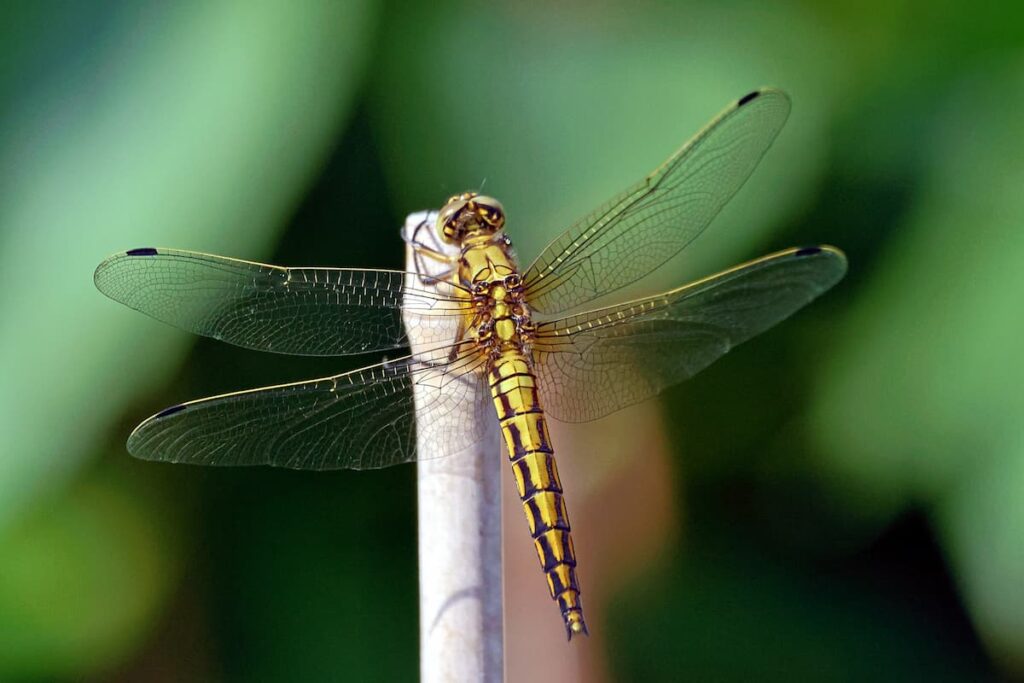
1. The Rulers of Earth Older Than Dinosaurs
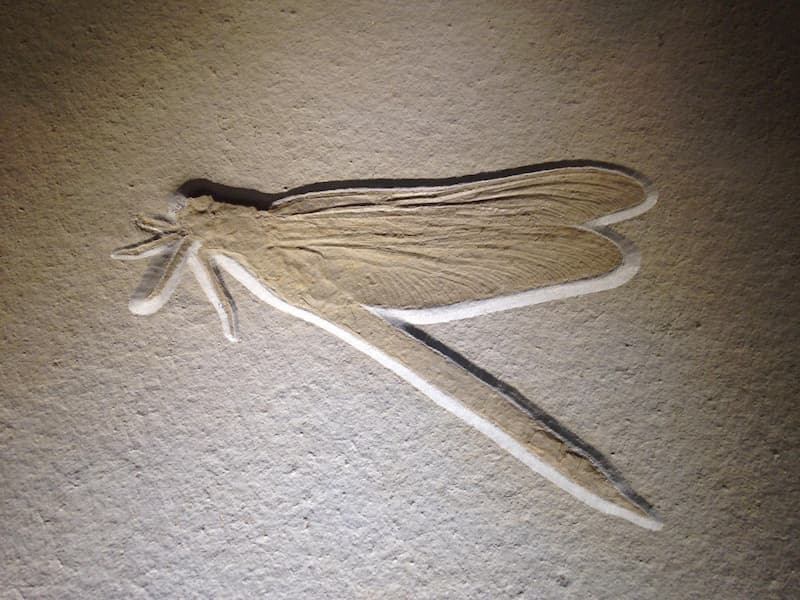
When did the most lethal aerial predator in Earth’s history first make its appearance. Surprisingly, it was long before dinosaurs dominated the planet. It goes back to the Carboniferous period of the Paleozoic era, a staggering 300 million years ago. The giant protagonist that ruled the primeval skies back then was Meganeura, the ancient ancestor of the dragonfly.
Meganeura boasted an overwhelming size that defies imagination. According to fossil research, its wingspan reached an astonishing 70 centimeters. This means a monstrous insect as large as a crow or an eagle was soaring through the skies. How could it maintain such a massive body and fly. The secret lay in the unique atmospheric environment of Earth at that time. During the Carboniferous period, the oxygen concentration on Earth was over 35 percent, which is significantly higher than it is today. Insects breathe through small openings on their skin called spiracles. The abundant oxygen allowed efficient cellular respiration to reach every corner of their bodies. Thanks to this, they could generate explosive energy and grow their bodies to a gigantic scale.
However, the seemingly eternal era of abundance came to an end. As the environment shifted, numerous giant creatures vanished from the face of the Earth. This was because crustal movements and climate change caused a sharp decline in atmospheric oxygen levels. The environment became unsustainable for maintaining a massive body. Yet, the dragonfly tenaciously survived amidst the threat of extinction. Why was that. It was due to their clever survival strategy. They made a bold evolutionary choice to reduce their body size in response to environmental changes.
Although their size decreased, there is a striking twist. They maintained their uniquely perfect physical structure and hunting prowess without a single error. They survived until the very end through countless ice ages and mass extinctions that devastated the planet. The creature that has survived for a whopping 300 million years without altering its flawless blueprint is the dragonfly we see around us today. In essence, they are the true masters who have ruled Earth since long before human history even began.
2. The Aerial Assassin Boasting a 95% Success Rate
Who is the most perfect hunter on Earth. People often think of the lion, the king of the savanna, or the eagle, the ruler of the skies. However, their hunting success rates are lower than you might expect. Lions succeed only about 25 percent of the time. Eagles also fall short of the halfway mark. Then, what is the hunting success rate of the dragonfly we are introducing today. It reaches an astounding 95 percent. This means that out of ten prey items airborne, more than nine disappear into the dragonfly’s mouth. How is such a miraculous probability possible.
The secret lies in the exceptional predictive ability of its brain. Dragonflies do not simply chase after their prey. That is a method used only by amateurs. They calculate the flight path and speed of their prey in real-time. Then, they predict and intercept the exact path the prey will take in the future. It operates on the same principle as a guided missile. Scientists call this smart interception flight. They do not react instantly upon seeing. Instead, their brain already reads the future position of the opponent and moves accordingly.
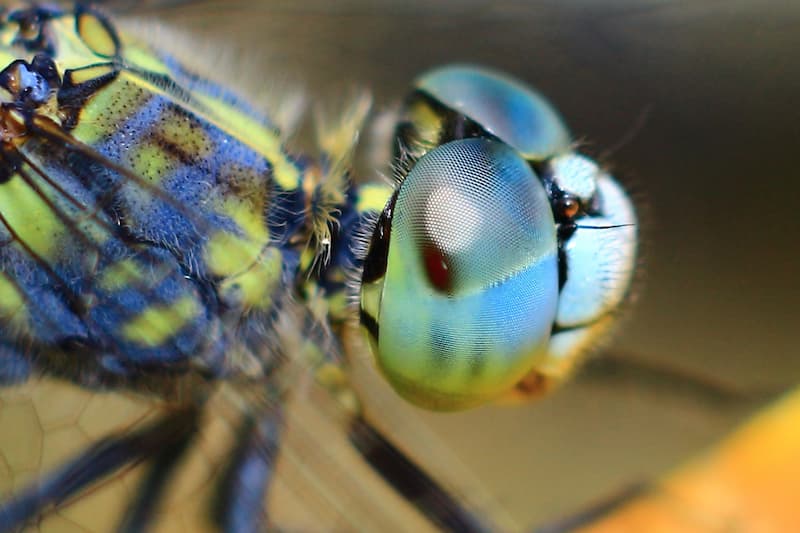
On top of this, their overwhelming visual capability adds firepower to their arsenal. The massive eyes of a dragonfly consist of about 30,000 ommatidia. It is no exaggeration to say that their entire head is an eye. Thanks to this structure, they can see all 360 degrees around them without a single blind spot. Furthermore, they perceive the world at a speed of over 200 frames per second, which is much faster than humans. The movement of a fly, which appears as a mere rapid blur to human eyes, looks like slow-motion video to a dragonfly.
The final step is completed by their ruthless physical structure. While flying, they basket their six legs together in a rounded shape. Then, they snatch their prey right out of the air. The sharp spines on their legs clamp down on the captured prey so tightly that escape is absolutely impossible. The trapped prey is swiftly torn into pieces by powerful jaws even before the flight ends. It is a flawless assassination operation executed entirely in mid-air.
3. God Like Flight Technology Mimicked by Helicopters
The most powerful weapon supporting the dragonfly’s phenomenal hunting success rate is its flight capability, which surpasses even that of a spacecraft. They are the most free and erratic fliers on Earth. Flying forward is basic, and they perfectly execute backward flight as well as hovering, where they stay completely still in mid-air. During flight, they can suddenly change direction and sprint at speeds of 50 kilometers per hour.
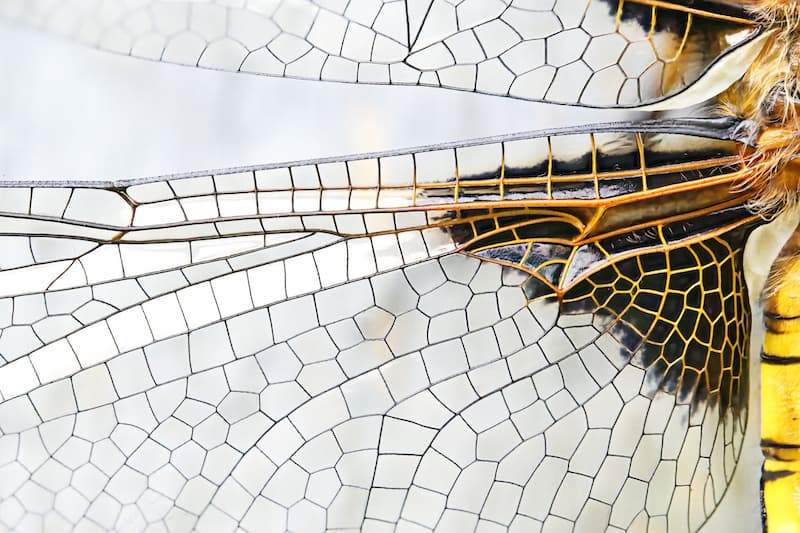
The secret to this incredible aviation skill is hidden within their four wings. Most insects move their forewings and hindwings together. In contrast, dragonflies can control all four wings completely independently. This is because the muscles connected to each wing move separately. When the forewings move upward, the hindwings push downward to manipulate the airflow. In this process, tiny air vortices are generated around the wings, and dragonflies convert these vortices into lift to suspend their bodies in the air.
This is a supernatural way of flying that is difficult to explain using conventional aerodynamics. Ordinary airplanes lose lift and stall when the airflow becomes irregular, but dragonflies actually gain greater force by utilizing those irregular vortices. In addition, a dense network of veins on the wing surface and a heavy cellular structure called the pterostigma at the tip of the wing dampen minute vibrations. Thanks to this, the wings do not tear or break even during high-speed flight, allowing them to maintain a stable posture.
The cutting-edge helicopters that modern engineering boasts were also created by mimicking this flight principle of the dragonfly. The technology to hover and perform vertical takeoffs and landings by adjusting the angle of the propeller is entirely inspired by the body structure of the dragonfly. However, even the most precise machinery built by humans cannot perfectly match the flexible and exquisite wing movements that the dragonfly has evolved over 300 million years.
4. Biomimicry Technology Changing the Future of Humanity
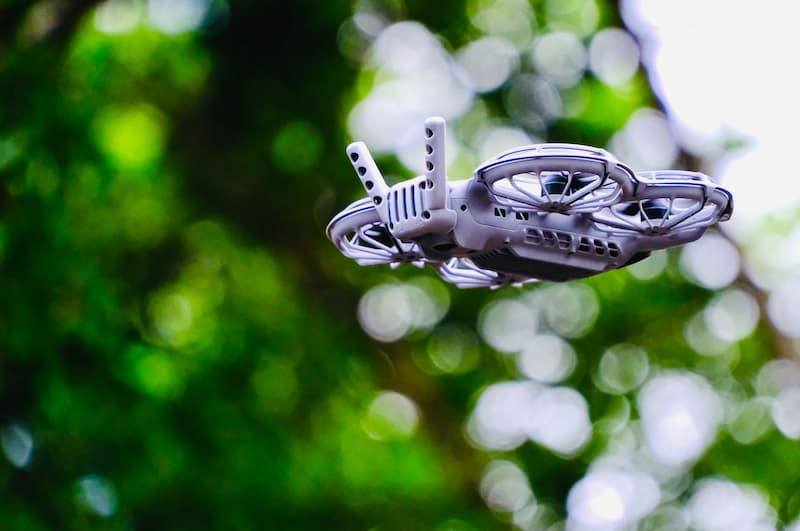
The perfect physical structure of the dragonfly, which has undergone evolution for 300 million years, is now the hottest subject of research in modern science. This is because it is more efficient and sophisticated than any advanced aircraft created by humans. Scientists are analyzing the flight principles and wing structures of dragonflies down to the cellular level.
The field receiving particular attention is drone technology, specifically micro air vehicles. Most drones currently used by humanity generate lift by rapidly spinning propellers with motor power. This method consumes a large amount of energy and generates severe noise. Battery depletion is also extreme. On the other hand, biomimetic drones that replicate the wing movements of a dragonfly are completely different. By controlling four wings independently, they can fly freely through tight spaces without making noise. Active development is underway for these to be used as military reconnaissance robots that can infiltrate enemy lines, for domestic searches in confined buildings, or for lifesaving operations at disaster sites where strong winds blow. It is a future-oriented aircraft that delivers immense efficiency with a tiny body.
In the field of aerodynamics, the dragonfly’s wing is a massive key to innovation. When looking at the surface of a dragonfly’s wing through a microscope, it is not flat but composed of minute wrinkles and a network-like vein structure. This unique structure plays a role in minimizing air resistance and maximizing lift. Scientists are applying this structure to research aimed at increasing the efficiency of actual airplane wings and reducing fuel costs. The neural control system of the dragonfly, which maintains its center of gravity in real-time without shaking even in severe turbulence, also provides a crucial hint for developing future autonomous flight artificial intelligence.
The simple wing beat of an insect is thoroughly changing the paradigm of human transportation and robotics. Why did we not focus on nature’s blueprint sooner. The mysterious blueprint completed by nature 300 million years ago has now become the core key leading the advanced future technology of 21st-century humanity.
Conclusion
The dragonfly reminds us that the ultimate pinnacle of engineering might already exist in the quiet corners of our backyards. As we spend billions trying to synthesize autonomous intelligence and perfect mechanical fluidity, this ancient predator has seamlessly executed those exact functions for hundreds of millions of years. This realization forces a profound shift in perspective. Are we truly inventing the future, or are we merely translating an organic encyclopedia that was finalized long before humanity drew its first breath? Perhaps true scientific progress lies not in outsmarting nature, but in mastering the humility required to look closer at its existing blueprints.
![[Bit#36] The Mystery of the Octopus: Secrets of an Alien Highly Intelligent Organism](https://hiddenbitknowledge.com/wp-content/uploads/2026/05/79e43c3db89e-768x512.jpg)
![[Bit#57] Wildfires and Ecosystems: The Bio-Mechanism of Destruction and Rebirth](https://hiddenbitknowledge.com/wp-content/uploads/2026/06/8b81363e2c58-768x512.jpg)
![Allelopathy: How Plants Use Chemistry to Influence Their Neighbors [Bit#183]](https://hiddenbitknowledge.com/wp-content/uploads/2026/10/main-image-6-768x419.jpg)
![[Bit #152] How Cat Purrs Heal Bones and Tissue](https://hiddenbitknowledge.com/wp-content/uploads/2026/09/main.cat-purring-close-up-768x512.jpg)
![[Bit#43] Animal’s Instinctive Weather Radar You Didn’t Know About](https://hiddenbitknowledge.com/wp-content/uploads/2026/05/8bf6811cafc2-768x512.jpg)
![[Bit#60] The Mystery of Insect Metamorphosis: Rebirth Arising from Death](https://hiddenbitknowledge.com/wp-content/uploads/2026/06/f1929ee79876-768x514.jpg)