When DNA Mutations Change Human Abilities [Bit#204]
Most genetic mutations do not give people extraordinary abilities. Many have no noticeable effect, while others can contribute to inherited diseases or changes in how the body functions. Yet a small number of genetic variations produce physical traits that seem almost unbelievable.
Some people develop unusually large muscles without intensive training. Others have exceptionally dense bones, naturally sleep fewer hours, or carry genetic variations that help them live in environments where oxygen is scarce.
These are not fictional superpowers. They are real biological differences documented in human genetics research.
The interesting part is that each ability begins with a change in a specific biological process. A mutation can weaken a system that normally limits growth, alter how the body responds to its environment, or change the way a virus interacts with human cells.
Understanding these cases reveals something important about human biology. The same genetic instructions that establish our physical limits can sometimes be altered in unexpected ways.
When the Body’s Muscle Growth Brake Stops Working

Muscle growth is not controlled by exercise alone. The body also has biological systems that prevent muscles from growing indefinitely.
One important regulator is a protein called myostatin. Produced from the MSTN gene, myostatin acts as a natural brake on skeletal muscle development. It helps control how much muscle tissue the body produces.
When this regulatory system stops working properly, muscle growth can change dramatically.
In 2004, researchers reported an unusual case involving a young child who had an exceptionally muscular body from infancy. The child showed unusually developed muscles in the thighs and upper arms, even without an intensive exercise program.
Genetic testing revealed a mutation affecting both copies of the MSTN gene. The mutation interfered with the production of functional myostatin, removing an important restriction on muscle development.
The researchers also found that the child’s muscle tissue contained no detectable myostatin products.
This finding was particularly important because it provided direct evidence that myostatin regulates muscle growth in humans, not just in laboratory animals.
The child continued to show increased muscle size and strength during early childhood. However, this was a rare case, and it does not establish that every person with reduced myostatin activity would develop identical physical abilities.
It also does not mean that greater muscle growth automatically produces unlimited strength or better overall health.
The case nevertheless demonstrates how a single genetic change can alter one of the body’s fundamental growth-control systems.
Bones That Become Much Denser Than Normal
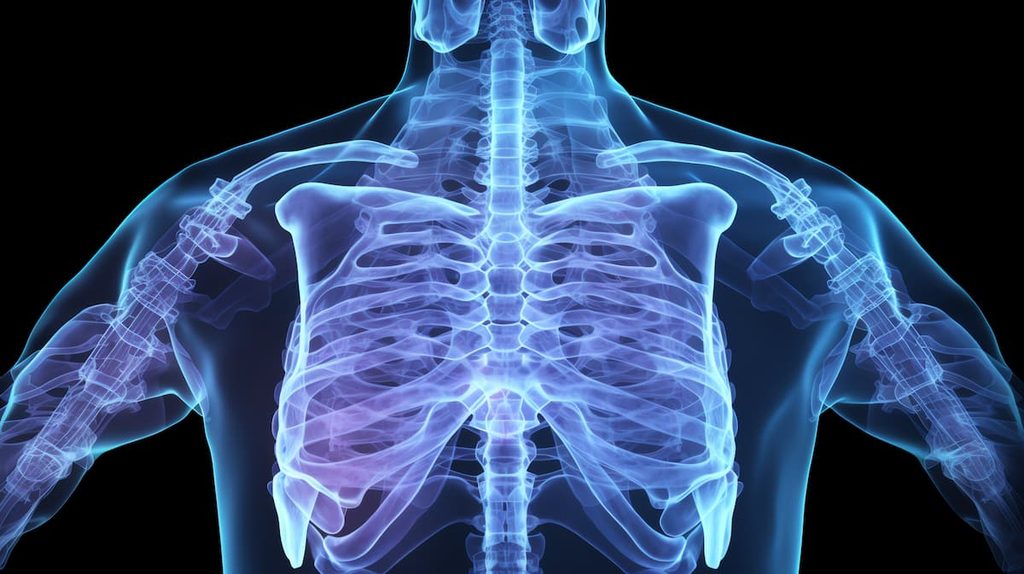
Muscles are not the only structures that can develop unusual strength-related characteristics. Some people have bones with exceptionally high mineral density.
A particularly important discovery involved the LRP5 gene.
LRP5 helps regulate a biological signaling pathway known as Wnt signaling. This pathway plays an important role in bone formation and development.
In 2002, researchers investigated a family in which several members had unusually high bone density. Genetic analysis identified a specific LRP5 mutation that was associated with this inherited trait.
The mutation changed how LRP5 responded to a protein called Dickkopf-1, which normally helps suppress Wnt signaling.
Because this inhibition became less effective, Wnt signaling remained more active than usual. As a result, bone formation increased.
The affected family members showed unusually dense bones, along with changes such as an enlarged jaw and a bony growth on the roof of the mouth.
This discovery revealed that changing one component of a signaling pathway can substantially influence the structure of the human skeleton.
However, extremely dense bones should not be confused with perfectly healthy bones.
Excessive bone growth can sometimes narrow spaces through which nerves pass. Clinical reports of LRP5-related high bone mass have documented complications involving hearing, neurological symptoms, and other skeletal changes.
In other words, a biological trait that appears advantageous at first can create problems when it develops beyond the body’s normal range.
People Who Naturally Need Less Sleep

Most adults need around seven to nine hours of sleep each night. However, a small number of people naturally function well with considerably less sleep.
Researchers have investigated whether genetics can explain some of these unusual sleep patterns.
One gene that attracted attention is BHLHE41, also known as DEC2. It encodes a protein involved in regulating gene activity and biological processes associated with sleep.
In 2009, researchers identified a rare DEC2 mutation in a family whose members naturally slept for shorter periods than usual.
The researchers studied human sleep patterns and also used genetically modified mice to investigate how the mutation affected sleep regulation.
The findings suggested that the mutation could influence the amount of sleep the body requires.
A later study published in 2014 identified another BHLHE41 variant associated with shorter sleep duration and fewer performance problems during sleep deprivation in one member of a twin pair.
These findings are fascinating because they suggest that the amount of sleep a person naturally needs is partly influenced by genetic differences.
However, the evidence remains limited. The human cases are rare, and the findings do not mean that ordinary people can safely reduce their sleep by changing their habits.
Most importantly, sleeping less because of a natural genetic trait is not the same as deliberately depriving the body of sleep.
For the small number of people carrying relevant variants, sleep regulation may work differently. For everyone else, adequate sleep remains important for normal brain and body function.
How Some Humans Adapted to Life in Thin Mountain Air
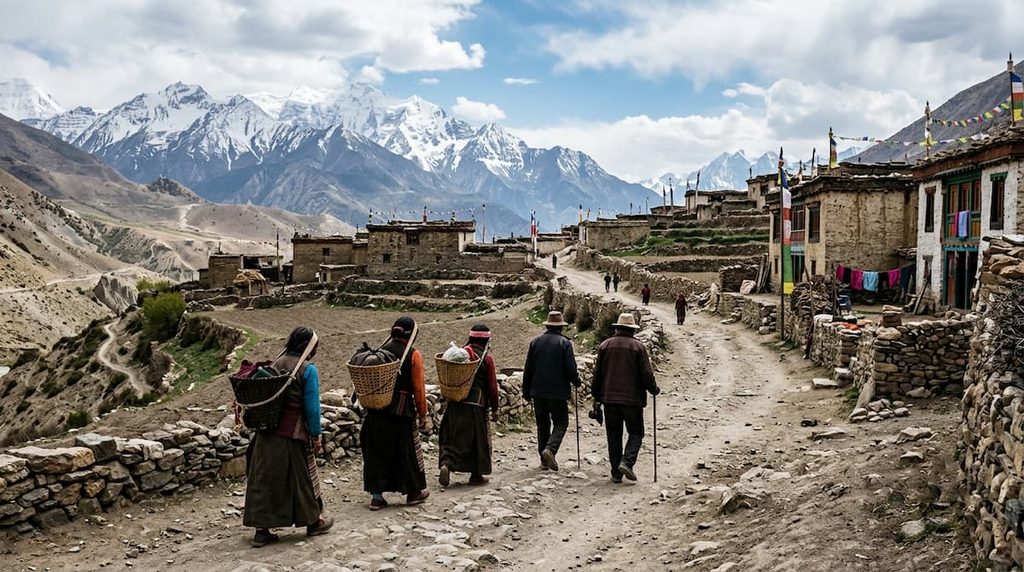
Living at high altitude presents a serious biological challenge.
As elevation increases, atmospheric pressure decreases. Although the percentage of oxygen in the air remains approximately the same, each breath delivers less oxygen because the air pressure is lower.
The body must adapt to this environment.
Many people respond to high altitude by producing more red blood cells. This helps transport oxygen, but excessive red blood cell production can make blood thicker and place additional strain on the circulatory system.
Tibetan populations provide an extraordinary example of a different biological response.
Researchers studying Tibetan genomes identified important genetic differences associated with high-altitude adaptation. One of the strongest signals involved the EPAS1 gene.
EPAS1 helps regulate the body’s response to low oxygen levels through a protein known as hypoxia-inducible factor 2 alpha, or HIF-2α.
Research suggests that particular EPAS1 variants help regulate this response, reducing excessive increases in hemoglobin levels under low-oxygen conditions.
This is important because it allows people with these adaptations to live at high altitude without relying on the same degree of increased red blood cell production seen in many other populations.
Later functional studies provided additional evidence that Tibetan-associated EPAS1 variants influence gene expression and the body’s response to low oxygen.
Unlike the rare individual cases involving unusual muscle growth or sleep patterns, this adaptation developed across a population over many generations.
It is an example of how natural selection can change the frequency of genetic variants when they help people survive and reproduce in a particular environment.
The result is not an ability to breathe without oxygen. Rather, it is a different way of managing the biological stress caused by oxygen scarcity.
A Genetic Change That Makes It Harder for HIV to Enter Cells
Some genetic variations do not change a person’s physical appearance or athletic abilities. Instead, they alter how the body interacts with infectious organisms.
One well-studied example involves the CCR5 gene.
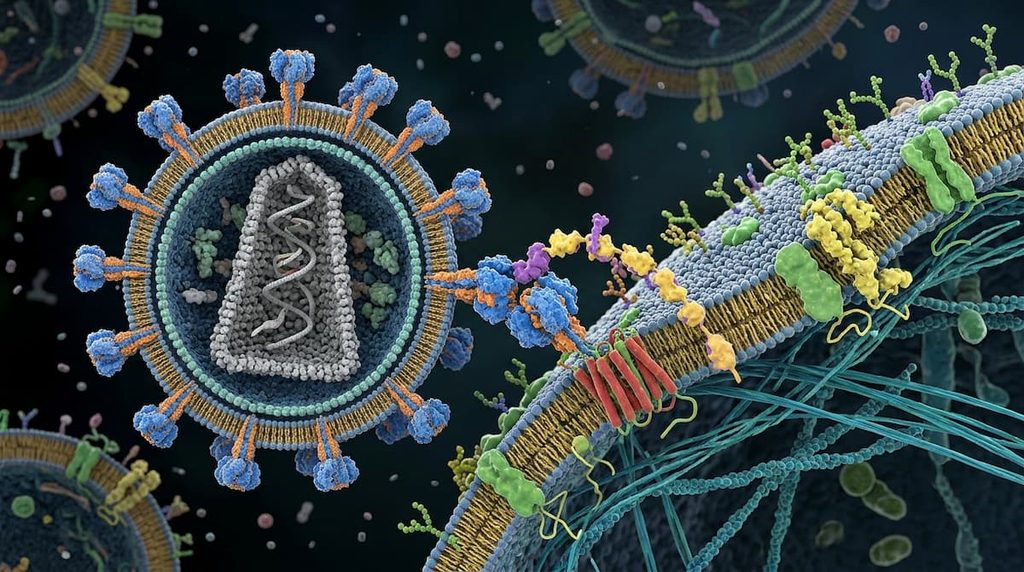
CCR5 provides instructions for making a receptor found on the surface of certain immune cells. Some strains of HIV use this receptor, together with another receptor called CD4, to enter and infect these cells.
A particular genetic variation known as CCR5-Δ32 contains a deletion of 32 DNA base pairs.
This deletion disrupts the genetic instructions and prevents the production of a normal functional CCR5 receptor.
People who inherit this deletion from both parents generally have greatly reduced CCR5 receptor availability on their immune cells. As a result, they can show strong resistance to HIV-1 strains that rely on CCR5 to enter cells.
Researchers first established this relationship through studies of people who had been repeatedly exposed to HIV but remained uninfected.
Further research confirmed that CCR5-Δ32 was associated with reduced susceptibility to infection.
However, this protection has important limits.
Not all HIV strains use CCR5. Some can use a different receptor, called CXCR4, to enter cells. Therefore, carrying two copies of CCR5-Δ32 does not provide universal protection against HIV.
This example demonstrates how a small change in DNA can alter the relationship between a human cell and an infectious virus.
It also shows that a genetic variation can be advantageous in one particular biological situation without making a person generally immune to disease.
Why Genetic Advantages Are Not Always Superpowers
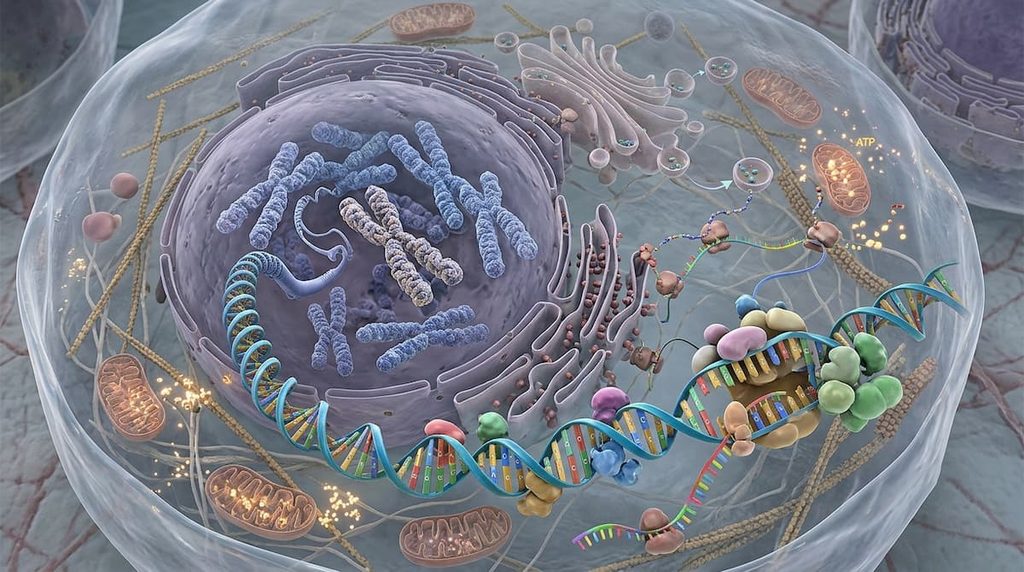
These examples may sound like extraordinary abilities, but genetics rarely produces simple advantages without consequences.
A mutation that increases muscle growth does not necessarily improve every aspect of physical performance. A mutation associated with extremely high bone density can also cause excessive skeletal growth.
Likewise, a genetic variation that changes sleep duration does not mean that everyone can safely function with fewer hours of rest.
Even genetic resistance to one infection does not guarantee protection against other strains of the same virus.
Another important point is that not every unusual human ability can be explained by a single gene.
Athletic performance, intelligence, endurance, and many other complex traits involve numerous genetic factors interacting with nutrition, development, training, and environmental conditions.
This is why scientists distinguish between a mutation that directly changes a biological process and a genetic variant that is merely associated with a particular trait.
A rare mutation can have a dramatic effect, but many genetic differences produce only small changes that become noticeable when combined with other factors.
The Hidden Potential Within Human DNA
The human body is built around biological systems that regulate growth, repair, energy use, immunity, and adaptation.
These systems are usually carefully balanced. A genetic change can sometimes shift that balance in an unexpected direction, producing a trait that appears extraordinary compared with what most people experience.
The stories of unusual muscle growth, extremely dense bones, naturally short sleep, high-altitude adaptation, and resistance to certain HIV strains reveal how much biological variation exists within our species.
They also remind us that evolution does not design humans around a single definition of physical perfection.
A trait that helps in one environment may be less useful in another. A change that improves one biological function may interfere with something else.
Perhaps the most remarkable discovery is not that some people possess abilities that resemble superpowers. It is that the human body contains so many interconnected biological systems that even a small change in DNA can sometimes reshape how those systems work.
Scientific sources
1. Schuelke M, Wagner KR, Stolz LE, et al. “Myostatin mutation associated with gross muscle hypertrophy in a child.” New England Journal of Medicine. 2004;350(26):2682-2688. PMID: 15215484. DOI: 10.1056/NEJMoa040933. Read the study on PubMed.
2. Boyden LM, Mao J, Belsky J, et al. “High bone density due to a mutation in LDL-receptor-related protein 5.” New England Journal of Medicine. 2002;346(20):1513-1521. PMID: 12015390. DOI: 10.1056/NEJMoa013444. Read the study on PubMed.
3. He Y, Jones CR, Fujiki N, et al. “The transcriptional repressor DEC2 regulates sleep length in mammals.” Science. 2009;325(5942):866-870. PMID: 19679812. DOI: 10.1126/science.1174443. Read the study on PubMed.
4. Pellegrino R, Kavakli IH, Goel N, et al. “A novel BHLHE41 variant is associated with short sleep and resistance to sleep deprivation in humans.” Sleep. 2014;37(8):1327-1336. PMID: 25083013. DOI: 10.5665/sleep.3924. Read the study on PubMed.
5. Yi X, Liang Y, Huerta-Sanchez E, et al. “Sequencing of 50 human exomes reveals adaptation to high altitude.” Science. 2010;329(5987):75-78. PMID: 20595611. DOI: 10.1126/science.1190371. Read the study on PubMed.
6. Peng Y, Cui C, He Y, et al. “Down-Regulation of EPAS1 Transcription and Genetic Adaptation of Tibetans to High-Altitude Hypoxia.” Molecular Biology and Evolution. 2017;34(4):818-830. PMID: 28096303. DOI: 10.1093/molbev/msw280. Read the study on PubMed.
7. Samson M, Libert F, Doranz BJ, et al. “Resistance to HIV-1 infection in caucasian individuals bearing mutant alleles of the CCR-5 chemokine receptor gene.” Nature. 1996;382(6593):722-725. PMID: 8751444. DOI: 10.1038/382722a0. Read the study on PubMed.
8. Dean M, Carrington M, Winkler C, et al. “Genetic restriction of HIV-1 infection and progression to AIDS by a deletion allele of the CKR5 structural gene.” Science. 1996;273(5283):1856-1862. PMID: 8791590. DOI: 10.1126/science.273.5283.1856. Read the study on PubMed