When Does Human Development Really Begin? [Bit#184]

Every birthday marks another year of life. The date is easy to identify: it is the day a person was born. But human development does not begin on that date. Long before a newborn takes a first breath, a complex series of biological events has already taken place.
This raises an interesting distinction. A birthday tells us how much time has passed since birth, but it does not tell us how long a person’s development has been underway.
Medicine makes this distinction especially clear. Pregnancy is usually measured using a clock that starts before fertilization, even though the embryo itself develops only after fertilization. Understanding why these timelines differ reveals something important about how human development is measured.
Birth Is a Milestone, Not the Beginning of Development
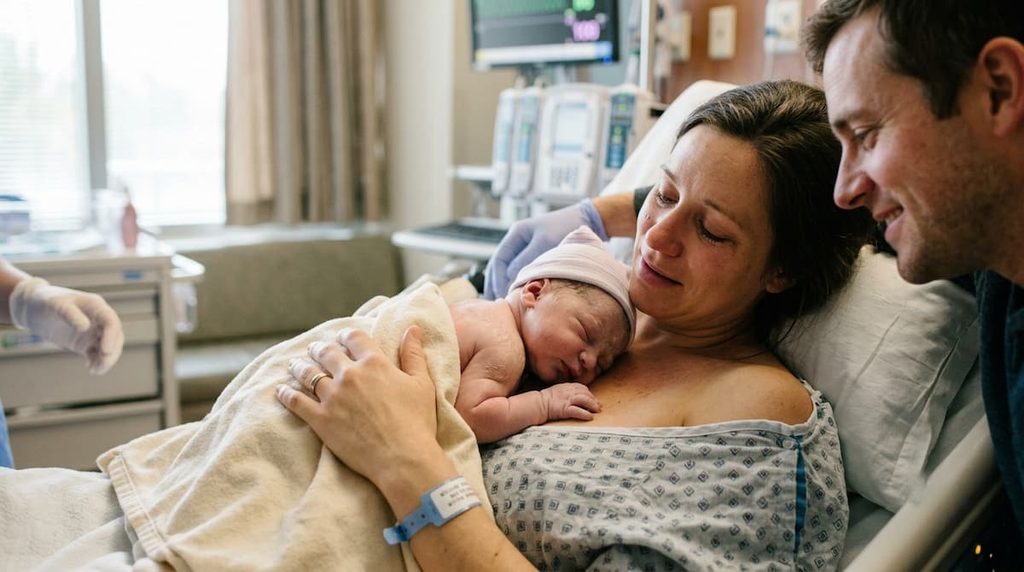
Birth is one of the most visible transitions in human life. Before birth, the developing fetus receives oxygen and nutrients through the placenta. After birth, a newborn must begin breathing with its lungs and adjust to a very different environment.
These changes make birth a major physiological event. However, they do not mean that development begins at delivery.
The foundations of the body form during prenatal development, the period before birth. Cells multiply, specialize, and organize into tissues and organs. The heart, nervous system, limbs, and other structures develop through a sequence of coordinated biological processes.
Development continues after birth, too. The brain undergoes extensive changes during childhood and adolescence, the body grows, and reproductive maturity develops later. Even in adulthood, tissues maintain themselves and respond to changing conditions.
Human development is therefore a continuous process that extends across multiple stages. Birth is a particularly important boundary in that process, but it is not its starting point.
What Happens Before Birth?
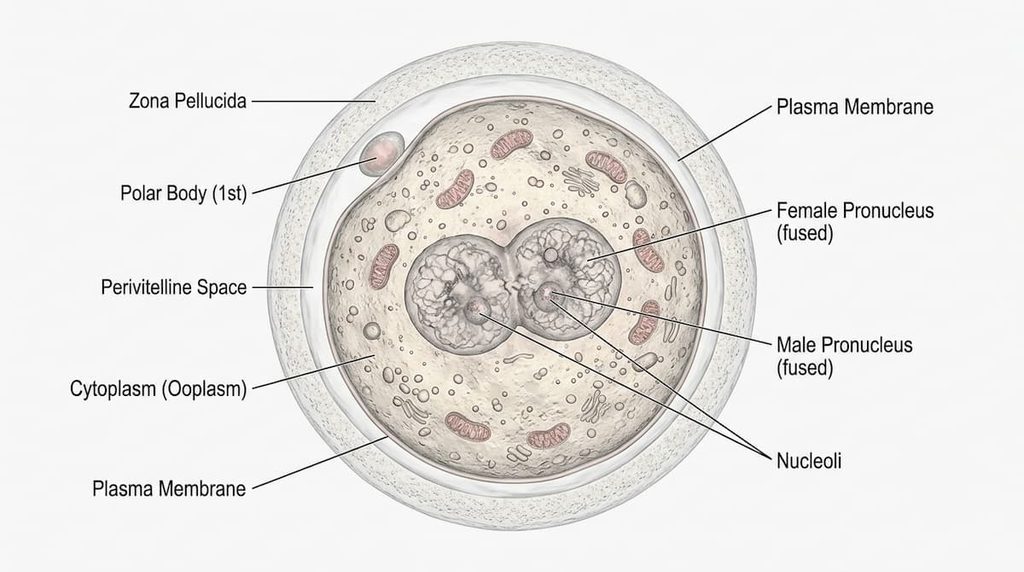
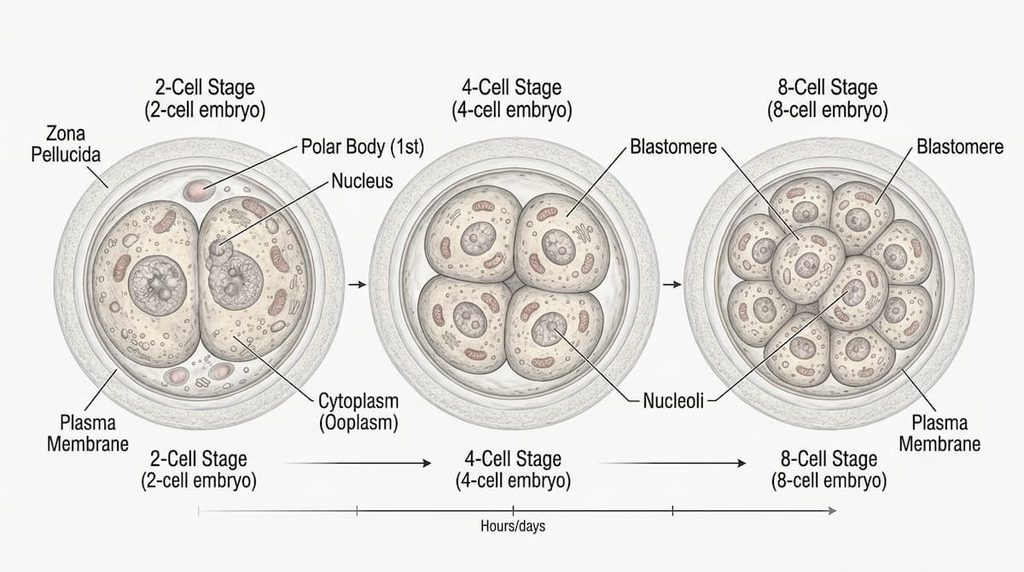
To understand the difference between a birthday and the beginning of prenatal development, it helps to look at the earliest stages of reproduction.
Fertilization occurs when a sperm cell and an egg cell unite through a complex sequence of cellular events. The resulting cell is called a zygote. It contains genetic material from both parents and begins a developmental process that differs fundamentally from the activities of either reproductive cell alone.
The zygote does not immediately become a recognizable miniature human. Instead, it undergoes repeated cell divisions. The resulting cells initially become smaller as their number increases, forming an increasingly organized early embryo.
Over the following days, the embryo passes through several stages. A compact cluster of cells called a morula forms, followed by a fluid-filled structure known as a blastocyst. The blastocyst contains an inner cell population that contributes to the embryo and an outer cell population involved in establishing tissues that support development.
The blastocyst then begins implantation into the uterine lining. Implantation is essential for the usual continuation of pregnancy, allowing the developing conceptus to establish an interface with maternal tissues.
These events take place before anything resembling the newborn appearance that we associate with a person’s birthday.
The early stages also demonstrate why development cannot be reduced to a single dramatic moment visible to the naked eye. It involves coordinated changes in cell division, gene activity, and cell specialization. Researchers continue to investigate the molecular mechanisms that guide these processes.
Why Does Pregnancy Counting Start Before Fertilization?
One of the most confusing details of pregnancy is that the medical clock usually starts before the embryo exists.
In routine obstetric care, pregnancy duration is generally expressed as gestational age. This is counted from the first day of the pregnant person’s last menstrual period, commonly abbreviated as LMP.
Fertilization usually occurs later, around the time of ovulation. In a typical 28-day menstrual cycle, ovulation occurs approximately two weeks after the period begins, although the timing varies considerably between individuals and cycles.
As a result, a pregnancy described as being at four weeks of gestational age usually involves an embryo that has existed for roughly two weeks, not four. This is an approximation, not a way to determine the exact age of every embryo.
Why use this seemingly unusual system?
The date of the last menstrual period is often easier to establish than the exact date of fertilization. Ovulation and fertilization do not necessarily occur on precisely predictable days, and many people cannot identify when fertilization occurred. A consistent starting point helps clinicians estimate pregnancy duration, monitor development, and plan prenatal care.
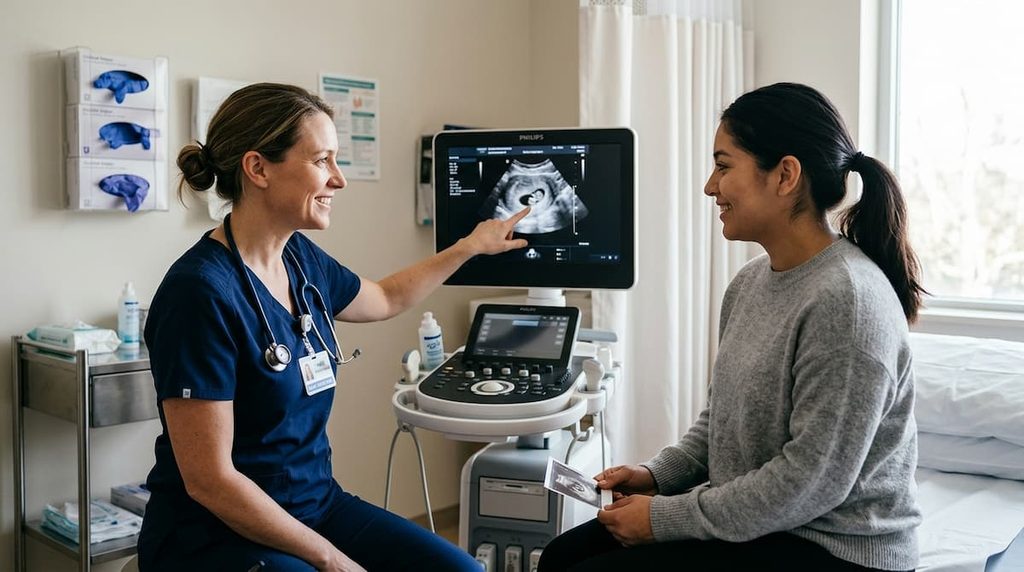
Ultrasound can help confirm or revise pregnancy dating. Early ultrasound measurements are particularly useful, while dating based only on the last menstrual period can be less reliable when cycle timing is uncertain. Pregnancies resulting from assisted reproductive technology may have more precise information about fertilization or embryo transfer available.
The important distinction is that gestational age is a clinical dating convention. It does not mean that an embryo has been developing since the first day of the last menstrual period.
Two Clocks Measure Different Things

Consider two ways of describing the same person’s early life.
The first clock begins at birth. It is the clock used for birthdays, legal age, and many everyday conversations. When someone celebrates a first birthday, one year has passed since delivery.
The second clock describes prenatal development. Depending on the question, researchers and clinicians may measure time from fertilization, use gestational age, or track particular developmental milestones.
These clocks are not competing versions of the same measurement. They answer different questions.
Age since birth measures elapsed time outside the womb. Gestational age provides a standardized clinical measure of pregnancy duration. Time since fertilization is more directly related to how long development has proceeded after the sperm and egg unite, when that timing can be established.
Confusing these measurements can create misleading statements. For example, saying that an embryo is four weeks old when the clinical record gives a gestational age of four weeks may overstate the time since fertilization.
The same distinction matters in scientific research. Studies of embryonic development need to specify which dating system they use, because even a difference of several days can matter when a structure or biological process is changing rapidly.
Is Fertilization the Same as the Beginning of Human Life?
The question becomes more complicated when the phrase “beginning of life” is used instead of “beginning of development.”
Biologically, fertilization is a major transition. The sperm and egg are specialized reproductive cells, and their union initiates the formation of a zygote that can undergo embryonic development. Researchers can investigate the cellular events that occur during this process and the stages that follow.
But the phrase “When does human life begin?” can mean more than one thing.
It may refer to the start of a new organism’s developmental trajectory. It may instead ask when an entity should be regarded as a person in a moral, philosophical, or legal sense. These are related questions, but they are not interchangeable.
Embryology can describe fertilization, cell division, implantation, and later development. It cannot, through biological observations alone, settle every ethical or legal question associated with those events. Different debates may also use the word “life” in different ways, which can make apparently scientific disagreements partly disagreements about definitions.
For this article, the most precise question is narrower: when does prenatal human development begin, and how does that timeline relate to the birthday we use to count age?
That question can be addressed through reproductive biology and clinical dating without pretending that it resolves every broader debate.
What Your Birthday Actually Tells You
A birthday is not an inaccurate measure. It is a measure designed for a specific purpose.
It identifies the date of birth and provides a consistent reference point for tracking the time that has passed since then. It does not attempt to represent every stage of development that preceded birth.
Medical pregnancy dating illustrates the difference particularly well. A clinician may describe a pregnancy using gestational weeks, while developmental research may focus on time since fertilization or on a specific embryonic stage. Each approach can be useful, provided its meaning is clear.
The next time a birthday comes around, it is worth remembering that the date marks an important transition, not the beginning of the entire developmental story. Before birth, cells have already divided, specialized, and organized into the structures that support a new person’s life outside the womb.
Your birthday marks how long you have been alive since birth. The biology behind that day began much earlier.
Scientific Sources
- Niakan KK, Han J, Pedersen RA, Simon C, Reijo Pera RA. “Human pre-implantation embryo development.” Development. 2012;139(5):829-841. PMID: 22318624. DOI: 10.1242/dev.060426. Read the study on PubMed
- Clift D, Schuh M. “Restarting life: fertilization and the transition from meiosis to mitosis.” Nature Reviews Molecular Cell Biology. 2013;14(9):549-562. PMID: 23942453. DOI: 10.1038/nrm3643. Read the study on PubMed
- American College of Obstetricians and Gynecologists. “Committee Opinion No. 700: Methods for Estimating the Due Date.” Obstetrics & Gynecology. 2017;129(5). PMID: 28426621. DOI: 10.1097/AOG.0000000000002046. Read the clinical guidance on PubMed
- Lynch CD, Zhang J. “The research implications of the selection of a gestational age estimation method.” Paediatric and Perinatal Epidemiology. 2007;21(Suppl 2):86-96. PMID: 17803622. DOI: 10.1111/j.1365-3016.2007.00865.x. Read the study on PubMed