Does a Dominant Gene Actually Dominate? [Bit#205]
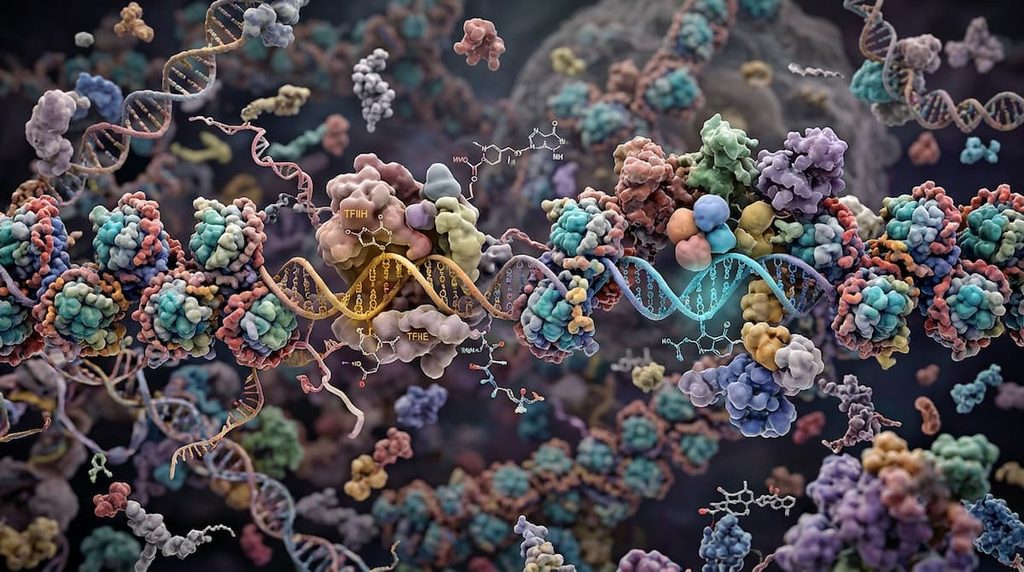
When you hear the word dominant, what comes to mind?
Something stronger. More powerful. Maybe even something that wins.
That seems like a reasonable way to think about a dominant gene. If one version of a gene is called dominant and another is called recessive, it is easy to imagine that the dominant one somehow overpowers the other.
But that is not what genetic dominance means.
A dominant allele is not necessarily stronger, better, or more common. And a recessive allele is not a weaker version that is destined to disappear.
The words sound like they describe a competition. Genetics is describing something much more specific.
Does a dominant allele overpower a recessive one?
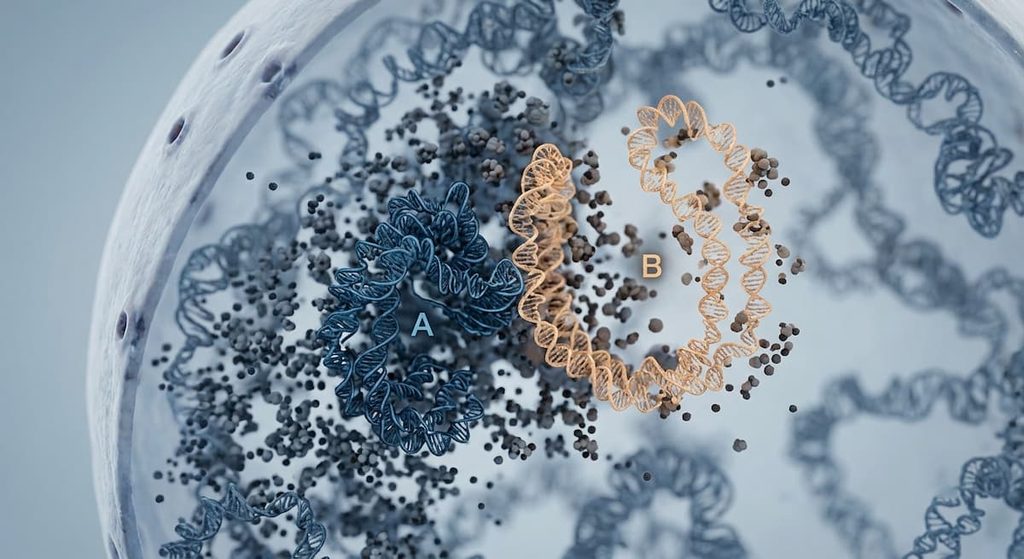
Imagine that you inherit two versions of the same gene, one from each parent. These versions are called alleles.
For some genes, having two different alleles produces a phenotype that resembles the effect of one allele more than the other. In a simple Mendelian example, that allele is described as dominant, while the other is described as recessive.
Nothing has to “defeat” anything.
The dominant allele does not attack, destroy, or silence the recessive allele. Instead, the two alleles can produce different amounts or forms of a gene product, and the way those products interact with cells and biological pathways determines what we observe as a trait.
So dominance is really about the relationship between a genotype and its phenotype.
That is a very different idea from being stronger.
Does dominant mean more common?

This is another surprisingly common misunderstanding.
It might seem logical that a dominant allele should spread through a population and eventually become common. After all, if it shows its effect whenever it is present, shouldn’t it have an advantage?
Not necessarily.
Dominance and frequency are two different things.
An allele can be dominant while remaining relatively rare in a population. A recessive allele can also be common.
Imagine a population in which a particular dominant allele is present in only a small fraction of people. The fact that its effect can appear in heterozygotes does not automatically make the allele more successful at reproducing.
Its frequency depends on population genetics, including factors such as natural selection, genetic drift, migration, mutation, and patterns of reproduction.
Dominance describes how alleles behave together in producing a phenotype. It does not tell you how often an allele occurs in a population.
This distinction is important because studies of biology students have found that dominance is often confused with allele frequency and evolutionary advantage.
In other words, dominant does not mean common.
Then why does one allele appear dominant?
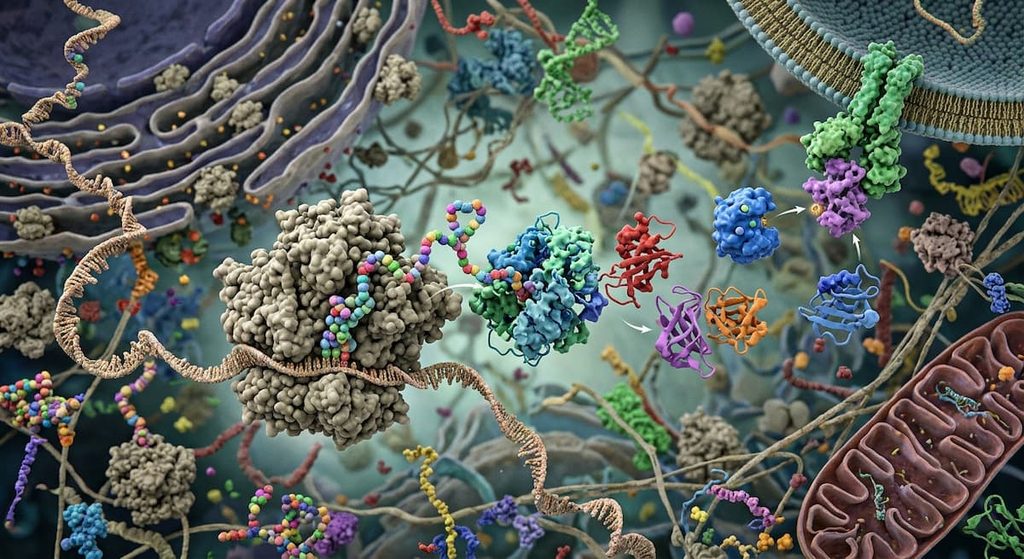
This is where the story becomes more interesting.
If dominance is not about strength, why does one allele sometimes determine the observable phenotype when two different alleles are present?
There is no single answer.
Dominance can arise from different molecular mechanisms.
Consider a gene that produces a protein needed in a particular cellular process. If one working copy of the gene produces enough protein to keep the process running normally, a person with one working copy and one altered copy may show little or no effect from the altered allele.
But if the body needs more protein than one working copy can provide, losing the function of one copy can produce a phenotype. This situation is known as haploinsufficiency.
In other cases, a changed protein can interfere with the normal protein made by the other allele. This is called a dominant-negative effect.
Some variants can also produce an altered protein with a new or excessive activity, creating what is known as a gain-of-function effect.
These mechanisms are very different, but they can all produce patterns that geneticists describe using dominance.
So there is no single biological switch labeled “dominant.”
Is a recessive allele a weak allele?

The word recessive can create another misleading impression.
If dominant means powerful, it is tempting to assume that recessive means weak.
But an allele being recessive does not mean that it is biologically inferior.
A recessive phenotype generally requires a particular genetic combination before its effect becomes apparent. In a simple case, a person needs two copies of the relevant recessive allele to show the associated phenotype.
A person carrying only one copy may not show that phenotype.
That does not make the allele weak. It means that one copy is not enough to produce the phenotype under that particular biological system.
This distinction matters because the same allele can behave differently depending on what phenotype is being measured and what other genetic factors are involved.
If recessive alleles are hidden, why don’t they disappear?

This question leads to another common misconception.
If recessive alleles are less visible, perhaps they should gradually disappear from the population.
But an allele does not need to produce a visible phenotype in every carrier to be passed on.
A recessive allele can remain in a population because people who carry one copy may pass it to their children even though they do not show the associated recessive phenotype themselves.
That means a recessive allele can persist across many generations.
Its persistence does not mean the allele is secretly “trying” to survive. It simply follows the rules of inheritance and population genetics.
And again, whether an allele becomes more or less common depends on much more than whether it is dominant or recessive.
Does dominant mean better?

Absolutely not.
This may be the biggest trap created by the word itself.
In everyday English, dominant can mean powerful, controlling, or superior. But genetic dominance carries no built-in value judgment.
A dominant allele can contribute to a normal trait, but dominant variants can also cause genetic disorders.
Likewise, a recessive allele is not automatically harmful or defective. Recessive inheritance can describe completely ordinary biological variation as well as genetic disease.
The words dominant and recessive do not rank alleles from best to worst.
They describe how particular genetic variants relate to an observable phenotype.
And not every trait is simply dominant or recessive
There is one more reason to be careful with the familiar dominant-versus-recessive story.
Many human traits do not fit neatly into a two-choice genetic model.
Some traits are influenced by many genes. Others are affected by environmental factors, developmental processes, or interactions between genes.
Even when a trait involves a single gene, the relationship between genotype and phenotype can be more complicated than a simple dominant-recessive pattern.
This is why familiar examples such as eye color should not be treated as if every human trait follows a basic Mendelian switch.
Real biology often has more than two settings.
So what does “dominant” actually mean?
The word sounds as though one allele is winning a genetic battle.
But there is no battle.
Dominance is a way of describing what happens when particular genetic variants occur together and produce a particular phenotype.
A dominant allele is not necessarily stronger.
It is not necessarily more common.
It is not necessarily better.
And a recessive allele is not necessarily weak or destined to disappear.
The deeper lesson is that genetic vocabulary can sometimes make biology seem simpler than it really is. The word dominant sounds like a description of power, but in genetics it is mainly a description of a relationship.
Once that distinction becomes clear, Mendelian genetics stops looking like a contest between strong and weak genes.
It starts to look like what it really is: a system in which the effects of genes emerge from how their products interact with cells, organisms, and each other.
scientific sources
Abraham JK, Perez KE, Price RM. “The Dominance Concept Inventory: A Tool for Assessing Undergraduate Student Alternative Conceptions about Dominance in Mendelian and Population Genetics.” CBE Life Sci Educ. 2014;13(2):349-358. PMID: 26086665. DOI: 10.1187/cbe.13-08-0160. Read the study on PubMed. PubMed
Veitia RA, Caburet S, Birchler JA. “Mechanisms of Mendelian dominance.” Clin Genet. 2018;93(3):419-428. PMID: 28755412. DOI: 10.1111/cge.13107. Read the study on PubMed. PubMed
Billiard S, Castric V, Llaurens V. “The integrative biology of genetic dominance.” Biol Rev Camb Philos Soc. 2021;96(6):2925-2942. PMID: 34382317. DOI: 10.1111/brv.12786. Read the study on PubMed. PubMed
Palmer DS, Zhou W, Abbott L, Wigdor EM, Baya N, Churchhouse C, Seed C, Poterba T, King D, Kanai M, Bloemendal A, Neale BM. “Analysis of genetic dominance in the UK Biobank.” Science. 2023;379(6639):1341-1348. PMID: 36996212. DOI: 10.1126/science.abn8455. Read the study on PubMed.