How Did Animals Become So Huge? [Bit#208]
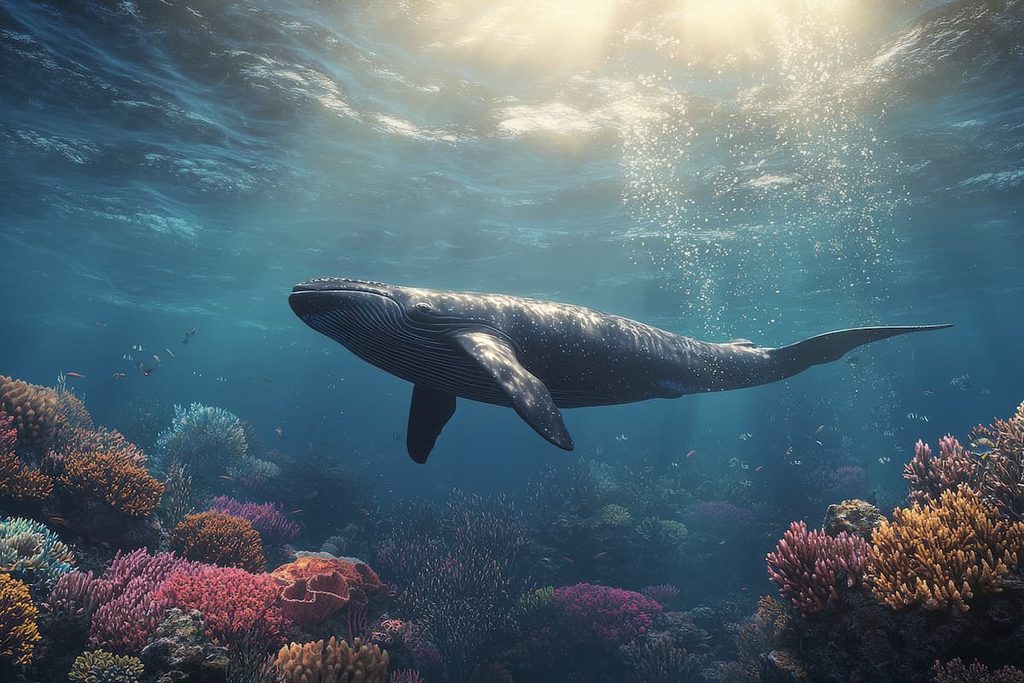
A whale can weigh more than 100 tons. Some sauropod dinosaurs reached masses that would dwarf almost every land animal alive today. Even among mammals, some extinct species grew to extraordinary sizes.
But none of these animals began their evolutionary history as giants.
Their ancestors were much smaller. Over millions of years, some lineages repeatedly moved toward larger and larger body sizes. In certain groups, this process eventually produced animals that were enormous compared with their ancestors.
So what made this possible?
The answer is not simply that evolution favors bigger animals. Gigantism, the evolution of exceptionally large body size, can emerge when several conditions come together: ecological opportunities, biological changes that make large bodies possible, and natural selection that favors larger individuals under particular conditions.
And there is an important twist. Evolution does not always push animals toward larger bodies. The same evolutionary process can also produce smaller animals when the environment favors being small.
When being bigger becomes useful
Body size affects almost everything an animal does.
A larger animal may be harder for predators to kill. It may compete more effectively for certain resources, travel farther, or use food sources that smaller animals cannot exploit efficiently. In some environments, becoming larger can therefore provide a survival or reproductive advantage.
But this does not mean that bigger is always better.
A large body also requires more food and energy. Growing one takes time and resources, and maintaining it can be costly. The advantage of becoming larger therefore depends heavily on the environment in which an animal lives.
This becomes especially clear when an ecosystem changes.
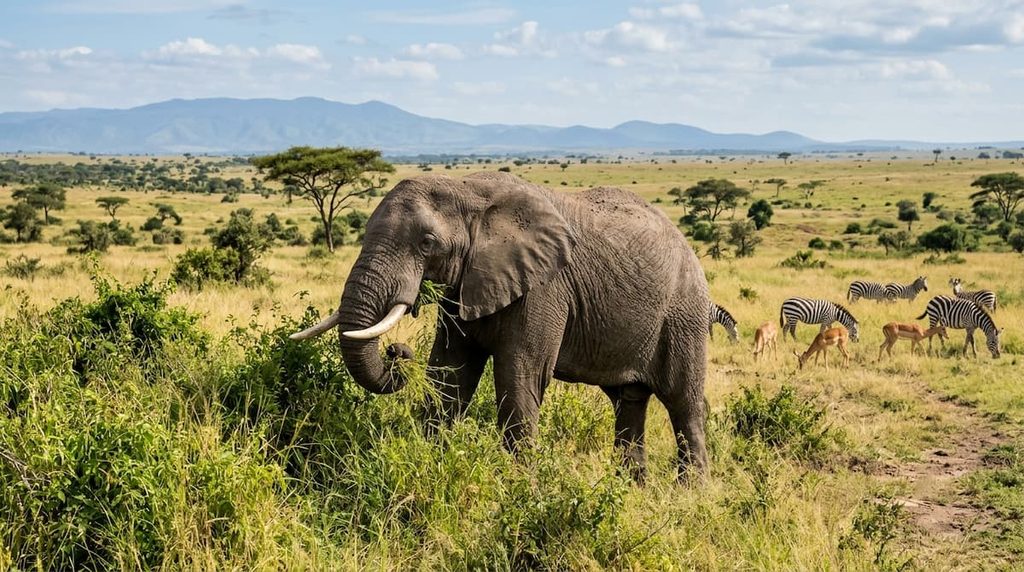
When a major ecological disruption removes dominant groups, the surviving animals may suddenly encounter opportunities that did not exist before. New food sources, habitats, and ecological roles can become available.
One of the clearest examples occurred after the Cretaceous-Paleogene extinction, which eliminated the non-avian dinosaurs. During the following millions of years, mammals diversified into ecological roles that had previously been occupied by other groups. Their maximum body size also increased substantially.
This does not mean that mammals became large simply because the dinosaurs disappeared. Instead, the disappearance of dominant groups opened ecological opportunities, and some mammalian lineages were able to exploit them.
That distinction matters.
Evolution does not look ahead and decide that an animal should become a giant. A new environment changes which traits can be advantageous. If larger individuals repeatedly gain an advantage, natural selection can shift a lineage toward larger body sizes over many generations.
A new opportunity can change the size of an animal
This raises another question.
If large bodies can be advantageous, why doesn’t every animal become enormous?
Because evolution works within particular environments and biological constraints.
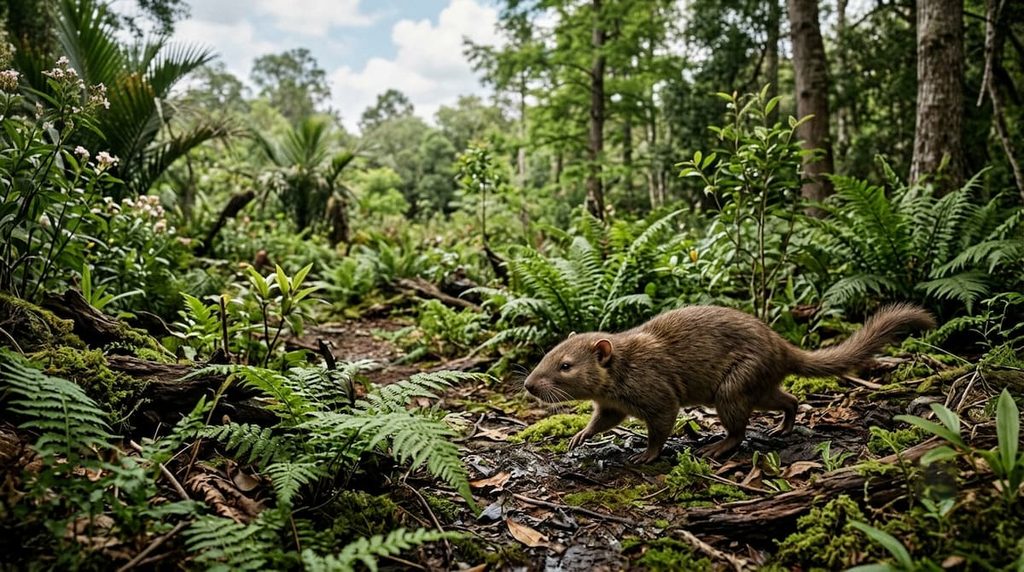
A body size that works well in one ecological niche may be disastrous in another. A small animal may need less food and reproduce quickly, while a large animal may require much more energy but gain advantages in competition or predator avoidance.
When an ecological opportunity appears, the range of viable body sizes can change.
Researchers studying the long-term evolution of mammals have found repeated increases in body size in different lineages. These increases are consistent with the idea that evolutionary changes in body size can be driven by shifts in ecological conditions and the opportunities available to different groups.
But the pattern is not a simple march toward ever-larger animals.
Sometimes large-bodied lineages diversify. Sometimes small-bodied forms remain successful. And sometimes body size changes in the opposite direction.
The environment helps determine which direction is favored.
Giants need a biological way to grow
Ecological opportunity alone is not enough to produce a giant.
An animal must also have the biology needed to build and maintain a large body.
Sauropod dinosaurs provide one of the clearest examples.
Their ancestors were not enormous animals. Early sauropodomorphs included relatively small-bodied species, some weighing only around one or two tons. Yet later sauropods included animals that reached masses of many tens of tons.
What changed?
One important clue comes from growth.
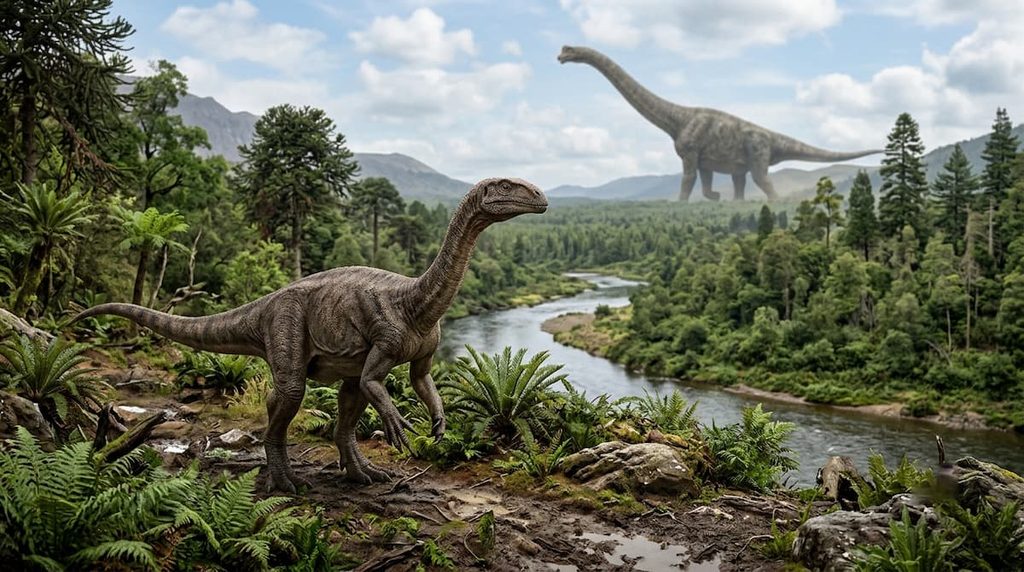
Research on sauropodomorph evolution found that rapid growth appeared before the extreme gigantism seen in later sauropods. In other words, the ability to grow quickly was already present in relatively small members of the lineage before the largest body sizes evolved.
This does not mean that rapid growth automatically produces gigantism.
Instead, it suggests that fast growth may have provided an important biological foundation for it.
A lineage cannot evolve a massive adult body if its biology makes such growth extremely difficult or energetically impossible. Changes in growth rate and other aspects of development can therefore expand the range of body sizes that evolution can produce.
Once that biological foundation exists, natural selection can act on body size in environments where being larger provides an advantage.
The result can be a gradual shift from relatively small animals toward much larger ones.
Gigantism can evolve again and again
The sauropods reveal something even more surprising.
Their gigantism was not a single evolutionary event.
Different sauropod lineages independently evolved enormous body sizes. Over a very long period, extreme body mass appeared repeatedly in different branches of their evolutionary history.
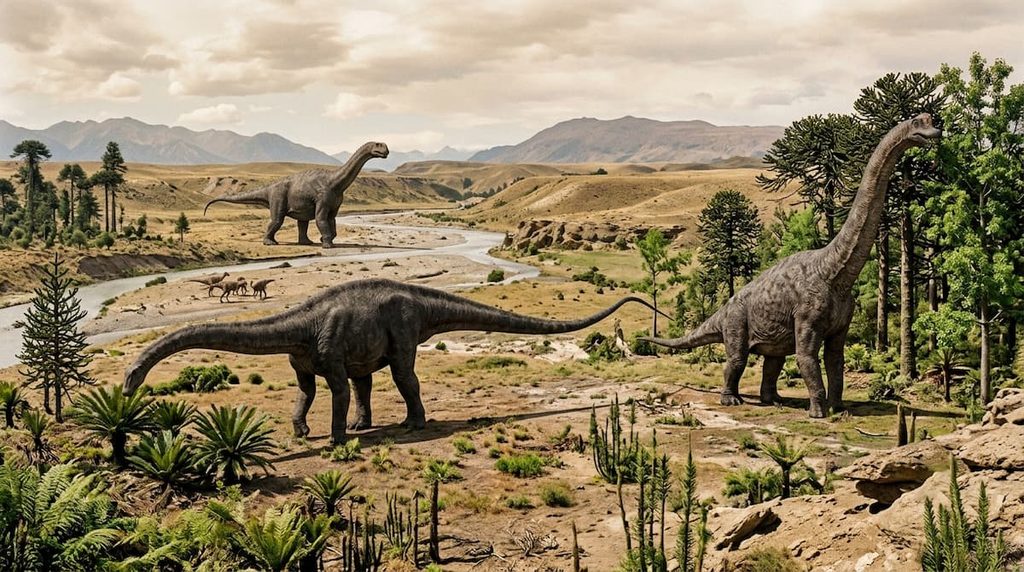
This repeated pattern is important because it suggests that gigantism does not require one unique evolutionary accident.
When similar biological and ecological conditions occur in different lineages, evolution can sometimes produce similar outcomes.
This is an example of convergent evolution. Different evolutionary lineages independently develop similar traits because they encounter similar selective pressures or functional challenges.
The details are never exactly the same. Different giants may have evolved different anatomical and physiological solutions to support their size.
But the repeated appearance of very large bodies suggests that gigantism can become an achievable evolutionary strategy under the right conditions.
This also changes how we should think about giant animals.
A giant species is not necessarily an evolutionary oddity that happened once.
In some groups, becoming very large was a route that evolution discovered repeatedly.
So why didn’t they keep getting bigger?
If large body size could be advantageous, why did evolution stop?
Because gigantism comes with costs.
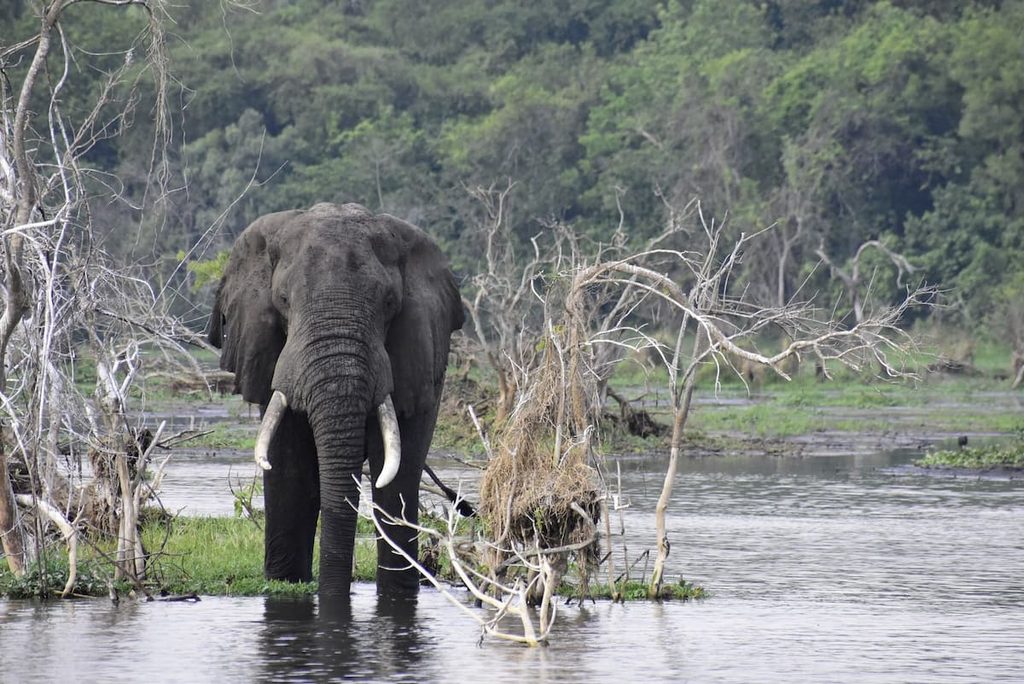
A larger body generally requires more resources. An animal must obtain enough food to support its tissues, move its body, reproduce, and survive periods when resources are scarce.
There are also physical and physiological limits.
As body size increases, the problems involved in supporting and moving a large body can become increasingly important. Growth, reproduction, heat exchange, and resource requirements can all interact with body size.
Eventually, the benefits of becoming larger may no longer outweigh the costs.
This helps explain why maximum body size can increase for a period and then level off.
Research on terrestrial mammals has found that maximum body size increased substantially over evolutionary time but later became relatively stable. Environmental factors such as climate and the amount of available land may have helped place limits on how large terrestrial mammals could become.
So gigantism is not an evolutionary escalator that keeps moving upward forever.
It is closer to a balance.
When the benefits of a larger body exceed its costs, selection can favor greater size. When the costs become too high, further increases may no longer provide enough advantage.
Evolution does not always make animals bigger
There is one more reason not to treat gigantism as a general rule of evolution.
In some environments, evolution can favor smaller bodies.
Islands provide a particularly interesting example.
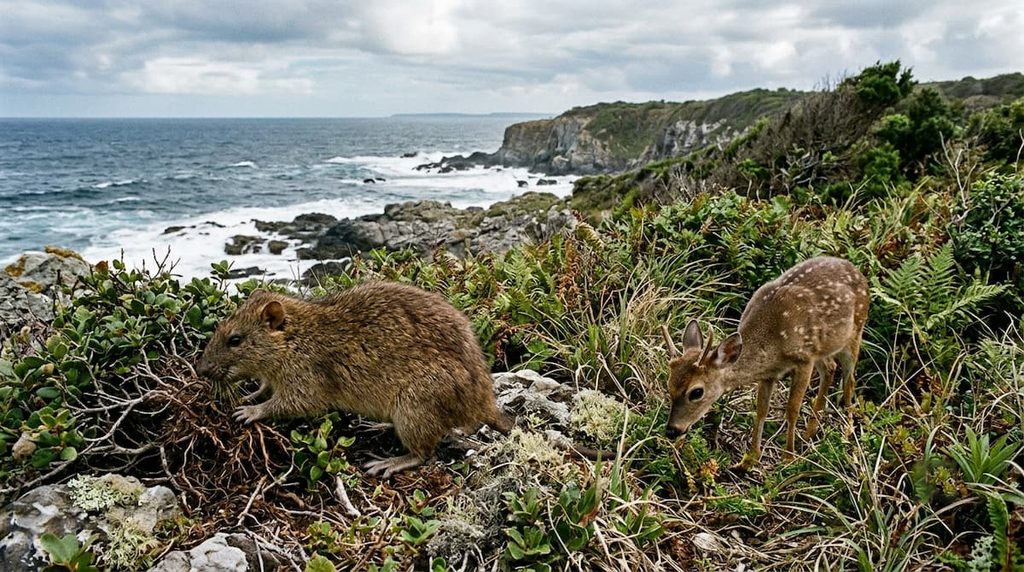
Small animals isolated on islands can sometimes evolve larger bodies, a phenomenon known as island gigantism. At the same time, large mainland animals can evolve smaller bodies on islands, known as island dwarfism.
These patterns may seem contradictory.
If evolution favors larger bodies, why would large animals become smaller?
The answer is that evolution is responding to the environment, not following a universal command to increase body size.
On an island, food availability, predators, competition, climate, and available space can differ dramatically from conditions on the mainland. A smaller body may become advantageous for an animal that no longer needs to maintain the same size.
The same principle that can produce giants can therefore produce dwarfs.
The giant was never the goal
Looking at a massive whale or a giant sauropod, it is tempting to imagine evolution as a process that gradually aimed for a bigger and bigger animal.
But that is not what happened.
Gigantism is not a destination built into evolution. It is an outcome that can emerge when ecological opportunities, biological capabilities, and natural selection align over long periods of time.
A lineage may start relatively small. A change in its environment may make larger bodies more useful. Changes in growth and development may make greater size biologically possible. Selection can then favor larger individuals, generation after generation.
In another environment, the same evolutionary process can favor smaller bodies instead.
That is why the history of giant animals is not really a story about evolution trying to make everything bigger.
It is a story about how life responds to changing opportunities and limits.
Some lineages became giants because their environments allowed large bodies to work.
And the fact that evolution produced those giants repeatedly tells us something remarkable: given the right conditions, enormous body size is not an impossible accident. It is one of the many solutions that evolution can discover.
Scientific Sources
- Smith, F. A., et al. “The Evolution of Maximum Body Size of Terrestrial Mammals.” Science. 2010;330(6008):1216-1219. PMID: 21109666. DOI: 10.1126/science.1194830. Read the study on PubMed.
- Poelstra, J. W., et al. “The Evolution of Body Size in Mammals.” Current Biology. 2015;25(9):1133-1138. PMID: 25848031. DOI: 10.1016/j.cub.2015.02.053. Read the study on PubMed.
- Sander, P. M., et al. “Rapid Growth Preceded Gigantism in Sauropod Evolution.” Current Biology. 2022;32(18):4045-4052.e4. PMID: 36084648. DOI: 10.1016/j.cub.2022.07.036. Read the study on PubMed.
- Benson, R. B. J., et al. “The Evolution of Maximum Terrestrial Body Mass in Sauropod Dinosaurs.” Science. 2023;381(6659):eade7854. PMID: 37160089. DOI: 10.1126/science.ade7854. Read the study on PubMed.
- Heim, N. A., et al. “Cope’s Rule in the Evolution of Marine Animals.” Science. 2015;347(6224):867-870. PMID: 25700517. DOI: 10.1126/science.1260065. Read the study on PubMed.
- Lomolino, M. V., et al. “The Island Rule in Mammals and Other Vertebrates.” Global Ecology and Biogeography. 2021;30(8):1698-1713. PMID: 33859376. Read the study on PubMed.