Why Do Different Countries Have Different Street Trees? [Bit#195]
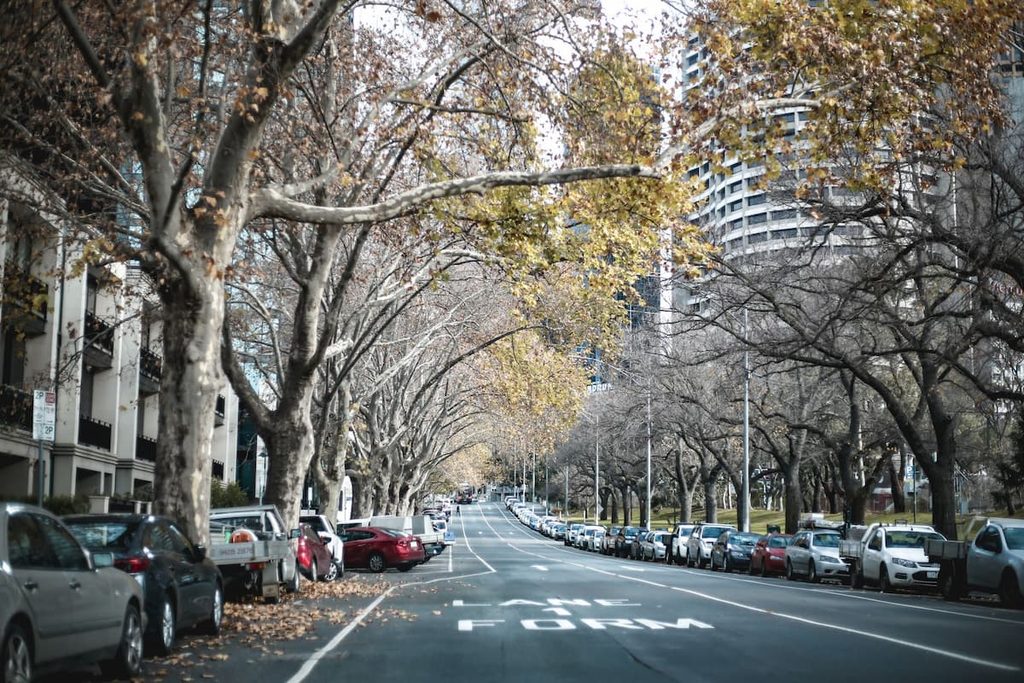
Walk down a street in Paris, Buenos Aires, or Ottawa, and the trees lining the pavement may look surprisingly different. Some streets are shaded by broad, spreading crowns. Others are lined with tall, narrow trees, while some cities feature flowering trees that transform their streets for a few weeks each year.
These differences are not simply a matter of local taste. Trees must survive the climate, grow in limited spaces, tolerate the conditions created by roads and buildings, and meet the needs of the people managing them. Over time, these pressures shape the character of a city’s streets.
Yet there is an intriguing twist. Even cities with similar climates can have very different street-tree patterns. The explanation lies in the interaction between biology and human decisions.
Climate Sets the Limits, but It Does Not Choose Every Tree
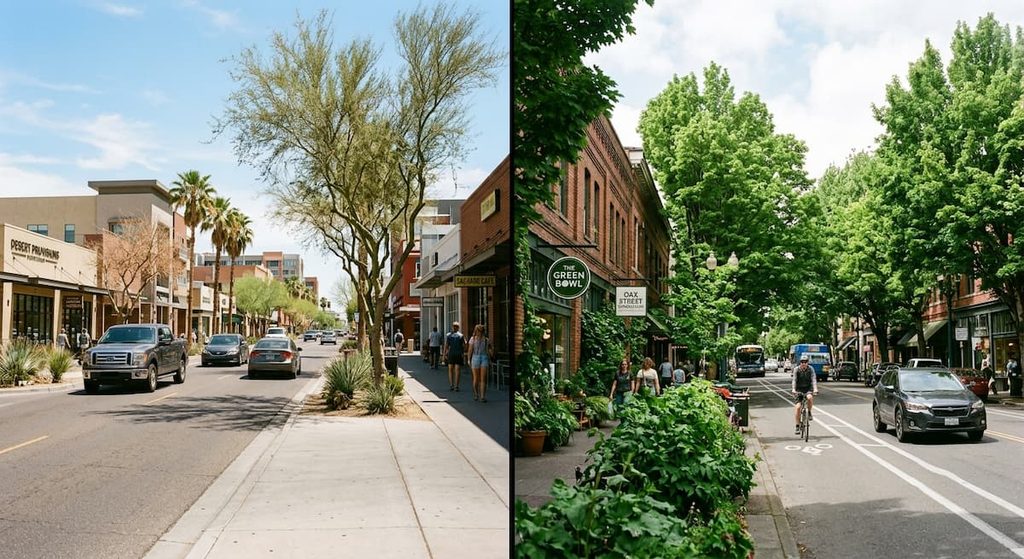
Temperature and rainfall are among the first factors that determine which trees can thrive in a region.
A tree adapted to warm, humid conditions may struggle when exposed to prolonged freezing temperatures. A species from a dry environment may tolerate drought better than one that depends on consistently moist soil. Seasonal differences also matter. Trees in places with cold winters must cope with freezing conditions, while trees in hot regions may face intense sunlight and long periods without rain.
Trees respond to these challenges through several biological features. Their leaves influence how much water they lose, their roots affect how they access moisture, and their vascular tissues transport water from the soil to the canopy.
One important process is transpiration, the loss of water vapor through tiny pores called stomata, most of which are found on leaves. When water becomes scarce, many trees reduce water loss by closing these pores. However, this also restricts the entry of carbon dioxide needed for photosynthesis, potentially slowing growth.
Heat creates another challenge. High temperatures can damage photosynthetic machinery and increase water demand. A tree that survives in a particular climate is not necessarily able to tolerate every extreme that occurs there.
Research on 43 commonly used urban tree species found that climate information based on where a species naturally occurs did not strongly predict several measured traits related to drought and heat tolerance. In other words, knowing a tree’s usual geographic range was not enough to reliably rank its tolerance to these stresses.
This matters because a tree’s natural distribution provides useful clues, but it is not a complete guide to its performance on a city street. Actual tolerance depends on physiological traits, growing conditions, and the specific stress involved.
Climate therefore acts as a filter. It helps determine which trees are suitable candidates, but it does not automatically identify the best species for every street.
A City Is a Different Environment From a Forest
A tree planted beside a road faces conditions that may be very different from those experienced by the same species in a natural forest.
In a forest, roots can often spread through a relatively continuous area of soil. On a city street, underground space may be restricted by pavement, foundations, pipes, and compacted ground. A tree may have access to only a small planting pit surrounded by hard surfaces.
These restrictions affect water and oxygen availability. Compacted soil contains fewer large air spaces, which can limit root growth and the movement of oxygen to underground tissues. Small soil volumes also hold less water and provide fewer resources for a growing tree.
The environment above ground can be equally challenging. Buildings and pavement absorb and release heat, while reflected sunlight and limited shade can expose leaves to higher temperatures. Traffic, construction, and routine pruning create additional pressures.
A species that grows impressively in a park may therefore perform poorly in a narrow pavement strip. Another species with a smaller crown or greater tolerance of restricted growing conditions may be better suited to the same location.
This helps explain why the most common tree in a region is not necessarily the most common street tree. City planners are not selecting trees for an entire natural landscape. They are selecting organisms for a highly modified environment.
Why Similar Climates Can Produce Different Streetscapes
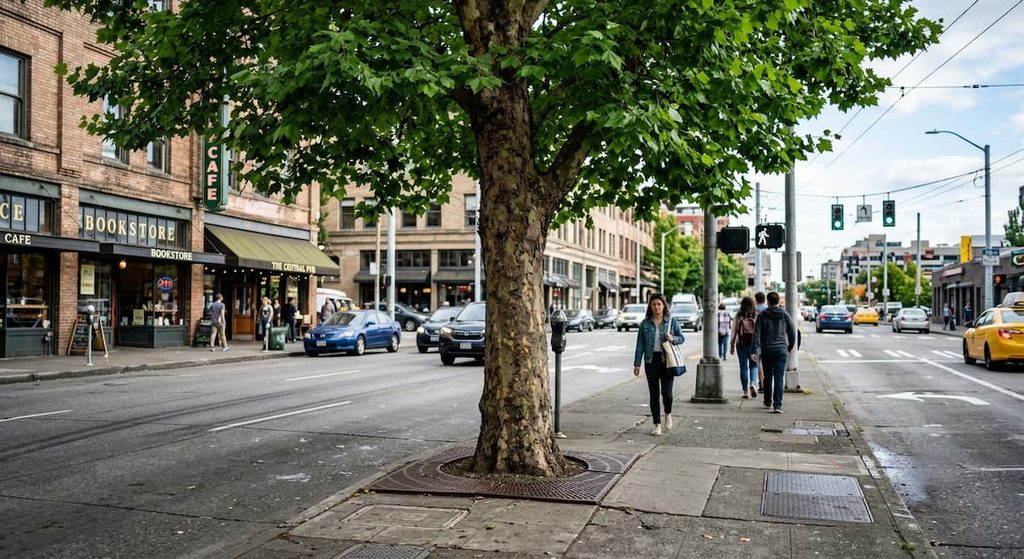
If climate were the only important factor, cities in similar climatic regions might be expected to have similar street trees. But comparisons of five capital cities found substantial differences in both the density and distribution of their street trees.
The study examined Ottawa, Stockholm, Buenos Aires, Paris, and Washington, DC. Although the cities were grouped into two broad climate zones, tree density still varied considerably within each group.
Buenos Aires had the highest overall street-tree density among the five cities, while Stockholm had the lowest. Ottawa also had a higher density than Stockholm, despite both being in the same broad climate zone.
The differences were not limited to the total number of trees. The way trees were distributed across local streets, collector roads, and major arterial roads also varied from city to city.
These findings suggest that local conditions and human decisions help shape urban tree patterns alongside climate. The study identified historical and cultural influences, urban form, aesthetic preferences, and governance as important possibilities.
Consider how a city develops its streets. Wide roads with generous planting strips can accommodate trees differently from narrow streets bordered by buildings. Some municipalities may prioritize continuous shade along pedestrian routes, while others may concentrate planting in selected public spaces.
Existing infrastructure also creates a legacy. Once roads, sidewalks, and underground utilities have been built, changing the available space for trees can be expensive. Decisions made decades earlier may continue to influence what can be planted today.
A city’s streetscape is therefore partly a biological response to the environment and partly a record of how that city has been designed and managed.
Why Do Some Streets Have Almost Identical Trees?
Look along a long avenue, and you may notice that many trees appear to be the same species, planted at regular intervals. This uniform appearance is often intentional.
Planting the same species can create a consistent visual design. Trees of similar size and shape can produce a recognizable streetscape, while predictable growth patterns may make maintenance and planning easier.
However, uniform planting comes with a biological risk.
A large study assembled data on more than 5.6 million trees from 63 cities across the United States. The researchers found that tree species tended to cluster together in nearly all of the cities examined.
This clustering can occur even in cities that have many different tree species overall. A city may have high diversity across its entire area but still contain individual streets or neighborhoods dominated by one species.
Why does this matter? Many pests and diseases affect particular groups of trees. If a susceptible species is planted in a long, continuous row, a pest capable of attacking that species may find abundant hosts close together.
That does not mean every uniform avenue will suffer an outbreak. The risk depends on the pest, the tree species, local conditions, and other factors. But concentrated planting can create a vulnerability that a citywide species count alone would not reveal.
This distinction is important: having many tree species across a city is not the same as distributing them in a way that reduces risk.
A more resilient planting strategy can include several suitable species arranged across streets and neighborhoods. The goal is not to make every street look random. It is to avoid relying too heavily on a single species when alternatives can provide comparable benefits.
Native Trees, Introduced Trees, and Local Wildlife
Another reason street trees differ among places is the relationship between a tree species and the region where it is planted.
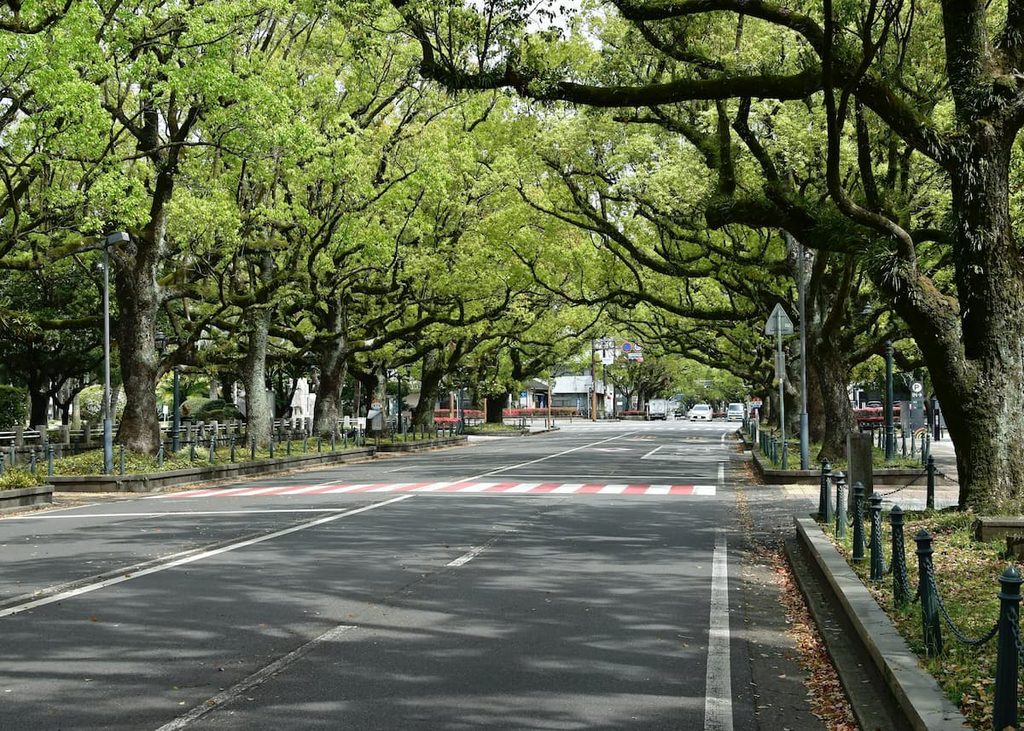
A native tree is one that occurs naturally in a particular region without recent human introduction. An introduced tree has been moved beyond its natural range through human activity. Introduced species are not automatically invasive or harmful. Some grow well in cities and provide valuable shade, while others can spread beyond planting sites and create ecological problems.
The distinction matters because trees support more than the people who walk beneath them. Their leaves, flowers, fruits, bark, and branches can provide food and habitat for insects, birds, and other organisms.
Local wildlife has evolved alongside particular plant communities. Some insects, for example, can feed successfully on only a limited range of plant species. Replacing a diverse native plant community with a small selection of unfamiliar trees may therefore change which organisms can use an area.
Research across US cities found that introduced tree species contributed to making urban tree communities more similar to one another. Cities sometimes selected many of the same introduced species, despite their different local environments.
This is one reason the streets of distant cities can occasionally look more alike than expected. Tree planting is influenced not only by local ecology but also by shared horticultural practices and the availability of familiar ornamental species.
Still, native status alone should not decide every planting choice. A suitable urban forest may need a mix of species that can tolerate local climate, soil restrictions, pests, and future environmental conditions. Ecological value and practical survival both matter.
The challenge is to select trees that function well in the built environment while also supporting the wider ecosystem.
What Global Tree Data Can Tell Us
For a long time, comparing street trees across countries was difficult because cities collected and published their tree inventories in different ways. Some recorded individual trees and species, while others provided incomplete lists or data that were difficult to compare directly.
Open data and new surveying methods are beginning to address this problem.
A 2021 study examined street-tree inventories in eight cities internationally using publicly available data. It found that tree diversity was generally greater outside city centers than within them, particularly at the species level. The pattern suggests that dense urban centers may offer less room for a varied tree community, although the study cannot establish that the same pattern occurs in every city.
Another study used street-view imagery to investigate tree species, size, and diversity in Hangzhou, China. The researchers found that camphor trees made up a large proportion of the street trees in their study area. They also found differences in diversity among urban districts.
Street-view surveys could help researchers examine places where comprehensive tree inventories are unavailable. However, images cannot always reveal species reliably, and visible trees may not represent every tree in a city. Such methods are useful tools, not perfect replacements for field surveys.
In 2026, researchers also introduced the Global Urban Tree Species dataset, combining information from scientific literature, biodiversity databases, and other open sources. It contains 159,845 occurrence records covering 10,094 tree species across 8,349 cities in 139 countries. Of these records, 109,879 were confirmed to come from urban areas.
These numbers describe a broad collection of records, not a complete census of every urban tree on Earth. Coverage and data quality can differ among countries and cities. Nevertheless, the dataset provides a valuable starting point for understanding the global distribution of urban tree species.
Together, these studies show why the question is more complicated than finding one signature tree for each country. Researchers must distinguish between the species present in a region, the trees actually planted along streets, and the way those trees are distributed within a city.
Choosing Street Trees for a Changing Future
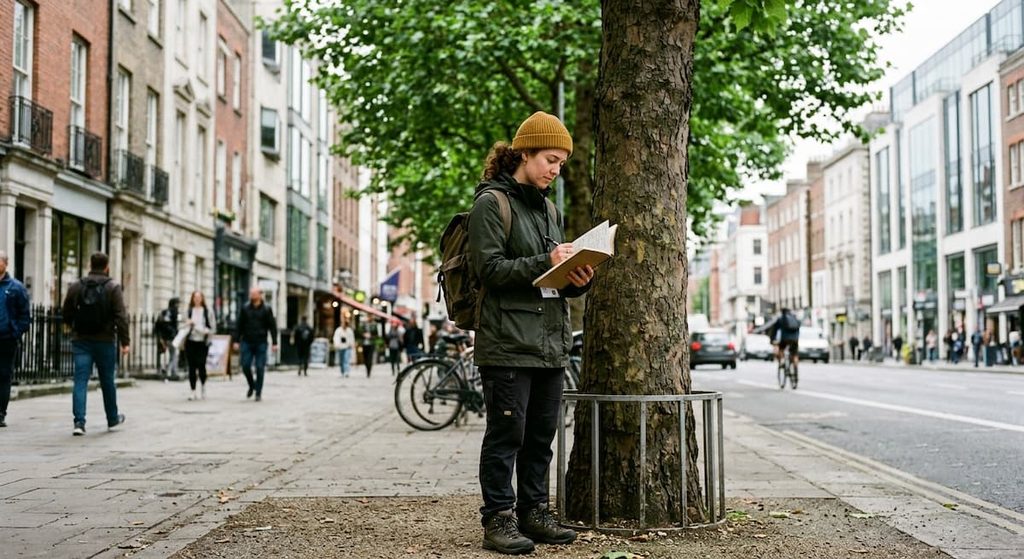
Cities cannot select trees based only on how they look today. Trees may remain in place for decades, during which temperatures, rainfall patterns, pest distributions, and water availability can change.
A species that performs well under current conditions may struggle during future heatwaves or prolonged droughts. But choosing trees based only on climate projections is not enough either. Researchers have found that a species’ natural climate range does not always predict its measured tolerance to heat and water stress.
Cities therefore need several kinds of information: local climate, soil conditions, available rooting space, species biology, maintenance requirements, and the ecological relationships between trees and other organisms.
Diversity is another important consideration. Planting a mixture of suitable species can reduce dependence on any single species and may help limit the consequences of certain pests or diseases. Yet diversity must be planned carefully. A collection of poorly adapted species will not create a healthy urban forest simply because it contains many names.
The best planting decisions also depend on the street itself. A narrow sidewalk, a broad avenue, and a shaded residential road may require different tree characteristics. There is no universal species that can perform every role in every city.
That is why the most successful streetscapes may not be the ones with the most uniform trees or the greatest possible number of species. They are the ones in which tree selection fits the physical environment, supports ecological function, and anticipates future conditions.
The Biology Hidden in an Ordinary Street
Street trees can make a city feel familiar, but their appearance reflects a complicated history of environmental limits and human choices. Climate influences which species can survive. Urban infrastructure determines where roots and branches can grow. Cultural preferences and past planning decisions shape which trees are planted, while pests, diseases, and changing weather affect how resilient those plantings will be.
A line of identical trees may look orderly, but that visual consistency can hide ecological risks. A diverse canopy may look less uniform, yet its value depends on which species are present and how they are distributed.
The next time you walk beneath a street canopy, look beyond the shape of the leaves. Ask why those particular trees were chosen, whether the street provides what they need, and what might happen if one species began to decline.
The trees along a road are not merely decorations. They are living infrastructure, and the decisions that shape them can influence a city’s comfort, biodiversity, and resilience for generations.
Scientific Sources
1. Galle NJ, Halpern D, Nitoslawski S, Duarte F, Ratti C, Pilla F. “Mapping the diversity of street tree inventories across eight cities internationally using open data.” Urban Forestry & Urban Greening. 2021;61:127099. DOI: 10.1016/j.ufug.2021.127099. Open-access article. Read the full study on ScienceDirect
2. Smart N, Eisenman TS, Karvonen A. “Street Tree Density and Distribution: An International Analysis of Five Capital Cities.” Frontiers in Ecology and Evolution. 2020;8:562646. DOI: 10.3389/fevo.2020.562646. Open-access article. Read the full study on Frontiers
3. McCoy DE, Goulet-Scott B, Meng W, Atahan BF, Kiros H, Nishino M, Kartesz J. “Species clustering, climate effects, and introduced species in 5 million city trees across 63 US cities.” eLife. 2022;11:e77891. PMID: 36165436. DOI: 10.7554/eLife.77891. Read the study on PubMed
4. Hanley PA, Arndt SK, Livesley SJ, Szota C. “Relating the climate envelopes of urban tree species to their drought and thermal tolerance.” Science of the Total Environment. 2021;753:142012. PMID: 33207433. DOI: 10.1016/j.scitotenv.2020.142012. Read the study on PubMed
5. Hu Y, Wang H, Yan H, Han Q, Nan X, Zhao K, Bao Z. “Alternative scenarios for urban tree surveys: Investigating the species, structures, and diversities of street trees using street view imagery.” Science of the Total Environment. 2023;896:165157. PMID: 37391146. DOI: 10.1016/j.scitotenv.2023.165157. Read the study on PubMed
6. Yang X, Yan P, Jin J, Liu X, Yang J. “Global Urban Tree Species (GUTS): Revealing tree species diversity across the world’s urban areas.” Scientific Data. 2026;13:485. PMID: 41714648. DOI: 10.1038/s41597-026-06868-2. Read the study on PubMed