[Bit#84] Is a Genius Brain Structurally Different From an Ordinary One?
Introduction
The minds of geniuses who changed human history have always been a massive mystery. We often vaguely assume that their brains must be much larger or possess a highly special structure. This article traces everything from the autopsy results of Albert Einstein, the most famous genius in history, to the secrets of neural networks uncovered by modern neuroscience. We will explore how genetic talent and effort interact at the cellular level, searching for clues to unlock our own latent potential.
1. Size Is Not Everything The Twist in Einsteins Brain
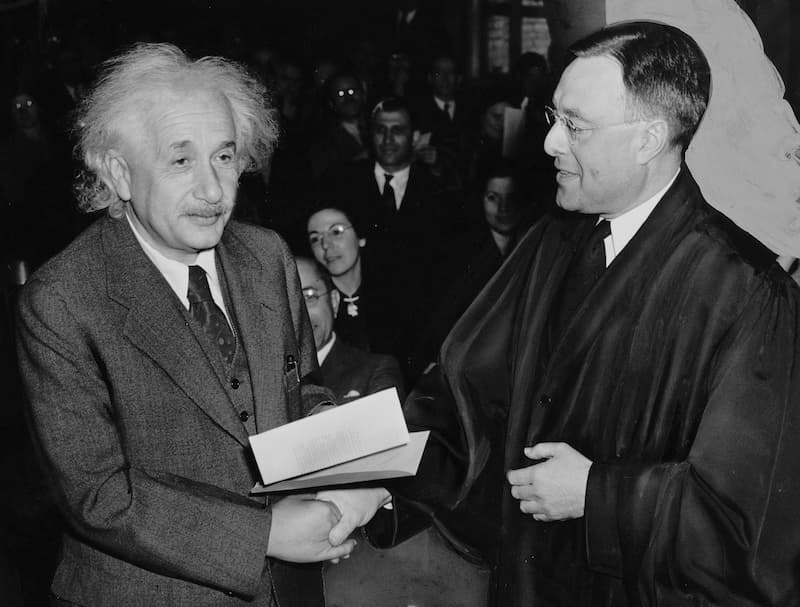
Is a genius’s head much larger than an ordinary person’s? We implicitly believe that a smart person must have a large brain. However, the brain of Albert Einstein, widely regarded as the greatest genius in history, offered a completely different twist. Immediately after his death in 1955, a pathologist named Thomas Harvey secretly removed his brain. This was because he wanted to be the first in history to uncover the secret of genius.
The doctor could not believe his eyes when he weighed it. Einsteins brain weighed only 1,230 grams. Why was this number so shocking? It is because the average brain weight of an ordinary adult male is around 1,400 grams. Einsteins brain was actually more than 10 percent lighter than average. Ultimately, this provided powerful evidence that head size and human intelligence are not directly proportional. It operates on the exact same principle as why huge whales or elephants have much heavier brains than humans but cannot solve advanced mathematics.
Then, was Einsteins brain completely identical in shape to an ordinary person’s? Of course not. While the overall size was small, bizarre differences were discovered in its internal structure. When neuroscientists precisely analyzed photographs of his brain, they found that the parietal lobe region in both cerebral hemispheres was 15 percent wider than normal. The parietal lobe is the core area responsible for spatial perception and mathematical reasoning. The secret behind how Einstein could visualize complex physics formulas as imagery first was hidden right inside this unique structure.
Furthermore, a specific groove called the lateral sulcus, which is commonly found in ordinary people, was partially absent in his brain. Was the absence of this groove a defect? Surprisingly, the opposite was true. Because this groove was disconnected mid-way, the surrounding neurons could communicate with each other much faster without boundaries. As the physical distance for information travel was shortened, the processing speed of his brain skyrocketed. Einstein personally demonstrated that the development of specific regions and structural efficiency determine genius, rather than overall brain size.
2. The Highway of Thought Secrets of the Cerebral Cortex and Glial Cells
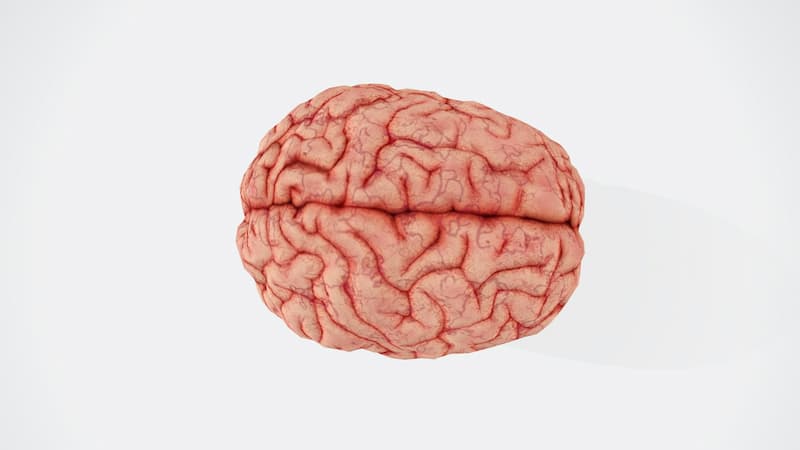
The thick layer of cells covering the surface of the brain is called the cerebral cortex. This cerebral cortex is the core headquarters controlling human memory, concentration, reasoning, and language skills. Generally, many studies show that highly intelligent people have a thicker cerebral cortex than ordinary individuals. Does this mean geniuses are born with an incredibly thick cerebral cortex from birth? Amazingly, the answer is no.
When you examine the cerebral cortex of geniuses during childhood, it is often actually thinner than that of ordinary children. Why does this phenomenon occur? The secret lies in the speed of development. Ordinary children experience their cerebral cortex becoming thickest during elementary school years, which then gradually thins out after passing through puberty. Conversely, the cerebral cortex of geniuses thickens explosively right until just before adolescence. In essence, they continue to increase the volume of brain cells until a much later period. This means the actual growth period of their brain is significantly longer than that of average people.
Having reached its peak, the cerebral cortex of a genius begins to thin out very steeply after passing through puberty. At this time, a massive construction project takes place inside the brain to clear away unnecessary cells and leave only the highly useful neural networks that are frequently used. It is a process of narrowing and refining the pathways of thought to push information processing efficiency to its absolute limit. A genius’s brain is not simply in a state of having numerous cells. It refers to a state like a well-paved highway, designed to operate with extreme precision and speed.
It does not end here. Recently, neuroscientists discovered another decisive clue in Einsteins brain. This clue points directly to glial cells. In the past, scientists viewed these cells merely as a glue-like substance supporting neurons. However, when they examined Einsteins parietal lobe, they found a much higher volume of glial cells compared to ordinary people. As it turned out, glial cells are the primary contributors that supply nutrients to neurons and assist in signal transmission. Just as a car cannot run if its fuel delivery system is faulty no matter how great the engine is, the hidden support of glial cells stood behind the superior intelligence of geniuses, perfectly backing up their neurons.
3. Maximizing Brain Efficiency Neural Plasticity and Pruning
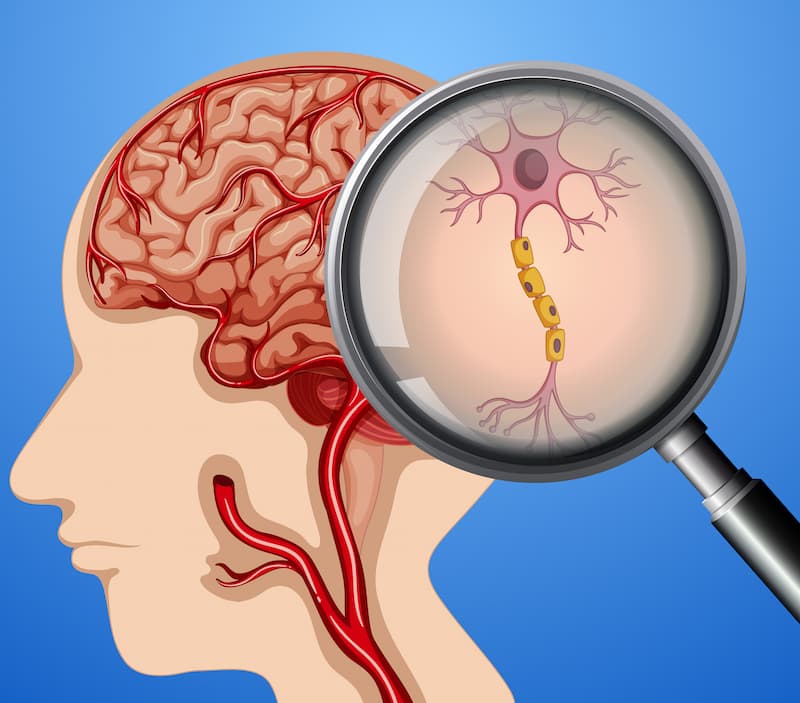
Our brain is not a fixed organ from the moment we are born. It possesses an amazing ability to reshape its own structure and function based on environment and experience. In neuroscience, this ability is called neural plasticity. The brains of geniuses have a significantly superior capacity for this plasticity compared to ordinary people. This means that when they acquire new knowledge or solve complex problems, they reconfigure their neural circuits much faster and more flexibly.
Then, are the neural networks of a genius unconditionally complex and tangled? Another massive twist occurs here. The brain of a highly intelligent person operates much more quietly and calmly than expected. Neuroscientists call this the neural efficiency hypothesis. Ordinary people use various parts of their brain in a complex manner when solving difficult problems, consuming an excessive amount of energy. On the other hand, geniuses activate only the absolute minimum core areas necessary to solve the problem. They use their brain very thriftily without any waste.
The core process that completes this efficiency is pruning. As our brain grows, it generates a massive number of neural connections. However, if unused connections remain as they are, the brain suffers from signal interference and becomes inefficient. It is identical to how a computer slows down when it is filled with useless files. The brains of geniuses perfectly execute this pruning during adolescence, sharply cutting away unnecessary neural connections.
Ultimately, genius is not a state of mindlessly stacking up numerous neurons. It refers to a state where the noise of useless information is eliminated, leaving only the most optimized paths of thought. It is the result of choice and concentration, making frequently used circuits thick and strong, while boldly discarding unused ones. The exceptional intelligence of geniuses originates from the structure of an ultra-efficient neural network, not from the sheer count of brain cells.
4. The Border Between Genius and Madness Neural Networks Generating Creativity

Great geniuses throughout history have often suffered from bizarre behaviors or mental illnesses. Human neuroscience has tracked the reasons for this for a long time. Are genius and madness truly just a paper-thin difference apart? To state the conclusion first, there is scientific evidence. The secret depends entirely on how flexibly specific regions of the brain connect with one another.
When formulating creative thoughts, our brain activates a region called the default mode network. This area is a unique neural network that actually becomes most active when we are daydreaming and not thinking about anything in particular. The moments when you fall into a reverie or when eccentric ideas suddenly pop up are precisely when this network operates. Geniuses possess a much stronger and denser connectivity within this default mode network compared to ordinary individuals. This is where the power to detect associations that others miss and to combine completely new concepts comes from.
However, this superior connectivity comes with a fatal price. This is because a problem arises in the information filtering system. An ordinary person’s brain automatically filters out useless stimuli or random thoughts during daily life. In contrast, the brains of geniuses with extremely high creativity receive all surrounding stimuli and sensations exactly as they are without any filter. In essence, their brain suffers under a constant flood of diverse information.
Due to this, geniuses are prone to experiencing extreme stress or anxiety. In severe cases, it can even lead to mental confusion such as hallucinations or delusions. Because the latches of their brain are opened wide, they end up shouldering intense mental pain simultaneously with acquiring innovative ideas. The grand creativity of geniuses might perhaps be the most beautiful yet dangerous signal sent by an overloaded brain.
Conclusion
In the end, a genius’s brain is not a special organ made of an entirely different material from an ordinary brain. It is the result of developing the brain over a longer period than others and perfectly cutting away unnecessary paths to pave a highway of information. In exchange for gaining superior efficiency and intense connectivity, they also inherited the destiny of enduring overwhelming stimuli.
Here, we come to face one important question. If a future arrives where anyone can possess a genius brain artificially by manipulating genes or surgically modifying the brain due to technological advancements, could we truly become happy? Can a society that craves for everyone to become smart, even while risking the dangers of pain and madness, truly be considered a healthy society? Rather than changing the structure of the brain, discovering the unique efficiency that each of us already possesses might be the very first step toward awakening true genius.
![[Bit#147] The Spicy Illusion: Why Does the Brain Mistake Pain for Pleasure?](https://hiddenbitknowledge.com/wp-content/uploads/2026/09/main.eat-spicy-food-768x496.jpg)
![[Bit#7] The Chilling Reason Why Your Brain Paralyzes Your Body While You Sleep](https://hiddenbitknowledge.com/wp-content/uploads/2026/04/6e3ddc42884a-768x511.jpg)
![Why Do We Enjoy Seeing Successful People Fail? [Bit#180]](https://hiddenbitknowledge.com/wp-content/uploads/2026/10/main-image-4-768x419.jpg)
![[Bit#61] The Principles and Fatal Flaws of Lie Detectors](https://hiddenbitknowledge.com/wp-content/uploads/2026/06/a9e7593c4bfc-768x512.jpg)
![[Bit#62] Is Reincarnation Science or Illusion? Decoding the Secrets of the Human Brain](https://hiddenbitknowledge.com/wp-content/uploads/2026/06/main.Reincarnation-768x512.jpg)
![[Bit#119] How Psilocybin Treats Depression: The Bio-Mechanism Behind Magic Mushrooms](https://hiddenbitknowledge.com/wp-content/uploads/2026/08/main.magic-mushrooms-768x419.jpg)