[Bit#93] Dolly’s Legacy and the Hidden Truths of Cloning
Introduction
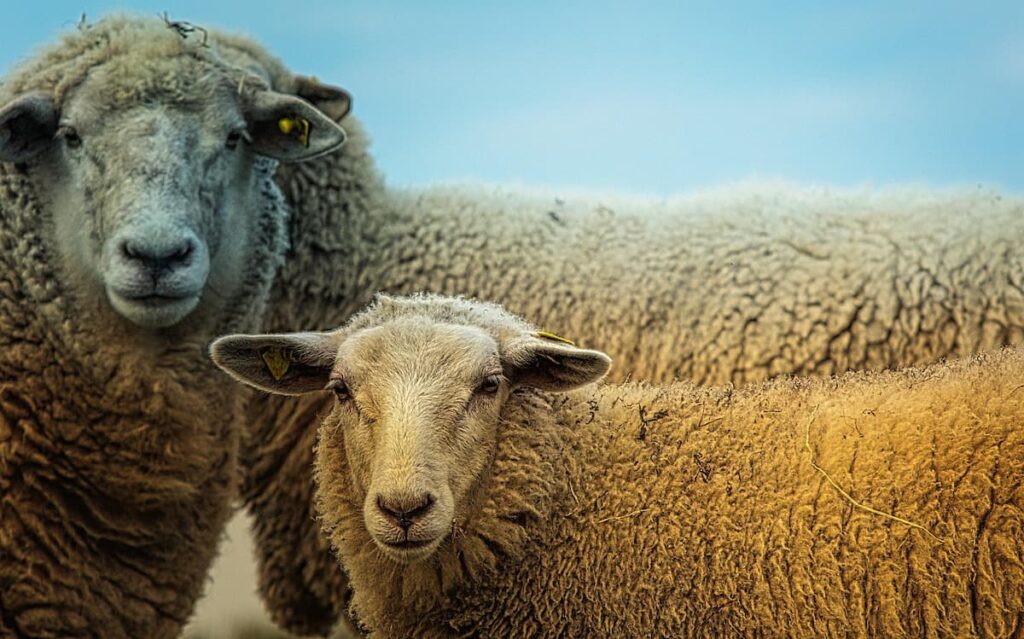
It has been 30 years since Dolly the sheep stunned the entire world. Humanity has rapidly advanced cloning technology, a field once considered the exclusive domain of God. However, behind this brilliant success lies a dark shadow that we have long chosen to ignore. Beyond merely creating identical living beings, we must critically examine how this technology shakes the very essence of life itself.
1. Dolly’s Legacy and Three Decades of Technological Leap
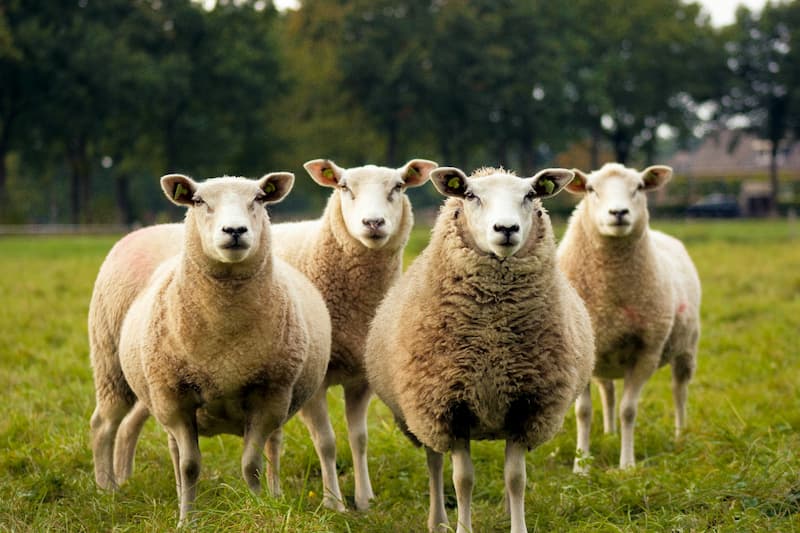
In 1996, the eyes of the world were fixed on a single sheep named Dolly. Dolly was the very first mammal cloned from an adult somatic cell. At the time, the scientific community was deeply shocked. This was because scientists firmly believed that creating a new life from fully developed animal cells was impossible. However, the Roslin Institute in Scotland shattered this dogma completely. The birth of Dolly marked one of the greatest paradigm shifts in the history of biotechnology.
Why was Dolly’s birth so monumental? The secret lay in rewinding the clock of a differentiated cell. Somatic cells in our bodies, such as skin or liver cells, already have predetermined roles. Scientists reversed this destiny. They extracted the nucleus from a mammary gland cell and transferred it into an enucleated egg from another sheep. Then, they applied an electrical pulse. Amazingly, this cell reprogrammed itself as if it were a newly fertilized egg. This process is called dedifferentiation. This breakthrough proved the astonishing fact that fully developed cells can be born again.
Over the next 30 years, cloning technology advanced without stopping. Beginning with sheep, the technology expanded to mice, cows, pigs, dogs, and finally to primates. In 2018, Chinese researchers successfully cloned crab-eating macaques, bringing the technology to primates closest to humans. Today, humanity can create genetically identical animal models through cloning. This has dramatically improved the accuracy of disease research and drug development. The small step taken by Dolly has now become the foundation of a massive biotechnology revolution.
2. The Secret of Telomeres and the Trap of Accelerated Aging
Cloning technology is not a magical trick that produces perfect copies. Dolly the sheep passed away at the age of six. Considering that the average lifespan of a sheep is about 12 years, her death was incredibly premature. Dolly also suffered from severe arthritis and lung disease during her life. Why did this tragedy occur? The culprit was a cellular clock known as the telomere.
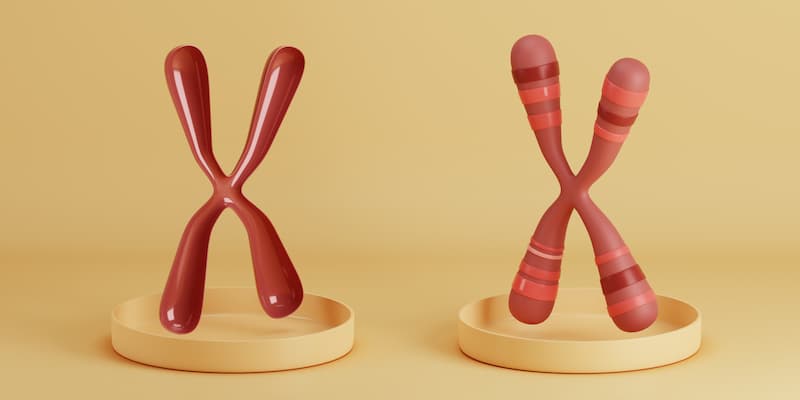
Telomeres are protective cap-like genetic structures at the ends of chromosomes. Every time a cell divides, the length of these telomeres shortens. It acts just like an hourglass measuring lifespan. The cell used to clone Dolly was a somatic cell from a mother sheep that had already lived for six years. This meant Dolly was born with an old cell that had already aged by six years from the very start.
In fact, Dolly’s telomeres were significantly shorter than those of other sheep her age. Although she looked like a newborn lamb, her biological age was already past middle age. She was caught in the trap of accelerated aging. Scientists have made immense efforts over the past 30 years to solve this issue. Fortunately, modern cloning technology has greatly improved reprogramming techniques to restore telomere length during the nuclear transfer process.
Yet, a fundamental question remains. Does artificially extending the apparent age of genes truly reset the actual passage of life back to youth? The subtle genetic defects hidden deep within the organs of cloned animals remain an unsolved puzzle. When humanity attempts to force the clock of life backward, nature issues a stern warning of early aging to check human arrogance.
3. The Invisible Failures and the Blind Spots of Bioethics
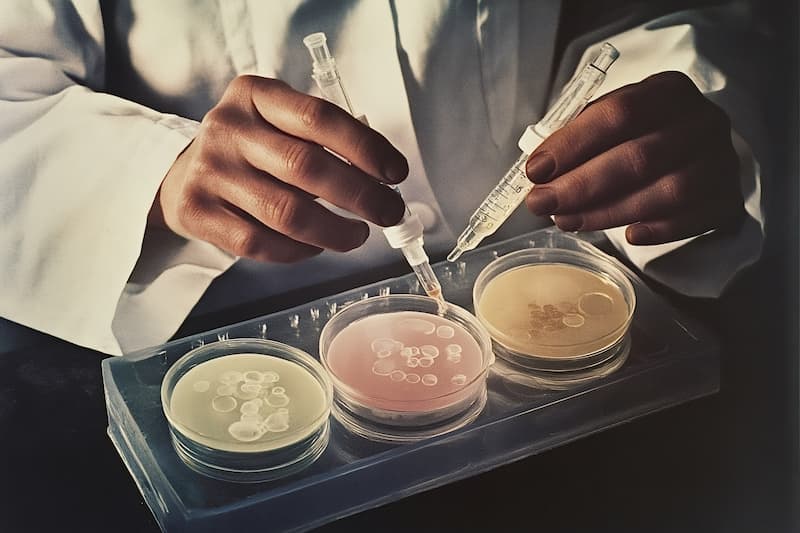
The cloned animals we see in the media are only a tiny handful of successful cases. Behind the glittering showcase lie hundreds or thousands of failures and immense suffering. Do you know how many lives vanish before a single, healthy cloned animal is born? An overwhelming number of eggs and surrogate animals are used and discarded like simple tools.
Indeed, when Dolly was created, the Roslin Institute attempted nuclear transfer 277 times. Out of those, only 29 developed into embryos. In the end, only one single sheep, Dolly, survived to birth. The remaining 276 lives vanished without a trace inside the laboratory. Even today, with highly advanced technology, the reality remains largely the same. The success rate of cloning still hovers in the single digits. Why is this rate so low?
The issue lies in unstable epigenetic reprogramming. Numerous errors occur during the artificial reset of cells. Cloned animals born through this flawed process suffer from horrific deformities. Some are born with malformed hearts, while others have organs protruding outside their bodies. Large Offspring Syndrome, where the fetus grows abnormally large and ruptures the surrogate’s uterus, is also common. These animals die in extreme agony shortly after birth.
Animal welfare groups define cloning research as cruel abuse. It artificially creates lives with genetic defects and abandons them to die in pain. Under the pretext of biotechnology advancement, laboratory animals remain in a legal blind spot without proper protection. Is it truly justifiable to mutilate so many lives for the sake of human curiosity and convenience? We must remember the silent screams of these destroyed lives behind the cute appearance of cloned animals.
4. Resurrecting Extinct Species and the Ambition of Custom Organs

It is a law of nature that time cannot be reversed. Yet, humanity is attempting to break even this iron rule. This is evident in projects aiming to restore extinct species using cloning technology. Efforts to reconstruct the DNA of mammoths frozen in Siberian ice tens of thousands of years ago are actively underway. Is this human desire to bring lost lives back to Earth a blessing, or is it a disaster?
Why do scientists refuse to stop these risky endeavors? The answer is much closer to our daily lives than we think: xenotransplantation technology for human life extension. Every year, countless patients die while waiting for organ transplants. To solve this, scientists are breeding cloned pigs engineered with human genes. The plan is to mass-produce customized organs that do not trigger immune rejection when transplanted into humans.
Recently, clinical trials transplanting genetically modified cloned pig hearts into human patients have shown promising results. For some, this technology is the only remaining lifeline. However, looking at it from another perspective, the fate of cloned living beings born solely for organ harvesting and kept confined their entire lives is incredibly cruel.
Ultimately, cloning technology has crossed the boundaries of pure science. We face a highly selfish choice of extending human lifespans at the expense of animal suffering. The question posed by Dolly’s birth 30 years ago remains entirely valid. Will we become compassionate creators who respect life, or will we become monsters that treat life as a mere utility? It is time for humanity to answer this heavy question.
Conclusion
During the 30 years since Dolly’s birth, humanity has made great leaps forward. We have unlocked the secrets of numerous diseases and obtained the keys to bringing back extinct species. Yet, on the flip side, there have been invisible sacrifices and tears of tens of thousands of animals. How long can we ignore the cruel truth hidden behind the brilliant progress of technology?
How far can we go in violating the dignity of other lives for human convenience and longevity? If technology advances further and makes perfect human cloning possible, will we treat those cloned individuals as our equals? We must deeply reflect on whether the value of life lies in its mere existence, or in its utility.
![[Bit#130] Stop Ignoring Your Arteries: The Secret Power of Bioflavonoids](https://hiddenbitknowledge.com/wp-content/uploads/2026/08/main.bioflavonoids-767x428.jpg)
![When Does Human Development Really Begin? [Bit#184]](https://hiddenbitknowledge.com/wp-content/uploads/2026/10/main-image-7-767x428.jpg)
![[Bit#33] The Secret of Hairless Skin: Why Did Humans Abandon Their Fur?](https://hiddenbitknowledge.com/wp-content/uploads/2026/05/30e0d6220515-768x429.jpg)
![[Bit#35] The Night Owl Myth: Why Your DNA Rebels Against Mornings](https://hiddenbitknowledge.com/wp-content/uploads/2026/05/b2de24ca8745-768x419.jpg)
![[Bit#66] Cytokine Storm: Why Our Immune System Attacks Itself](https://hiddenbitknowledge.com/wp-content/uploads/2026/06/main.Cytokine-Storm-768x512.jpg)
![[Bit#168] Why Tears from Sadness and Onions Are Chemically Different](https://hiddenbitknowledge.com/wp-content/uploads/2026/09/main.tear_-768x419.jpg)