[Bit#75] The Backlash of Artificial Rain: The Cost of Manipulating Atmospheric Circulation
1. Stealing the Sky: Climate Disparity Triggered by Cloud Seeding

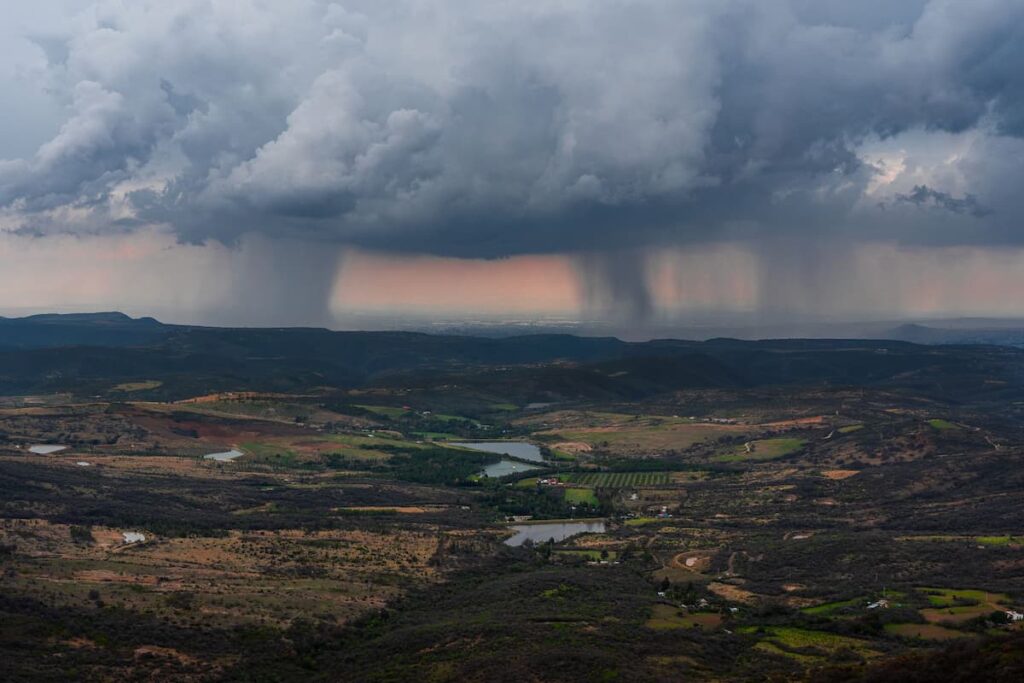
The total amount of matter within Earth’s atmospheric system always remains constant. This is due to the law of the water cycle. Artificial rain is not an alchemy that creates rain from nothing out of thin air. It is a technology that artificially squeezes water vapor already floating in the atmosphere to make it fall on a specific region first. Scientifically speaking, it is closer to weather hijacking. Why use such a radical expression as “hijacking”?
To induce artificial rain, cloud seeds must be scattered into the atmosphere via aircraft or ground generators. These substances strongly attract the surrounding fine water vapor particles like a magnet. The principle is that when the water vapor clumps together and becomes heavy, it falls as rain. Right at this point, the unexpected side effect begins. If water vapor is artificially concentrated in one region, what happens to the atmosphere in the surrounding areas? The water vapor density in the surrounding air layers has no choice but to drop sharply.
A phenomenon occurs where moisture that should have moved with the wind and fallen naturally in other regions becomes trapped in one place and pours down in advance. In meteorology, this is called artificial atmospheric dehydration. Neighboring regions or neighboring countries that are deprived of their moisture supply from an atmospheric dynamics perspective eventually face severe droughts. In fact, in continental countries with vast territories, after artificial rain was conducted in a specific state, unprecedented dry weather and massive wildfires occurred in neighboring states, leading to legal disputes.
The flow of the atmosphere does not follow borders or administrative districts. This is because the Earth is connected as one massive barometric system. While one side rejoices over the sweet rain, washing away fine dust or resolving a drought, someone else has to look at a burning land due to the water vapor that was artificially stolen. Attempts to control the water streams of the sky with human hands ultimately lead to the breaking of the peaceful atmospheric balance. The era of climate disparity, where technology for abundance becomes a disaster for neighbors, has already begun.
2. Invasion of Ice Nuclei: Environmental Persistence of Silver Iodide Compounds

The most core process when inducing artificial rain is scattering “cloud seeds” into the clouds. Currently, the most widely used representative substance in weather modification experiments around the world is the silver iodide (AgI) compound. Silver iodide has a crystal structure very similar to natural ice particles, namely ice nuclei, inside clouds that maintain sub-zero temperatures. Because of this, it exhibits excellent performance in rapidly adsorbing surrounding supercooled water droplets (unfrozen fine water droplets) and turning them into snow or rain. To scientists, it is like a magical catalyst.
However, the problem arises after this efficient chemical substance pours down to the ground along with the rain. Silver iodide is a heavy metal-based compound that does not decompose easily in nature. As the artificial rain falling from the sky is absorbed into the soil and flows into rivers, these microscopic chemical particles slowly begin to persist and accumulate throughout the entire ecosystem.
In particular, the microbial ecosystem in the soil and the aquatic ecosystem take the hit first. Silver (Ag) ions possess strong toxicity that destroys the cell membranes of microorganisms such as bacteria and disrupts metabolic processes even at very low concentrations. Research results continue to be reported stating that silver iodide components entering rivers interfere with the photosynthesis of aquatic phytoplankton and are absorbed into the bodies of fish and amphibians that feed on them, causing genetic mutations or reproductive decline.
Of course, proponents of artificial rain argue that the amount of silver iodide used during a single treatment is so small that it is harmless to the environment. However, if artificial rain becomes commercialized and is repeatedly treated in a specific region for years or decades, the story becomes completely different. The heavy metal compounds accumulated in the environment will move up the food chain, eventually threatening the dining table and drinking water sources of humans, the final apex predators. For the short-term purpose of resolving a drought, humanity is practically spraying chemical pollutants into the sky themselves, which will return as a boomerang.
3. Warning of the Butterfly Effect: Super-Storms Caused by Artificial Atmospheric Stagnation
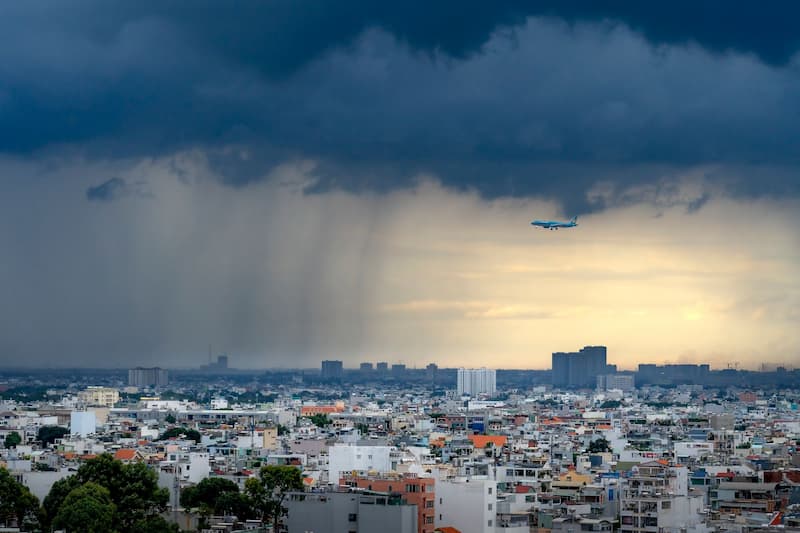
Artificial rain is not a one-time event that ends simply by squeezing rain out of a cloud. Earth’s atmosphere is like a massive barometric gear that rotates precisely interlocked together. The act of artificially compressing clouds at specific coordinates and forcing water vapor to condense can be a dangerous catalyst that changes the topographic map of the atmosphere. This is the prelude to a massive “butterfly effect” in meteorology.
The most serious scientific side effect is that the normal updrafts and thermal balance of the atmosphere are broken. When a large amount of water vapor suddenly condenses into water droplets within a narrow cloud band due to an artificial rain treatment, a tremendous amount of latent heat (hidden heat) is released into the atmosphere during this process. The upper air, which has suddenly become hot, shakes the surrounding atmospheric pressure layout and causes a sort of “atmospheric blocking phenomenon” that blocks the normal flow of the atmosphere.
Because of this, weather fronts that should have flowed naturally with the wind stagnate in a specific region for a long time. When a massive water vapor pathway becomes fixed due to the artificially twisted air pressure layout, it turns into a catastrophe where an unmanageable level of super-sized localized heavy rain pours down, rather than the small amount of rain originally planned for drought relief. Weather modification technology causes the atmosphere to lose its natural resilience, thereby creating extreme weather events that are completely outside the scope of human prediction.
In fact, the meteorological community views that the record-breaking heavy rains and floods of unknown cause occurring in countries that frequently use artificial rain technology may be deeply related to this atmospheric stagnation mechanism. The paradox of breaking the brakes of atmospheric circulation while trying to solve the immediate problem of drought—this is precisely the dangerous butterfly effect that artificial atmospheric manipulation is hiding.
4. Artificial Aerosol Accumulation: The Science of the Fine Dust Vicious Cycle
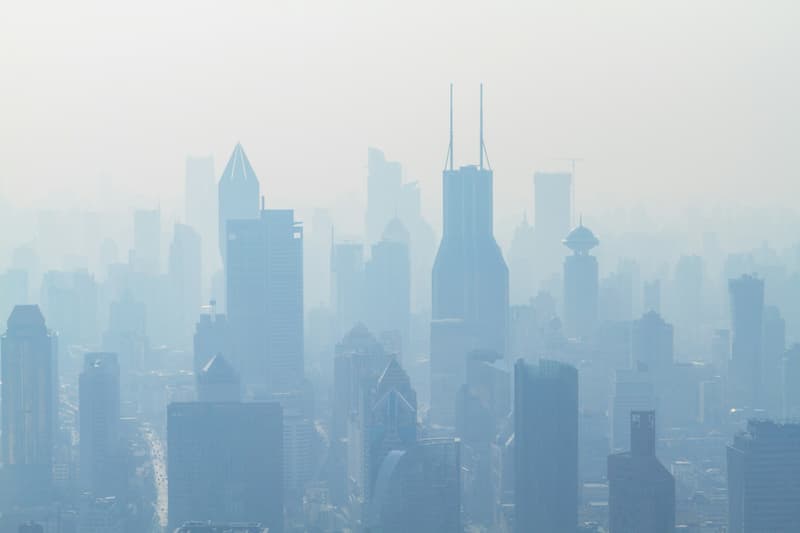
Artificial rain is often mentioned as a relief pitcher to wash away severe fine dust in urban areas. In fact, many countries often spray cloud seeds into the sky for the purpose of improving air quality. But what does it look like from an atmospheric dynamics perspective? This method can paradoxically lead to results that fix fine dust in a longer-term and more severe manner. Why does this phenomenon occur?
This is because the condensation nuclei substances sprayed into the air for artificial rain do not entirely wash down to the ground along with the rain. A significant amount of fine chemical aerosol particles remain intact in the upper layer of the atmosphere even after the rain stops. These artificial aerosols remaining in the upper sky absorb or reflect sunlight, drastically reducing the amount of solar radiation reaching the earth’s surface. As a result, the temperature of the earth’s surface cools down while the temperature of the upper layer rises instead, forming a temperature inversion layer. Why is this phenomenon dangerous?
A normal atmosphere naturally diffuses pollutants as the warm air below moves upward. However, the temperature inversion layer created by artificial aerosols tightly presses down on the atmosphere like a giant roof. It completely cuts off the vertical circulation of air. In the end, after briefly washing away fine dust with artificial rain, artificial atmospheric stagnation occurs where the flow of air completely stops.
Within this stagnant blanket of air, automobile exhaust and factory pollutants emitted by the city become entirely trapped. This is the reason why a vicious cycle is completed, where a high-concentration fine dust smog that is much denser and more fatal than before persists for several days. In trying to catch dust, it amounts to creating a massive prison that traps dust instead. The moment we touch the sky, nature responds with an even more severe stagnation.
![[Bit#23] The Dining Revolution: Cultured Meat and the Dilemma of Carnivory](https://hiddenbitknowledge.com/wp-content/uploads/2026/05/7b4b7585b7de-768x538.jpg)
![[Bit#58] Insects Changing the Future of Humanity: Innovations in Biomimicry](https://hiddenbitknowledge.com/wp-content/uploads/2026/06/44bd14a34264-768x419.jpg)
![[Bit#174] Electromagnetic Waves in Biotechnology: How Light Spectrum Powers Modern Medicine](https://hiddenbitknowledge.com/wp-content/uploads/2026/10/main.electromagnetic-waves-768x419.jpg)
![[Bit#126] Alien Biology Unveiled: What Forms Could Extraterrestrial Life Take Beyond Earth?](https://hiddenbitknowledge.com/wp-content/uploads/2026/08/main.-Alien-Biology-Unveiled-768x419.jpg)
![[Bit#28] Messages from the Deep: How Extreme Survival Strategies Shape the Future of Humanity](https://hiddenbitknowledge.com/wp-content/uploads/2026/05/351f921afc8f-768x419.jpg)
![[Bit#95] 3D Bio-Printing: The Artificial Organ Revolution Challenging the Realm of God](https://hiddenbitknowledge.com/wp-content/uploads/2026/07/main.3D-bioprinter-768x512.jpg)