How Poisons Hijack the Living Body [Bit#219]
A poison seems simple at first. It is something that can harm or kill a living organism.
But that definition leaves out the most interesting part.
Some poisons evolved as defenses in plants. Others were deliberately developed by humans to kill insects, rodents, or unwanted plants. Some became useful in mining, agriculture, medicine, or manufacturing long before their dangers were fully understood.
And once a poison enters a living body, it does not simply cause “damage.” It interacts with specific biological processes. Sometimes scientists can exploit that chemistry to neutralize the poison or remove it from the body. Sometimes they can only control the damage while waiting for the body to eliminate it.
In a few cases, the most effective solution has been to stop using the poison altogether.
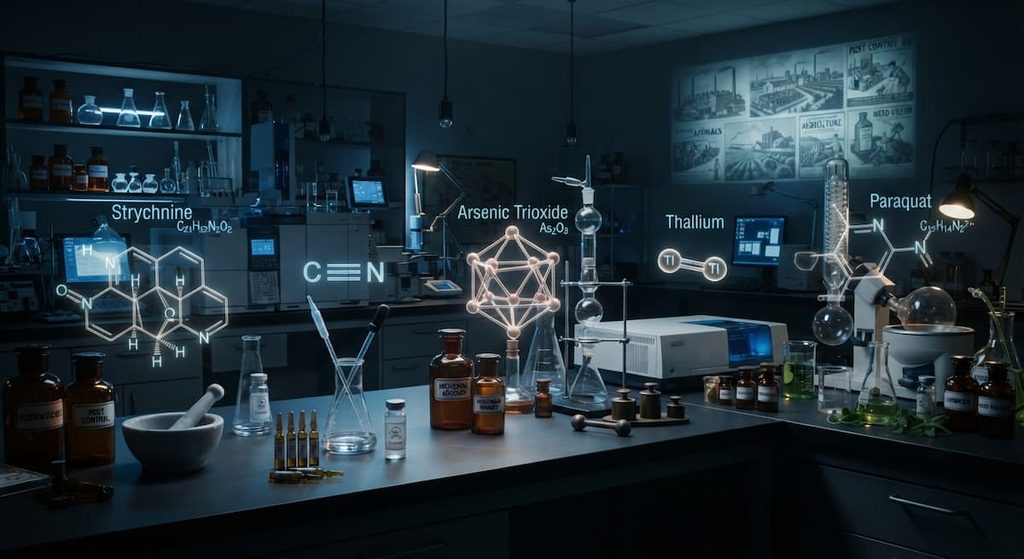
Cyanide, strychnine, arsenic, thallium, and paraquat reveal five different versions of the same story.
A poison can begin as a survival strategy
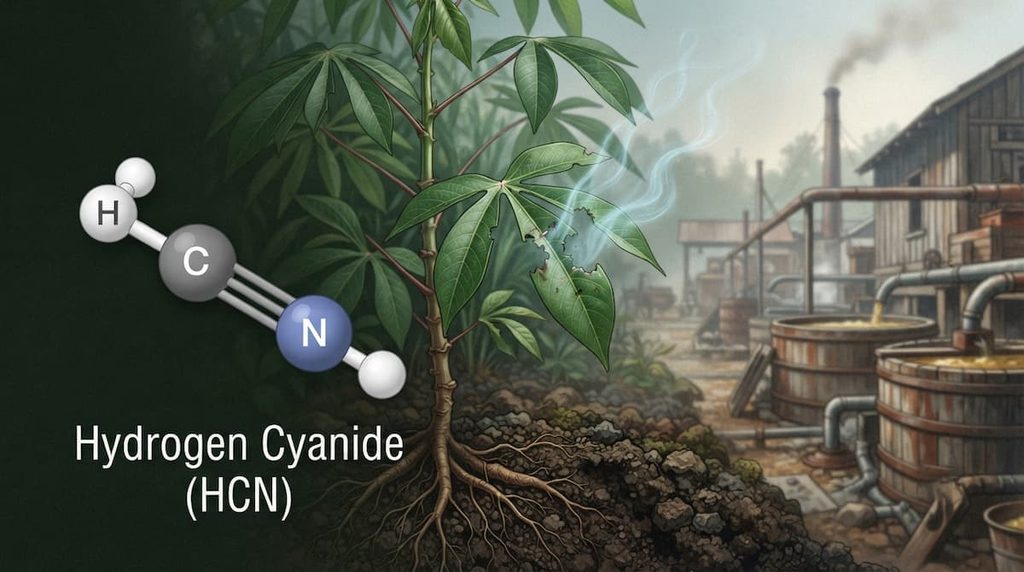
Cyanide provides one of the clearest examples.
Plants do not produce cyanide because they are trying to poison humans. Some plants produce cyanogenic compounds as part of their chemical defense against herbivores. When plant tissue is damaged, these compounds can release hydrogen cyanide, potentially making the damaged tissue dangerous to consume.
This creates a remarkable biological system. The plant stores the chemical components separately enough to avoid poisoning itself, while tissue damage can bring them together and release the defensive compound.
Humans eventually found very different uses for cyanide chemistry.
Cyanide compounds became useful in industrial processes, including gold extraction, as well as pest control. The same chemistry that evolved as a plant defense could therefore become a human tool.
But cyanide’s danger comes from what happens after it enters an animal.
Cyanide interferes with mitochondrial cytochrome c oxidase, an essential component of the electron transport chain. The result is not simply a shortage of oxygen in the blood. Instead, cells become unable to use oxygen normally for aerobic energy production.
That distinction is critical.
A person can have oxygen reaching the tissues while the cells themselves are unable to make proper use of it. As the disruption becomes severe, cellular energy production collapses and lactic acidosis, cardiovascular instability, respiratory abnormalities, and loss of consciousness can develop.
This mechanism also explains why cyanide has specific antidotes.
Hydroxocobalamin contains cobalt that can bind cyanide and form cyanocobalamin, allowing the cyanide to be removed from the critical biological target. Sodium thiosulfate takes a different approach by supplying sulfur that helps convert cyanide into thiocyanate, a much less toxic compound that can be excreted.
In other words, the antidote works because scientists understood the poison’s chemistry.
That does not mean every suspected cyanide exposure has a simple solution. Treatment depends on the circumstances, and evidence for hydroxocobalamin in smoke inhalation has important uncertainties. A 2025 systematic review found that available studies were not strong enough for a reliable meta-analysis and noted possible risks as well as uncertain mortality benefit in that setting.
The important idea is broader.
Understanding what a poison attacks can reveal a way to fight it.
Strychnine turns off the nervous system’s brakes
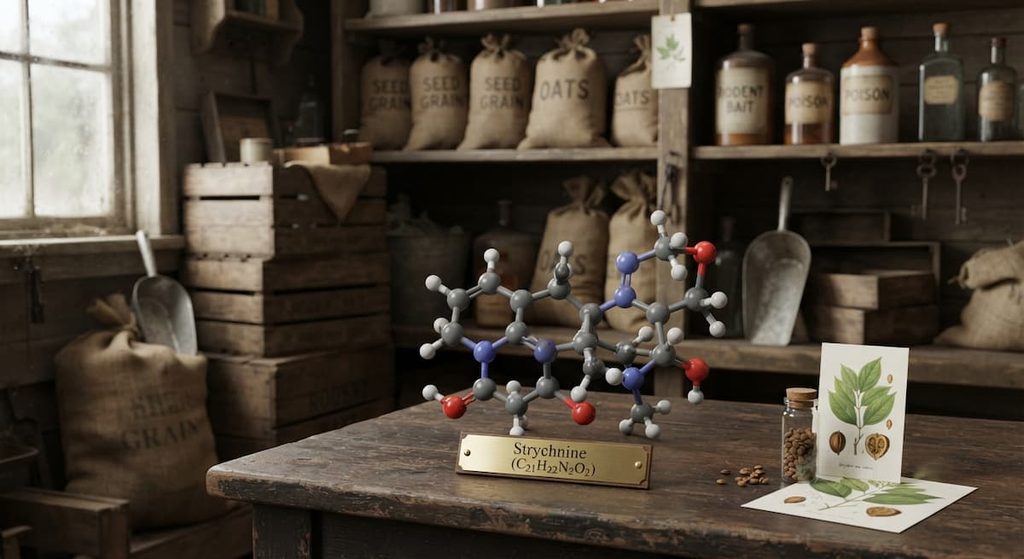
Strychnine tells a different story.
The compound is a highly toxic alkaloid derived from the Strychnos nux-vomica plant. Humans historically used it in rodenticides, pesticides, and some traditional medicine preparations because its biological effects could be useful against unwanted organisms.
Those same effects make it dangerous to animals that were never supposed to be its targets, including humans.
Strychnine does not primarily destroy muscles. It interferes with the nervous system that controls them.
In the spinal cord, glycine normally acts as an inhibitory neurotransmitter. Strychnine blocks postsynaptic glycine receptors, removing an important inhibitory signal from motor neurons.
The result is like losing a braking system while the accelerator still works.
Small sensory stimuli can trigger severe, painful muscle spasms. In serious poisoning, repeated contractions can cause hyperthermia, metabolic acidosis, muscle breakdown, kidney injury, and eventually respiratory failure if the muscles needed for breathing can no longer function properly.
But unlike cyanide, strychnine poisoning does not have a standard antidote that simply binds the poison and makes it harmless.
Treatment instead focuses on controlling what the poison has done to the nervous system. Benzodiazepines and other intensive supportive measures can suppress severe spasms, while airway and respiratory support may be required in critical cases.
This creates an important distinction.
Sometimes treating poisoning means removing the poison. Sometimes it means keeping the body alive while the poison is eliminated.
Strychnine also demonstrates why a useful poison can eventually become an obsolete one.
It was used as a pesticide until 1968 and as a rodenticide until 2006, when its sale was banned throughout the European Union and remaining supplies were recalled.
The change was not simply a search for a stronger poison. It reflected a broader shift toward other approaches to pest and rodent control.
The history of strychnine therefore shows that toxicity is not the only question.
A chemical can be effective at killing a target and still be a poor tool if the cost to non-target organisms is too high.
Arsenic was useful precisely because it was toxic
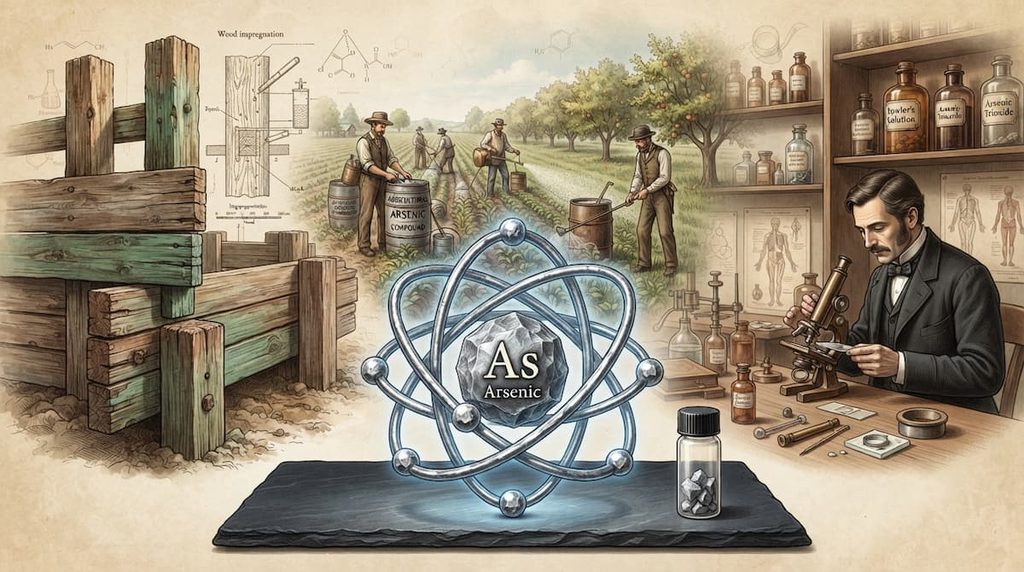
Arsenic is even more complicated.
It has a long history as a poison, but humans did not keep using it simply because they failed to understand that it was dangerous. Arsenic compounds had properties that were useful for controlling organisms humans considered harmful.
Arsenic has been used historically as a pesticide, herbicide, wood preservative, and even as a therapeutic compound. By around 1980 in the United States, about 70 percent of arsenic consumption was associated with wood preservative production. Arsenical herbicides were also used in agricultural settings and on other managed land.
That creates an uncomfortable but important biological lesson.
Toxicity can be a useful property when the target is a pest, weed, or pathogen.
The problem is that biological boundaries are rarely perfect.
Arsenic can interfere with multiple cellular processes rather than acting through one simple target. Different arsenic compounds can behave differently in the body, but exposure can disrupt enzymes, energy metabolism, redox balance, and other cellular functions.
Acute poisoning can produce severe gastrointestinal symptoms, cardiovascular disturbances, hypotension, and metabolic abnormalities. Chronic exposure has a different pattern and is associated with long-term toxic effects.
This also makes treatment more complicated than simply giving an antidote.
In appropriate cases of significant arsenic poisoning, chelation can be used. Chelating agents bind arsenic and help form complexes that can be eliminated from the body. Dimercaprol, for example, has a long history in the treatment of arsenic poisoning, while other chelators have also been investigated.
But chelation is not a universal reset button.
Its usefulness depends on the type of arsenic exposure, how much entered the body, and how quickly treatment begins. Removing arsenic also does not necessarily reverse every biological injury that has already occurred.
Arsenic therefore adds another idea to the story.
Sometimes the solution is not to chemically destroy a poison, but to bind it tightly enough that the body can remove it.
Thallium shows that an antidote can work like a trap
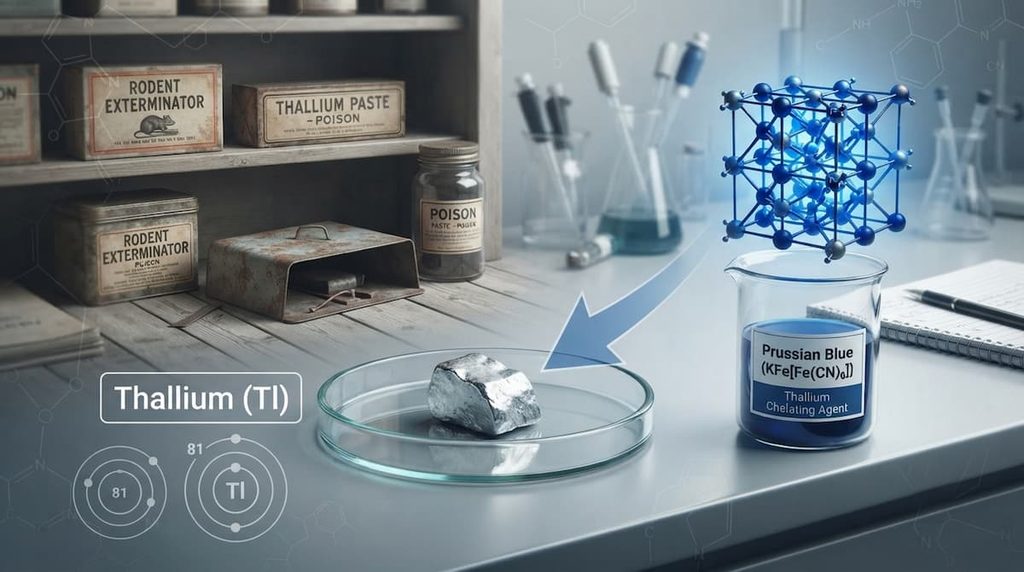
Thallium takes that idea in an even more unusual direction.
Thallium compounds have been used in manufacturing and other applications, and thallium was also used historically as a rodenticide. Its toxicity comes partly from its ability to behave like potassium in biological systems.
Thallium(I) and potassium both carry a positive charge and have similar ionic characteristics. Because of this similarity, thallium can follow some of the pathways normally used by potassium.
That allows it to interfere with processes that depend on potassium and can also disrupt cellular respiration, protein interactions, and calcium regulation.
The symptoms can therefore appear across different parts of the body.
Early poisoning may involve gastrointestinal symptoms. Neurological damage can then become prominent, with peripheral neuropathy and severe pain. Alopecia, or hair loss, is another characteristic feature of thallium poisoning.
But the treatment reveals something particularly interesting about toxicology.
One of the important treatments is Prussian blue.
Prussian blue does not simply destroy thallium already inside tissues. Instead, it can bind thallium in the gastrointestinal tract and interfere with enterohepatic recycling. This helps prevent the body from reabsorbing thallium and increases its elimination in feces.
That means an antidote does not necessarily have to make a poison disappear chemically.
It can also change the poison’s journey through the body.
Stop the poison from coming back, and the body can have a better chance of getting rid of it.
The distinction matters because it shows how closely toxicology follows physiology. Scientists do not always need to find a chemical that destroys the poison. Sometimes they only need to find a way to interrupt the biological route that keeps the poison circulating.
Paraquat reveals the limits of antidotes
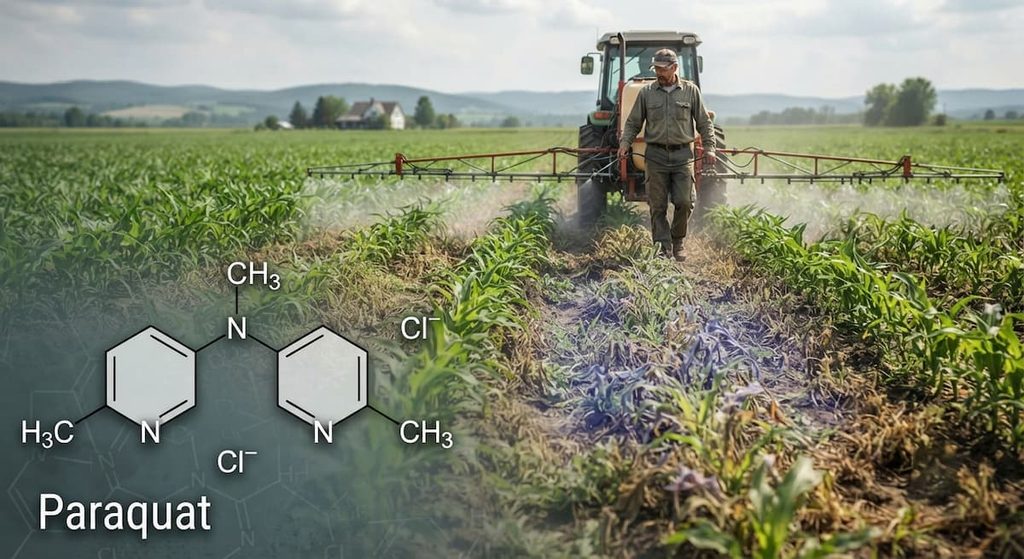
Paraquat presents the opposite problem.
Unlike cyanide, strychnine, arsenic, and thallium, paraquat was deliberately developed as a human-made agricultural chemical.
It was discovered in 1955 and introduced commercially in 1962 as a non-selective contact herbicide. Its ability to rapidly damage green plant tissue made it useful for weed control and for particular agricultural practices.
Its effectiveness comes from chemistry that is also dangerous to animals.
Paraquat undergoes redox cycling inside cells, generating reactive oxygen species and promoting oxidative damage. The lungs are particularly vulnerable, but severe poisoning can also damage the kidneys, liver, gastrointestinal tract, and other organs.
The clinical course can vary with the amount and circumstances of exposure, but severe poisoning can progress to respiratory failure and multi-organ injury.
And here the story reaches a limit.
There is no specific antidote for paraquat poisoning.
Medical management therefore focuses on preventing further absorption when possible, removing the poison from the body when appropriate, and supporting damaged organs. Numerous experimental and clinical approaches have been investigated, but none has become an established specific antidote.
This is an important distinction from cyanide.
Scientists understand major parts of paraquat toxicity, including its relationship with oxidative stress. Yet understanding the mechanism has not produced a reliable way to reverse the entire process once severe poisoning has occurred.
That limitation changes the role of prevention.
If a poison cannot be reliably neutralized after exposure, reducing exposure in the first place becomes much more important.
And that can eventually change agriculture itself.
Paraquat is already prohibited in many jurisdictions, while other regions continue to use it. Research on weed management has also explored ways to control weeds without relying on paraquat.
The replacement of a poison can therefore be considered another form of toxicological intervention.
Instead of asking how to save an organism after exposure, we can ask whether the dangerous chemical needs to be there at all.
What these poisons reveal about biology
These five poisons do not tell the same story.
Cyanide can be attacked by exploiting its chemistry. Strychnine is mainly managed by controlling the neurological crisis it creates. Arsenic can, in appropriate circumstances, be targeted with chelation. Thallium can be trapped in the gut to interrupt its recycling. Paraquat remains much harder because there is no established specific antidote.
The differences are not random.
They come from what each poison does inside a living system.
That is why the most useful question in toxicology is not simply:
How poisonous is it?
A better question is:
What does it interfere with, and can that interference be reversed?
The answer determines almost everything that comes next.
If the poison can be chemically captured, scientists may be able to build an antidote.
If it can be converted into a less harmful compound, treatment can exploit that reaction.
If the body keeps reabsorbing it, blocking that cycle may help.
If the poison mainly causes a physiological crisis, doctors may have to control the consequences while the body clears the substance.
And if none of those strategies works well enough, the most effective solution may be to reduce exposure or replace the chemical altogether.
A poison, then, is not simply a substance that kills.
It is a chemical interaction between a substance and the biology of a living organism.
And the more precisely we understand that interaction, the more possibilities we have to neutralize it, remove it, control its effects, or decide that the poison is no longer worth using.
Scientific Sources
- Petrikovics I, et al. “Cyanide Poisoning: Pathophysiology and Treatment Recommendations.” Toxicology Reviews / related toxicology literature. Verified PubMed record supporting cyanide toxicity and antidotal strategies. PMID: 10024740. Read the study on PubMed
- Thompson JP, Marrs TC. “Hydroxocobalamin in cyanide poisoning.” Critical Reviews in Toxicology. 2012;50(10):875-885. PMID: 23163594. DOI: 10.3109/15563650.2012.742197. Read the study on PubMed
- Jin WY, Huang DC, Guo J, et al. “Evidence for Hydroxocobalamin in Cyanide Toxicity Caused by Smoke Inhalation: An Updated Systematic Review.” Emergency Medicine International. 2025;2025:1779752. PMID: 41497958. DOI: 10.1155/emmi/1779752. Read the study on PubMed
- Menza D, Lee VR. “Strychnine Toxicity.” StatPearls. Updated 2026. PMID: 29083795. Read the study on PubMed
- Parker AJ, Lee JB, Redman J, Jolliffe LJ. “Strychnine poisoning: gone but not forgotten.” Emergency Medicine Journal. 2011;28(1):84. PMID: 20810461. DOI: 10.1136/emj.2009.080879. Read the study on PubMed
- Hughes MF, Beck BD, Chen Y, Lewis AS, Thomas DJ. “Arsenic exposure and toxicology: a historical perspective.” Toxicological Sciences. 2011;123(2):305-332. PMID: 21750349. DOI: 10.1093/toxsci/kfr184. Read the study on PubMed
- Bencko V, et al. “The history of arsenical pesticides and health risks related to the use of Agent Blue.” Annals of Agricultural and Environmental Medicine. 2017. PMID: 28664715. DOI: 10.26444/aaem/74715. Read the study on PubMed
- Mulkey JP, Oehme FW. “A review of thallium toxicity.” Veterinary and Human Toxicology. 1993;35(5):445-453. PMID: 8249271. Read the study on PubMed
- Hoffman RS. “Thallium toxicity and the role of Prussian blue in therapy.” Toxicologic Reviews. 2003;22(1):29-40. PMID: 14579545. DOI: 10.2165/00139709-200322010-00004. Read the study on PubMed
- Sagar GR. “Uses and usefulness of paraquat.” Human Toxicology. 1987;6(1):7-11. PMID: 3546089. DOI: 10.1177/096032718700600102. Read the study on PubMed
- Chen X, et al. “ADME/T-based strategies for paraquat detoxification: Transporters and enzymes.” Environmental Pollution. 2021. PMID: 34536650. DOI: 10.1016/j.envpol.2021.118137. Read the study on PubMed
- Moccia et al. “Ecotoxicology of the herbicide paraquat: effects on wildlife and knowledge gaps.” Environmental Science and Pollution Research. 2023. PMID: 37973658. Read the study on PubMed


