Why Does Driving Change How You Behave? [Bit#213]
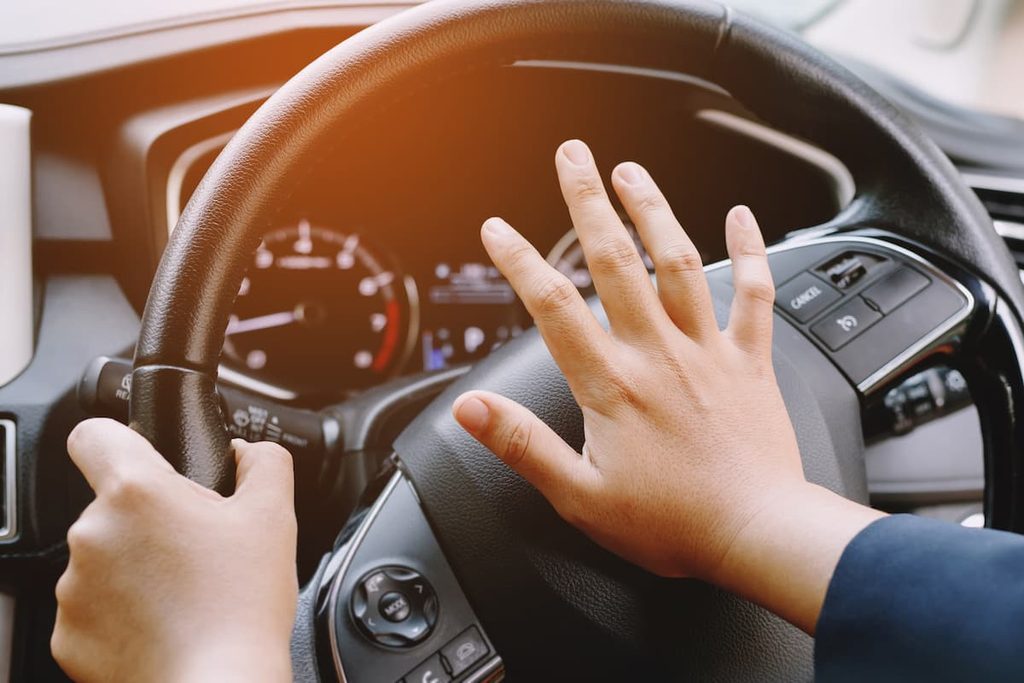
Have you ever noticed how different people can seem once they get behind the wheel?
Someone who would never shout at a stranger may suddenly lean on the horn. A normally patient person may become furious when another driver cuts in. Someone who rarely takes risks may suddenly feel comfortable driving more aggressively.
People often describe this by saying that driving makes us braver.
But that explanation misses something important.
The car may not be changing who you are. It may be changing the conditions in which you behave.
When Anger Behind the Wheel Is Different
It seems obvious that driving makes people angry. Traffic jams, slow drivers, sudden lane changes, and people who appear to ignore traffic rules can all be frustrating.
But researchers have found something more interesting.
Anger while driving does not necessarily work exactly like anger in ordinary life.
Research comparing anger experienced while driving with anger experienced in non-driving situations found that driving-related anger was particularly connected with blaming other people and communication problems between drivers. This suggests that driving creates a distinctive social situation for anger rather than simply producing more anger overall.
That distinction matters.
Imagine someone accidentally bumps into you in a supermarket.
You can see their face. You can hear their explanation. They can immediately see your reaction.
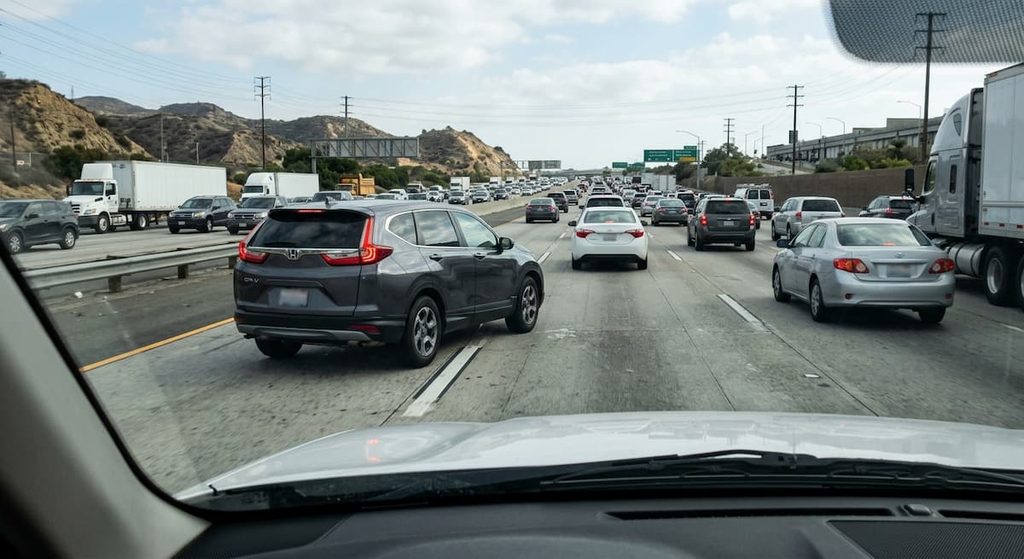
Now imagine a driver suddenly moving into your lane.
You may see only a vehicle.
You do not know whether the driver failed to notice you, misunderstood the traffic situation, was distracted, or deliberately cut you off.
The missing information leaves room for interpretation.
And that interpretation can change what happens next.
The Other Driver Becomes an Intention
One of the most important findings in driving psychology concerns how people explain another driver’s behavior.
Researchers have found that when drivers believe another person’s action was controllable and intentional, they are more likely to see that person as responsible for what happened. Perceived responsibility, in turn, is linked to anger and aggressive responses.
Consider two possible thoughts after someone changes lanes in front of you.
“They probably didn’t see me.”
Or:
“They saw me and did it anyway.”
The physical event is identical.
Your interpretation is not.
The second interpretation transforms an unknown driver into someone who appears to have deliberately acted against you.
This is important because anger is not produced only by what happens. It is also shaped by what we believe caused it and who we think is responsible.
Another study found that blaming other people helps explain the relationship between driving anger and aberrant driving behavior. In that study, blaming others was positively associated with driving violations.
So the mental sequence may look something like this:
Something happens → I interpret it as deliberate → I decide the other driver is responsible → I become angry → aggressive behavior becomes easier to express.
The car has not created a new personality.
It has created a situation in which this chain can happen very quickly.
The Invisible Shield of the Car
There is another unusual feature of driving.
You are surrounded by a physical shell.
The other driver cannot easily approach you, read your facial expression, or have an ordinary face-to-face interaction with you.
That separation can create a sense of anonymity.
Researchers have tested this idea directly.
In a driving simulation study, participants drove more aggressively when they were placed in an anonymous condition than when they were identifiable. The study suggested that situational factors such as anonymity can influence aggressive driving, rather than aggressive driving being explained entirely by a person’s general disposition.
Anonymity does not automatically make people aggressive.
Instead, it may weaken one of the social brakes that normally restrain behavior.
That difference is easy to miss.
If you become angry with someone standing directly in front of you, you immediately face another human being.
If you become angry with someone inside another car, the situation feels different.
You can express anger with a horn, headlights, acceleration, or a sudden maneuver without having to look that person in the eye.
The car can therefore function like a psychological barrier.
Not a magic switch that turns a kind person into an aggressive one, but a barrier that can lower the immediate social cost of expressing an emotion.
Why the Same Driver Can Behave Differently
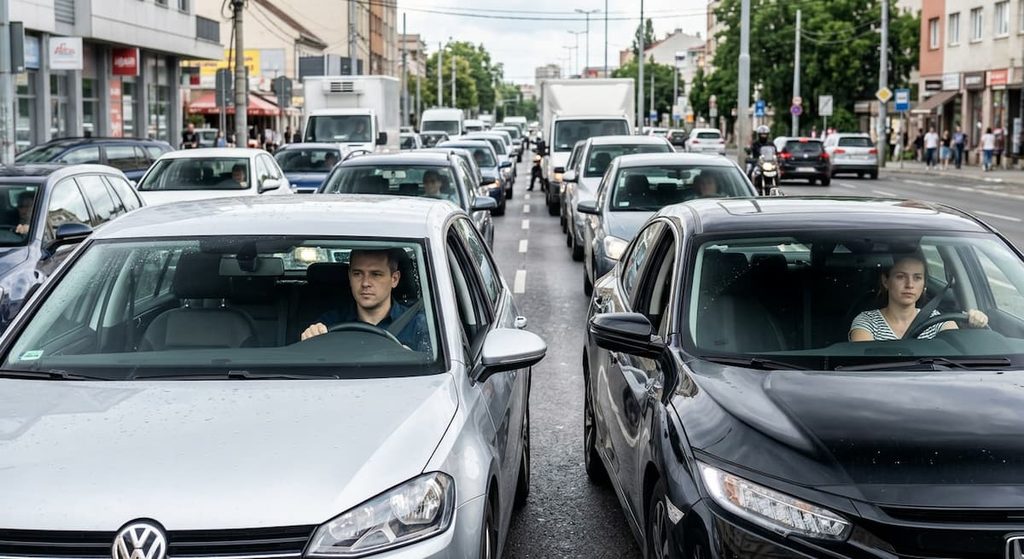
If the car itself caused aggression, everyone should become equally aggressive behind the wheel.
They do not.
A large systematic review published in 2025 examined 148 studies on psychological factors associated with aggressive driving. The researchers found consistent relationships involving personality traits, attitudes toward aggressive driving, emotion regulation, and other psychological factors. Difficulties with self-regulation were associated with more aggressive driving, while traits and capacities associated with better regulation were linked with less.
This changes the question.
Instead of asking:
“Why does driving make people aggressive?”
we should ask:
“Why does driving allow aggression to emerge more easily in some people and some situations?”
The answer is a combination of the person and the environment.
Someone who already has a low tolerance for frustration may react differently from someone who remains calm under pressure.
Someone who tends to blame others may interpret the same lane change differently from someone who assumes it was accidental.
And someone who feels anonymous may express an emotion that they would normally suppress in a face-to-face encounter.
The car is only one part of the system.
Frustration Can Change the Whole Drive
Driving also creates a special problem because people often have a clear goal.
You are trying to get somewhere.
That means another driver’s behavior can feel like more than a minor inconvenience. It can feel like an obstacle between you and your goal.
Research on driving anger has repeatedly identified blocked progress, frustrating traffic events, and other drivers’ behavior as important triggers.
A systematic review of aggressive driving found that difficulties with self-regulation and problematic attitudes toward aggressive driving are consistently associated with aggressive behavior.
Other research has shown that people who are more prone to driving anger can also be more likely to interpret ordinary driving behaviors as intentionally aggressive.
This creates a potentially self-reinforcing cycle.
The more hostile the situation appears, the easier it becomes to interpret the next event as another hostile act.
And once every other driver starts looking like an opponent, ordinary traffic becomes a series of personal conflicts.
Anger Can Follow You to the Next Situation
There is another reason road anger can become surprisingly powerful.
An angry driver does not always return to a neutral state immediately after the original event.
Research has examined how anger generated by one driving situation can influence behavior during a later situation. Experimental work using frustrating traffic conditions and time pressure has shown that anger can persist beyond the immediate event and affect subsequent driving behavior.
This suggests that the effect of a frustrating event is not necessarily limited to the moment when it happens.
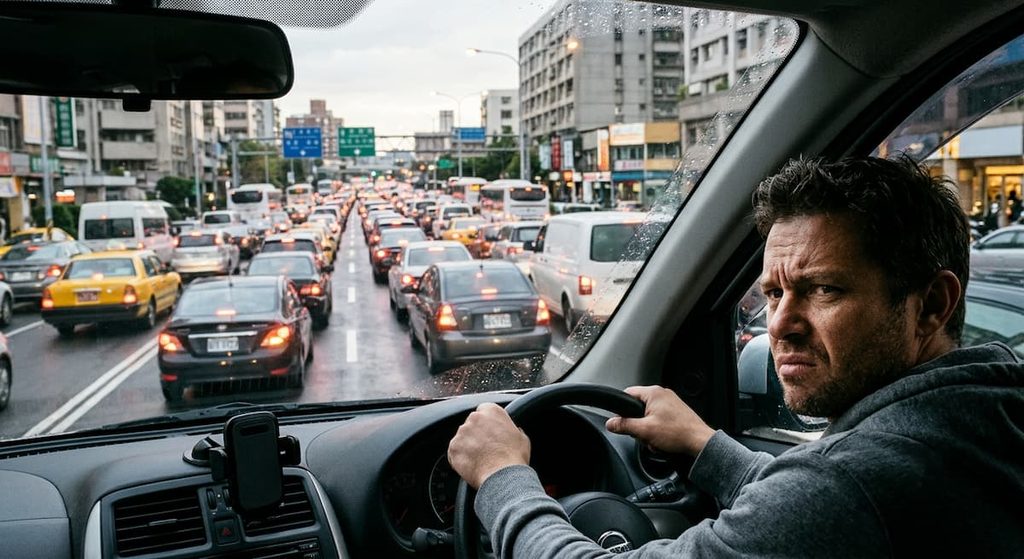
A driver who has just been cut off may carry that emotional state into the next interaction.
The next driver then does something mildly irritating.
Under normal circumstances, it might barely matter.
But after frustration has already built up, the same event can become the final trigger.
This helps explain why road rage can sometimes seem disproportionate to the event that immediately preceded it.
The final incident may not be the whole story.
It may simply be the event that arrives after the emotional system has already been loaded.
So Does Driving Make Us Braver?
Not exactly.
The popular idea contains a small piece of truth, but the science points toward a more precise explanation.
Driving can change several conditions at once.
You are physically separated from other people.
You have limited information about their intentions.
You are pursuing a goal and can become frustrated when other drivers interfere with it.
You may interpret their actions as deliberate and blame them for the resulting problem.
And because you are inside a vehicle, expressing anger can carry a lower immediate social cost than confronting someone face to face.
Put those factors together, and a person can behave more boldly than they normally would.
But that does not necessarily mean the person’s underlying character has changed.
The situation has changed the path from emotion to behavior.
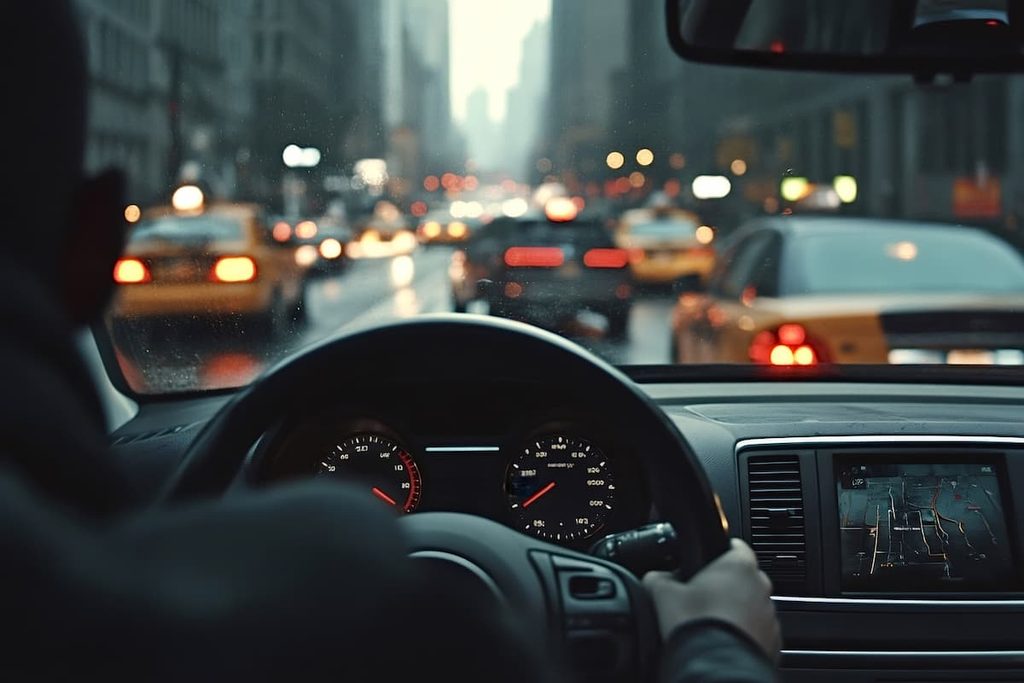
The Car Does Not Reveal Your “True Nature”
This is perhaps the most interesting part.
People sometimes say that aggressive driving reveals who someone really is.
Science gives us a more complicated picture.
Aggressive driving is associated with stable characteristics such as driving anger, personality, attitudes, impulsivity, and self-regulation. But situational factors also matter. The 2025 systematic review specifically concluded that aggressive driving cannot be understood from a single psychological characteristic and highlighted the interaction among multiple factors.
So the driver who suddenly becomes impatient is not necessarily revealing a hidden personality that was always waiting to escape.
Instead, a particular environment may make certain reactions easier.
The same person can behave differently depending on whether they are anonymous or identifiable, whether they are calm or already frustrated, whether they interpret another driver’s action as accidental or intentional, and whether they are able to regulate their emotional response.
That is a much more interesting explanation than simply saying that people become “braver” in cars.
What Changes When You See the Person?
The next time someone cuts in front of you, there is a useful thought experiment.
Before deciding that the other driver was being deliberately rude, consider what you actually know.
You know what the car did.
You do not necessarily know why the driver did it.
That gap between behavior and intention is where much of the psychology of driving anger lives.
The other driver may still have been careless. They may still have created a dangerous situation. But deciding that the person deliberately targeted you adds information that you may not actually have.
And that extra interpretation can change your emotional response.
A car can therefore do something psychologically unusual.
It can put people close enough together to interfere with one another, but far enough apart that they cannot easily see one another as complete human beings.
That combination may help explain why ordinary people sometimes behave in extraordinary ways behind the wheel.
The car does not necessarily make you fearless.
It can make your social brakes weaker, your interpretation of other drivers harsher, and your emotions easier to turn into action.
So perhaps the real question is not whether driving reveals our true nature.
It is what happens when a human being, an enclosed vehicle, a stressful goal, and an unknown stranger all meet on the same road.
Scientific Sources
- Parkinson, B. “Anger on and off the road.” British Journal of Psychology. 2001;92(3):507-526. PMID: 11534742. DOI: not verified. Read the study on PubMed
- Wickens, C., Wiesenthal, D. L., Flora, D. B., Flett, G. L. “Understanding driver anger and aggression: attributional theory in the driving environment.” Journal of Experimental Psychology: Applied. 2011;17(4):354-370. PMID: 21988326. DOI: 10.1037/a0025815. Read the study on PubMed
- Ellison-Potter, P., Bell, P., Deffenbacher, J. “The Effects of Trait Driving Anger, Anonymity, and Aggressive Stimuli on Aggressive Driving Behavior.” Journal of Applied Social Psychology. 2001;31(2):431-443. DOI: 10.1111/j.1559-1816.2001.tb00204.x. Read the study on Wiley
- Love, S., Nicolls, M. “What drives road rage? A systematic review on the psychological correlates of aggressive driving behavior.” Journal of Safety Research. 2025;94:92-109. PMID: 40930667. DOI: 10.1016/j.jsr.2025.06.014. Read the study on PubMed
- Su, Z., Woodman, R., Smyth, J., Elliott, M. “The relationship between aggressive driving and driver performance: A systematic review with meta-analysis.” Accident Analysis & Prevention. 2023;183:106972. PMID: 36709552. DOI: 10.1016/j.aap.2023.106972. Read the study on PubMed
- “The Italian adaptation of the Driving Anger Scale: examining measurement invariance and the role of blaming others as a mediator of the relationship between trait driving anger and aberrant driving behavior.” Transportation Research Part F: Traffic Psychology and Behaviour. 2023. PMID: 37352614. Read the study on PubMed