What Makes a Species Different? [Bit#187]
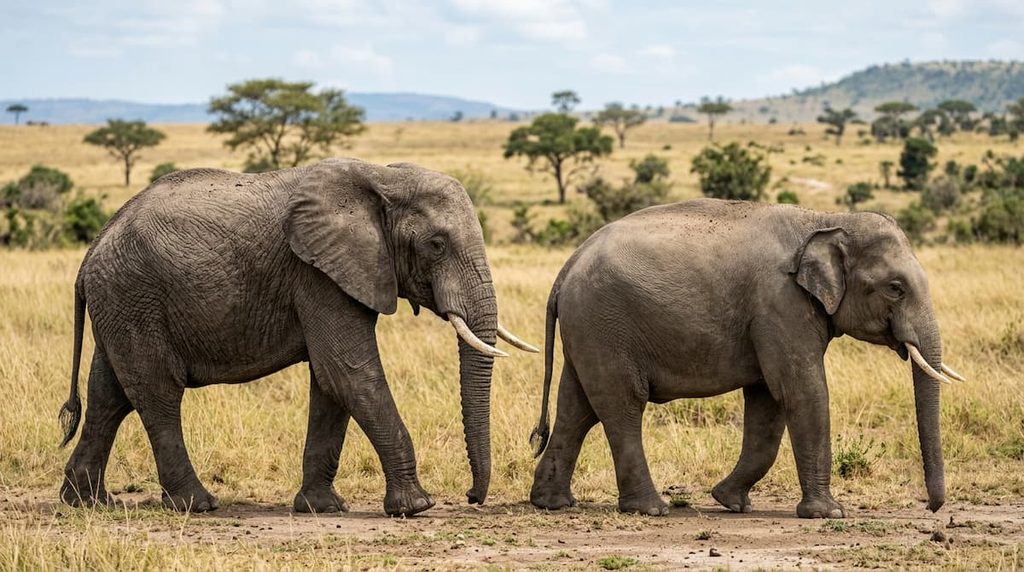
Imagine two animals standing side by side. They have almost identical bodies, the same colors, and nearly indistinguishable features. You might assume they belong to the same species. Yet scientists could classify them as two different species.
Now imagine the opposite situation. Two animals look noticeably different, perhaps because they live in different environments or have developed different body shapes. Despite their contrasting appearances, they might belong to the same species.
Both situations are possible because a species is not simply a group of organisms that look alike. Appearance matters, but biologists also examine reproduction, genetics, ecology, and evolutionary history to determine how organisms are related.
This raises a surprisingly difficult question: What exactly makes one species different from another?
Why Appearance Can Be Misleading
For centuries, scientists relied heavily on physical characteristics to classify living things. They compared body shapes, colors, anatomical structures, and other visible features. These observations remain essential, especially when identifying organisms in the field or examining preserved specimens.
However, appearance does not always reveal the full biological story.
Consider insects that look almost identical. Two populations may share the same general body shape and coloration while differing in their DNA, reproductive behavior, or evolutionary history. Those differences can indicate that what appears to be one species actually contains more than one distinct evolutionary lineage.
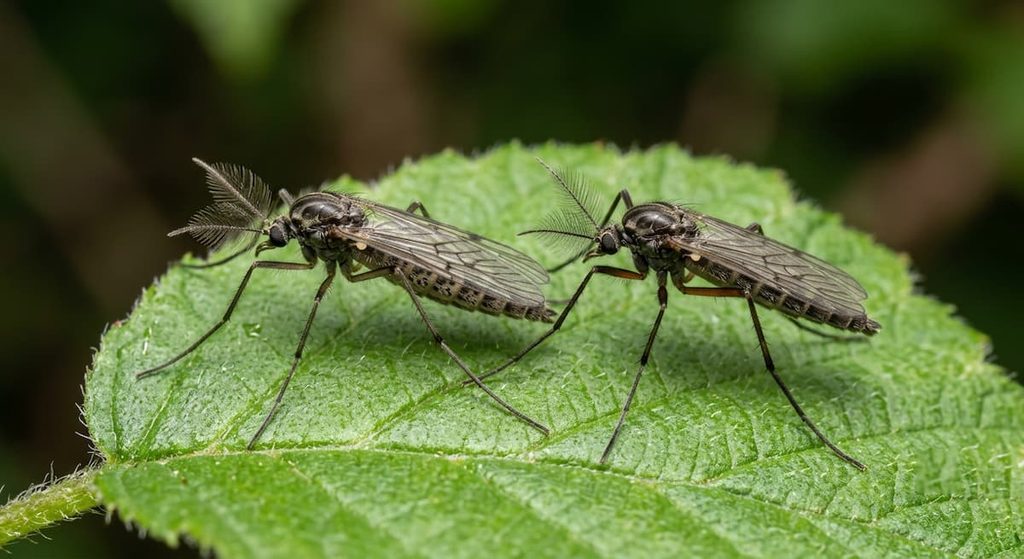
Such organisms are often called cryptic species. The term describes species that are difficult to distinguish using conventional physical characteristics alone. It does not mean that the organisms are invisible or that they necessarily have no physical differences. Instead, their distinguishing features may be subtle, overlooked, or difficult to observe.
A study of non-biting midges from Brazil’s Atlantic Forest illustrates this challenge. Researchers examined 86 specimens representing 14 species in a group of small flies called the Corynoneura group. They compared DNA barcodes, short DNA sequences used to help identify organisms, with morphological evidence.
The genetic analysis supported groups corresponding to the 14 species. In some cases, genetic groupings could also be associated with differences in the pupal stage. The researchers also identified a possible case of cryptic diversity where genetic subdivisions appeared without corresponding morphological divergence.
The important lesson is not that DNA always overrides appearance. It is that organisms can share a very similar appearance while carrying evidence of distinct evolutionary histories.
Physical resemblance is useful evidence, but it is not a final verdict.
The Famous Rule: Can They Produce Offspring?
One of the best-known ways to define a species is the biological species concept, associated with evolutionary biologist Ernst Mayr.
Under this concept, a species consists of natural populations whose members can interbreed and are reproductively isolated from other such populations.
In simpler terms, scientists ask whether organisms can reproduce with one another under natural conditions and whether their populations remain reproductively separate from other groups.
This idea is powerful because reproduction connects individual organisms across generations. When genes regularly pass between individuals, they help maintain a shared gene pool. When gene exchange becomes restricted, populations can begin evolving independently.
Over time, differences may accumulate. The populations might develop different mating behaviors, reproductive timing, chromosome arrangements, or other characteristics that make successful reproduction between them less likely.
Eventually, they may become separate species.
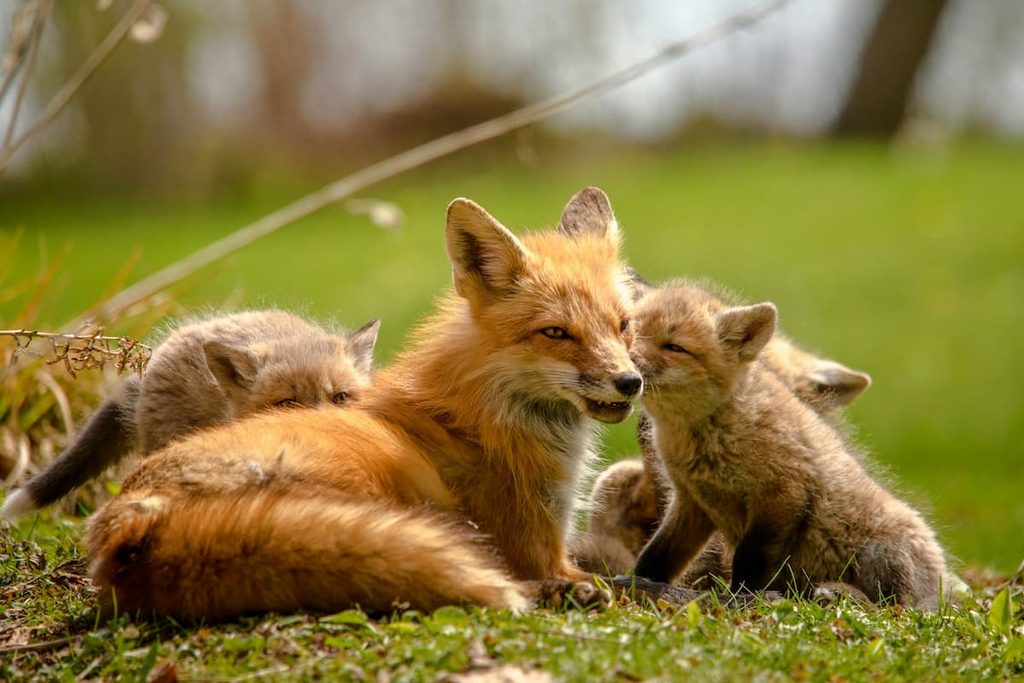
But the familiar rule is often misunderstood. It is not simply a test of whether two individual animals can mate or produce a baby.
First, the concept concerns populations, not just isolated individuals. Second, the offspring must be considered in a broader reproductive context. If two animals produce offspring that cannot reproduce, for example, that does not demonstrate that their populations belong to the same biological species.
Third, the rule is most straightforward for organisms that reproduce sexually. It becomes much harder to apply to bacteria and other organisms that reproduce without mating in the conventional sense.
There is another complication: scientists cannot always observe whether two populations would interbreed naturally. They may live on different islands, occupy separate habitats, or reproduce at different times of year.
The biological species concept is therefore an important framework, not a universal laboratory test that settles every case.
If Two Species Can Have Babies, Are They the Same Species?
Not necessarily.
Some distinct species can interbreed and produce hybrid offspring. A hybrid is an organism descended from parents belonging to different populations or species, depending on the classification and context.
A familiar example is the mule, usually produced by crossing a female horse with a male donkey. Horses and donkeys are classified as different species, yet they can produce hybrid offspring. Mules are generally sterile, meaning they cannot reproduce normally.
This example shows why producing an offspring is not the same as demonstrating that two populations belong to one species.
However, sterility is not a requirement for every hybrid. Some hybrids between distinct species can reproduce, and genetic material can sometimes pass from one species into another through repeated backcrossing.
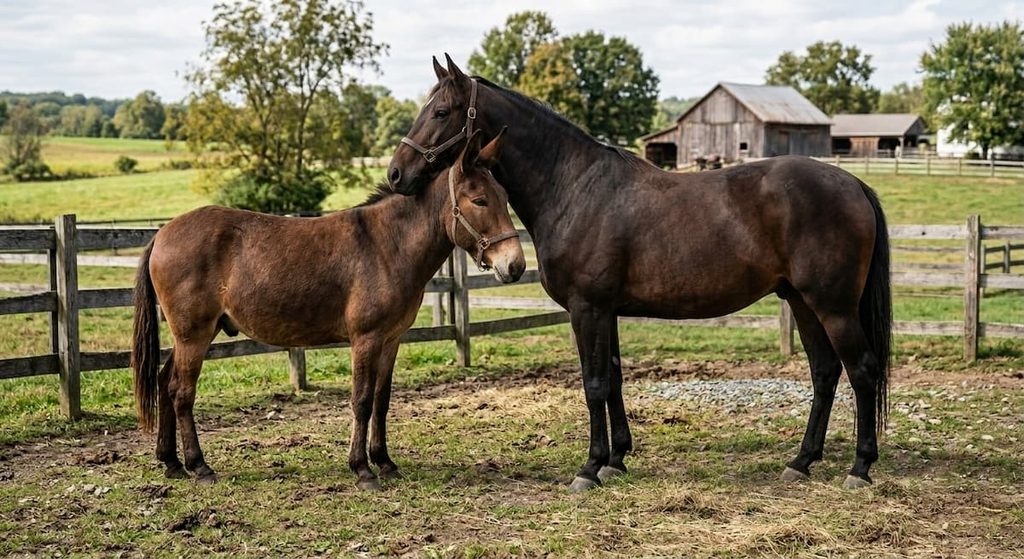
Biologists call the movement of genetic material between populations through hybridization and subsequent breeding introgression. This process can complicate the boundary between species.
Research on hybridization and species boundaries shows that reproductive separation is not always absolute across an organism’s entire genome. Some regions of DNA may remain strongly differentiated between species, while other regions can cross the boundary through hybridization.
In other words, species boundaries can behave less like completely sealed walls and more like barriers that allow some genetic exchange while restricting other forms of exchange.
This does not mean that species are meaningless or that every organism belongs to one continuous population. It means that the evolutionary process of becoming separate species does not always produce a perfectly clean division.
A single successful hybrid cross cannot settle the question. Scientists need to consider how frequently interbreeding occurs, whether genes move between populations over generations, and whether the populations continue evolving as distinct groups.
DNA Can Reveal Differences the Eye Cannot See
If appearance and reproduction can both be misleading, could scientists simply compare DNA?
DNA provides a powerful additional source of evidence. Every organism inherits genetic information from its ancestors, and populations can accumulate genetic differences as they evolve. By comparing DNA sequences, researchers can identify patterns that are difficult or impossible to detect from physical appearance alone.
One widely used technique is DNA barcoding. It examines a selected genetic region that can help distinguish species in a particular group of organisms. In many animals, researchers use a region of the mitochondrial gene known as COI.
The Brazilian midge study used COI sequences alongside morphological observations to investigate species boundaries. This combined approach was especially useful because traditional identification based on appearance was difficult for some members of the group.
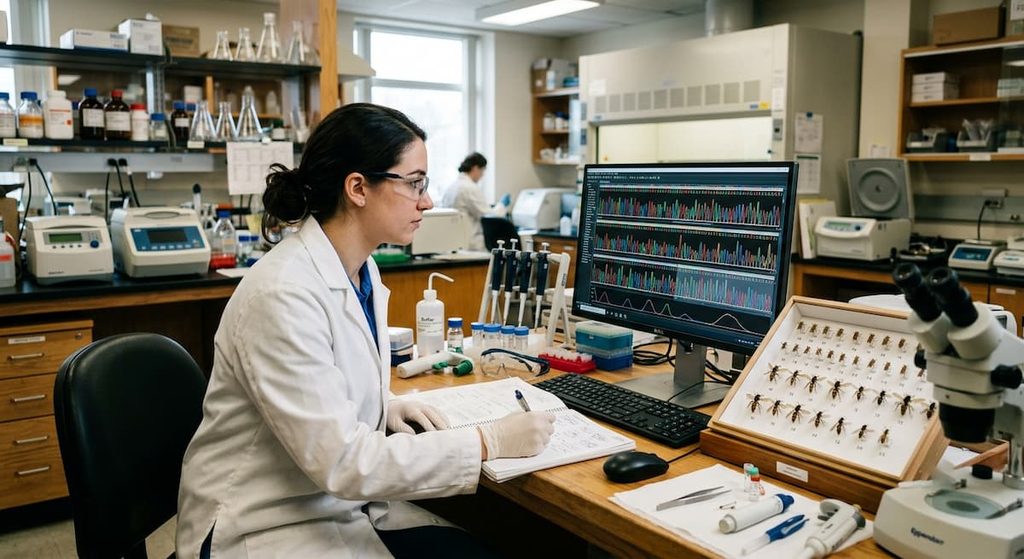
However, DNA barcoding is not a universal species detector.
Closely related species may share some DNA sequences, while individuals belonging to the same species may carry different versions of a sequence. Hybridization, incomplete separation of ancestral genetic variation, and differences in the evolutionary history of individual genes can all complicate interpretation.
The result also depends on which part of the genome is examined. A short genetic sequence represents only a small portion of an organism’s complete genetic information.
For this reason, scientists may examine multiple genes or entire genomes when the question requires more detailed evidence. They can compare those results with anatomy, behavior, geographical distribution, habitat preferences, and reproductive patterns.
The goal is not simply to find a genetic difference. It is to determine whether the evidence supports the existence of independently evolving groups.
A DNA difference is a clue, not an automatic declaration of a new species.
Why Scientists Use More Than One Species Concept
There is no single species definition that works equally well for every organism and every scientific question.
The biological species concept emphasizes reproductive isolation. But other approaches focus on different kinds of evidence.
The morphological species concept groups organisms according to their physical characteristics. It is especially useful when researchers have preserved specimens or cannot directly observe reproduction. Its weakness is that different species can look alike, while members of the same species can look different.
The phylogenetic species concept emphasizes evolutionary relationships and the identification of distinct lineages. Researchers use evidence such as DNA sequences and inherited characteristics to reconstruct how groups are related. Its application depends on the organisms being studied and the criteria used to recognize separate lineages.
The ecological species concept focuses on the ecological niche occupied by a group. A niche includes the environmental conditions and resources associated with an organism’s survival and reproduction. Populations that use different resources or occupy different ecological roles may be diverging, although ecological differences alone do not automatically establish separate species.
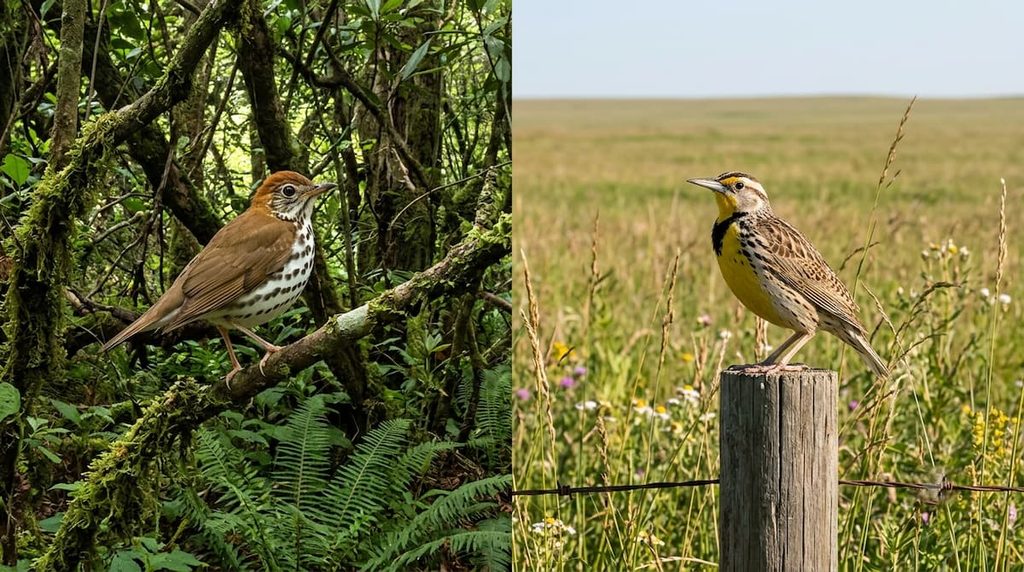
These approaches are not simply competing answers to the same easy question. Each highlights a different aspect of biological diversity, and each has limitations.
In a 2007 paper published in Systematic Biology, Kevin de Queiroz argued that much of the disagreement about species comes from confusing two questions: what a species fundamentally is, and how scientists should determine where one species ends and another begins.
His framework treats a species as a separately evolving lineage of populations. Reproductive isolation, distinctive physical characteristics, and evolutionary relationships then become different kinds of evidence that can help scientists recognize such lineages.
This distinction is useful because it explains why researchers may disagree about a difficult classification without disagreeing about the underlying evolutionary process.
One scientist might emphasize differences in mating behavior. Another might focus on genomic evidence. A third might examine anatomy or ecology. Their conclusions may depend on how much evidence is available and how clearly it supports the separation of the groups.
The best classification is not necessarily the one supported by the largest number of genetic differences or the most obvious physical contrast. It is the one that most convincingly explains the evidence in the context of the organism’s evolutionary history.
How Does One Species Become Two?
Species do not usually appear as completely separate categories in a single generation. Speciation, the process by which new species arise, often begins when populations become separated or start experiencing different evolutionary pressures.
Imagine a population of animals living across a broad region. A mountain range, a newly formed river, or a change in climate might divide the population into groups. Once contact becomes limited, mutations, natural selection, and genetic drift can cause the groups to change independently.
Genetic drift is the random change in the frequency of genetic variants from one generation to the next. Its effects can be particularly strong in small populations.
Meanwhile, natural selection may favor different characteristics in different environments. Mating signals, breeding seasons, body structures, or preferences for particular habitats may gradually diverge.
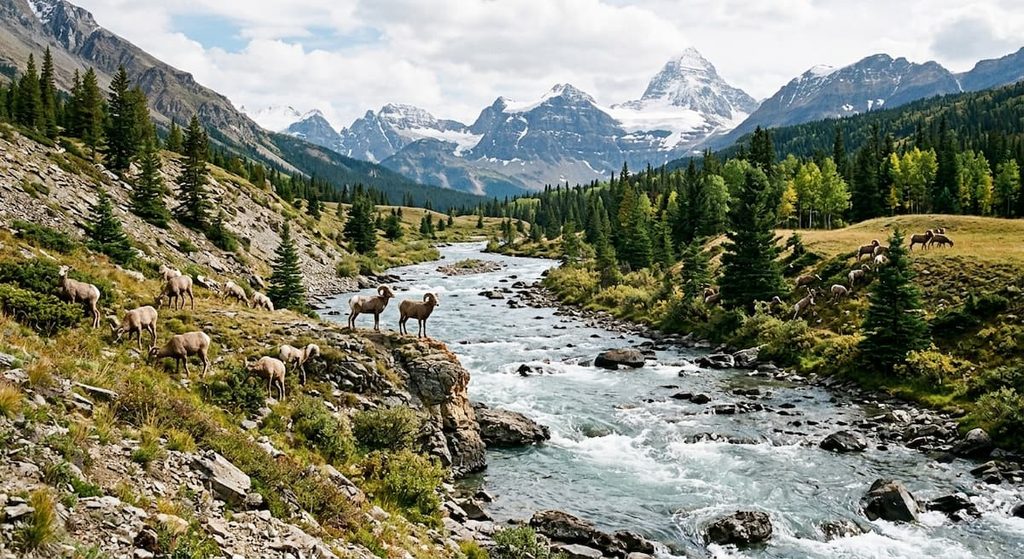
Over many generations, these differences can reduce gene exchange between the populations. If the groups eventually remain distinct even when they encounter one another, the evidence for separate species becomes stronger.
Geographical separation is not always necessary, however. Populations can begin diverging while living in the same region if they use different habitats, specialize on different resources, or develop different mating preferences.
Nor does every isolated population automatically become a new species. Some populations remain capable of interbreeding if they come back into contact. Others may diverge for a long time without reaching complete reproductive isolation.
Speciation is therefore an evolutionary process, not a fixed timetable. Scientists often have to infer the history of that process from the patterns they observe today.
Where Is the Boundary Between Two Species?
The most difficult cases occur when the evidence does not agree neatly.
Two populations may have different appearances but still exchange genes. Others may be genetically distinct while remaining difficult to distinguish by eye. Some may occupy different ecological niches but still interbreed where their ranges overlap.
In such cases, researchers investigate the full pattern rather than relying on a single characteristic.
They might ask whether the populations maintain their differences over time, whether their mating behavior limits reproduction, whether genetic evidence supports separate evolutionary lineages, and whether the observed differences persist when the groups come into contact.
Even then, reasonable scientific disagreement can remain. Different researchers may interpret incomplete evidence differently, particularly when speciation is still underway.
That uncertainty is not necessarily a failure of biology. It reflects the fact that evolution does not always produce sharp boundaries at the moment when scientists would find them most convenient.
There is also a practical distinction between discovering biological diversity and formally naming a species. Researchers may gather evidence suggesting that a population represents a previously unrecognized lineage. Establishing its taxonomic status requires careful analysis, comparison with related organisms, and appropriate scientific documentation.
A genetic cluster alone does not automatically become a formally accepted species.
What Makes a Species Different, Then?
A species is not defined simply by how an organism looks, how many genetic differences it has, or whether two individuals can produce offspring.
Those observations matter because they help scientists understand whether organisms belong to distinct evolutionary lineages. Their relative importance depends on the biology of the organisms and the question being investigated.
For many sexually reproducing animals, reproductive isolation is especially informative. For organisms that reproduce asexually, or for populations whose boundaries are difficult to observe, genetic, morphological, ecological, and evolutionary evidence may be more useful.
The central idea is that species classification is an attempt to understand how living populations evolve and remain distinct, not merely to sort organisms into boxes based on appearance.
This also explains why scientific classifications sometimes change. New genetic data, improved observations, or a better understanding of reproduction can reveal relationships that earlier methods could not detect.
The natural world does not always divide itself into perfectly obvious categories. Sometimes two species look almost identical. Sometimes two populations look different but remain part of the same species. And sometimes distinct species continue exchanging a limited amount of genetic material.
For biologists, the challenge is to determine which differences reflect ordinary variation within a species and which reveal populations following separate evolutionary paths.
That is what makes the species concept so important: it helps scientists turn the diversity of life into an understanding of how that diversity arose.
Scientific Sources
1. de Queiroz K. “Species concepts and species delimitation.” Systematic Biology. 2007;56(6):879-886. PMID: 18027281. DOI: 10.1080/10635150701701083. Read the study on PubMed.
2. Silva FL, Wiedenbrug S. “Integrating DNA barcodes and morphology for species delimitation in the Corynoneura group (Diptera: Chironomidae: Orthocladiinae).” Bulletin of Entomological Research. 2014;104(1):65-78. PMID: 24112240. DOI: 10.1017/S0007485313000515. Read the study on PubMed.
3. Harrison RG, Larson EL. “Hybridization, introgression, and the nature of species boundaries.” Journal of Heredity. 2014;105(Suppl 1):795-809. PMID: 25149255. DOI: 10.1093/jhered/esu033. Read the study on PubMed.