Why Is Liver Disease Linked to Fatigue? [Bit#198]
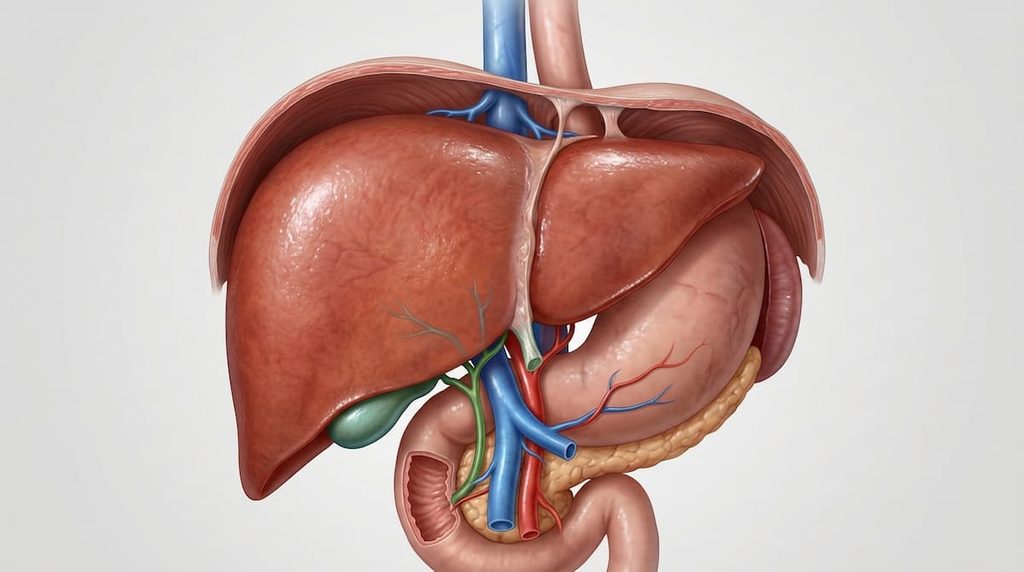
You can get a full night’s sleep and still wake up feeling exhausted. Everyday tasks may take more effort than usual, and even activities you once enjoyed can begin to feel draining. For some people, this persistent fatigue is connected to a chronic liver disease.
The connection is more complicated than it might seem. The liver helps regulate how the body handles nutrients and energy, but fatigue is not simply a sign that the liver has stopped working properly. Researchers now understand that liver-related fatigue can involve communication between the liver and brain, changes in muscle function, inflammation, and disturbances in sleep.
Even more surprisingly, the severity of fatigue does not always match the severity of liver damage. Understanding why requires looking beyond the liver itself.

Fatigue Is More Than Feeling Sleepy
Fatigue is often confused with sleepiness, but the two are not identical. Sleepiness is the tendency to fall asleep. Fatigue is a broader feeling of exhaustion, reduced energy, or difficulty sustaining physical or mental effort.
Someone experiencing fatigue may sleep for a reasonable number of hours and still struggle to concentrate, exercise, or complete ordinary tasks. Rest may help, but it does not always make the feeling disappear.
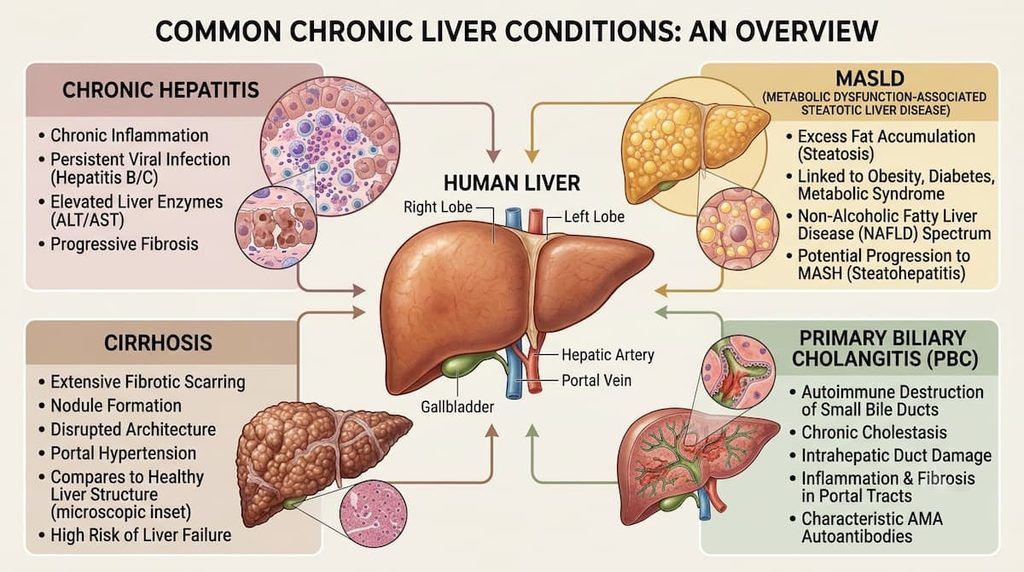
Fatigue is a common complaint among people with chronic liver disease, including conditions such as chronic hepatitis, metabolic dysfunction-associated steatotic liver disease (MASLD), and primary biliary cholangitis (PBC). PBC is a chronic autoimmune disease that damages the small bile ducts inside the liver.
The experience varies considerably between individuals. Some people report mild tiredness, while others find that fatigue interferes with work, relationships, exercise, and social activities.
This matters because fatigue is not merely an inconvenience. It can affect a person’s quality of life even when conventional tests do not suggest severe liver damage.
The Liver Helps Keep Energy Available
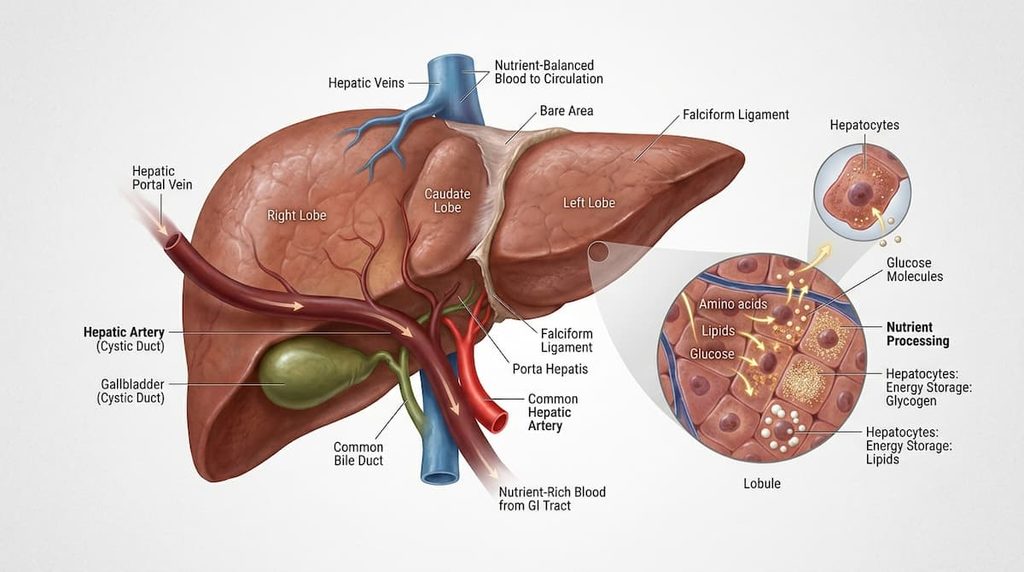
The liver plays a central role in maintaining the body’s energy supply. After a meal, it processes nutrients arriving from the digestive system and stores some of the glucose as glycogen. Between meals, it can break down glycogen and release glucose into the bloodstream. It also participates in the metabolism of fats, proteins, and many other substances.
These functions help supply energy to organs such as the brain and muscles. The liver also processes waste products, produces important blood proteins, and makes bile, which helps the body absorb dietary fats.
Chronic liver disease can disrupt some of these processes. Depending on the condition and its stage, a person may experience altered nutrient handling, poor nutritional status, reduced muscle mass, or changes in metabolism.
These changes can contribute to physical weakness and reduced exercise tolerance. A walk that once felt easy may require more effort, for example.
However, it would be misleading to say that every person with liver-related fatigue simply lacks energy because their liver cannot produce enough of it. The body has several overlapping systems for regulating energy, and the mechanisms behind fatigue differ between liver diseases and individual patients.
The liver’s metabolic role is one part of the explanation, not the whole story.
How the Liver May Influence the Brain
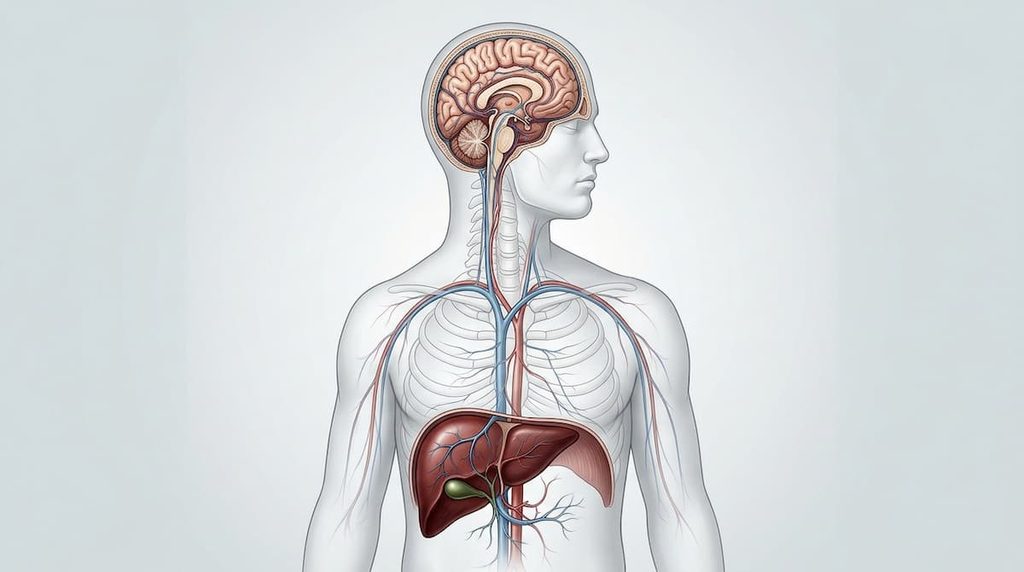
One of the most important ideas in liver-fatigue research is that the liver and brain do not work independently. They communicate through nerves, immune signals, and substances circulating in the blood.
When liver tissue becomes inflamed, immune cells can release signaling molecules called cytokines. These molecules help coordinate the body’s response to injury and infection. But inflammatory signals can also affect communication between the immune system and the brain.
Researchers have proposed several routes through which this communication may occur. Signals can travel along sensory nerves, including branches of the vagus nerve. Inflammatory molecules may also influence cells associated with the blood-brain barrier, the protective interface that regulates what passes from the bloodstream into the brain.
These pathways may change activity in brain systems involved in motivation, attention, and the regulation of behavior. As a result, a person may experience reduced drive, mental exhaustion, or difficulty sustaining effort.
This helps explain why fatigue is not always proportional to physical damage in the liver. The sensation of fatigue depends partly on how the brain interprets and responds to signals from the body, not only on how much liver tissue has been injured.
There is an important limitation, however. Although the liver-brain connection is a leading explanation for central fatigue, scientists have not established one complete mechanism that accounts for every case. Different liver diseases may involve different combinations of biological processes.
Two Forms of Fatigue Can Overlap
Researchers often distinguish between central and peripheral fatigue. These terms describe different aspects of the experience rather than two completely separate conditions.
Central fatigue refers to fatigue associated with changes in the central nervous system. A person may feel mentally drained, struggle to maintain concentration, or find it unusually difficult to initiate activities. Altered signaling between the body and brain may contribute to these symptoms.
Peripheral fatigue involves the muscles and other parts of the body responsible for physical performance. A person may have reduced exercise tolerance, weakness, or difficulty sustaining physical activity.
Chronic liver disease can affect both sides of this picture. Muscle loss, inadequate nutrition, reduced physical activity, and changes in the body’s metabolic processes may all contribute to physical limitations. Meanwhile, altered brain signaling, sleep disturbances, and other symptoms can contribute to the subjective feeling of exhaustion.
The two forms may reinforce each other. Someone who feels exhausted may become less active, and prolonged inactivity can contribute to reduced physical conditioning and muscle weakness. Physical tasks may then become more demanding.
This is one reason liver-related fatigue cannot always be explained by a single blood test or one measurement of liver function.
Why Inflammation Matters, but Does Not Explain Everything
Inflammation is another important part of the picture. It occurs when the immune system responds to injury, infection, or other threats. In chronic liver disease, ongoing inflammation may affect liver tissue and contribute to signals that reach other parts of the body.
Studies have found associations between inflammatory activity and fatigue in some groups of people with chronic liver disease. For example, a study involving 1,374 patients with biopsy-confirmed chronic liver disease found that fatigue was associated with active liver inflammation in certain age groups.
An association does not prove that inflammation directly causes fatigue in every patient. The relationship may vary with age, the underlying disease, other health conditions, and the way fatigue is measured.
Researchers are also investigating how the gut microbiome, the community of microorganisms living in the digestive tract, may contribute to communication between the gut, liver, and brain. Changes in the microbiome may influence immune activity and the substances that travel between these organs.
This is a promising area of research, but it should not be presented as a settled explanation for liver-related fatigue. The relative contributions of inflammation, gut-derived signals, metabolism, and brain function remain incompletely understood.
Why Severe Fatigue Does Not Always Mean Severe Liver Damage
It seems logical to assume that more serious liver damage would produce more severe fatigue. In practice, the relationship is not that straightforward.
Some people with relatively early-stage chronic liver disease experience substantial fatigue. Others with more advanced disease may report less fatigue than expected. The pattern also differs between conditions.
Primary biliary cholangitis is a particularly useful example. Fatigue is a major symptom for many people with this disease, and it can substantially affect daily life. Yet fatigue does not consistently track the usual measures of liver disease severity.
Other factors may help explain the difference. Sleep quality, mood, physical conditioning, nutrition, medications, and coexisting medical conditions can influence how exhausted a person feels. Some of these factors may be consequences of liver disease, while others may occur independently.
The relationship can also change over time. Treating an underlying condition may improve fatigue in some patients, but improvement is not guaranteed. Research involving people treated successfully for chronic hepatitis C has found that fatigue can decrease after viral clearance, although it may persist in some individuals.
The lesson is not that liver damage is irrelevant to fatigue. Rather, fatigue is a complex symptom that cannot reliably measure the amount of damage in the liver by itself.
Can Fatigue Tell You Whether Your Liver Is Healthy?
No. Fatigue alone cannot establish whether someone has liver disease, and the absence of fatigue cannot rule it out.
Persistent tiredness has many possible explanations, including inadequate sleep, anemia, thyroid disorders, infections, medication effects, mood disorders, and other chronic illnesses. These possibilities can overlap with liver disease, making the cause difficult to identify from symptoms alone.
Liver diseases can also develop without obvious symptoms, particularly in their earlier stages. Some people discover a problem through blood tests or other medical investigations rather than because they feel unusually tired.
A healthcare professional may consider a person’s medical history, medications, alcohol use, risk factors, physical examination, and appropriate laboratory tests when evaluating persistent fatigue. Liver blood tests can provide useful information, but they do not independently answer every question about liver health.
Unexplained fatigue that persists, worsens, or interferes with everyday life deserves medical attention, especially when accompanied by symptoms such as yellowing of the skin or eyes, abdominal swelling, or dark urine. These symptoms have different possible causes and should be assessed in context.
The important distinction is simple: fatigue can be a clue, but it is not a diagnosis.
The Liver-Fatigue Connection Is a Whole-Body Problem
The liver is essential to energy regulation, but its relationship with fatigue extends far beyond the organ itself. Changes in metabolism, inflammatory signaling, communication with the brain, muscle function, and sleep may combine to make everyday activities feel unusually difficult.
Scientists have established that fatigue can be a major burden for people with chronic liver disease. They have also identified several plausible biological pathways that may contribute to it. What remains unresolved is why these pathways produce severe fatigue in some people but much less in others, and why the experience does not always reflect the extent of liver damage.
That uncertainty is not a reason to dismiss the symptom. It is a reminder that the feeling of exhaustion emerges from interacting systems throughout the body.
Understanding liver-related fatigue therefore requires looking at more than the liver alone. It means considering how the body regulates energy, how the immune system communicates with the brain, and how physical and mental effort are experienced in everyday life.
Scientific Sources
1. Younossi ZM, Kremer AE, Swain MG, et al. “Assessment of fatigue and its impact in chronic liver disease.” Journal of Hepatology. 2024;81(4):726-742. PMID: 38670320. DOI: 10.1016/j.jhep.2024.04.008. Read the study on PubMed
2. Kośnik A, Wójcicki M. “Fatigue in chronic liver disease patients: prevalence, pathophysiology, and management.” Przeglad Gastroenterologiczny. 2022;17(1):21-27. PMID: 35371364. DOI: 10.5114/pg.2022.114594. Read the study on PubMed
3. Gerber LH, Weinstein AA, Mehta R, Younossi ZM. “Importance of fatigue and its measurement in chronic liver disease.” World Journal of Gastroenterology. 2019;25(28):3669-3683. PMID: 31391765. DOI: 10.3748/wjg.v25.i28.3669. Read the study on PubMed
4. “Is fatigue related to the severity of liver inflammation in patients with chronic liver disease? A cross-sectional study.” 2023. PMID: 37080620. Read the study on PubMed
5. “Effects of Viral Eradication With Ledipasvir and Sofosbuvir, With or Without Ribavirin, on Measures of Fatigue in Patients With Chronic Hepatitis C Virus Infection.” 2016. PMID: 26241510. Read the study on PubMed