[Bit#110] Bioelectricity Unlocked: How Ion Channels Work
Introduction
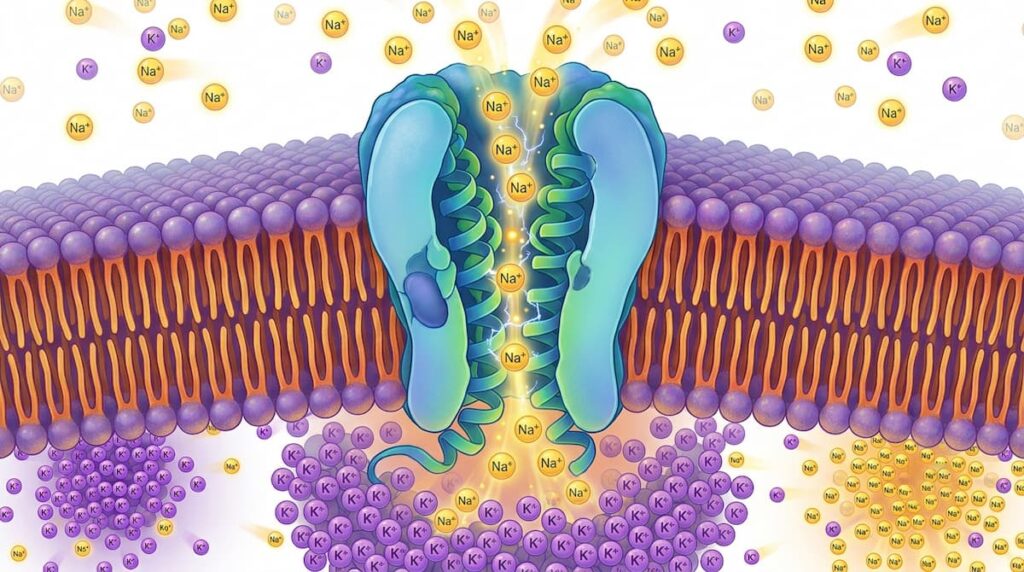
We breathe, think, and move every single day. But have you ever felt the microscopic electricity inside your body that makes all these actions possible? Our bodies generate bioelectricity by constantly moving mineral ions, specifically sodium and potassium, across cell membranes. The moment tiny protein channels embedded in the cell membrane open and close, the heart beats and the brain transmits signals. We now dive deep into the operational principles and mysterious causal relationships of ion channels, the most fundamental electrical switches of life.
1. The Microscopic Switch of Cell Membranes: Basic Structure of Ion Channels
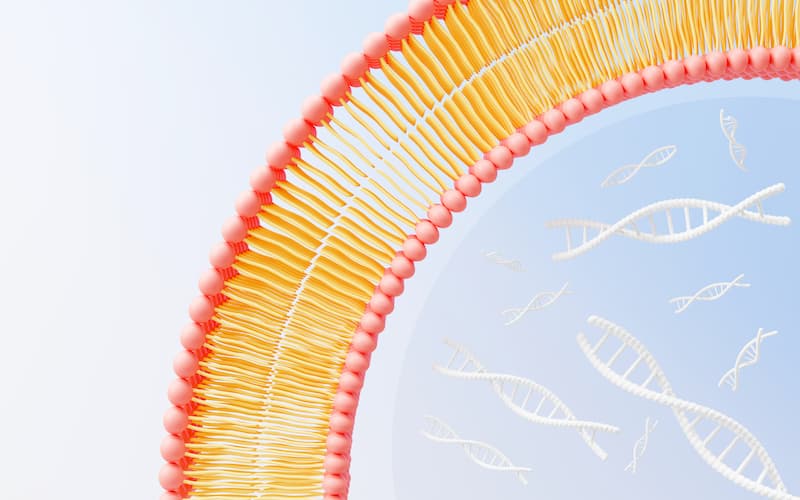
The fundamental unit of our body is the cell. These cells are surrounded by a solid barrier on their outer surface known as the cell membrane, or phospholipid bilayer. This cell membrane has a very unique property. It is filled with lipid components. Substances carrying an electrical charge that dissolve in water cannot pass through this barrier on their own. So how do moisture and ions enter the inside of the cell? The answer lies in microscopic protein pathways located throughout the cell membrane. These are ion channels.
Ion channels are not simply open holes. They are exquisitely designed main gates of the cell. They never leave the entrance unattended for any ion to enter at any time. Inside the pathway, a special mechanism called an ion selectivity filter exists. The sodium channel uses the size of the pathway and charge density to accurately distinguish only sodium ions. The potassium channel also selectively allows only potassium ions to pass through. Why did cells create such a tedious selection system? It is to perfectly control the balance of ion concentration inside and outside the cell.
Even more surprising is that these doors have gatekeepers that open and close depending on the situation. Normally, the door is tightly closed. When an electrical stimulus or chemical signal is delivered from the outside, the door opens instantaneously. The time an ion channel stays open is merely a few milliseconds. Although it is an extremely brief moment, it plays a decisive role in maintaining life phenomena. Without these tiny, elaborate protein switches, our bodies would not be able to exchange any signals with the outside world.
2. The Dance of Sodium and Potassium: The 0.001-Second Principle of Bioelectricity
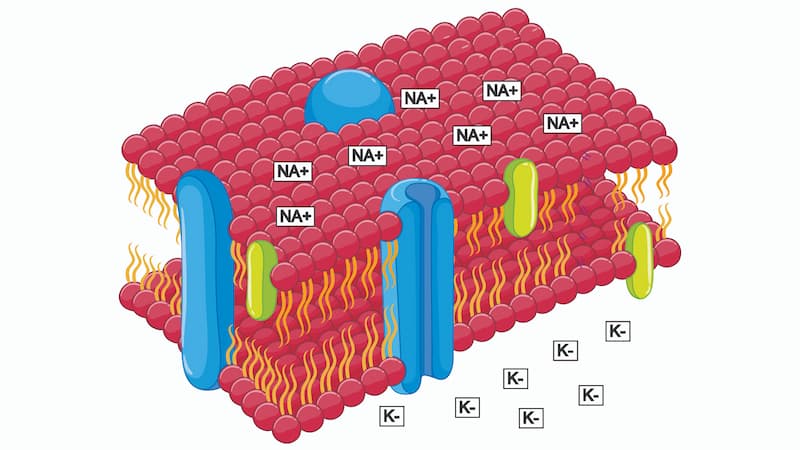
Cells are microscopic batteries that generate electricity on their own. Where on earth does this electricity come from? It originates directly from the movement of two ions: sodium and potassium. Normally, the inside of a cell is filled with potassium ions. Conversely, a large amount of sodium ions exists outside the cell. Bounded by the cell membrane, the arrangement of ions on the inside and outside is completely different. This state is called a chemical concentration gradient. Cells expend a tremendous amount of energy to maintain this concentration difference. Why must they maintain such different concentrations? To be ready to discharge electricity at any given moment.
When a cell receives a stimulus, the sodium channels in the cell membrane open instantly. Sodium ions trapped outside the cell rush inside like a flood. It is a natural phenomenon moving from an area of high concentration to low concentration. At this time, as sodium carrying a positive charge enters in large quantities, the electrical potential inside the cell rises rapidly. The voltage is reversed in an instant. This phenomenon is called an action potential. The time it takes for this entire process to occur is merely 0.001 seconds. Electricity is generated instantly without even time to blink an eye.
Once electricity discharges, the cell must return to its original state. This is because if it stays turned on continuously, it cannot transmit the next signal. This is when the potassium channel operates. At the exact moment the sodium channel closes, the potassium channel opens. Potassium ions inside the cell pour out to the exterior. As the positive charge exits back out, the voltage inside the cell drops back to its original negative charge state. This process is called repolarization.
This continuous dance of sodium entering and potassium exiting spreads like dominoes along the nerves in our body. This is the exact physical principle by which commands thought in the brain are transmitted all the way to our fingertips. The reason the heart maintains a steady beat and pumps blood is the same. It is because sodium and potassium move precisely in units of 0.001 seconds across the cell membranes of heart muscle. If even a single ion channel misses a beat, the electrical signal gets tangled up.
3. Collapse of Electrical Signals: Diseases Caused by Ion Channel Failures
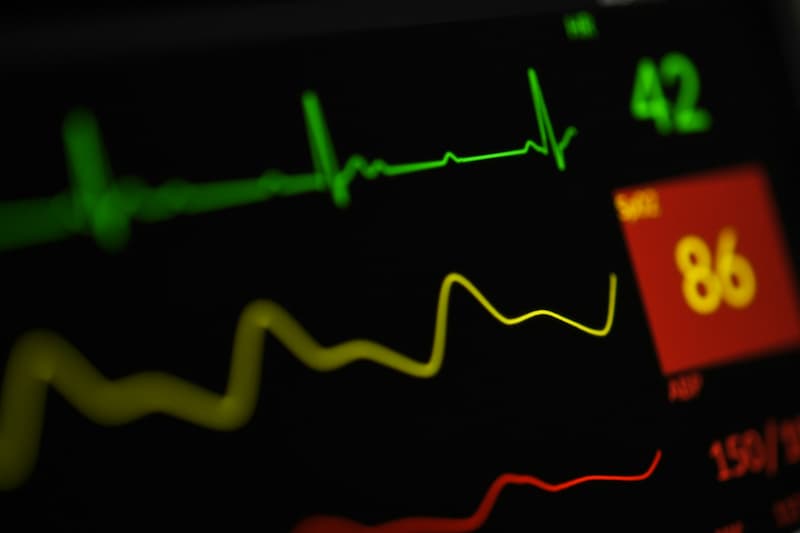
Cell membrane ion channels operate like delicate gears. But what happens if these microscopic pathways break down due to genetic defects or external toxins? The entire electrical signaling system of our body collapses in an instant. In medical terms, this is called channelopathy. A tiny error in an ion channel leads to a fatal disease that threatens survival.
A prime example is heart disease. What if an abnormality occurs in the sodium or potassium channels of heart cells? The heart loses its steady beat and throbs uncontrollably and irregularly. This is precisely fatal arrhythmia. As the 0.001-second timing that controls the heartbeat slips, sudden cardiac arrest can occur.
The exact same tragedy happens in the brain and nervous system. What happens if the ion channels in brain cell membranes fail to close on time and remain open? Ions carrying a positive charge pour in endlessly. Brain cells become excessively excited and fall into an uncontrollable state. This is the core mechanism of epileptic seizures. Cystic fibrosis is also a representative channelopathy that threatens life as mucus accumulates in the lungs and organs due to defects in chloride ion channels.
The pain we feel is also under the control of ion channels. When sodium channels that transmit pain signals become hyperactive, we feel extreme pain even without any stimulus. Conversely, what if this channel does not work at all? Even if you are burned or cut with a knife, you feel no pain whatsoever. Like this, ion channels are fighting on the frontline of life maintenance and sensory transmission.
4. Controlling the Switches of Life: Ion Channels and Future Medicine

Is it not amazing that these tiny channels, invisible to the eye, rule our entire body? Scientists who uncovered the operational principles of ion channels began searching for answers to numerous incurable diseases. Ion channels are currently one of the most noted therapeutic targets in modern medicine. Surprisingly, many medications we commonly take control ion channels.
Hypertension medication is a classic example. It blocks calcium channels in blood vessel muscles to dilate blood vessels and lower blood pressure. What about anesthetics injected into gums at the dentist? They temporarily lock the sodium channels of nerve cells. They physically block the pathway through which pain signals travel to the brain.
Recently, the medical field has been focusing on research to directly repair ion channels through gene therapy and precision medicine. Hints are also gathered from the venom of poisonous snakes or scorpions. This is because deadly toxic substances possess the property of strongly blocking specific ion channels. Innovative new drugs that relieve pain or stop seizures are being developed by applying venom in microscopic amounts. When the day comes that we can freely control these microscopic biological switches, humanity will break free from the fear of countless diseases.
Conclusion
Cell membrane ion channels are not simple protein particles. They are miraculous pathways that breathe life electricity into us by exchanging sodium and potassium in the fleeting instant of 0.001 seconds. The fact that our thoughts, heartbeats, and very lives depend on a single flow of microscopic ions leaves a deep resonance. Are we sophisticated machines living inside a perfectly controlled electrical system, or does a noble order unique to life exist beyond even this precision? Do you believe the bioelectricity in our body holds a meaning beyond simple chemical reactions?
![[Bit#102] Bacteriophage: The Natural Predator Virus Therapy Attacking Only Bacteria](https://hiddenbitknowledge.com/wp-content/uploads/2026/07/main.bacteriophage-768x620.jpg)
![[Bit#46] The Flawless Body is a Lie: Fatal Flaws of the Human Body](https://hiddenbitknowledge.com/wp-content/uploads/2026/05/e81c6bd3105b-768x512.jpg)
![[Bit#24] The Glucose Spike: A Silent Bombardment Destroying Your Body](https://hiddenbitknowledge.com/wp-content/uploads/2026/05/3d60887a0b05-768x512.jpg)
![[Bit#66] Cytokine Storm: Why Our Immune System Attacks Itself](https://hiddenbitknowledge.com/wp-content/uploads/2026/06/main.Cytokine-Storm-768x512.jpg)
![[Bit#151] The Science of Shock Absorption in the Jaw Joint When Chewing Hard Food](https://hiddenbitknowledge.com/wp-content/uploads/2026/09/main.eat-meat-768x419.jpg)
![[Bit#172] Why Facial Expressions Change: Unconcealable Brain Signals](https://hiddenbitknowledge.com/wp-content/uploads/2026/10/main.human-face-768x581.jpg)