Why Do You Feel Hungry After Eating? [Bit#201]

You have just finished a meal. Your stomach feels comfortably full, and you probably have no reason to eat more. But then someone brings out a chocolate cake. You look at it, notice its rich smell, and suddenly want a slice.
A few minutes ago, you were satisfied. Now, eating something else sounds surprisingly appealing.
This familiar experience is often called “false hunger.” The name suggests that the hunger is not real, but the science is more interesting than that. The desire to eat is real. What changes is the reason behind it.
Your body does not decide when to eat based only on how empty your stomach is. The brain also responds to memories, food-related sights and smells, emotions, and the pleasure associated with eating. Sometimes, these influences can make food attractive even when your body has already received enough energy.
Scientists study this behavior through concepts such as hedonic hunger and food cue reactivity. Understanding them reveals why feeling full does not always mean losing the desire to eat.
Your Body and Brain Have Different Reasons to Seek Food
Hunger is often treated as a simple signal from an empty stomach. In reality, appetite is regulated by several interacting systems.
One important process is called homeostatic hunger. It describes the motivation to eat when the body needs energy or nutrients to maintain its normal functions.
The brain plays a central role in this process. In particular, the hypothalamus receives information about the body’s energy state and helps coordinate feeding behavior. It also responds to signals from the digestive system, hormones, and other tissues.
When energy availability changes, these signals can influence how hungry you feel and how strongly you seek food.
But the body is not the only influence.
Imagine that you have eaten a complete lunch. Your stomach feels full, but you pass a bakery and notice the smell of warm bread. You suddenly want to buy something, even though you were not thinking about food a moment earlier.
This desire may have little to do with an immediate shortage of energy. Instead, it can be driven by the rewarding qualities of food.
This is where hedonic hunger becomes important.
Why Can You Want Food When You Are Already Full?
Hedonic hunger describes the desire to eat because food is pleasurable or rewarding, rather than simply because the body needs energy.
The concept was discussed by researchers Michael Lowe and Meghan Butryn in a 2007 review published in Physiology & Behavior. They described how food consumption can be driven by pleasure as well as the need for calories.
Consider two situations.
In the first, you have skipped lunch and feel physically hungry. Almost any satisfying meal sounds appealing because your body needs energy.
In the second, you have just eaten dinner but still want your favorite ice cream. You are not necessarily looking for more energy. You want the taste and enjoyment associated with that particular food.
These motivations are different, although they can occur together.
The brain has systems that help us recognize rewarding experiences and motivate us to seek them again. Food is one of those rewards. When something tastes particularly good, the experience can strengthen the desire to eat that food in the future.
This does not mean that wanting dessert after dinner is abnormal. Enjoying food is a normal part of human behavior.
The important distinction is that the desire to eat is not always a direct reflection of the body’s energy requirements.
How Can Looking at Food Make You Hungry?
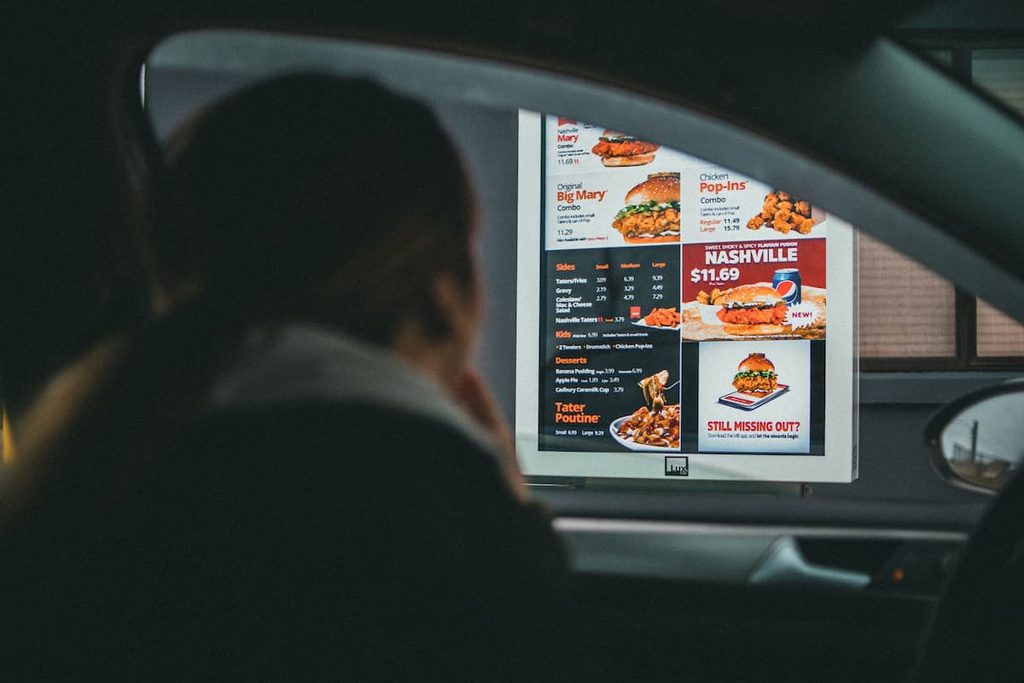
Sometimes, you do not need to taste food to start wanting it.
A picture of a hamburger, the smell of freshly baked cookies, or the sight of someone opening a bag of chips can make food suddenly seem appealing.
Scientists call this food cue reactivity. A food cue is any stimulus that reminds you of food or signals that food may be available.
These cues can be visual, such as photographs and advertisements. They can also involve smell, sound, location, or situations that you have learned to associate with eating.
For example, imagine that you regularly eat popcorn while watching movies. After repeating this routine many times, entering a movie theater may make you want popcorn before you have even noticed whether you are hungry.
Your brain has learned to connect the theater environment with a familiar and enjoyable food experience.
This connection is supported by research. In a 2016 meta-analysis, researchers Rebecca Boswell and Hedy Kober examined 45 published reports involving 3,292 participants.
They found that food cue reactivity and food cravings were associated with eating behavior and weight-related outcomes. The overall relationship was moderate, meaning that food cues and cravings mattered, but did not explain all differences in eating behavior.
One particularly interesting finding involved visual food cues. Pictures and videos of food showed effects similar to exposure to real food in the studies analyzed. Visual cues also showed stronger effects than smell cues in their comparison.
This helps explain why a food advertisement can make you want a snack even when you have recently eaten.
However, seeing food does not automatically make everyone eat more. People respond differently depending on their experiences, preferences, surroundings, and other factors.
Your Brain Remembers Foods You Enjoy

Food cravings are not caused by immediate sensory stimulation alone. Memories also help shape what we want to eat.
Think about a dessert you loved as a child. You might remember its taste, its smell, or the place where you used to eat it. Years later, encountering that food again may bring back the same desire.
The brain uses memories to connect foods with their previous outcomes. If eating something was enjoyable, the experience can influence how attractive that food seems in the future.
Several brain regions contribute to this process.
The hippocampus is important for forming and retrieving memories, including memories associated with food and eating situations. The amygdala helps process emotional significance and learned associations. The nucleus accumbens is involved in reward and motivation, while the orbitofrontal cortex contributes to evaluating the value of rewarding experiences.
These regions do not work as separate hunger switches. They form part of interconnected networks that help the brain process food-related information and guide behavior.
A 2022 review by Scott Kanoski and Kerri Boutelle examined the biological and behavioral mechanisms behind food cue reactivity. It described how food-related sights, smells, and learned associations can promote food seeking and consumption, even in individuals who are already satisfied.
The review also discussed evidence involving brain regions such as the nucleus accumbens, amygdala, orbitofrontal cortex, and hippocampus.
This helps explain why a familiar food can be tempting even when your stomach is full. Your brain is responding not only to what your body needs now, but also to what it has learned to find rewarding.
How Does Your Digestive System Tell Your Brain You Are Full?
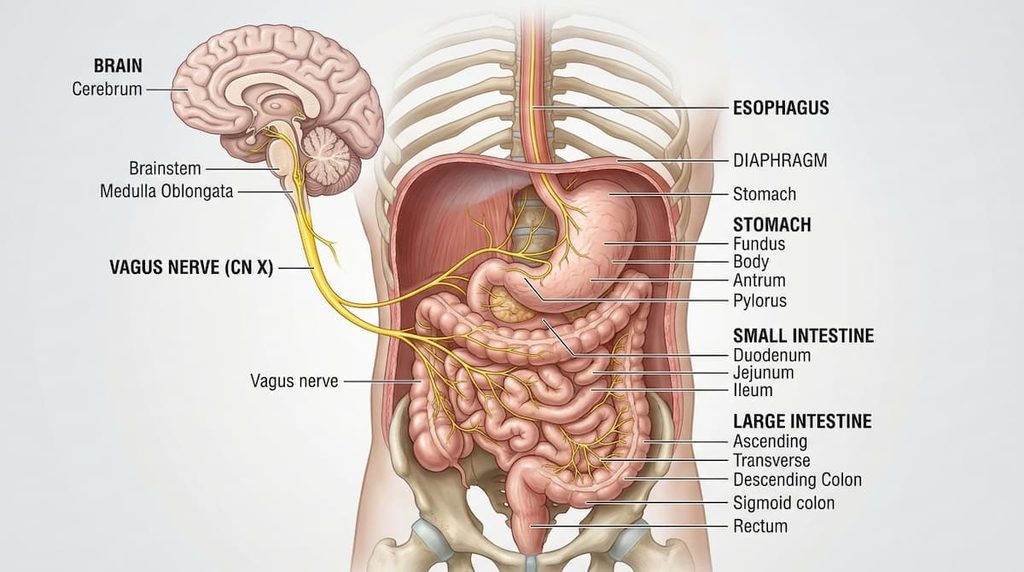
Although the brain influences food cravings, the digestive system also plays an essential role in appetite regulation.
Your stomach and intestines communicate with the brain through hormones and nerve signals. These messages help the brain understand what is happening during digestion and whether more food is needed.
Several hormones contribute to this communication.
Ghrelin is commonly known as a hunger-promoting hormone. It is produced mainly in the stomach, and its levels generally rise before meals and decrease after eating. It helps signal the body’s motivation to seek food.
Other hormones contribute to reducing appetite and promoting fullness.
Cholecystokinin, or CCK, is released by cells in the small intestine when nutrients enter the digestive system. It helps regulate digestion and contributes to signals that encourage a person to stop eating.
Glucagon-like peptide-1, known as GLP-1, is another important hormone. It is released by intestinal cells after eating and helps regulate blood glucose, slow stomach emptying, and reduce food intake.
Peptide YY, or PYY, is also released by the intestine after meals and is involved in appetite regulation.
These hormones do not operate independently. Their signals interact with the nervous system and the brain to influence hunger, fullness, and the amount of food we eat.
Researchers So-Hyeon Hong and Kyung Mook Choi reviewed these relationships in a 2024 article on gut hormones and appetite regulation. They emphasized that appetite is influenced by several hormones working through complex communication between the digestive system and the brain.
This is why the feeling of fullness cannot be explained simply by whether the stomach contains food. It is the result of multiple signals working together.
Why Does Fullness Sometimes Not Last Very Long?
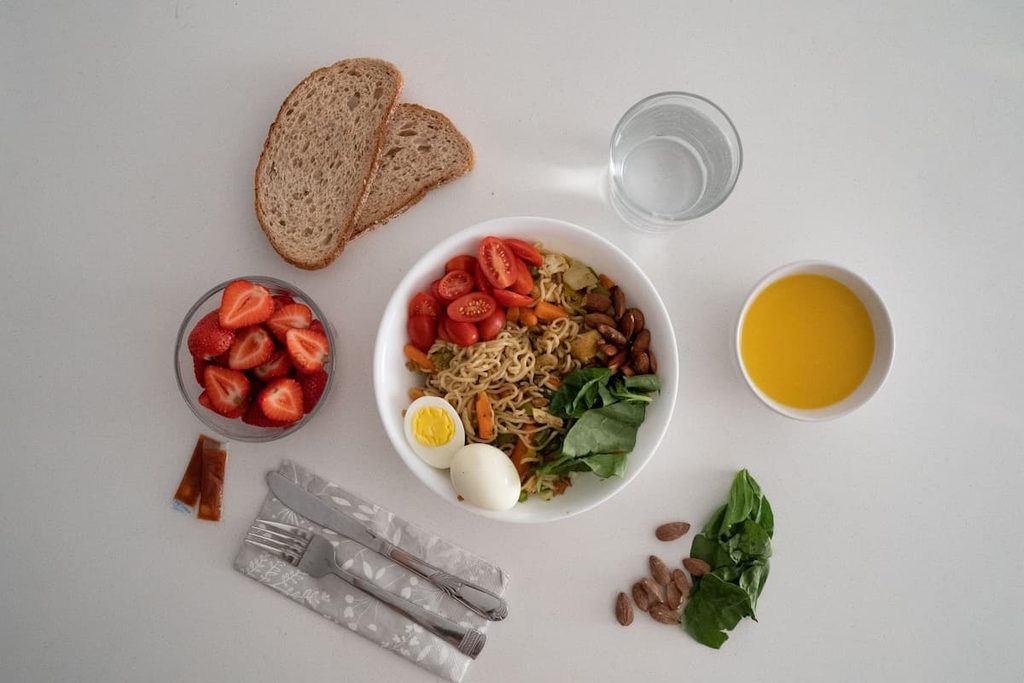
Even after eating, the feeling of fullness can vary depending on the meal and the individual.
One reason is that different foods influence appetite in different ways.
Protein, for example, can help increase feelings of fullness. A 2020 systematic review and meta-analysis of randomized controlled trials examined the short-term and long-term effects of protein consumption on appetite and digestive hormones.
The analysis found that acute protein intake reduced reported hunger and increased feelings of fullness compared with control conditions. It also affected several appetite-related hormones, including ghrelin, CCK, and GLP-1.
However, the findings for longer-term protein consumption were less conclusive. This means that the immediate effect of a protein-rich meal should not automatically be treated as proof that eating more protein will permanently reduce hunger.
Dietary fiber can also influence fullness. Fiber adds bulk to food, and some types slow digestion or affect how nutrients move through the digestive tract. However, its effects depend on the type of fiber, the food containing it, and the overall meal.
Meal size and food structure matter too. A small meal may simply provide less energy than the body needs. A meal containing a variety of nutrients may produce a different pattern of fullness from one made up mostly of quickly digested foods.
There is no single food or nutrient that guarantees long-lasting fullness for everyone.
Sleep, daily activity, meal timing, and individual differences can also influence appetite. As a result, feeling hungry again soon after eating does not always mean that the brain is producing unnecessary hunger signals.
Sometimes, the body genuinely needs more food. At other times, food-related cues and rewarding memories may be contributing to the desire to eat.
Is False Hunger Really False?
The phrase “false hunger” is convenient, but it can give the wrong impression.
A craving is not imaginary. If you suddenly want chocolate after dinner, that desire is a real response produced by your brain and body. It simply may not be caused by an immediate need for additional energy.
Physical hunger and hedonic hunger are not two completely separate experiences. They can overlap, influence each other, and change throughout the day.
This is why it is not always possible to identify the cause of hunger just by asking whether your stomach feels empty.
The next time you want something to eat shortly after a meal, consider what might have triggered the desire. Perhaps your meal was too small. Perhaps the smell of food caught your attention. Maybe you remembered a favorite snack or simply wanted something enjoyable.
Recognizing these different influences can help you understand your eating habits without treating every craving as a problem.
Our relationship with food is more complicated than an empty stomach asking for energy. The digestive system monitors the body’s needs, while the brain responds to memories, rewards, and the world around us.
Sometimes, your stomach has had enough, but your brain is still looking forward to the next bite.
Scientific Sources
1. Lowe MR, Butryn ML. “Hedonic hunger: a new dimension of appetite?” Physiology & Behavior. 2007;91(4):432-439. PMID: 17531274. DOI: 10.1016/j.physbeh.2007.04.006. Read the study on PubMed
2. Boswell RG, Kober H. “Food cue reactivity and craving predict eating and weight gain: a meta-analytic review.” Obesity Reviews. 2016;17(2):159-177. PMID: 26644270. DOI: 10.1111/obr.12354. Read the study on PubMed
3. Kanoski SE, Boutelle KN. “Food cue reactivity: Neurobiological and behavioral underpinnings.” Reviews in Endocrine and Metabolic Disorders. 2022;23(4):683-696. PMID: 35482137. DOI: 10.1007/s11154-022-09724-x. Read the study on PubMed
4. Hong SH, Choi KM. “Gut hormones and appetite regulation.” Current Opinion in Endocrinology, Diabetes and Obesity. 2024;31(3):115-121. PMID: 38511400. DOI: 10.1097/MED.0000000000000859. Read the study on PubMed
5. Kohanmoo A, Faghih S, Akhlaghi M. “Effect of short- and long-term protein consumption on appetite and appetite-regulating gastrointestinal hormones, a systematic review and meta-analysis of randomized controlled trials.” Physiology & Behavior. 2020;226:113123. PMID: 32768415. DOI: 10.1016/j.physbeh.2020.113123. Read the study on PubMed