[Bit#112] Rare Blood Type Rh-null: The Rarest Blood in the World
Introduction
There is a miraculous blood type that exists in only a few dozen people on the planet. The Rh-null blood type is referred to as Golden Blood because it completely lacks all Rh antigens. Why can this blood perfectly save anyone, yet simultaneously place its owner in lethal danger? Let us explore the rare mysteries of human medicine and the dignity of life together.
1. The Miracle of 0.01% Worldwide: What Is the Rh-null Blood Type?
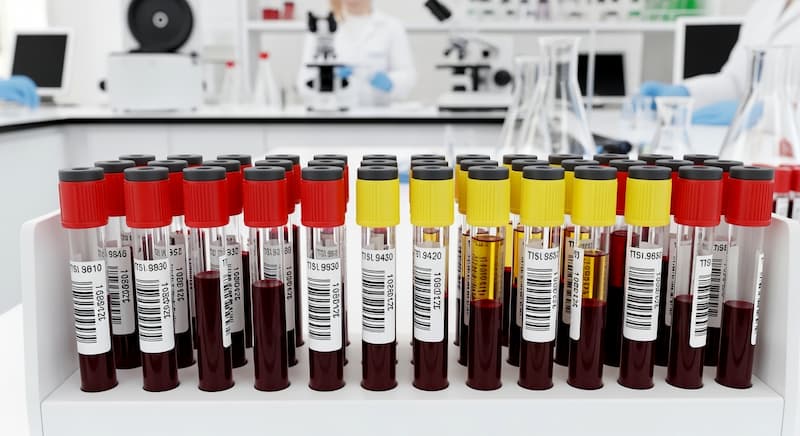
The blood types we commonly know are A, B, AB, and O. Plus and minus signs for the Rh factor attach to these types. However, there is a blood type that completely shatters this framework. It is the Rh-null blood type, colloquially known in some regions as the Rh-null variant.
This blood is exceedingly rare on Earth. Fewer than a few dozen people worldwide possess it. This is a strikingly tiny number. On the surface of human red blood cells, numerous antigens exist. In the Rh blood group alone, there are over 50 different antigens. Among them, the core antigens that trigger the strongest immune responses are C, c, D, E, and e.
A typical Rh-negative blood type refers to a case where only the D antigen is missing. The remaining antigens remain intact. So, what makes the Rh-null blood type different? Remarkably, it lacks every single C, c, D, E, and e antigen. All antigens belonging to the Rh system are entirely absent.
This unique nomenclature stems from medical notation. Locations where antigens exist are marked with uppercase letters, while missing locations are marked with lowercase letters or bar (-) symbols. Because all antigens tested negative, a series of bar symbols was appended continuously. Reading this sequence led to its unique descriptive name.
Why was such an extraordinary blood type formed? The cause lies in a genetic mutation. It appears only when an individual inherits a specific gene from both parents simultaneously that fails to produce Rh antigens. The probability of this occurring is extremely low. It is a rare occurrence happening to roughly one in millions.
The total absence of antigens carries immense medical significance. Our body’s immune system recognizes foreign substances as invaders and attacks them. The same principle applies to blood transfusions. However, Rh-null red blood cells carry no antigens that could irritate the immune system. The recipient’s immune cells fail to recognize this blood as an invader.
For this reason, this blood possesses the unique characteristic of being transferable to virtually anyone. This is why the medical community bestowed upon it the grand nickname of Golden Blood. However, for the person who actually possesses this blood, a completely different reality unfolds. This uniqueness can turn into a time bomb that threatens their very survival.
2. Medical Mystery Created by the Complete Absence of Rh Antigens
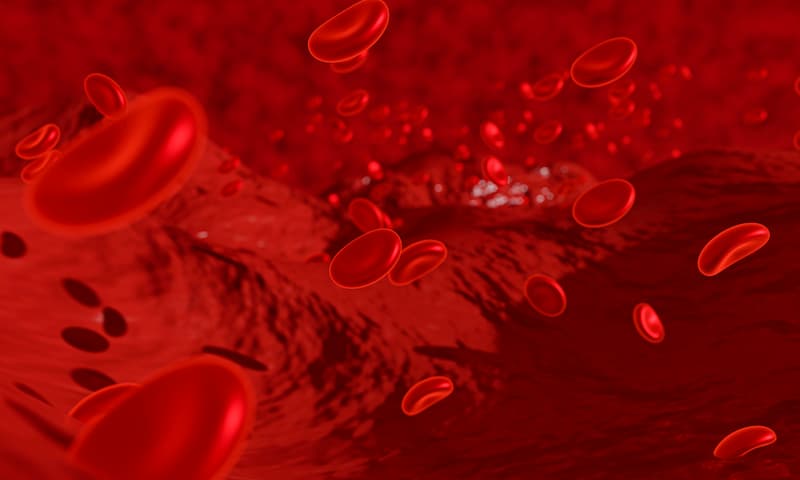
The surface of our red blood cells is packed with numerous proteins and antigens. These antigens play vital roles in maintaining cell shape and transporting substances. What would happen if not a single Rh antigen existed?
Surprisingly, the red blood cells of a person with Rh-null blood differ right from their external appearance. Normal red blood cells are shaped like a donut with a concave center. This shape is optimized to flexibly deform and pass through narrow blood vessels. However, red blood cells completely lacking Rh antigens suffer from an extremely unstable cell membrane structure.
Eventually, phenomena occur where the red blood cells turn spherical or are easily destroyed. In medicine, this condition is called spherocytosis. Because the cell membrane is weakened, its lifespan is significantly shortened. Why does such a physiological abnormality occur?
It is because the Rh protein complex acts as a core pillar supporting the red blood cell skeleton. When the pillar disappears, it is like a whole building shaking. Therefore, individuals with Rh-null blood live with chronic hemolytic anemia throughout their lives. It is a dangerous state where blood continuously breaks down and disappears on its own.
Ironically, this very cause of anemia becomes the starting point of a medical mystery. The fact that there are no antigens at all means complete immunological flawless perfection. Our immune system distinguishes self from non-self by looking at antigens attached to the surface. Since there are no target antigens to attack, immune cells do not view this blood as a provocative presence.
From the perspective of a patient receiving a transfusion, Rh-null blood becomes the safest blood that causes no immune rejection response. The most fragile and dangerous red blood cell turns into the most perfect blood when saving others. This is indeed a strange paradox of life science.
3. Double-Edged Sword of Golden Blood: Universal Donor vs Transfusion Tragedy
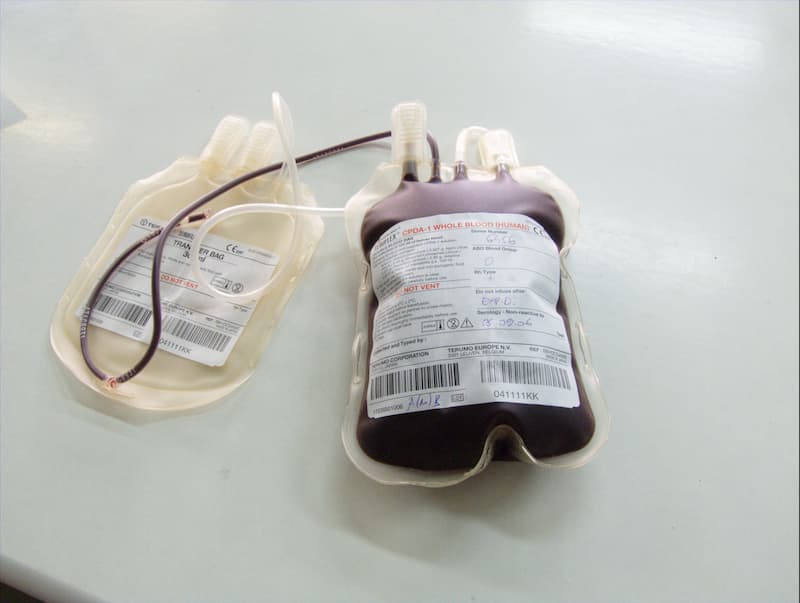
Rh-null blood is the most generous blood in the world. At the same time, it is also the most selfish blood. The situation changes when giving it to others. These red blood cells are not attacked no matter whose blood vessels they enter. This is because the main antigens that trigger immune rejection responses are completely non-existent.
It truly deserves the title of universal donor. To a patient whose life is endangered by transfusion side effects, just a single drop becomes a savior. For patients with rare blood types, this blood is their only hope. This is the decisive reason it is called Golden Blood in the field of transfusion medicine.
However, what if we change our perspective? When a person with Rh-null blood needs to receive blood themselves, the story reverses completely. For them, a transfusion becomes a perilous fight for survival. Why is that?
Their immune system has never experienced Rh antigens before. What happens if normal Rh-positive or Rh-negative blood enters their body? Immune cells treat the C, c, D, E, and e antigens as deadly viruses or invaders.
The result is catastrophic. An explosive antibody response occurs inside the body. A hemolytic reaction begins, destroying all incoming red blood cells. Along with shock, organs suffer damage, which can ultimately lead to death. An Rh-null carrier can only receive transfusions of identical Rh-null blood.
The problem is that there are only a few dozen people in the entire world who have this blood. If an accident occurs and an urgent transfusion is needed, a tragedy begins. Path to acquiring blood becomes blocked. Blood that could perfectly save anyone cannot be obtained for oneself even in a single drop, putting life at risk. Is there any twist of fate more cruel than this?
4. How Ultra-Rare Blood Owners Maintain a Global Network

A single accident leading to death: this is the reality that Rh-null blood owners face every single day. A powerful cooperative system connecting individuals across borders is essential. How are they maintaining this lifeline?
The key is the International Rare Donor Panel. The World Health Organization and the International Society of Blood Transfusion strictly manage information on rare blood owners. An emergency international transfusion network is also established. If an Rh-null patient emerges in any country, an emergency alert is immediately dispatched worldwide.
Advanced medical technology capable of long-term storage of rare blood is also mobilized. General blood can only be stored in a refrigerated state for about 35 days. Rh-null blood is different. It is mixed with a special protective agent that prevents cell damage and is cryopreserved at ultra-low temperatures below minus 80 degrees Celsius.
Using this method, blood can be safely maintained for over 10 years. An autologous transfusion method, where patients draw and store their own blood in advance while healthy, is also actively utilized. It is like creating one’s own blood bank in preparation for future emergencies.
However, transporting blood across borders still faces many hurdles. Complex customs procedures of each country and threats of temperature changes during aircraft transport always follow. A delay of just a few hours can decide a patient’s life or death.
Ultimately, the force protecting this ultimate rare blood of humanity is global solidarity. A network of donors without borders that transcends nations and races. Their voluntary donations are the real miracle sustaining the lives of many Rh-null carriers.
Conclusion
Rh-null blood clearly demonstrates the paradox of life: it can be a savior that saves everyone, yet remains isolated in its own need. Without the advancement of medicine and human love transcending borders, maintaining these rare lives would have been difficult.
We often believe that others and ourselves are perfectly connected. However, sometimes people live with the loneliest uniqueness in the world, just like Rh-null carriers. If you had to face life-threatening risks yourself just to become a presence that perfectly helps others, would you willingly accept that uniqueness?
![[Bit#14] Gray Hair and Hair Loss: A Play of Genetics or a Warning from Your Body?](https://hiddenbitknowledge.com/wp-content/uploads/2026/04/054ca0f2a0c3-768x512.jpg)
![[Bit#8] The Secret Cloning War in Your Bathroom While You Sleep](https://hiddenbitknowledge.com/wp-content/uploads/2026/04/7e29f21bdd69-768x512.jpg)
![[Bit#162] Why Do We Lose Hair When We Are Stressed?](https://hiddenbitknowledge.com/wp-content/uploads/2026/09/main.Stressed-Person-768x419.jpg)
![[Bit#164] The Real Reason Your Tongue Craves Fatty Foods](https://hiddenbitknowledge.com/wp-content/uploads/2026/09/main.fat-food-768x419.jpg)
![[Bit#93] Dolly’s Legacy and the Hidden Truths of Cloning](https://hiddenbitknowledge.com/wp-content/uploads/2026/07/main.dolly-sheeps-768x479.jpg)
![[Bit#102] Bacteriophage: The Natural Predator Virus Therapy Attacking Only Bacteria](https://hiddenbitknowledge.com/wp-content/uploads/2026/07/main.bacteriophage-768x620.jpg)