[Bit#111] Human Sixth Sense: Science of Proprioception and Interoception
Introduction
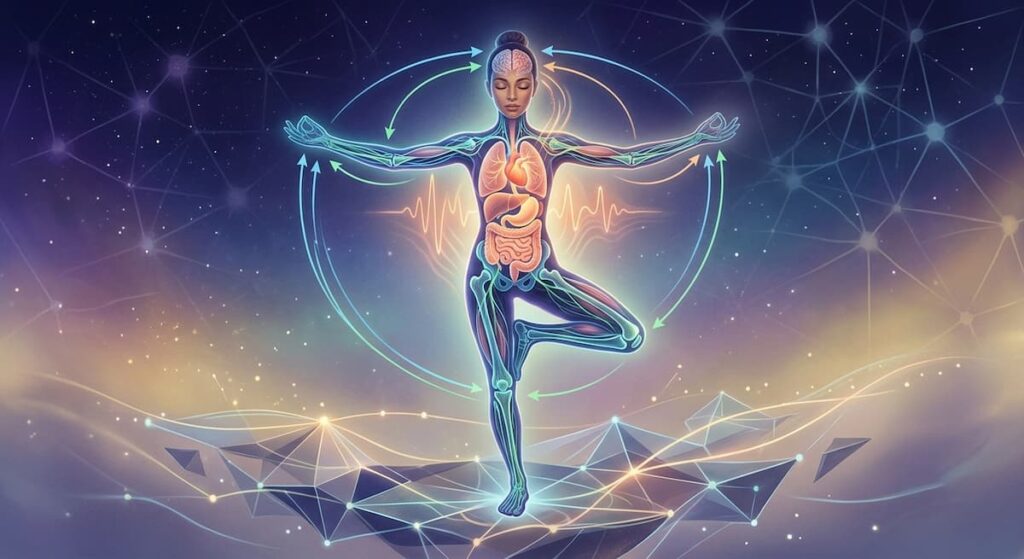
We are all well aware of the traditional five senses experienced through our eyes, nose, mouth, ears, and skin. However, humans possess a critical sixth sense that perceives internal bodily conditions without any external stimuli. This hidden system consists of proprioception and interoception. It is the exact reason why you can touch your nose with your eyes closed or feel a sudden gut instinct when danger looms. In this column, we explore the scientific reality of the human sixth sense and its profound impact on our survival.
1. Sensory Beyond the Five: The Discovery of Proprioception

Close your eyes and try touching the tip of your nose. Does your finger land accurately even in a pitch-black room? You achieve this without relying on vision or hearing. Most people take this seamless movement for granted. Yet, inside the brain, an immense volume of complex calculations occurs instantaneously. Beyond the basic five senses that process external environments, a specialized internal body control system exists. This is the sixth sense known scientifically as proprioception.
How do we know the exact position of our arms without looking at them? This sensory system is deeply embedded within our muscles, tendons, and joints. Tiny sensory receptors inside the muscles measure real-time changes in muscle length. Other organs within the tendons monitor the physical tension being applied. These biological signals stream continuously through the nervous system directly to the brain. Thanks to this mechanism, we walk down stairs without staring at our feet and place a spoon into our mouth without looking in a mirror.
What would happen if this sensory feedback suddenly vanished? In the 19th century, physician Charles Bell first introduced this concept to the world, calling it the sixth sense. Before his discovery, people believed motor control was purely a matter of the brain issuing commands. However, brain commands alone are insufficient. Without continuous feedback data regarding current limb positions, the brain cannot calculate the very next movement.
Imagine closing your eyes and feeling as though you are floating helplessly in open space. What if you could not even tell where your arms and legs were located? Proprioception is not a simple passive feeling. It functions as an internal human GPS that locks your body position into spatial coordinates. Without this active tracking, standing upright becomes entirely impossible. It is a remarkable human capability that proves our presence even in complete darkness.
2. The Secret Passage Connecting Brain and Body: Interoception and Gut Instinct

Have you ever felt your stomach twist and your heart race right before stepping onto a stage or entering a job interview? People often dismiss this reaction as mere psychological stress or a fleeting mood. However, scientific explanation tells a completely different story. This reaction is not simple mental tension. It represents a powerful sixth sense signal originating from deep within the body, biologically referred to as interoception.
While touch detects external contact, interoception listens to internal organ signals. The brain measures heart rate fluctuations, stomach contractions, and blood vessel dilations in real time. These internal signals travel through major neural pathways, such as the autonomic nervous system and the vagus nerve, directly to the insular cortex of the brain. Based on this continuous stream of internal metrics, the brain evaluates your current survival status from multiple angles.
Where does the mysterious intuition or gut feeling actually come from? Remarkably, its biological root lies directly in interoception. When facing an emergency or making a crucial decision, the physical body reacts before conscious thought occurs. Microscopic changes in internal organs and heart rhythm are subconsciously captured by the brain to trigger risk warnings. A heavy sensation in the gut or a sudden chill in the chest represents actionable intuition delivered faster than rational thought.
What happens when this internal perception grows dull? Failing to hear internal warning alarms leaves a person highly vulnerable to severe stress and anxiety disorders. Conversely, studies show that individuals who accurately perceive their own heartbeat possess superior emotional regulation and make more rational decisions. Ultimately, interoception acts as a cutting-edge, invisible alarm system that continuously monitors internal health to secure human survival.
3. Sensory Errors: What Happens When the Sixth Sense Is Paralyzed
We routinely take these internal signals for granted. But what happens when this sixth sense system suffers a critical failure? Astonishingly, even the most basic physical movements of daily life become impossible. Patients who lose proprioception cannot determine where their hands and feet are without visual confirmation. The moment they enter a dark room with lights turned off, they immediately lose balance and collapse.
Why does such a severe disruption occur? The feedback loop transmitting location data to the brain gets completely severed. The brain recognizes arm position only when eyes are actively looking at the limb. The moment vision shifts elsewhere, the brain loses track of the arm. Consequently, individuals with paralyzed proprioception must constantly stare at their feet just to walk. They must intently watch their fingers to button a shirt or turn a key in a lock. The brain falls into a state where it can no longer independently control the physical body.
Errors in interoception lead to equally severe consequences. When this internal monitor malfunctions, the brain interprets minor internal body changes as catastrophic panic. A slight elevation in heart rate gets misprocessed as an impending heart attack. On the other hand, failing to feel internal signals prevents the body from issuing danger alerts altogether. Inability to sense hunger or physical pain directly threatens basic survival.
In the end, the human sixth sense is an essential life-support system operating continuously beneath our conscious awareness. If sight and sound serve as external antennas scanning the outside world, the sixth sense acts as an internal guardian protecting our body from within. When this guardian falls asleep, daily life collapses instantly. This is precisely why we must pay close attention to the subtle internal signals our body sends every day.
4. Future Science and the Sixth Sense: Merging Artificial Intelligence with Bionic Technology

A person with hand paralysis grasps an object using a robotic prosthesis, while someone with an artificial leg walks effortlessly across a gravel path. Does this sound like a scene from a science fiction movie? Modern biomedical engineering has advanced to the point of directly implanting the human sixth sense into mechanical devices. Traditional prosthetics were mere tools mimicking basic gripping actions. Modern robotic limbs operate on an entirely different level. Advanced sensors measure real-time pressure and angle data at the fingertips, transmitting these signals directly into the user’s remaining nerve pathways.
As the brain processes signals sent by the machine, the user adjusts gripping force without needing to visually inspect the object. Does this sensory restoration stop at artificial limbs? Not at all. Proprioception technology is being actively integrated into virtual reality environments and remote surgical operations. When a surgeon performs remote surgery, the tactile feedback, texture, and physical resistance of organs detected by robotic arms are transferred directly to the surgeon’s fingertips.
Healthcare technologies leveraging interoception are also evolving at a rapid pace. Smartwatches and biometric sensors monitor subtle internal vibrations 24 hours a day. By analyzing minute heartbeat irregularities and autonomic nervous system imbalances, these devices issue warnings right before panic attacks or cardiac events occur. Machines now read internal body anomalies before the conscious brain even detects them.
Ultimately, the human sixth sense represents the crucial key that seamlessly links humanity with technology. As senses once confined to the subconscious merge with modern engineering, we are transcending natural physical limitations. Beyond simply restoring lost sensations, we are entering a new era that expands human physical capability.
Conclusion
The human sixth sense does more than track physical location or internal organ status. It separates our inner self from the external world, serving as the fundamental lifeline that securely grounds our existence within physical space.
If future technology advances to the point where machines completely replace or control our sixth sense, can we still be certain that our physical body and intuition belong entirely to us? Beyond the five senses receiving external stimuli, this hidden sense looking inward may well be the ultimate stronghold that proves who we truly are.
![[Bit#162] Why Do We Lose Hair When We Are Stressed?](https://hiddenbitknowledge.com/wp-content/uploads/2026/09/main.Stressed-Person-768x419.jpg)
![[Bit#137] The Science of 36.5°C: The Secret of Cellular Thermodynamics Optimized for Survival](https://hiddenbitknowledge.com/wp-content/uploads/2026/08/main.36.5-767x428.jpg)
![[Bit#85] Is a Virus Alive? The Shocking Truth Behind the Ultimate Biological Mystery](https://hiddenbitknowledge.com/wp-content/uploads/2026/07/main.virus_-768x512.jpg)
![[Bit #156] The Real Reason It Hurts Less When You Rub Where You Hit](https://hiddenbitknowledge.com/wp-content/uploads/2026/09/main.pain-reduce-768x419.jpg)
![[Bit#33] The Secret of Hairless Skin: Why Did Humans Abandon Their Fur?](https://hiddenbitknowledge.com/wp-content/uploads/2026/05/30e0d6220515-768x429.jpg)
![[Bit#71] The Silent Youth Killer: How Salt Forcibly Accelerates Your Cellular Aging Clock](https://hiddenbitknowledge.com/wp-content/uploads/2026/06/main.salt_-768x512.jpg)