Why Is Water Essential for Life? [Bit#199]
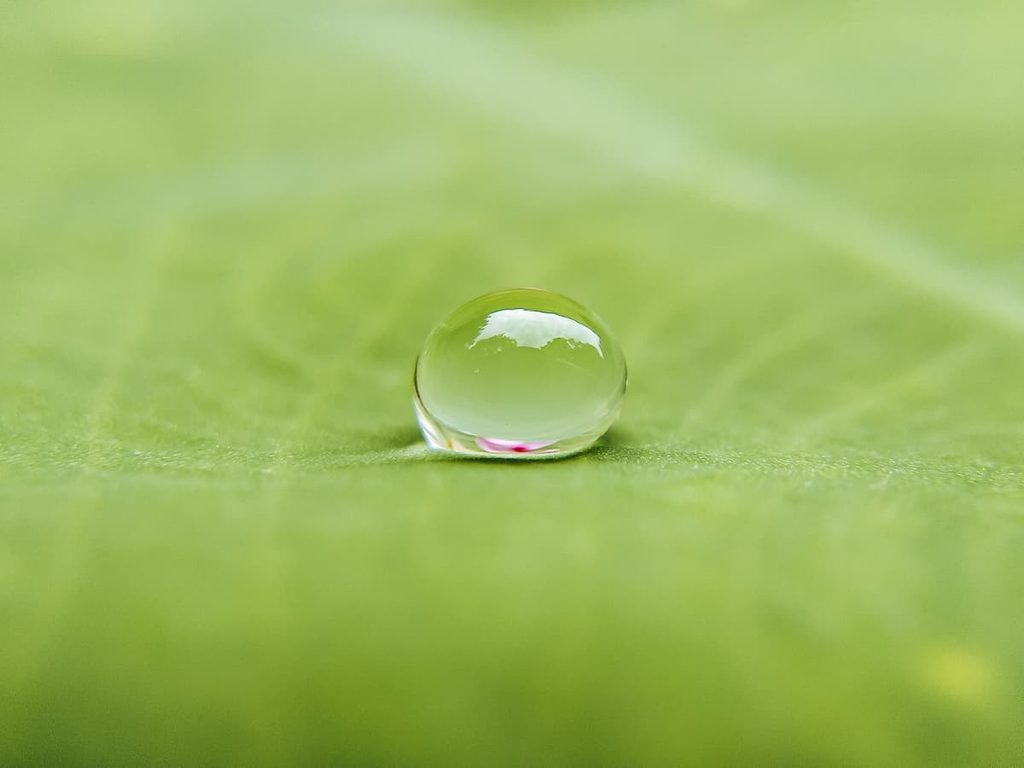
Water is so familiar that it is easy to overlook what it actually does. We drink it when we are thirsty, plants absorb it through their roots, and rivers carry it across the landscape. Yet water is much more than something living things need to consume. It is part of the environment that allows life’s chemistry to work.
Inside a living cell, countless molecules must meet, move, change shape, and react with one another. Water makes many of these processes possible. It also helps organisms transport materials, control temperature, and maintain the internal conditions their cells need to survive.
But there is another important detail: the presence of water alone does not guarantee that life can thrive. The water must be available in a usable form, and the surrounding conditions must also be suitable.
To understand why water matters so much, we need to look beyond the glass in front of us and into the microscopic world where life operates.
Water Is More Than a Place for Life to Happen
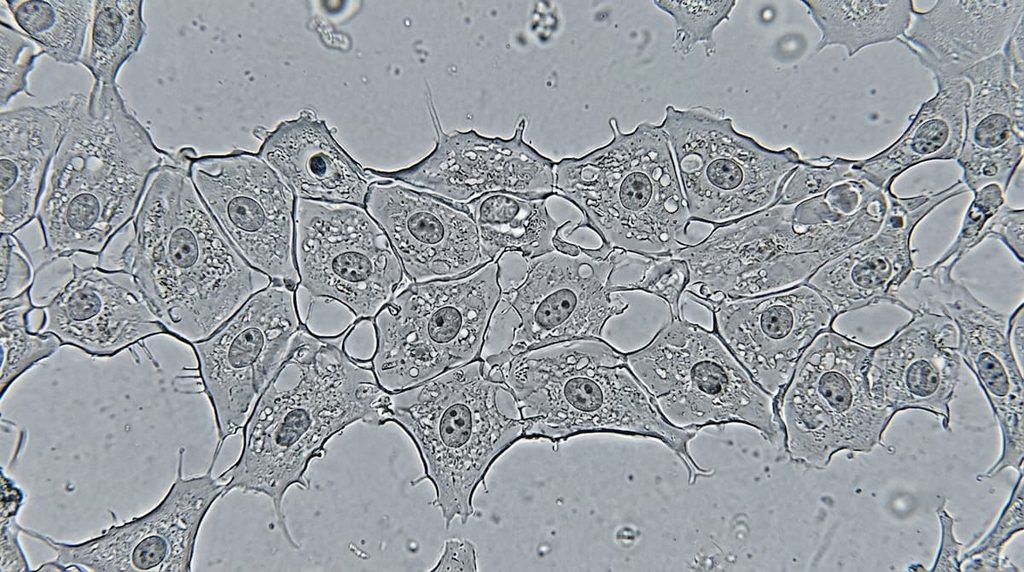
A living cell is not a tiny bag filled with inactive liquid. It is a busy chemical environment containing proteins, DNA, RNA, salts, sugars, and many other substances. These components interact continuously, allowing cells to obtain energy, build new molecules, respond to their surroundings, and maintain themselves.
Water provides the medium in which many of these interactions occur. Because a water molecule has an uneven distribution of electrical charge, it can interact with many charged and polar substances. This makes water an effective solvent for numerous biological molecules.
When table salt dissolves in water, for example, its sodium and chloride ions separate and become surrounded by water molecules. Similar interactions help many dissolved substances move through biological fluids and become available for chemical reactions.
However, not every substance dissolves easily in water. Oils and many other nonpolar substances behave differently. This contrast matters in biology because cells must manage both water-compatible substances and molecules that avoid contact with water.
Water therefore does not simply provide empty space for life. Its chemical properties influence which substances mix, how molecules interact, and how biological processes unfold.
Water Helps Proteins Take the Shapes They Need
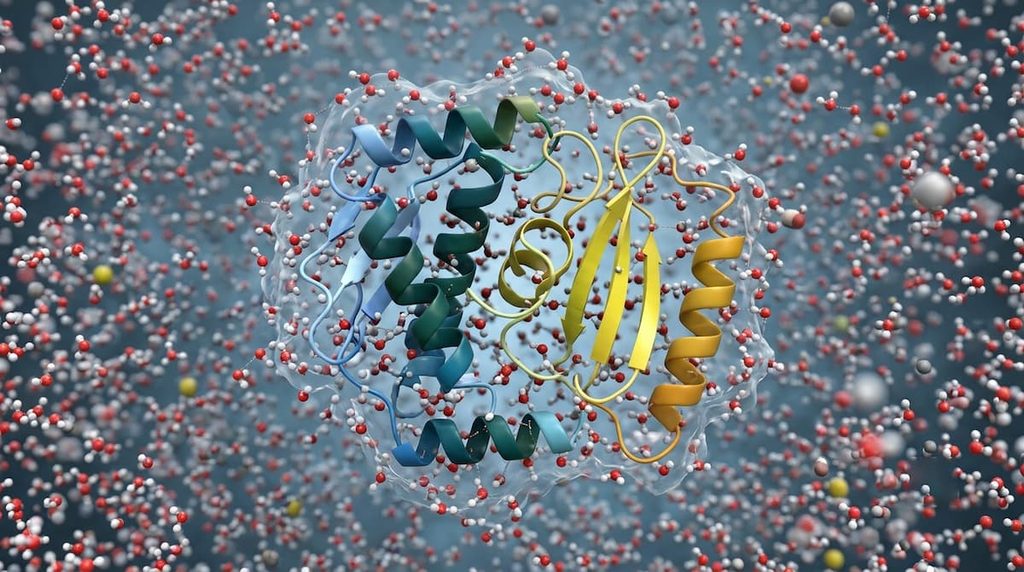
One of water’s less obvious roles is its influence on the shape and movement of proteins.
Proteins are molecules that perform an enormous variety of tasks. Some speed up chemical reactions, some transport substances, and others provide structural support or help cells communicate. To perform these jobs, proteins usually need particular three-dimensional shapes.
A protein begins as a chain of amino acids. As the chain folds, interactions among its parts and with the surrounding environment help determine its final structure. Water is an important participant in this process.
Some parts of a protein interact favorably with water, while others tend to avoid it. These differences help influence how the chain folds. Water can also form hydrogen bonds with parts of proteins and participate in interactions that affect their stability and movement.
The result is a relationship that goes both ways. A protein influences the arrangement and behavior of nearby water molecules, while water influences the protein’s structure and dynamics.
This matters because a change in a protein’s shape can alter what it does. A protein that loses its normal structure may work less effectively or stop performing its usual function.
Water does not determine every aspect of protein folding on its own. Amino acid sequences, temperature, acidity, salts, and other factors also matter. Nevertheless, understanding proteins requires understanding their interactions with the water around them.
Water Can Participate in Chemical Reactions
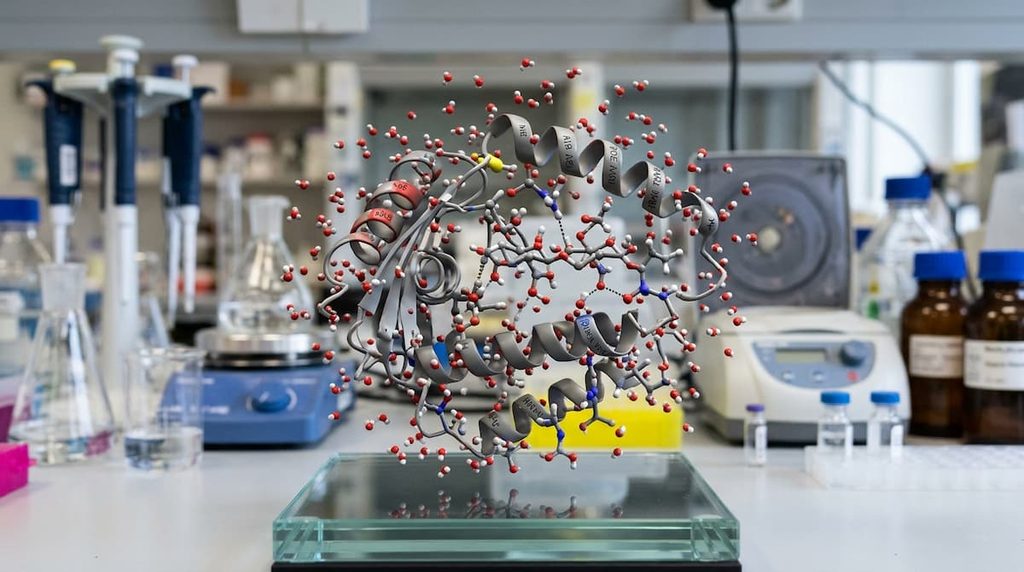
Water is often described as a solvent, but that description leaves out another important role: water can take part in chemical reactions itself.
Some reactions use water to break chemical bonds. One example is hydrolysis, a process in which a molecule is split through the addition of water. Biological systems use hydrolysis in many contexts, including the breakdown of certain nutrients and the processing of larger molecules into smaller components.
Water also participates in reactions involved in maintaining and repairing biological molecules. In some enzyme-catalyzed reactions, water molecules help transfer protons or participate directly in the chemistry taking place at an enzyme’s active site.
An enzyme is a biological catalyst that helps a reaction proceed more efficiently. Its surrounding environment, including nearby water molecules, can influence how the reaction works.
This does not mean that water automatically makes chemical reactions happen. Many reactions require enzymes, energy, suitable conditions, or other reactants. Water’s importance lies in the fact that it can provide the environment for reactions and sometimes become one of the substances directly involved.
Without this combination of solvent properties and chemical participation, many of the processes that sustain living cells would work very differently.
Water Helps the Body Stay Within Safe Limits

The importance of water becomes easier to recognize when we look at the human body.
Water forms a major part of body fluids, including blood plasma and the fluid surrounding cells. These fluids help carry nutrients, hormones, and waste products between different parts of the body. Water also contributes to lubrication in joints and other tissues, where fluid helps reduce friction or cushion movement.
Another essential role is temperature regulation.
When the body becomes hot, sweat can reach the skin’s surface. As that sweat evaporates, it takes heat away from the body. This helps cool the skin and supports temperature control, particularly during physical activity or exposure to hot conditions.
The effect depends on the surrounding environment. In very humid air, sweat evaporates less readily, so this cooling mechanism becomes less effective. Simply producing more sweat does not always provide enough cooling if the environment prevents evaporation.
Water also helps the body maintain the right balance of dissolved substances. Cells need appropriate concentrations of ions and other molecules to function normally. If body water is lost without adequate replacement, these balances can become disturbed.
The body responds through systems that regulate thirst, water conservation, and water excretion. These controls help maintain internal stability, a process known as homeostasis.
Water is therefore not just a resource the body uses. It is part of the system that allows the body to keep its internal conditions within workable limits.
Why Water in the Environment Is Not Always Enough
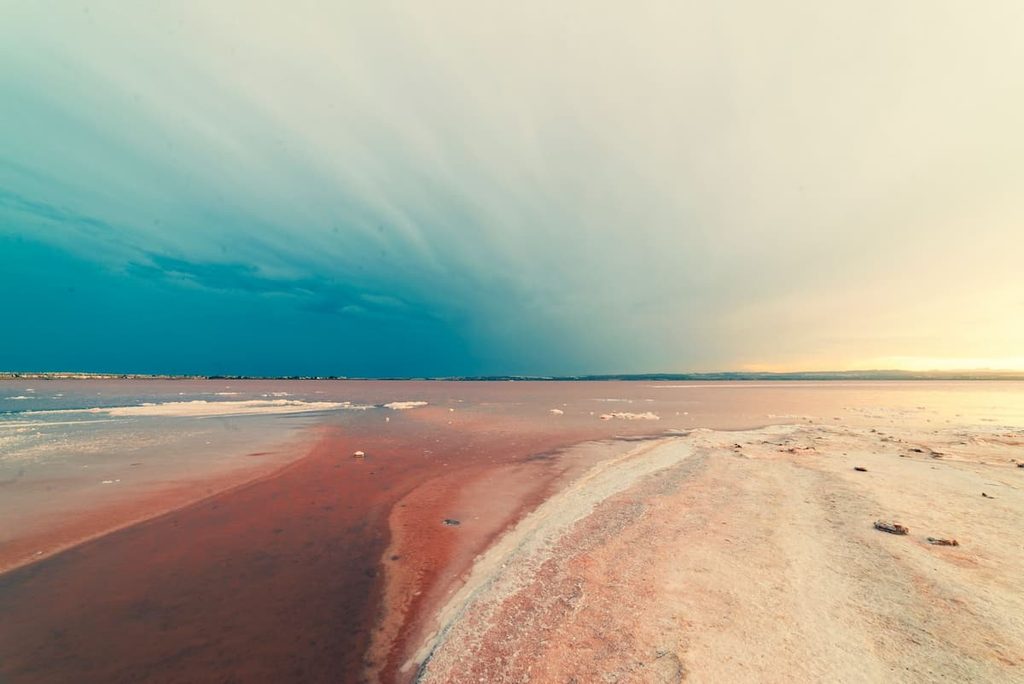
If water is so important, does finding water mean that living things can survive there?
Not necessarily.
What matters is not only how much water is present, but also how much of it organisms can actually use. Scientists describe this property using a measure called water activity.
Water activity reflects how available water is for biological and chemical processes. It is not simply the percentage of water in a material.
Consider a food with a high concentration of salt or sugar. It may contain water, but much of that water is less available to microorganisms. Under suitable conditions, high concentrations of dissolved substances can make it difficult for microbes to grow.
Some microorganisms have evolved ways to cope with these challenging environments. Certain salt-loving microbes can grow at exceptionally low water activities, while some fungi tolerate conditions that would prevent many other organisms from growing.
However, these abilities have limits. The fact that a microorganism can tolerate an environment that is too salty or dry for other species does not mean it can survive without water altogether.
This distinction helps explain why water alone cannot tell us whether a habitat can support life. Temperature, pressure, chemical conditions, available energy, and other environmental factors also influence survival.
For scientists searching for life beyond Earth, detecting water can therefore be an important clue, but it is not proof that a place is inhabited. Researchers must also consider whether the water is accessible and whether other conditions could support the chemical processes associated with life as we know it.
Is Water Essential to Every Possible Form of Life?
Every form of life currently known on Earth depends on water. From microscopic bacteria to giant trees and humans, living systems rely on water for their chemistry and internal organization.
But does that mean all life in the universe must be water-based?
We do not know.
Water has a combination of properties that makes it exceptionally useful for life on Earth. It can dissolve many substances, participate in chemical reactions, and remain liquid across a range of temperatures that occur naturally on our planet. These properties make it a compelling focus in the search for life elsewhere.
Still, scientists cannot rule out every hypothetical form of life that might use a different chemical system. No alternative form of life has been confirmed, and imagining one is not the same as demonstrating that it can exist.
The careful conclusion is that water is indispensable to all known Earth life, while the requirements of any possible life beyond Earth remain an open scientific question.
That distinction is important. It allows us to recognize the extraordinary role water plays without claiming to know more than the evidence supports.
Water Is Part of What Makes Life Possible
Water connects processes that might otherwise seem unrelated. It helps biological molecules fold into functional shapes, provides a setting for chemical reactions, carries materials through the body, and supports the regulation of temperature and internal chemistry.
Its importance is not explained by one remarkable property alone. It comes from the combination of physical and chemical characteristics that living systems use in many different ways.
That is also why the search for life begins with more than looking for a blue ocean or a trace of liquid. Scientists need to understand what water is doing in a particular environment, how accessible it is, and whether the surrounding conditions could support the chemistry of life.
A glass of water may look simple, but the biology that depends on it is anything but simple. Water is not merely something life needs from its surroundings. For every organism we know, it is woven into the processes that keep life working.
Scientific Sources
1. Ball P. “Water is an active matrix of life for cell and molecular biology.” Proceedings of the National Academy of Sciences of the United States of America. 2017;114(51):13327-13335. PMID: 28592654. DOI: 10.1073/pnas.1703781114. Read the study on PubMed
2. Bellissent-Funel MC, Hassanali A, Havenith M, Henchman R, Pohl P, Sterpone F, van der Spoel D, Xu Y, Garcia AE. “Water Determines the Structure and Dynamics of Proteins.” Chemical Reviews. 2016;116(13):7673-7697. PMID: 27186992. DOI: 10.1021/acs.chemrev.5b00664. Read the study on PubMed
3. Jéquier E, Constant F. “Water as an essential nutrient: the physiological basis of hydration.” European Journal of Clinical Nutrition. 2010;64(2):115-123. PMID: 19724292. DOI: 10.1038/ejcn.2009.111. Read the study on PubMed
4. Stevenson A, Cray JA, Williams JP, et al. “Is there a common water-activity limit for the three domains of life?” The ISME Journal. 2015;9(6):1333-1351. PMID: 25500507. DOI: 10.1038/ismej.2014.219. Read the study on PubMed
5. Biedermannová L, Schneider B. “Hydration of proteins and nucleic acids: Advances in experiment and theory. A review.” Biochimica et Biophysica Acta. 2016;1860(9):1821-1835. PMID: 27241846. DOI: 10.1016/j.bbagen.2016.05.036. Read the study on PubMed