Is There Really Such a Thing as Good Meat? [Bit#203]
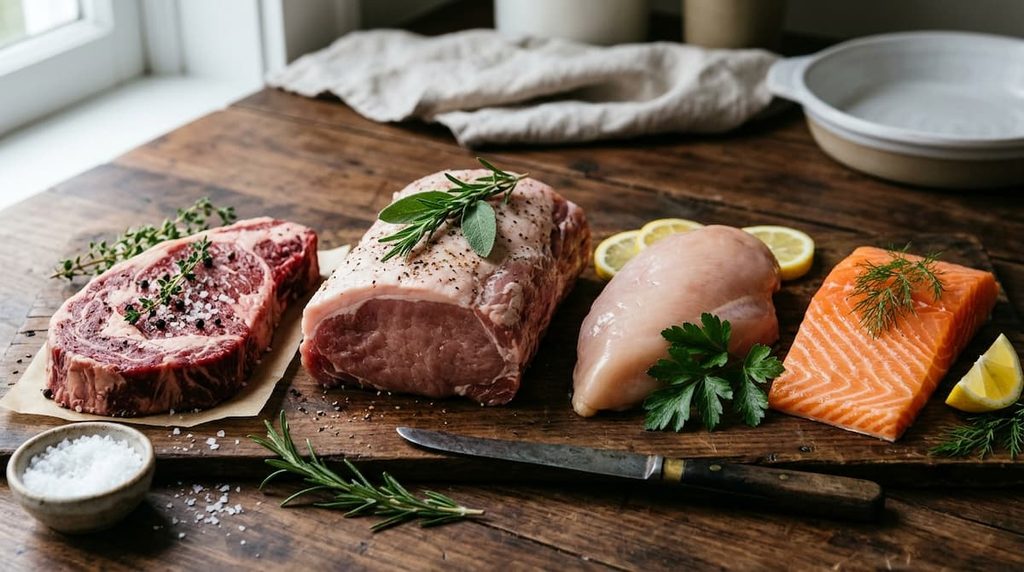
Walk into a supermarket and you will find meat divided into familiar categories. Beef is often treated as something to limit, chicken is considered a healthier everyday option, and fish is praised for its heart-friendly fats.
There seems to be a simple explanation for these differences. Beef contains more saturated fat, while fish provides unsaturated fats, including omega-3 fatty acids. Since saturated fat is associated with higher LDL cholesterol, it is easy to assume that some meats are naturally bad and others are naturally good.
But the science does not always support this simple ranking.
Researchers have compared different meats in human clinical trials and found results that challenge some common assumptions. They have also discovered that even fats belonging to the same category can affect the body differently.
So, what actually makes one type of meat healthier than another? The answer begins with the chemistry of fat, but it does not end there.

The Difference Between Saturated and Unsaturated Fat
Fat is not simply something the body stores for later. It provides energy, helps build cell membranes, supports the absorption of vitamins A, D, E, and K, and contributes to the production of important signaling molecules.
Dietary fats are made up of fatty acids, which differ in their chemical structures.
Saturated fatty acids have no carbon-carbon double bonds in their chains. Unsaturated fatty acids have at least one double bond. Those with one double bond are called monounsaturated fats, while those with two or more are called polyunsaturated fats.
These structural differences influence how fats behave in food and how they affect the body’s metabolism.
Saturated fats are found in varying amounts in beef, pork, poultry, butter, and some plant oils. Monounsaturated fats are common in olive oil, nuts, and many animal fats. Polyunsaturated fats are found in foods such as seeds, walnuts, and oily fish.
One important difference appears in blood cholesterol.
Replacing some saturated fat with unsaturated fat, especially polyunsaturated fat, can reduce LDL cholesterol. LDL is often called bad cholesterol because high levels contribute to the buildup of cholesterol-containing plaques in arteries.
Long-term dietary trials have also found that reducing saturated fat can lower the risk of combined cardiovascular events. A Cochrane review of 15 randomized trials involving more than 56,000 participants reported an approximately 17% reduction in combined cardiovascular events.
However, reducing saturated fat does not automatically make a diet healthier. The replacement matters. Swapping saturated fat for unsaturated fat is not nutritionally equivalent to replacing it with highly refined carbohydrates.
This distinction is essential when evaluating meat. A food cannot be judged only by the amount of fat it contains. The type of fat and the rest of the diet also matter.
Even Saturated Fat Has Different Types
There is another detail that often gets overlooked. Saturated fat is not a single chemical substance.
It is a category that includes many individual fatty acids. Two examples found in animal foods are palmitic acid and stearic acid.
Palmitic acid is a common saturated fatty acid found in animal fats and palm oil. Stearic acid is also found in animal fat, as well as foods such as cocoa butter.
Although both are saturated fats, they do not necessarily produce identical effects in the body.
A systematic review and meta-analysis published in 2022 examined 44 randomized controlled trials involving different dietary fatty acid substitutions.
The researchers found that replacing palmitic acid with unsaturated fatty acids reduced LDL cholesterol. The estimated reduction was about 0.36 mmol/L across the trials included in that comparison.
However, replacing stearic acid with unsaturated fats did not show the same clear improvement in the cardiometabolic markers examined.
This finding needs careful interpretation. It does not mean that stearic acid protects the heart or that palmitic acid is harmful in every amount. The researchers examined specific dietary substitutions and measurable health markers, not every possible long-term health outcome.
Still, the result reveals something important. Treating every saturated fatty acid as if it were biologically identical oversimplifies nutrition.
Does Chicken Really Have an Advantage Over Beef?
This is where the research becomes particularly interesting.
Many people assume that chicken is automatically healthier than beef because chicken is often leaner and is commonly associated with lower saturated fat intake.
But what happens when researchers compare the two under controlled dietary conditions?
A randomized controlled trial published in the American Journal of Clinical Nutrition in 2019 examined the effects of red meat, white meat, and nonmeat protein sources on cholesterol-related markers.
Participants followed different dietary patterns, with either higher or lower saturated fat intake. The researchers compared diets containing red meat, white meat, or plant-based protein.
The results challenged the idea that white meat is automatically better for blood cholesterol.
Red meat and white meat produced similar effects on LDL cholesterol and apolipoprotein B, or ApoB. Both were associated with higher levels of these markers than the nonmeat protein diet.
ApoB is an important protein found on several cholesterol-carrying particles that can contribute to plaque formation in arteries.
The amount of saturated fat also mattered. Diets higher in saturated fat increased LDL cholesterol and ApoB, regardless of whether the protein came from red or white meat.
In other words, the researchers did not find a clear advantage for chicken over beef in the main cholesterol-related outcomes they measured.
An earlier randomized clinical trial published in 1999 reached a related conclusion. Among 191 adults with high cholesterol, diets containing primarily lean red meat or lean white meat produced similar reductions in LDL cholesterol when both were part of a cholesterol-lowering dietary pattern.
These findings do not prove that beef and chicken have identical health effects in every situation. The studies examined particular diets, participants, and health markers. They also do not establish that eating either meat has the same long-term effect on cardiovascular disease.
But they do show why the simple rule that chicken is always healthier than beef is scientifically unreliable.
The cut of meat, fat content, preparation, portion size, and overall diet can matter more than the animal’s name alone.

Why Beef and Pork Have Different Fat Profiles
Beef and pork are both classified as red meat, but their fatty acid compositions are not identical.
Beef contains saturated, monounsaturated, and polyunsaturated fatty acids. Pork also contains all three, but its fat often has a relatively large proportion of monounsaturated fatty acids.
These differences are influenced by several factors, including the animal’s genetics, diet, age, and the specific cut of meat.
One particularly interesting reason comes from the digestive systems of these animals.
Cattle are ruminants. Their stomachs contain a specialized fermentation chamber called the rumen, where microorganisms help break down plant material.
When cattle eat foods containing unsaturated fatty acids, rumen microorganisms can chemically transform a substantial portion of those fats through a process called biohydrogenation.
This means that the fatty acids eventually reaching the animal’s tissues may differ from those originally present in its feed.
Pigs and chickens have a different digestive system. They are monogastric animals, meaning they have a single main stomach rather than the specialized multi-compartment stomach of ruminants.
Their tissue fatty acid composition can therefore reflect their dietary fat intake more directly.
This is one reason why changing an animal’s feed can influence the nutritional composition of its meat.
Research into livestock nutrition has demonstrated that feeding strategies and genetics can alter the fatty acid profile of meat. However, the extent of these changes depends on the animal species and the specific feeding conditions.
So even before meat reaches the supermarket, its nutritional composition has already been influenced by biology.
Why Fish Is Different
Fish is often recommended as part of a heart-healthy diet, and one major reason is its content of long-chain omega-3 fatty acids.
Two particularly important examples are EPA and DHA. These polyunsaturated fatty acids are involved in cell membrane structure and several biological processes throughout the body.
Some oily fish, including salmon, sardines, and mackerel, are especially rich in these fats.
But not all fish contain the same amount of omega-3 fatty acids.
A 2022 systematic review and meta-analysis examined whether fatty fish and lean fish were associated with different cardiovascular outcomes.
The researchers analyzed 19 reports from prospective studies involving human populations.
Higher consumption of fatty fish was associated with lower coronary heart disease incidence, lower coronary heart disease mortality, and slightly lower all-cause mortality.
These associations were not similarly observed for lean fish in the same analysis. However, neither fatty nor lean fish showed a significant association with every cardiovascular outcome examined.
Another umbrella review, which combined evidence from 34 meta-analyses of prospective cohort studies, also found that fish consumption was associated with lower cardiovascular mortality and several other health outcomes.
These findings support the value of fish as part of a healthy eating pattern, particularly oily fish. However, most of this evidence comes from observational studies. People who eat fish regularly may also differ in other dietary and lifestyle habits.
The results therefore show associations, not proof that eating fish alone causes every observed health benefit.
Even within the category of fish, nutritional differences matter. A lean white fish and an oily salmon fillet are not interchangeable sources of dietary fat.

Processing Adds Another Layer
Fat composition is important, but it is not the only factor that matters.
The difference between fresh meat and processed meat illustrates this clearly.
Bacon, ham, and many sausages are made using processes such as curing, salting, smoking, or fermentation. These methods can change the chemical composition of meat and may introduce additional substances.
The International Agency for Research on Cancer has classified processed meat as carcinogenic to humans, while unprocessed red meat is classified as probably carcinogenic to humans.
These classifications describe the strength of evidence that something can cause cancer. They do not mean that processed meat and tobacco carry the same level of risk.
This distinction is important because two foods can have similar amounts of protein and fat while differing in other health-related properties.
In other words, looking only at saturated and unsaturated fat cannot explain every difference between meat products.

So, Is There Really Good Meat and Bad Meat?
The research suggests that the answer depends on what we mean by good and bad.
If we are talking about blood cholesterol, replacing saturated fat with unsaturated fat is generally favorable. But the effect also depends on which fatty acid is being replaced and what takes its place.
If we compare beef and chicken, controlled trials do not support the idea that chicken is automatically better for cholesterol. Lean cuts of red meat can also fit into dietary patterns that improve blood lipid levels.
If we compare fish, oily varieties provide substantial amounts of omega-3 fatty acids and are associated with favorable cardiovascular outcomes in observational research.
And if we compare fresh meat with processed meat, the evidence reveals differences that cannot be explained by fatty acid composition alone.
The latest research also reminds us that the benefits of changing saturated fat intake are not identical for everyone. A 2026 systematic review of 17 randomized trials involving more than 66,000 participants found that the absolute benefits may be more meaningful for people at higher cardiovascular risk, while the benefits over five years were small for those at low baseline risk. The certainty of several outcomes remained limited.
Perhaps the biggest mistake is trying to judge an entire food using just one nutrient.
Meat contains proteins, fats, vitamins, minerals, and other compounds. Its nutritional value depends on the animal, the cut, the production method, and how it fits into the rest of a person’s diet.
A better question than whether beef is bad or chicken is good is this: What does this particular food provide, what are we replacing it with, and how does it fit into our overall eating pattern?
Science does not give us a simple list of good and bad meats. It gives us a more useful way to understand why different foods affect the body differently.
Scientific Sources
1. Bergeron N, et al. “Effects of red meat, white meat, and nonmeat protein sources on atherogenic lipoprotein measures in the context of low compared with high saturated fat intake: a randomized controlled trial.” Am J Clin Nutr. 2019;110(1):24-33. PMID: [31161217]. DOI: 10.1093/ajcn/nqz035. Read the study on PubMed.
2. Davidson MH, Hunninghake D, Maki KC, Kwiterovich PO Jr, Kafonek S. “Comparison of the effects of lean red meat vs lean white meat on serum lipid levels among free-living persons with hypercholesterolemia: a long-term, randomized clinical trial.” Arch Intern Med. 1999;159(12):1331-1338. PMID: [10386509]. DOI: 10.1001/archinte.159.12.1331. Read the study on PubMed.
3. Sellem L, et al. “Impact of Replacement of Individual Dietary SFAs on Circulating Lipids and Other Biomarkers of Cardiometabolic Health: A Systematic Review and Meta-Analysis of Randomized Controlled Trials in Humans.” Adv Nutr. 2022;13(4):1200-1225. PMID: [34849532]. DOI: 10.1093/advances/nmab143. Read the study on PubMed.
4. Giosuè A, Calabrese I, Lupoli R, Riccardi G, Vaccaro O, Vitale M. “Relations between the Consumption of Fatty or Lean Fish and Risk of Cardiovascular Disease and All-Cause Mortality: A Systematic Review and Meta-Analysis.” Adv Nutr. 2022;13(5):1554-1565. PMID: [35108375]. DOI: 10.1093/advances/nmac006. Read the study on PubMed.
5. Jayedi A, Shab-Bidar S. “Fish Consumption and the Risk of Chronic Disease: An Umbrella Review of Meta-Analyses of Prospective Cohort Studies.” Adv Nutr. 2020;11(5):1123-1133. PMID: [32207773]. DOI: 10.1093/advances/nmaa029. Read the study on PubMed.
6. Juárez M, Lam S, Bohrer BM, et al. “Enhancing the Nutritional Value of Red Meat through Genetic and Feeding Strategies.” Foods. 2021;10(4):872. PMID: [33923499]. DOI: 10.3390/foods10040872. Read the study on PubMed.
7. Hooper L, et al. “Reduction in saturated fat intake for cardiovascular disease.” Cochrane Database Syst Rev. 2020;8:CD011737. PMID: [32827219]. DOI: 10.1002/14651858.CD011737.pub3. Read the study on PubMed.
8. Steen JP, et al. “Effect of Interventions Aimed at Reducing or Modifying Saturated Fat Intake on Cholesterol, Mortality, and Major Cardiovascular Events: A Risk Stratified Systematic Review of Randomized Trials.” Ann Intern Med. 2026;179(2):242-255. PMID: [41397264]. DOI: 10.7326/ANNALS-25-02229. Read the study on PubMed.