[Bit#65] Why Do Women Live Longer Than Men?

1. The Biological Truth Behind the Statistical Gap
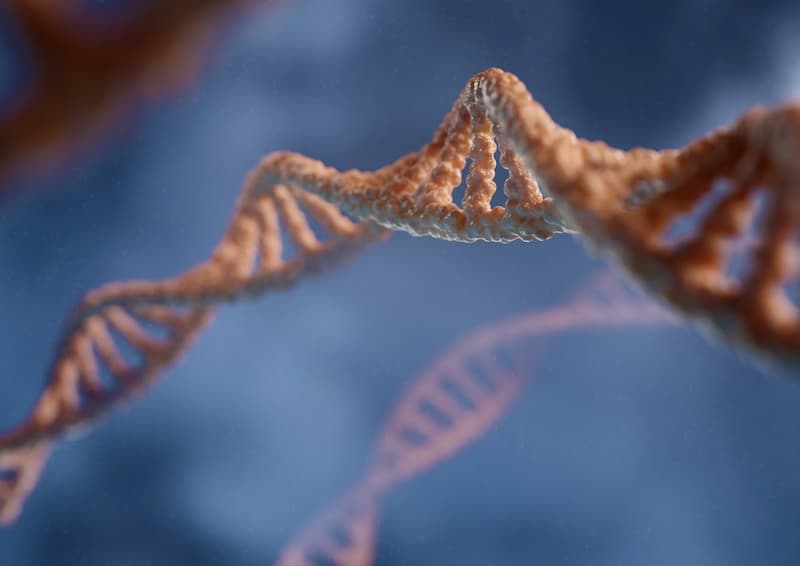
If you look at statistics from every country in the world, one common thread emerges: women live longer than men. People often search for the cause of this gap in social factors. They analyze that men have more dangerous jobs or engage in more high-risk activities. Of course, such social influences cannot be ignored. But is that all? Modern science gives a firm answer of no to this question.
In fact, the lifespan gap between genders begins as early as the fetal stage, even before entering society. In the early stages of pregnancy, male fetuses show higher miscarriage and mortality rates than female fetuses. This is evidence that biological vulnerability exists long before the environment we live in even begins to have an impact. It is a fundamental truth.
This gap is not a simple coincidence. Men show higher mortality rates than women across their entire life cycle. From heart disease and infectious illnesses to the immune system’s ability to detect cancer, women show superior survival capacity overall. We call this resilience possessed by women biological robustness.
So, what is the real reason that makes women more advantageous for survival? Is it simply the difference in physical structure? Or is it the influence of hormones? No. We have to look deeper. We can find the answer in the blueprints of our bodies: genes and cellular-level mechanisms. Why were males born with a destiny where they are forced to consume their energy faster biologically? To dig into the root cause, we must now face the secret of sex chromosomes, the blueprint of life. Why is the female genetic shield much more powerful than the male one? The astonishing truth unfolds right now.
2. The Secret of Sex Chromosomes: Why is the Female Genetic Shield Stronger?
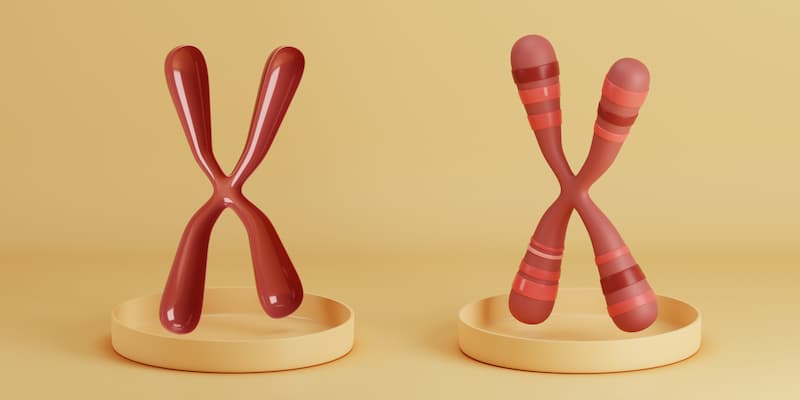
The first key to determining the lifespan gap between men and women lies in sex chromosomes. Biologically, women have two X chromosomes. On the other hand, men have one X chromosome and one Y chromosome. A very decisive difference occurs here. The X chromosome contains countless core genetic pieces of information necessary for sustaining life. But what happens if a mutation or defect occurs in the X chromosome?
Even if a problem arises in one X chromosome, women have the remaining normal X chromosome to perfectly fill the gap. It is like having an extra genetic safety device. In genetics, this is called the advantage of heterozygosity. It is like a car driving with an extra spare tire. The power to keep moving forward without stopping even if a tire goes flat; that is the powerful secret to female survival.
Men are in a different situation. Because they only have one X chromosome, there are no reserves to replace it if a problem arises. The male Y chromosome is very small compared to the X, and the genetic information it contains is extremely limited. It lacks much more of the information necessary to perform vital survival functions. Eventually, men have to continue their lives while leaving these genetic defects exposed.
Why did this difference emerge? From an evolutionary perspective, this male vulnerability is sometimes linked to the breeding strategy of the species. But the point we should focus on is clear. The fact that the dual genetic shield possessed by women slows down aging and increases resistance to disease from the cellular level. A foundation where cells can divide and be maintained more healthily is already in place. So, how does the female body, protected genetically like this, build a more perfect defense system with the help of hormones? Now it is time to examine another powerful weapon called hormones.
3. The Dual Nature of Hormones: How Estrogen Protects the Heart

Besides sex chromosomes, there is one more decisive biological element that supports female longevity. It is estrogen, the female hormone. Estrogen is not just a hormone that regulates reproductive functions. It acts as a very powerful shield that protects the blood vessels and heart of our body. Why is estrogen considered the secret to longevity?
Vascular health is a core indicator that determines human lifespan. As we age, blood vessels become stiff and lose their elasticity. In this process, fatal diseases like hypertension and arteriosclerosis occur. But estrogen helps keep blood vessel walls soft. It also plays a role in lowering bad cholesterol levels and raising good cholesterol levels in the blood. Thanks to this, women are protected much more safely from cardiovascular disease than men until menopause.
On the other hand, men relatively lack this hormonal shield. The male hormone testosterone is excellent for increasing muscle mass and creating active energy. However, it does not provide the same defensive mechanism as estrogen in terms of protecting cardiovascular health. Rather, excessive male hormone levels can sometimes put a burden on blood vessels in the long term.
You can now guess why women have less physical wear and tear than men. The genetic safety device that protects cells and the hormonal defense system that manages blood vessels are creating a synergy. So, what meaning do these biological defense mechanisms have in our evolutionary process that races toward death? Is it just a byproduct of survival, or is it the result of a cruel evolution designed for males to be consumed more quickly for the propagation of the species? Now, we will pursue that doubt to the end with an interpretation from an evolutionary perspective in the final section.
4. An Evolutionary Perspective: Why are Males Consumed So Quickly?

Now is the time to ask the final question. Why did nature grant a harsher fate to males? From an evolutionary perspective, longevity is not the only goal. Species preservation and the delivery of genes are more important. Males are inherently designed to engage in more powerful physical competition for reproduction. In this process, men pour their energy into competition and reproduction through growth rather than survival.
Biologically speaking, the life of a male is like a sports car that uses its engine excessively. It burns fuel quickly to produce explosive power. On the other hand, females take a strategy of managing energy efficiently and preserving their bodies. Because they have the biological duty to conceive and raise life, stable survival is more advantageous for species propagation than reckless competition. This difference has continued for millions of years and has solidified into the result we see today as the gender-based lifespan gap.
We often say that women are born healthier than men. But behind that lies a cold evolutionary calculation that they must survive longer to care for the species. Is the fact that males are consumed quickly a tragedy, or is it an essential sacrifice for the maintenance of the species? Perhaps the lifespan gap between men and women is not a problem we can just blame on the social environment. It is a very old homework assignment left to us by the massive blueprint of life.
Now we have completed the biological puzzle of why women live longer. Genetic shields, hormonal defense mechanisms, and the evolutionary will to preserve the species. All of this has gathered to make the us of today. Understanding the lifespan difference between men and women is the same as understanding how the human species has evolved. What do you think about this result? Will the biological sacrifice of males continue in the future?
![[Bit#99] The Reality of Designed Babies in the Era of CRISPR Gene Editing](https://hiddenbitknowledge.com/wp-content/uploads/2026/07/main.CRISPR-Gene-Editing-768x526.jpg)
![[Bit#30] Why Humans Can’t Survive on Grass: The Secret of Cellulose Digestion](https://hiddenbitknowledge.com/wp-content/uploads/2026/05/b85aeb5dda3e-768x512.jpg)
![[Bit#168] Why Tears from Sadness and Onions Are Chemically Different](https://hiddenbitknowledge.com/wp-content/uploads/2026/09/main.tear_-768x419.jpg)
![[Bit#105] Forensic Genetics: Reconstructing Suspect Faces and Biological Traits from a Single Cell](https://hiddenbitknowledge.com/wp-content/uploads/2026/07/main.DNA-tracing-technology-768x544.jpg)
![[Bit#151] The Science of Shock Absorption in the Jaw Joint When Chewing Hard Food](https://hiddenbitknowledge.com/wp-content/uploads/2026/09/main.eat-meat-768x419.jpg)
![[Bit#157] The Science of Autumn Foliage: The Biochemical Secrets Behind Leaf Color Changes](https://hiddenbitknowledge.com/wp-content/uploads/2026/09/main.Foliage-768x419.jpg)