[Bit#105] Forensic Genetics: Reconstructing Suspect Faces and Biological Traits from a Single Cell
Introduction
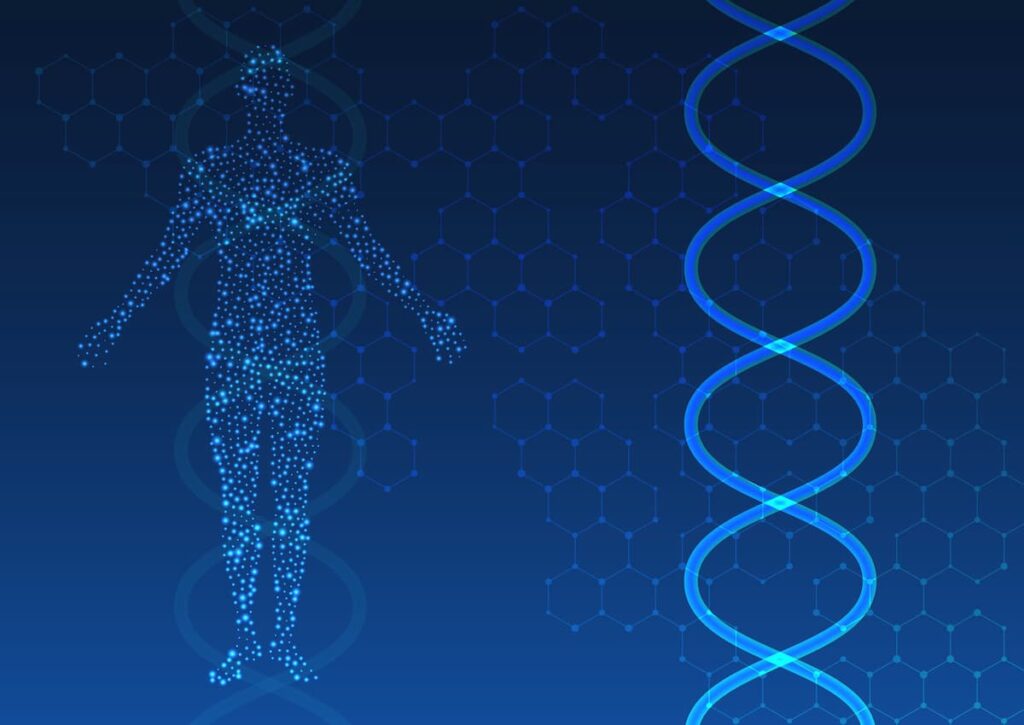
Exploring the revolution of forensic science that begins with a single cell: the technology of forensic genetics. We delve into the astonishing principles of how a single microscopic DNA fragment left at a crime scene reconstructs even the biological appearance and features of a suspect. Together, we reflect on the new questions that scientific and technological advancements pose for humanity’s pursuit of justice and crime prevention.
1. A Biological Fingerprint from One Cell: Defining Forensic Genetics and DNA Phenotyping
Imagine a single cell left behind at a crime scene. It is a microscopic particle invisible to the naked eye. Could this particle smaller than dust hold every piece of biological information about a suspect? Past investigative methods relied on comparing DNA recovered from crime scenes with existing databases. It was a straightforward matching process to find a hit among previously registered offenders. What happens if the DNA at the scene belongs to someone not in any database? The investigation encounters an immediate stalemate. Case files cold-case into mystery without even a minimal clue to pinpoint a suspect.
At this critical junction, DNA phenotyping an advanced branch of forensic genetics transforms the investigative paradigm. This technology reverse engineers the actual appearance of a culprit based on genetic information alone. It functions seamlessly even without a suspect’s name or identity on record. It directly decodes the genomic blueprint stored within the cell to reconstruct physical characteristics.
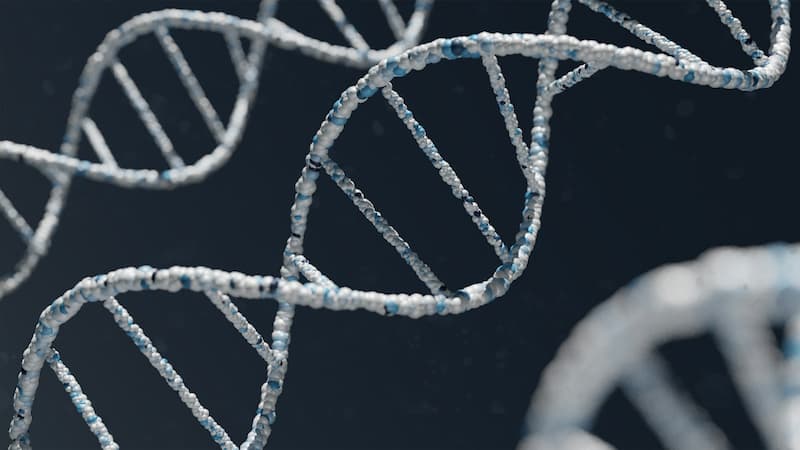
How can a single invisible cell sketch a facial composite? The secret lies in genetic variations known as Single Nucleotide Polymorphisms (SNPs). Inside our genome rests a precise blueprint determining skin tone, eye color, hair texture, and facial bone structure. Scientists pinpoint the exact genomic loci linked to specific physical traits across millions of genetic data points.
Modern forensic genetics restores this blueprint using minute DNA fragments. Amplifying the genetic material inside one single cell allows for the decoding of phenotypic traits. Investigators now initiate tracking based on scientifically derived facial features rather than traditional witness sketches. Microscopic evidence left at the scene ceases to be a passive specimen; it becomes an active biological fingerprint testifying to the suspect’s likeness and physical traits.
2. From Eye Color to Facial Contours: Scientific Principles of Appearance Restoration

How does a human face emerge from a fragment of genetic code? The answer resides in genetic markers that govern eye, skin, and hair pigmentation. Scientists have mapped the specific genetic loci determining iris color. The accuracy of predicting whether eyes are blue or brown already exceeds ninety percent.
Skin tone and hair morphology follow the same principle. Interpreting genetic combinations that regulate melanin concentration determines whether skin complexions are light or dark. It predicts whether hair is straight or curly with high precision, moving far beyond mere color matching.
Cutting-edge forensic genetics goes further by calculating three-dimensional facial bone structures. Microscopic biological dimensions—such as jaw width, cheekbone height, and nasal bridge elevation—are quantified into precise data points. Computer algorithms combine these measurements to render a 3D facial model. Why is such complex computation necessary?
A human face is never dictated by a single gene. Thousands of genetic variants interact simultaneously to shape facial topology. Forensic geneticists integrated artificial intelligence machine learning models trained on thousands of genomic datasets paired with high-resolution facial scans.
Consequently, DNA retrieved from a single cell generates a composite sketch bearing a striking resemblance to the actual suspect. Invisible genetic messages transform into a tangible, visible reality.
3. Technical Limitations and Challenges in Single-Cell Suspect Identification

Reconstructing a suspect’s face from a single cell appears all-powerful. Why do forensic scientists remain cautious instead of deploying it unconditionally? The limitation is not a matter of DNA amplification. The genuine hurdle stems from the biological gap between the inherited genetic blueprint and a person’s real-world appearance.
DNA provides only the foundational genetic code assigned at birth. However, human appearance changes constantly due to environmental factors. Lifestyle, nutritional status, smoking habits, scars, and tattoos remain impossible to predict through genetic sequencing alone. Even identical twins with identical DNA develop distinct facial contours and skin textures based on their living environments. This variation occurs due to epigenetic factors that imprint environmental influences onto the genome.
Predicting age and body weight presents an even greater challenge. Current DNA phenotyping faces limitations in determining a suspect’s exact chronological age or body mass index. A facial composite generated from 20-year-old genetic markers differs significantly from a 50-year-old suspect’s present look. Human faces develop through intricate interactions among thousands of genes over time.
Scientists are overcoming these boundaries by implementing epigenetic clock technology. Measuring DNA methylation levels estimates the suspect’s true biological age. AI models trained on vast population genomic data and environmental variables refine these predictions. Forensic investigators treat these models as probabilistic approximations rather than absolute answers, continually refining algorithms to reduce errors and boost accuracy.
4. The Future and Ethical Boundaries of Forensic Science: Innovation vs. Privacy

Drafting a suspect’s face from a single cell represents a monumental scientific leap. Yet, this progress raises profound ethical questions. The efficiency of criminal investigation directly collides with individual privacy rights. How far should state authorities be permitted to collect and analyze personal genomic data?
Primary concerns center on privacy infringement of innocent citizens and potential genetic discrimination. DNA phenotyping risks being misused to stigmatize specific ethnicities or physical traits as criminal risk factors. If imperfect genomic composites circulate publicly, innocent individuals sharing similar physical traits could face unwarranted social suspicion. This sparks continuous debate over human rights violations.
Consequently, governments worldwide are establishing strict legal guidelines regarding genetic data usage. Legislation increasingly restricts forensic phenotyping to violent crimes or mandates the immediate destruction of genetic profiles once investigations conclude. Genetic data represents an individual’s most intimate biological secret.
Scientific advancement moves faster than legal framework development. A clear equilibrium must be established between public safety and personal genetic privacy. Mature societal consensus and legislative safeguards are as urgent as technical precision itself.
Conclusion
Forensic genetics is a powerful tool awakening truth hidden within a single cell to serve judicial justice. Science continuously evolves toward reconstructing suspect appearances with higher accuracy.
Yet, as technology unlocks our deepest biological secrets, how much privacy are we willing to surrender for absolute security? Between achieving justice through scientific progress and protecting individual dignity, we must carefully consider the core human values we need to preserve.
![[Bit#157] The Science of Autumn Foliage: The Biochemical Secrets Behind Leaf Color Changes](https://hiddenbitknowledge.com/wp-content/uploads/2026/09/main.Foliage-768x419.jpg)
![[Bit#49] The Miraculous Defense System of Human Skin](https://hiddenbitknowledge.com/wp-content/uploads/2026/06/1e35ee73e983-768x538.jpg)
![[Bit#35] The Night Owl Myth: Why Your DNA Rebels Against Mornings](https://hiddenbitknowledge.com/wp-content/uploads/2026/05/b2de24ca8745-768x419.jpg)
![[Bit#56] Deadly Toxin or Magic of Life? The Two Faces of Microbes](https://hiddenbitknowledge.com/wp-content/uploads/2026/06/6b131e0f931c-768x512.jpg)
![[Bit#144] Hidden Mechanisms of How Fine Dust Destroys the Lungs](https://hiddenbitknowledge.com/wp-content/uploads/2026/09/main.dust_-767x428.jpg)
![[Bit#77] Cosmic Radiation and Its Fatal Impact on Human Genetics](https://hiddenbitknowledge.com/wp-content/uploads/2026/06/main.Cosmic-Radiation-768x430.jpg)